
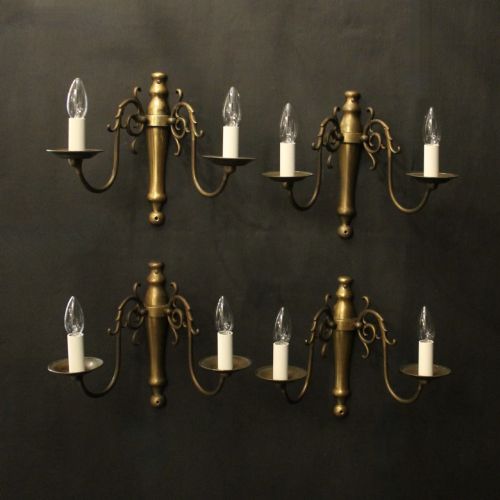
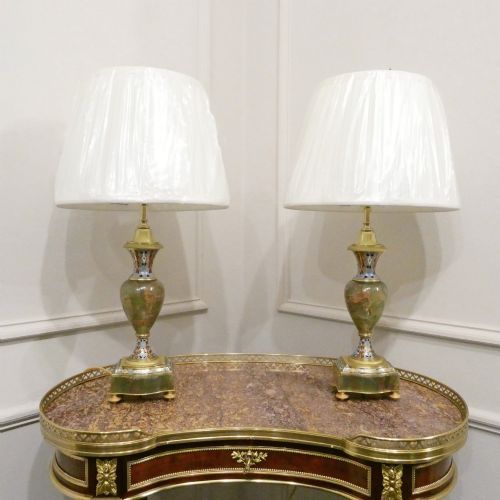
Antique Lamps
Antique lamps here are domestic lighting for table, desk and floor, mostly wired for electricity, with a body of older oil lamps, candlesticks and vases converted to the same use.
Antique Lamps
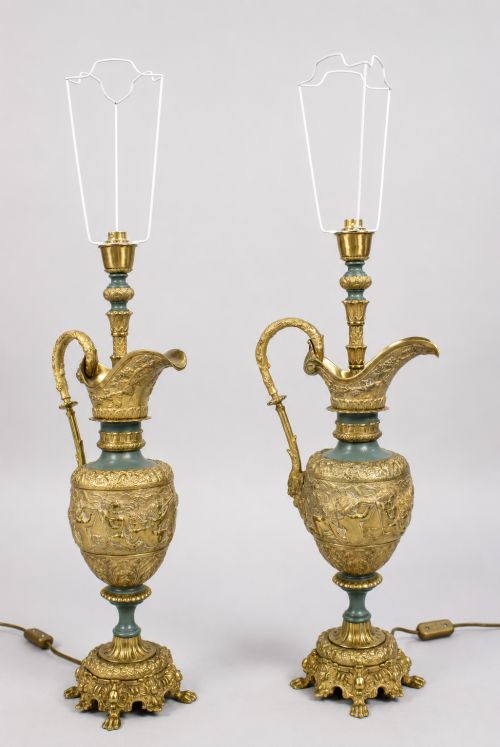
Titles in this category are built from material and form rather than a name. Brass runs through roughly a third of them, table lamps through a bit more than a third, and standard lamps through about one in seven. One title in five describes a pair, so matched lamps are a normal way for these to come to market.
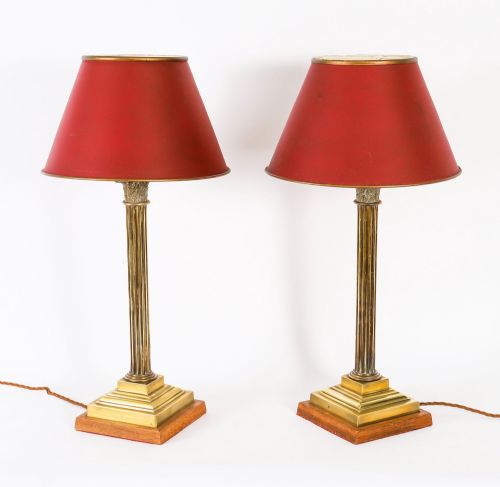
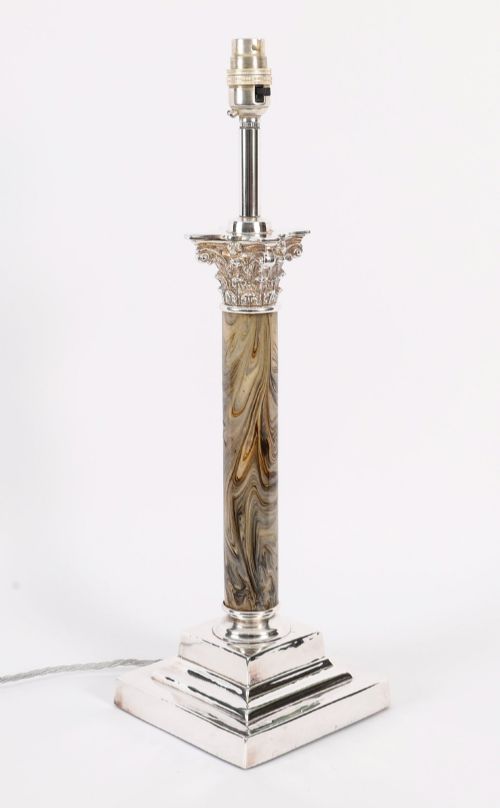
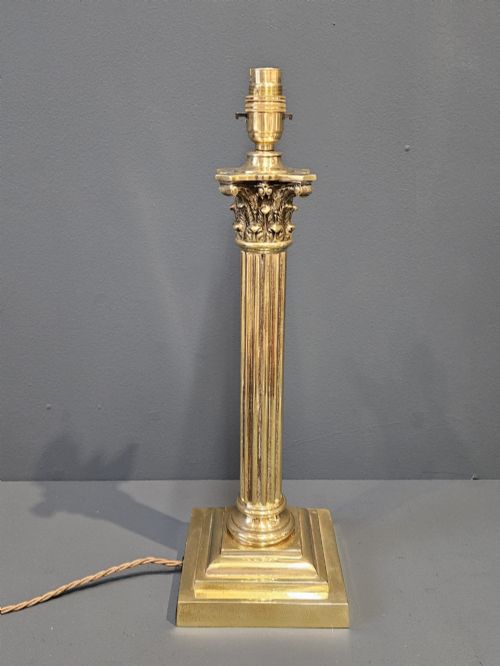
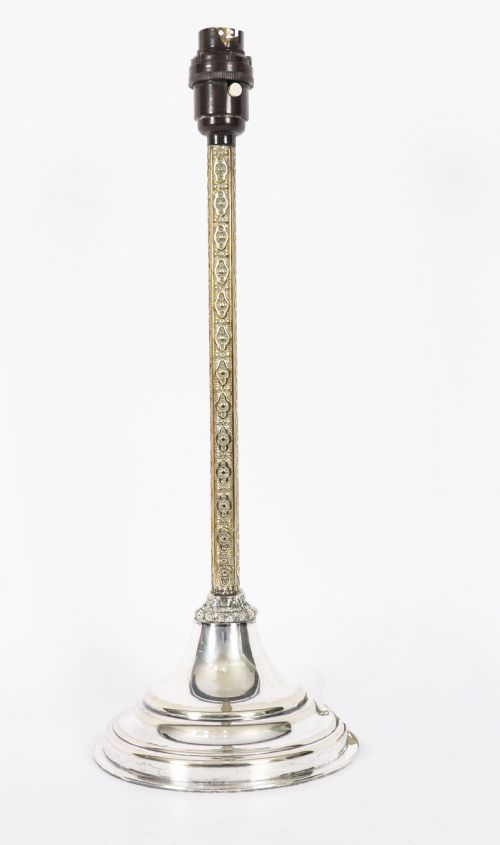
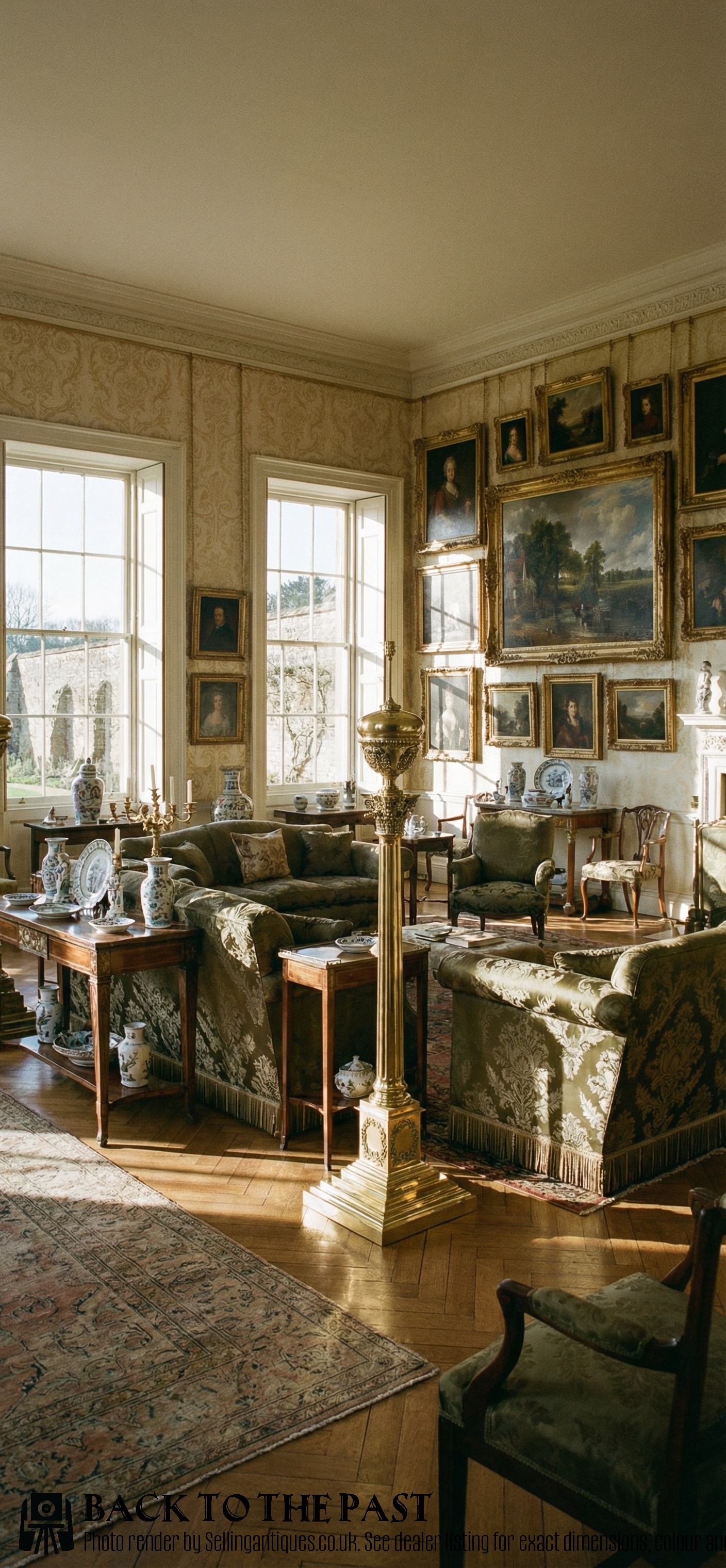
The single piece a buyer meets most is a brass Corinthian column table lamp of late Victorian, Edwardian or interwar date, often one of a pair. The Corinthian column is the most repeated named design in the category, almost always brass or silver plate. Alongside it sit Pullman carriage lamps and candlesticks wired as table lamps.
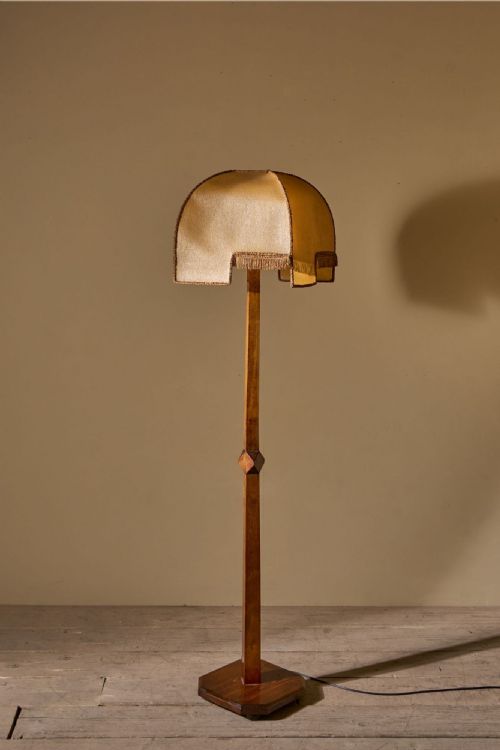
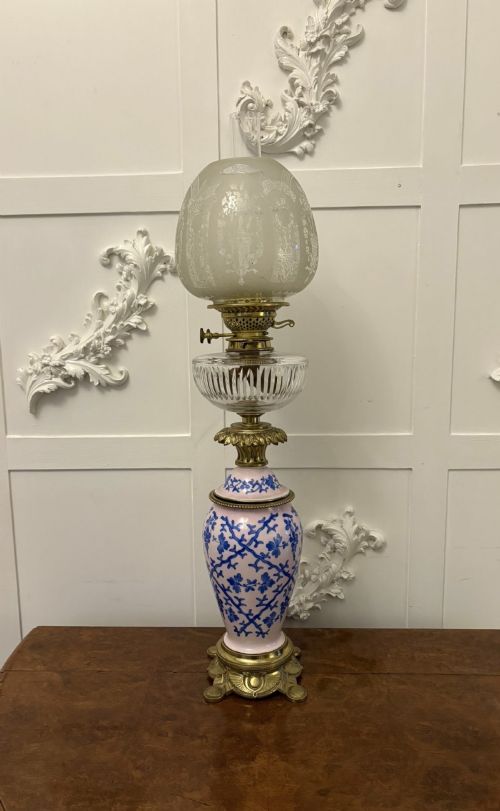
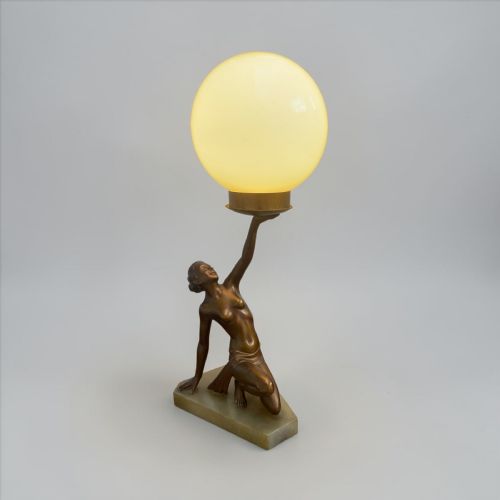
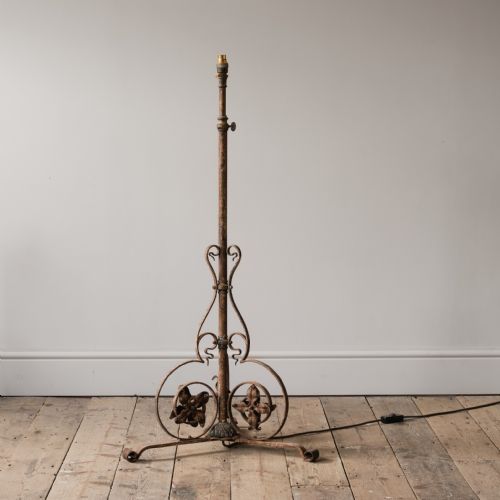
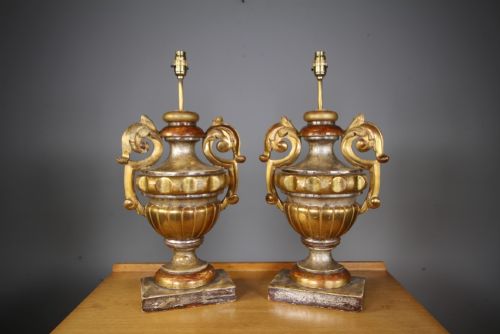
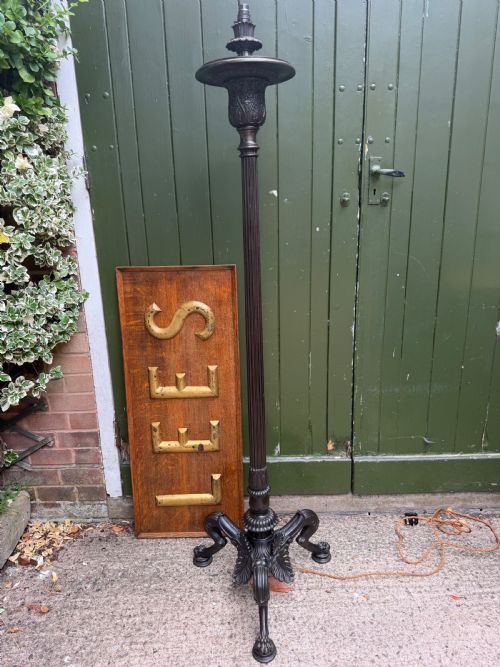
The rest divides into recognisable seams. Standard and floor lamps in mahogany, oak, walnut, giltwood and telescopic brass make up about one in six. Art Deco and Art Nouveau pieces, including chrome and Bakelite, come to roughly one in eight. Desk and adjustable reading lamps, rise and fall, swan neck, bankers and articulated types, are about one in twenty. Oil lamps and vase conversions together account for around one in ten.
Dating spans 1700 to 1960, with the mass between 1890 and 1939; the 1920s and 1930s lead, ahead of the 1910s and 1900s. Much of the dating is by label rather than year, so '19th Century', 'Edwardian' and 'Victorian' do a lot of work. Anything earlier than 1800 is a conversion rather than a lamp: 18th-century candlesticks, a cast bronze crusie oil lamp, Chinese vases of the 1700s wired for electricity.

Top And Bottom
Material and mounts set the range more than anything else. Bronze, ormolu, marble, onyx and solid silver sit at the top, and large pairs of 19th-century French figural bronze torchères sit at the very top of it. Plain wooden standard lamps and small Bakelite desk lamps occupy the other end. Brass and chrome fill the broad middle.
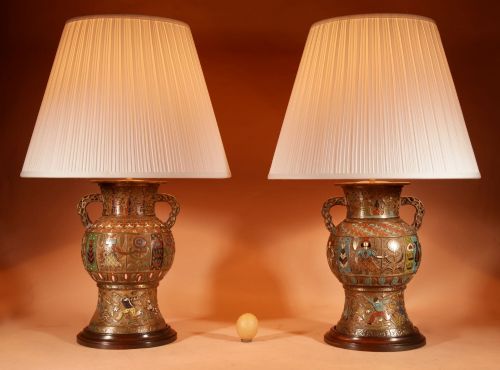
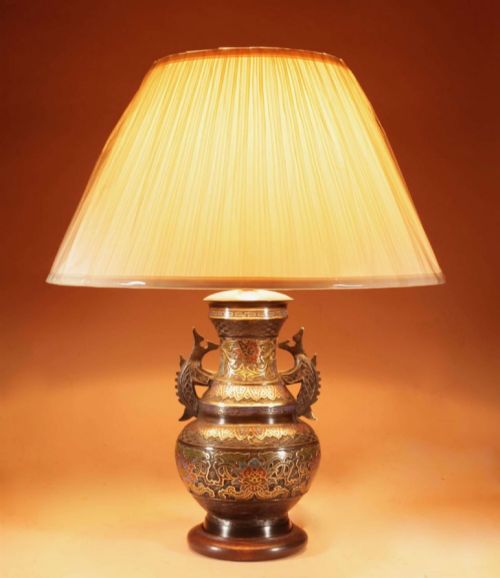
Number matters almost as much. Pairs cluster in the upper half of the range, and sets of four or eight appear only at the higher end. Converted antique ceramics behave the same way: pairs of Chinese and Japanese vases, famille rose, Cantonese, Imari, Kutani and cloisonné, account for much of what sits above the middle, well clear of a plain electric base of the same date.
Scale pushes a lamp up, with large, tall and floor-standing pieces sitting well up the range. A name does too, though it is the exception. Only four maker names are carried by three or more dealers across the whole category, so a stamped or attributed piece, or one tied to a specific model, sits above its unattributed equivalent simply because so little else is identified.
Antique Lamps Retail Price Guide 2026
Typical UK retail prices for lamps, calculated from the Sellingantiques database of over a million retail prices indexed since 2003. This retail price guide relies exclusively on Sellingantiques data; no external sources or auction records are used, so the figures do not describe the wider market.
The 1920s is the period label used most on Sellingantiques for lamps, with the 1930s next and the 19th century third.
Hinks·Faraday & Sons·Pirouette·William McGeoch
The Antique Lamps Glossary
- Standard lamp
- A floor-standing lamp on a tall column or stem. Over a thousand titles use the word, in oak, mahogany, walnut, giltwood and telescopic brass.
- Corinthian column
- A classical fluted column with an acanthus capital used as the lamp stem. The commonest named design in the category, usually brass or silver plate.
- Rewired and PAT tested
- A statement in the listing that the lamp has new flex and has been electrically tested. Hundreds of titles carry one phrase or the other.
- Converted
- An oil lamp, candlestick or vase adapted to electricity. A frequent construction in these titles, and the reason the oldest pieces here are conversions.
- Rise and fall
- A desk or standard lamp whose height adjusts on a sliding or telescopic stem. Swan neck and articulated arms do a similar job on desk lamps.
- Bouillotte
- A table lamp with a dished metal base, candle arms and an adjustable tole shade. Toleware, painted sheet metal, also turns up on oil lamps and canister-form bases.
Antique Lamps: Frequently Asked Questions
What is the most common antique lamp type?
A brass table lamp of late Victorian to Edwardian or interwar date. Table is the commonest word in these titles, with brass close behind.
Within that, the Corinthian column is the most repeated design, named in 476 titles and often one of a matched pair.
Do these lamps come with shades?
Often not. Shade appears in only 346 titles, and 149 describe the piece as a base, meaning the lamp without a shade.
Where a shade is part of the design, as with bouillotte and tole types, the listing tends to say so.
Are antique lamps usually signed or marked?
Rarely. Only four maker names are carried by three or more dealers across more than seven thousand listings, so the overwhelming majority arrive with no attribution.
When a name does appear, it may be stamped on the base or offered as an attribution rather than a mark.
How old are most of the lamps listed?
The dated field runs from 1700 to 1960, with 4,935 listings carrying a clean year. The bulk falls between 1890 and 1939.
The 1920s and 1930s lead on numbers, ahead of the 1910s and 1900s. Plenty of listings use a period label instead: 19th Century, Edwardian, Victorian, Georgian, Regency.
Why are so many sold as pairs?
Lamps were made and bought in twos for mantelpieces, side tables and hall consoles, and 1,593 titles on Sellingantiques describe a pair.
Pairs cluster in the upper half of the range, and sets of four or eight appear only at the higher end.
What unusual lamps turn up in this category?
Railway and maritime forms make a quiet seam: Pullman carriage lamps, GWR carriage lamps, gimballed ship's lamps, station platform lamps and copper street lanterns.
One-offs surface in ones and twos as well, among them a taxidermy deer-hoof table lamp, an aluminium aircraft hangar lamp, an early searchlight and a set of merman candelabra.