
Antique Crystal Chandeliers
A ceiling-hung electric light fitting whose metal frame is strung and plated with cut and moulded glass drops, made to throw light back out through the glass.
Antique Crystal Chandeliers
Branched hanging lights carrying faceted glass grew up in the eighteenth century, when the drops were there to multiply candlelight by refraction. The form was adapted to gas and then to electricity from the later nineteenth century, which is why the frames offered now are wired fittings rather than candle holders.
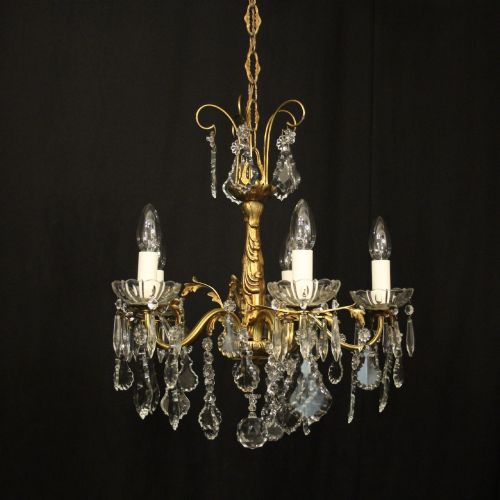
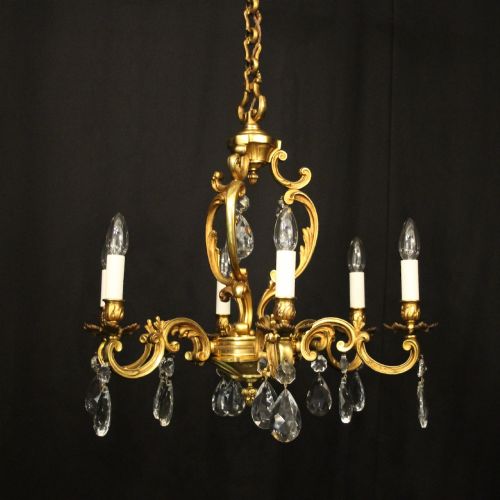
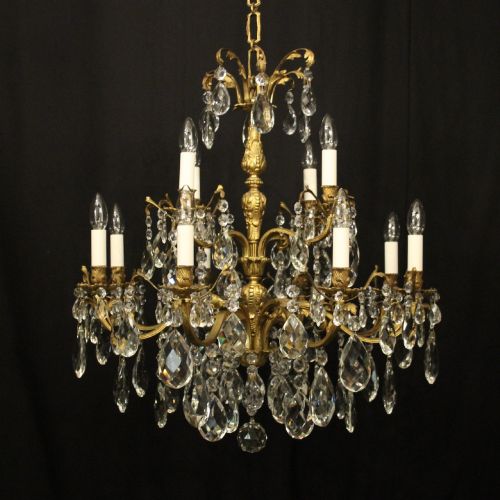
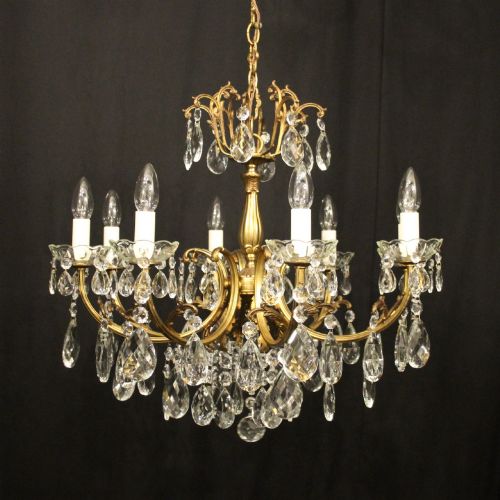
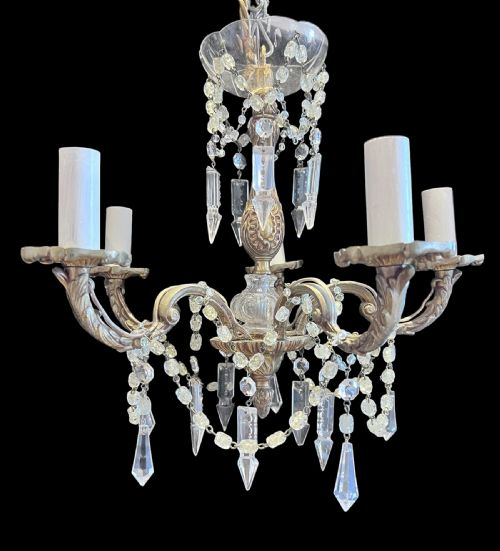
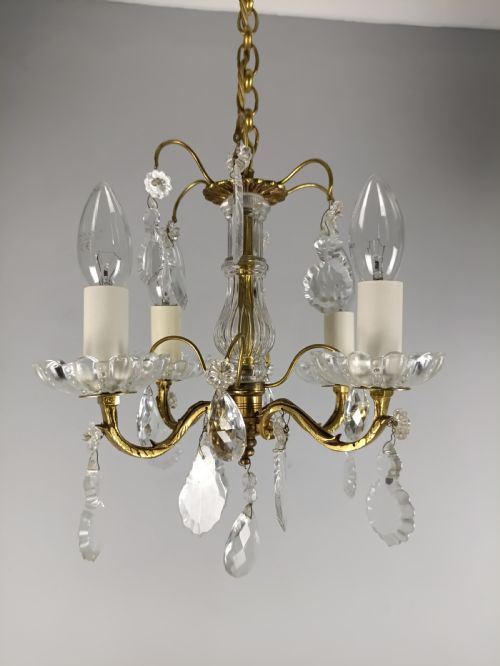
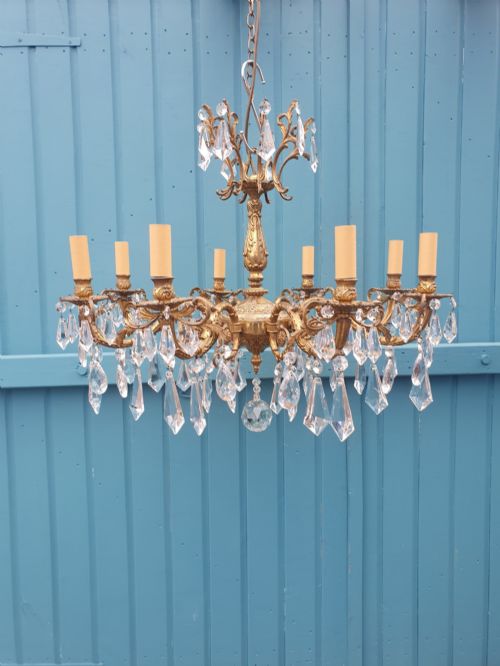
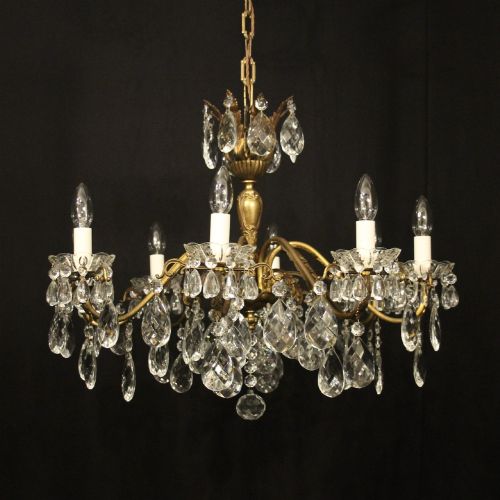
The frames are most often gilded bronze or gilt brass. Toleware, wrought iron, chrome, silvered metal and giltwood all turn up as well. Onto that frame go drops, prisms, beads and swags of cut and moulded glass, and nearly every title states the count of lights or arms: 3 Light, 8 Arm, 12 Branch.
French work dominates, with Italian behind it, and the single commonest thing a buyer meets on Sellingantiques is a six- or eight-light French or Italian gilded-bronze chandelier of the 1920s or 1930s. Of the listings carrying a clean year, the 1920s and 1930s together account for the great bulk. Where a piece is called Victorian, Edwardian or nineteenth-century, the year given is a dealer's bracket rather than a date.
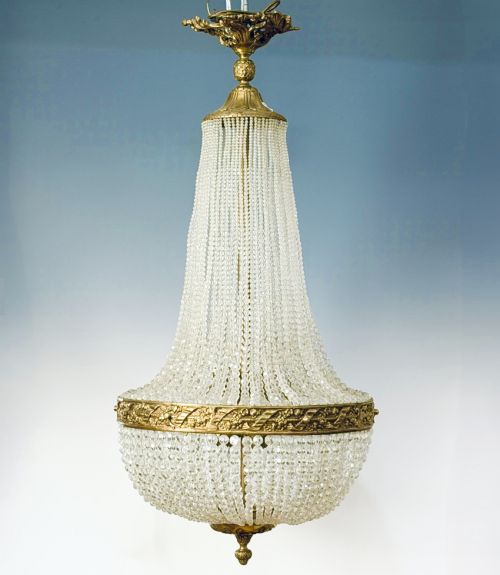
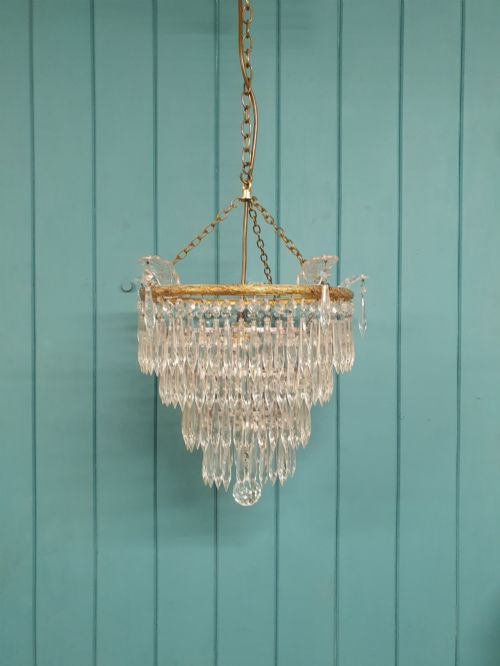
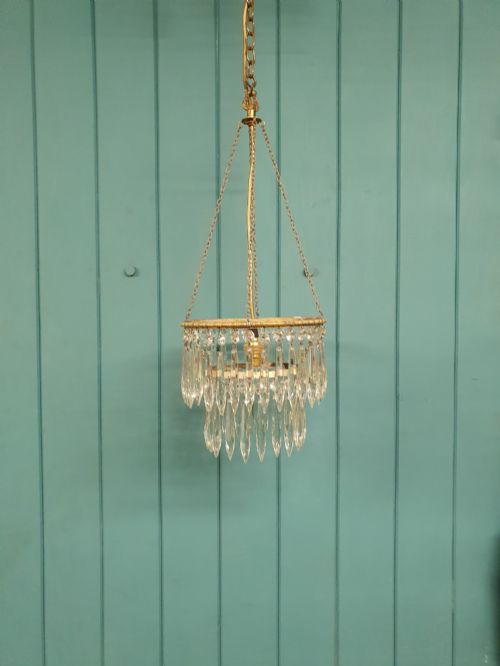
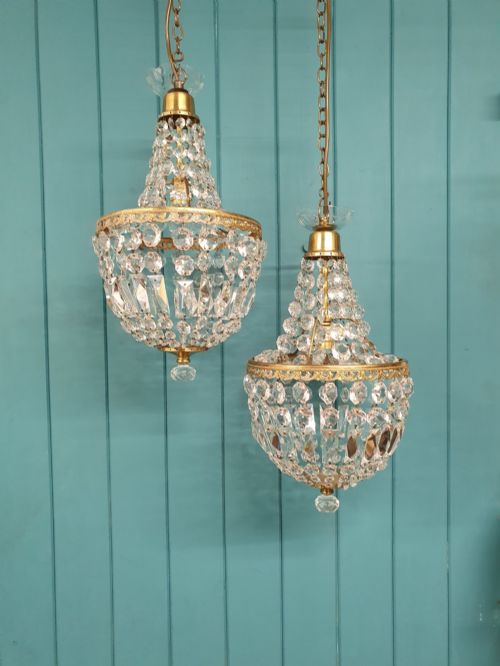
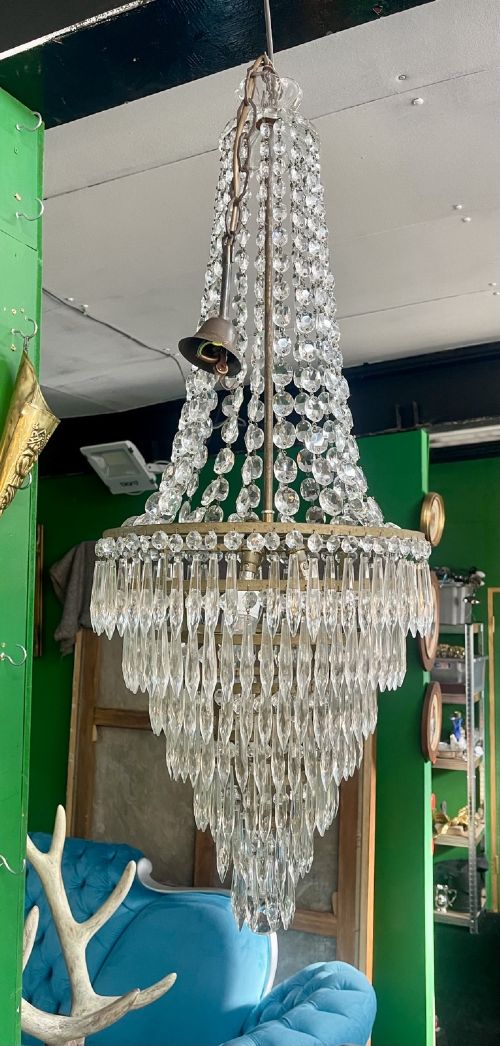
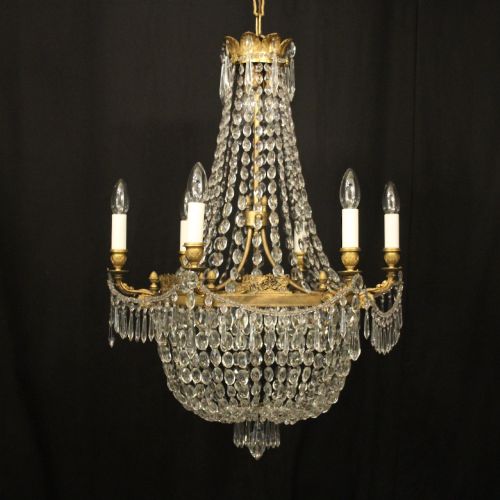
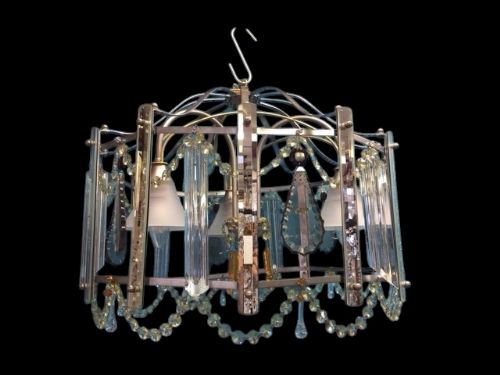
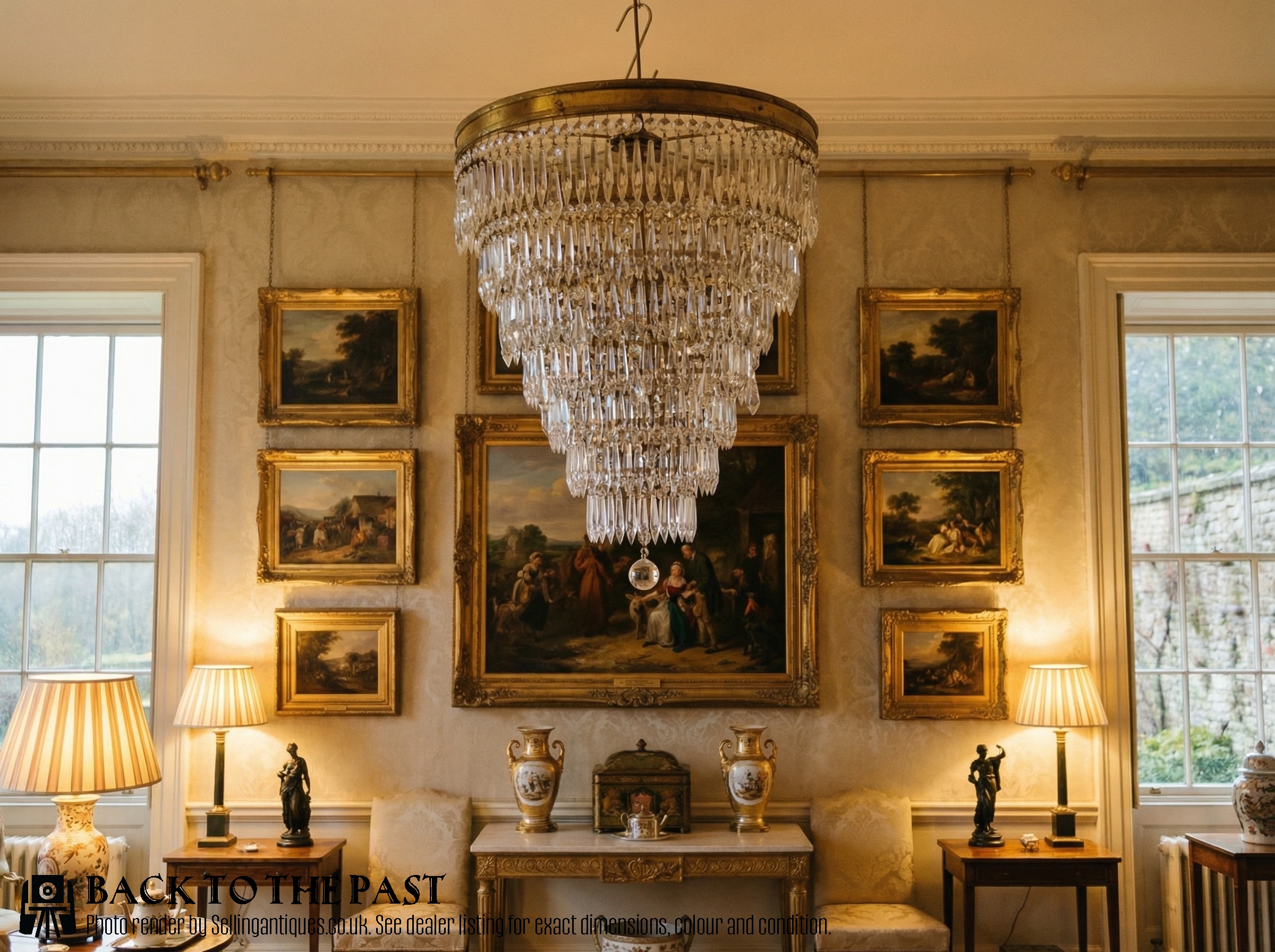
Beyond the plain multi-light frame sit recognisable shapes: Art Deco chandeliers of three, four, five or six glass tiers; birdcage frames with arms sweeping up to a top ring, in counts from five to twenty; tent, bag, basket and waterfall forms. Matching wall lights, plafonieres, girandoles and converted table candelabra travel under the same heading.

Where The Range Splits
Light count does most of the work. The bottom of the range reads Single Light, 3 Light or 4 Light, often a flush ceiling pendant of a few drops. The top is held by twelve-light-and-above pieces, and titles run up through 16, 18, 20, 24, 36 and 41 light ballroom chandeliers.
Frame and finish sort the rest. Gilded bronze, giltwood and Florentine work cluster high; chrome frames and undressed crystal-glass pendants sit at the bottom. Named regional and period styles carry weight too, with Florentine, Genoa, Empire, Louis Revival, Venetian and Bohemian labels falling in the middle and upper reaches.
Then scale and multiples. Stated diameters in the descriptions run from six inches to forty-two, tier counts from two to seven, and the word large appears in a good number of titles. Pairs occupy much of the upper range, and a set of six fourteen-light ballroom chandeliers has sold together.
Antique Crystal Chandeliers Retail Price Guide 2026
Typical UK retail prices for crystal chandeliers, calculated from the Sellingantiques database of over a million retail prices indexed since 2003. This retail price guide relies exclusively on Sellingantiques data; no external sources or auction records are used, so the figures do not describe the wider market.
The widest stated diameter on Sellingantiques is 42 inches, for a pair of two-tier cut-glass chandeliers. The smallest measured pieces are 6 inches across.
The Antique Crystal Chandeliers Glossary
- Light / arm / branch
- The number of lamp holders, given in nearly every title. 3 Light, 8 Arm and 12 Branch all mean the same kind of count.
- Tier
- A stacked horizontal ring of glass. Three- and four-tier examples are common in Art Deco frames, and five and six tiers appear.
- Gilded bronze / gilt brass
- The two commonest frame descriptions in this category. Dealers use gilt and gilded interchangeably.
- Birdcage
- A frame whose arms sweep up and over to a top ring, forming a cage around the centre. Arm counts run from five to twenty.
- Tent and bag
- Chains of drops swagged down into a rounded bag below, usually under a tented upper section. Waterfall describes drops hung in dense falling rows so the glass streams downward.
- Plafoniere
- A close-mounted or flush ceiling fitting rather than a hanging one. Electrolier and gasolier are older words for a chandelier made for electricity or converted from gas.
Antique Crystal Chandeliers: Frequently Asked Questions
How many lights do these chandeliers usually have?
The count is stated in nearly every title, and six and eight lights are what a buyer meets most often. Three- and four-light fittings are common at the smaller end, along with single-light flush pendants.
At the other extreme, 16, 18, 20, 21, 24, 36 and 41 light ballroom chandeliers have all been listed on Sellingantiques.
What period are most of them from?
The dated field runs from 1800 to 1950, but the weight is interwar. Of the listings with a clean year, the 1920s and 1930s together account for the great bulk.
Nineteenth-century material is thin and loosely dated. A number of listings say only 19th Century, with a scattering in the 1880s and 1890s.
Edwardian and Victorian, when they appear, work as style labels rather than fixed years.
Where do antique crystal chandeliers come from?
France and Italy account for the overwhelming share. French appears in roughly half of all titles, Italian in something over a quarter, and French gilded bronze is the single most repeated description.
Italian work includes Florentine and Genoa pieces, and Marie Theresa frames turn up throughout.
Swedish, Russian, Venetian, Bohemian and Czech attributions are the real scarcities, appearing once or twice against hundreds of French and Italian ones.
Are the frames always metal?
Gilded bronze and gilt brass cover most of them, and bronze alone appears in around a quarter of titles.
Giltwood frames come up in Florentine and Genoa work. Toleware, wrought iron, chrome and silvered metal each appear as well.
Does coloured glass turn up in this category?
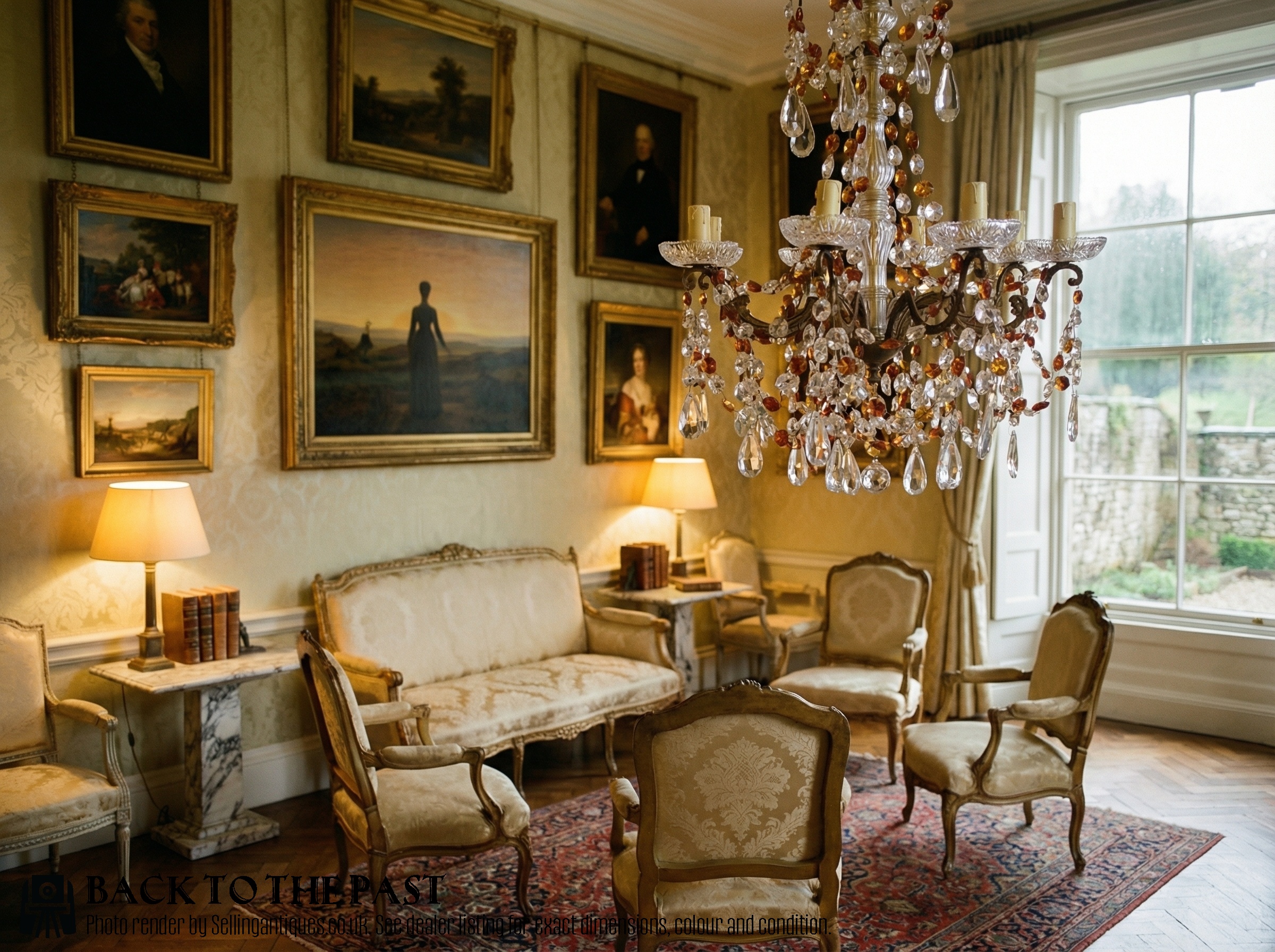
It does, though it stays uncommon. Amber, amethyst, cobalt, turquoise, cranberry, red and blue crystals each appear in a handful of titles.
More unusual still are the chandeliers hung with coloured glass fruits, grapes, apples and pears among them.
What unusual forms show up?
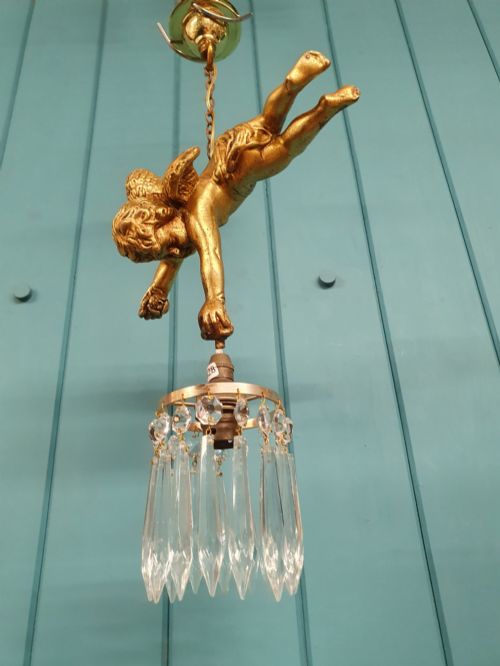
Alongside the standard frames, the archive holds a galleon chandelier, a pod chandelier, a swan-style chandelier and a cherub gasolier, each surfacing once.
Purse chandeliers and converted table chandeliers appear too, as do wall chandeliers made to match a ceiling piece.
The highest-priced record is a monumental Art Deco chandelier removed from a named London building.