


Antique Sconces
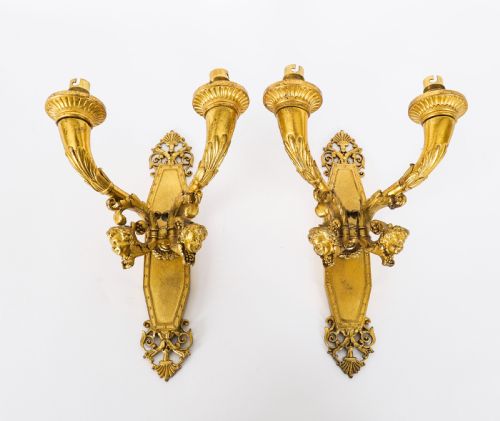
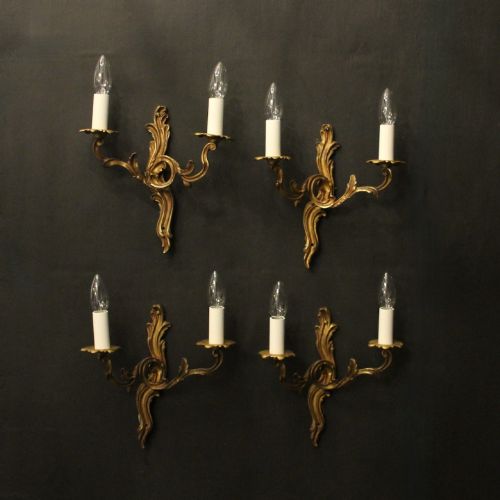
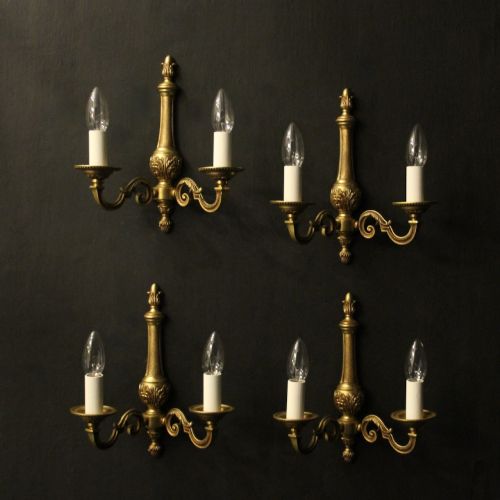
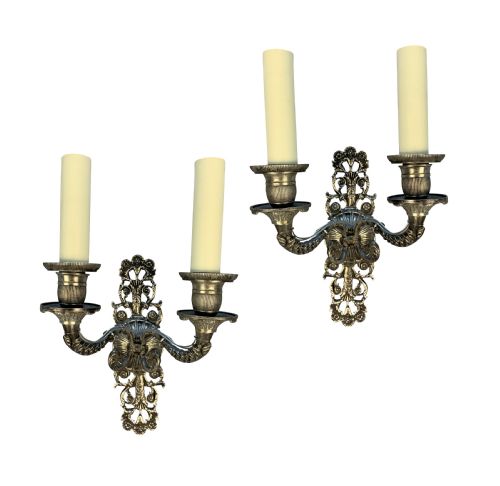
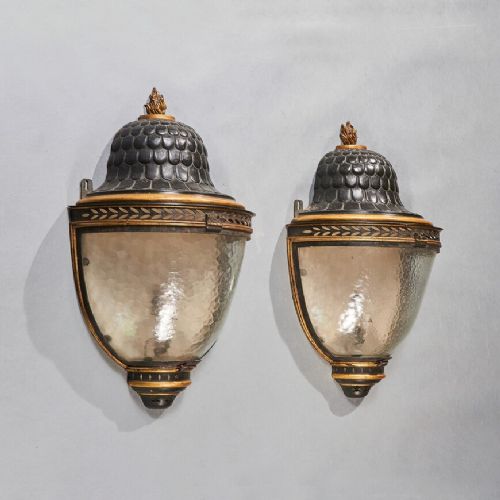
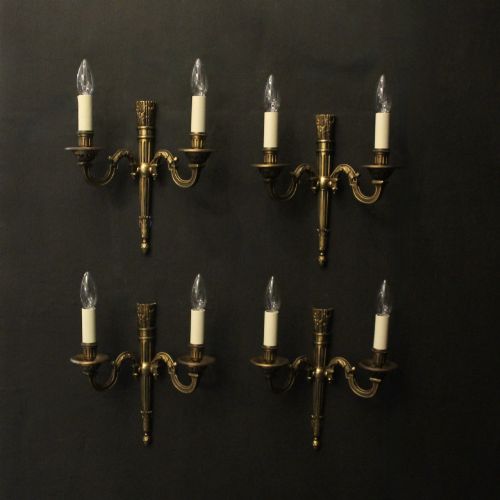
A sconce is a light fixed to the wall, a backplate carrying scrolled arms with candle nozzles or bulb-holders, made so a room could be lit from its walls rather than its tables.
What Are Antique Sconces?
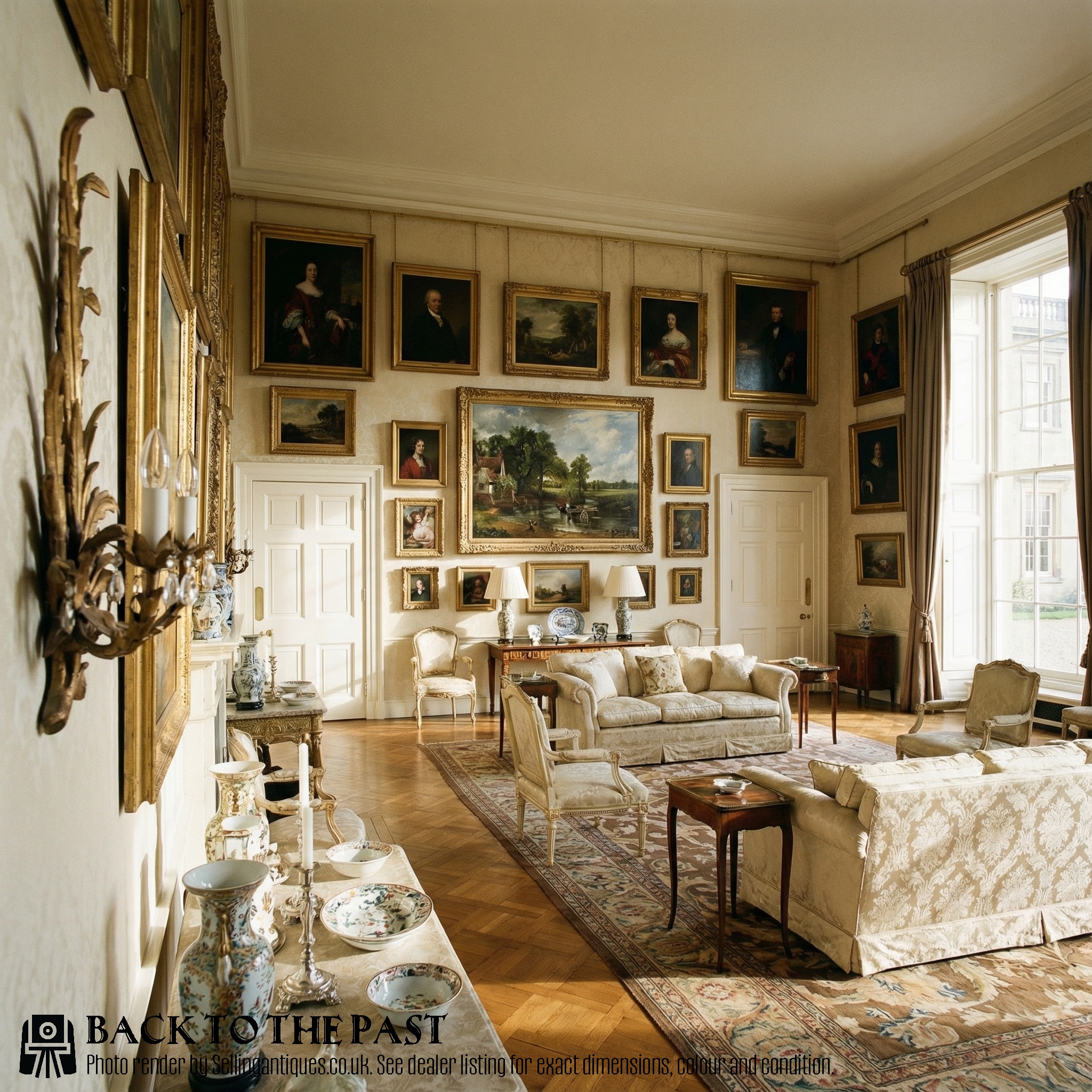
The form began as a candle-holder fixed to a wall, sometimes against a mirrored back so a few flames went further. From the later nineteenth century the same brackets were made or adapted for gas and then electricity, which is why a wall light still looks like a candle branch long after the candle stopped being the point.
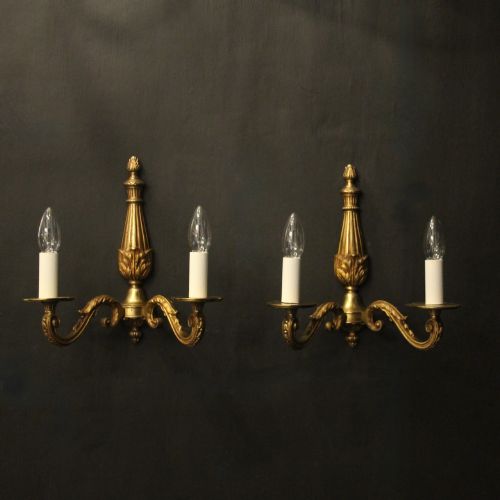
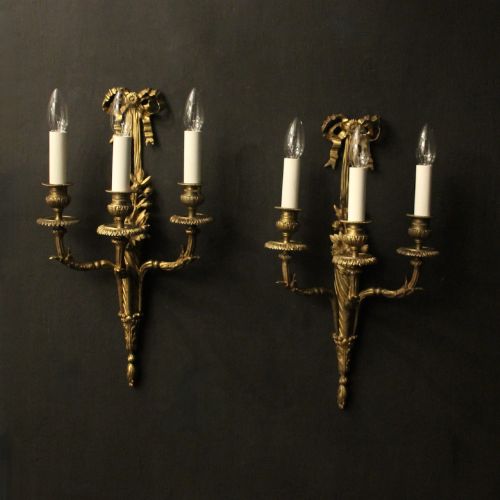
The listing you are most likely to meet is a pair of French twin-arm wall lights in gilded bronze or gilt brass. The word wall appears in 834 of 986 titles and pair in 684, French in 476. Where arm counts are stated, twin arm outnumbers triple arm. Pairs are so much the norm that a single sconce is usually flagged as single in the title, and sets run to three, four, six, seven and, once, eight.
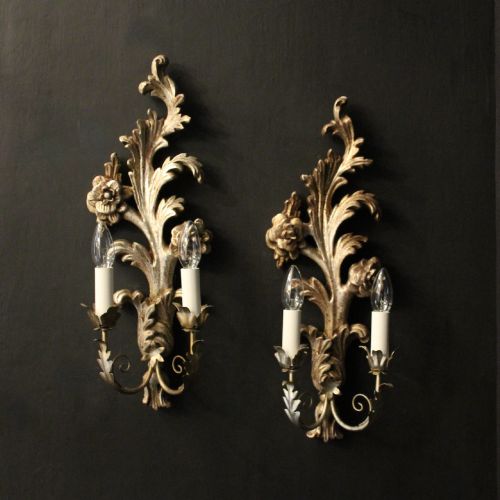
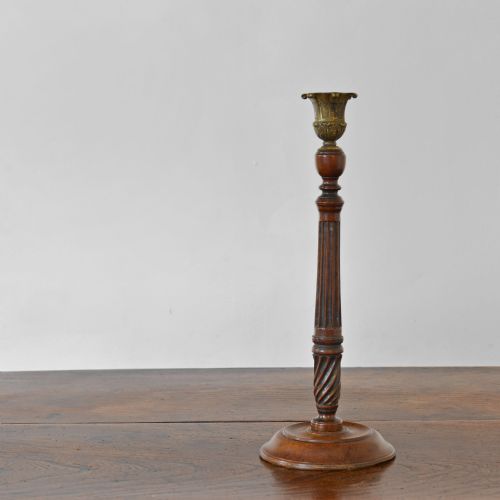
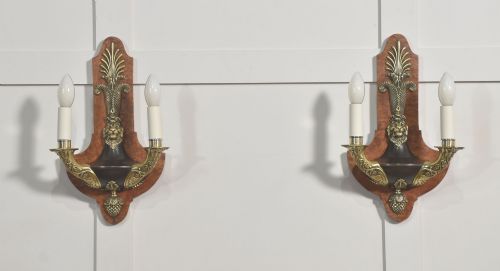
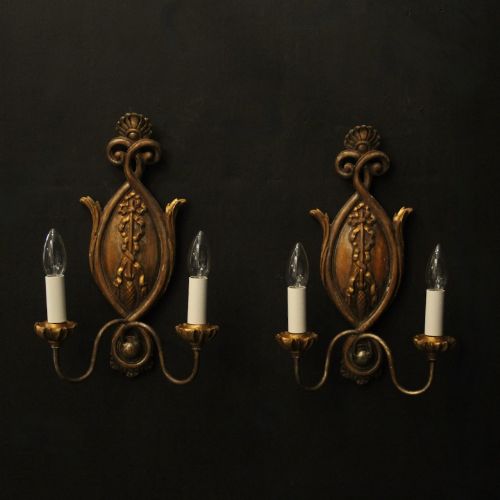
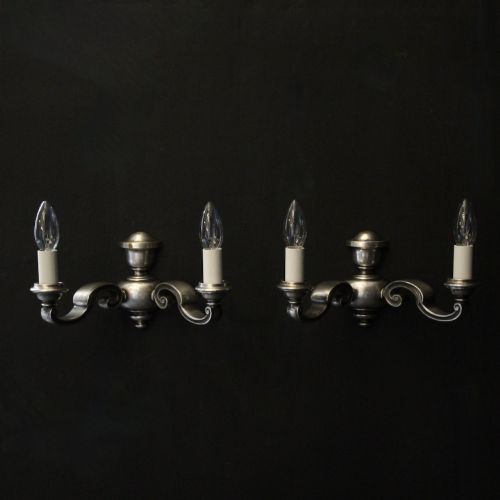
Around half the category sits in that French gilded-metal branch, with ormolu and gilt bronze recurring toward the top of the range. Behind it come brass and copper candle sconces, wall brackets and half-lanterns, then carved and gilded wood: giltwood, Florentine and Italian polychrome. A separate 1930s Art Deco group works in chrome, glass, Bakelite and Catalin, with clam shells, clouds, crescents, flames, trumpets and cinema globes. Candlesticks, chambersticks and candelabra also turn up under the same heading.
Dating runs from 1750 to 1940, and 573 listings carry a year. The commonest date given is the vague nineteenth century, on 243 listings, so a quarter of the category is placed within a hundred years rather than a decade. Where decades are stated they cluster in the 1930s and 1920s. Eighteenth-century pieces are scarce, and 163 different dealers have handled sconces on Sellingantiques, roughly 99 a year.

Where The Range Splits
Material sets the floor and the ceiling. Gilded bronze and ormolu carry the high end, and plain or plated brass sconces and brackets sit at the bottom. Giltwood is its own case: carved, gessoed and gilded rather than cast, and it turns up throughout the middle and, in Venetian and Lombardy examples, at the top.
Then it is arithmetic. More arms and more lights push a pair upward, and five-light and five-arm examples appear well up the range while single-arm sconces sit low. Set size does the same work: fours and sixes cluster at the top, pairs are the norm, singles are below. Scale counts too, with large in 78 titles and the monumental pieces high in the range.
Ornament separates otherwise similar pairs. Modelled figures and animals push against plain scrollwork, and the recurring subjects are cherubs and putti, eagles, lion and ram masks, mermaids, panther heads and Bacchus. The stranger corners of the category live here as well: hanging bat sconces, a carved oak gargoyle, winged horses, Indian brass cobra candle lamps.
Retail Price Guide 2026
Typical UK retail prices for sconces, calculated from the Sellingantiques database of over a million retail prices indexed since 2003. This retail price guide relies exclusively on Sellingantiques data; no external sources or auction records are used, so the figures do not describe the wider market.
19th Century is the date given most often on Sellingantiques for sconces, with the 1930s next and the 1920s third.
The Antique Sconces Glossary
- Wall light
- The same object described by function, and the commonest phrasing in this category, with 358 titles reading wall lights. Sconce appears in 85, most often as wall sconce.
- Arm or branch
- The projecting scrolled stem that carries a candle nozzle or bulb-holder. Twin arm appears in 86 titles, triple arm in 49, branch in 40.
- Gilded bronze
- Cast bronze with a gilt surface, and the single most-named material combination at 128 titles. Ormolu, in 54 titles, describes gilded brass or bronze mounts in the French manner and concentrates toward the top of the range.
- Giltwood
- Carved wood gessoed and gilded instead of cast metal, named in 48 titles, often alongside Florentine or Italian. Polychrome means painted in several colours, usually on the carved Italian pieces.
- Girandole
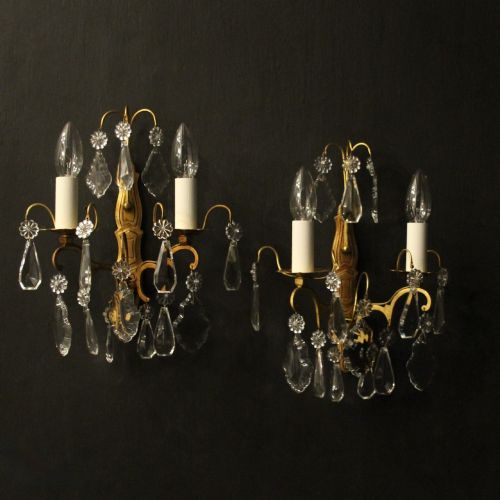
- A candle sconce with a mirrored or glass-hung back, so the flame is doubled by reflection. A small population, but a distinct one.
- Appliqué
- The French term for a wall light, used in a handful of titles. Toleware, or tole peinte, is painted sheet metal and turns up across the period.
Frequently Asked Questions
Are sconces sold in pairs?
Almost always. Pair appears in 684 of 986 titles, and the pair is the working unit of sale in this category.
Sets go further, to three, four, six, seven and in one case eight. A lone sconce is usually described as single in the title, which tells you how unusual it is.
What are antique sconces normally made of?
Gilded bronze and gilt brass dominate, with gilded bronze alone named in 128 titles and ormolu in 54. Plain brass and copper make up a large second group, covering candle sconces, wall brackets and half-lanterns.
Carved and gilded wood forms a smaller branch, described as giltwood, Florentine or Italian polychrome. The 1930s group works in chrome, glass, Bakelite and Catalin instead.
How old are most of these?
The dated field runs from 1750 to 1940. Nineteenth century is the commonest date given, on 243 listings, and titles reading 19th outnumber those reading 20th by a wide margin.
Where a decade is stated, the 1930s and 1920s are the largest buckets, then the 1900s and 1910s. Eighteenth-century dating is scarce, on 14 listings.
Victorian, Edwardian and 18th Century are used as loosely as nineteenth century is.
Why do so many sconces come from France?
France is far ahead of every other origin named, on 476 titles, and French pair alone accounts for 193. Gilded bronze, gilt brass and ormolu in the French manner are the backbone of the category.
Italy follows at a distance, with the Florentine workshops named separately. Dutch, Swedish, Venetian, Bohemian and Indian pieces surface only once or twice.
Does rewired mean something specific in these titles?
It appears in a number of titles to show the fitting has been made ready for use. Beyond that word, the listings say little about wiring.
Gas fittings turn up in only a handful of titles, so gas is a curiosity in this archive rather than a strand running through it.
What forms turn up besides twin-arm wall lights?
Candle-only sconces, girandoles with mirrored backs, half-lanterns, porch and street lanterns, and plain wall brackets. Candlesticks, chambersticks and candelabra also sit under the same heading, and that fringe is larger in current stock.
The Art Deco group brings shapes seen nowhere else in the category: clam and scallop shells, clouds, crescents, flames, trumpets, strip lights, skyscrapers and cinema globe shades.