


Antique Wall Lights
Wall-mounted light fittings, brackets, sconces, appliques and half-lanterns, made to throw light off a wall surface, and sold overwhelmingly in pairs.

What Are Antique Wall Lights?
Wall brackets developed to lift candlelight off a wall, often with a back plate or a mirror behind to throw it further. Gas and then electricity kept the form in production through the 19th and early 20th centuries, and plenty of earlier candle patterns were converted or copied for the new fuels.
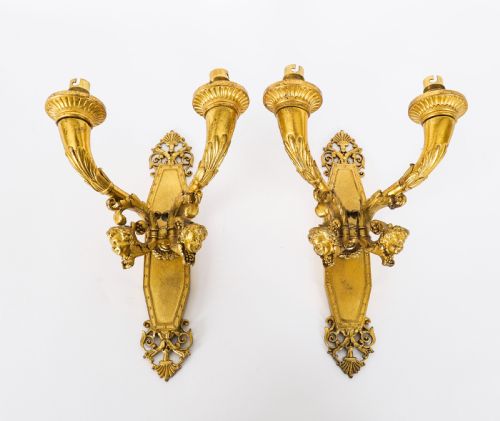
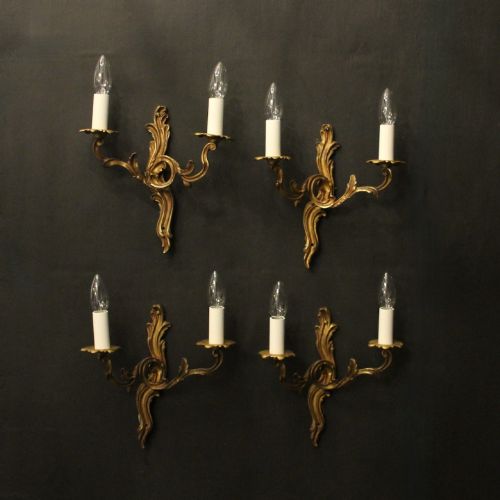
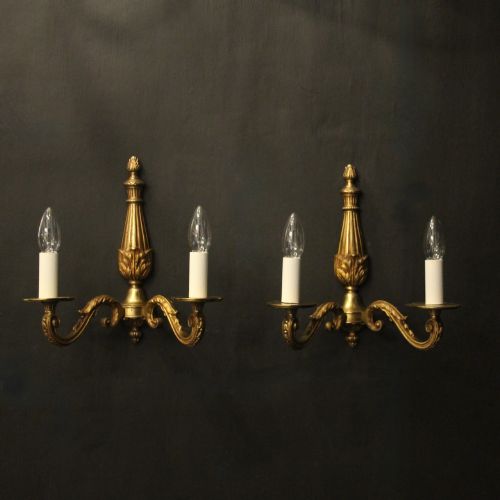
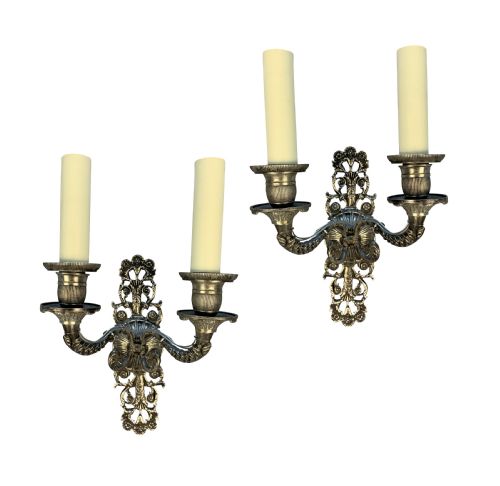
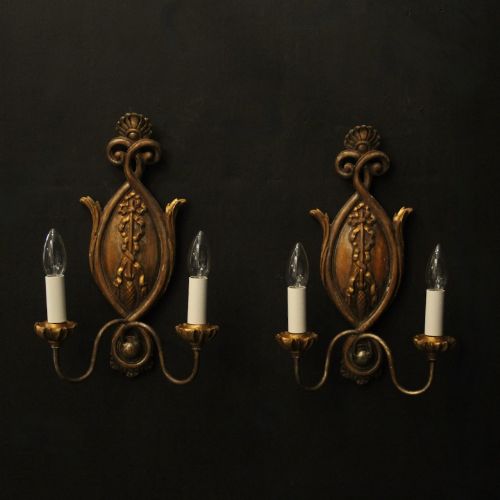
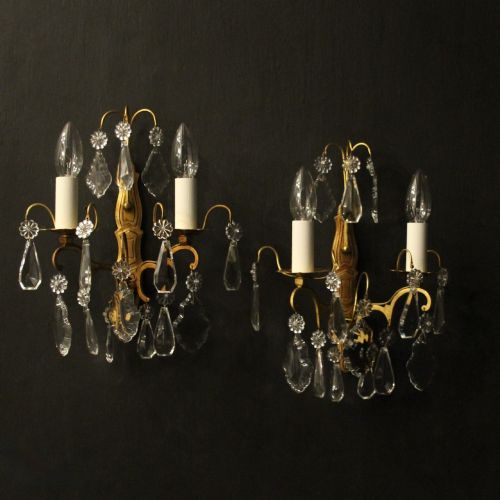
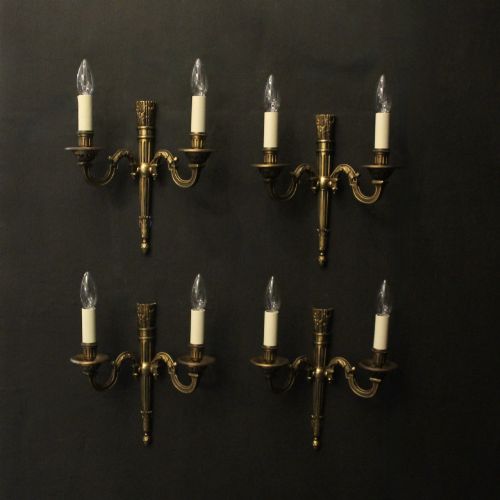
The listing you are most likely to meet is a pair of French gilded twin-arm wall lights of the 1920s or 30s. Two-thirds of titles say pair, well over half say French, a third say gilded, and twin arm turns up in around one title in five. Singles are the exception rather than the rule, and sets of three, four, six, seven and eight all appear.
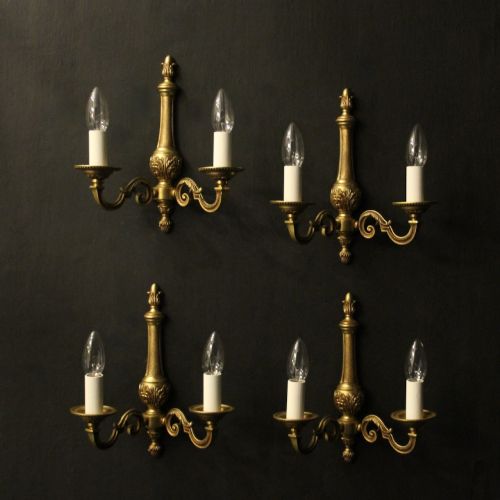
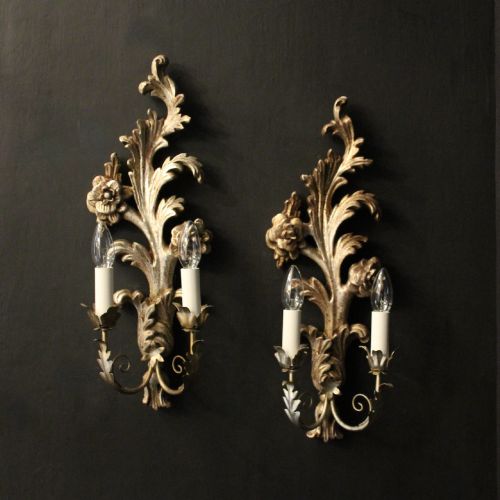
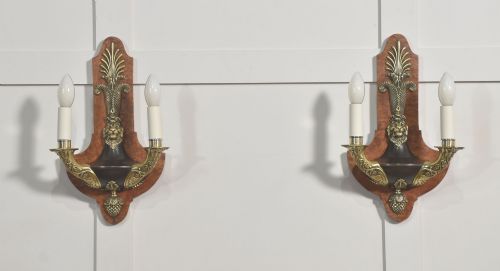
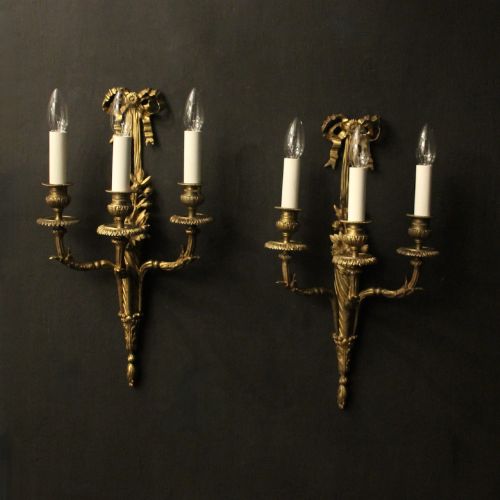
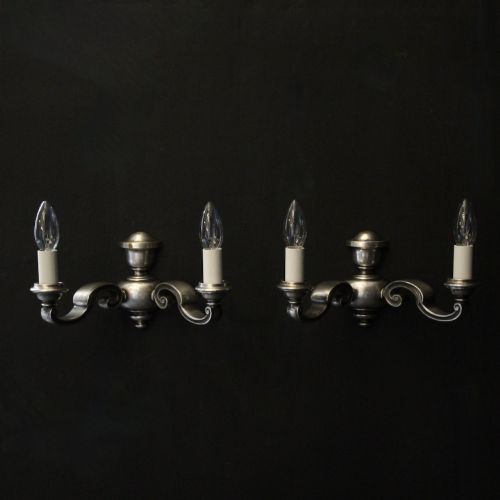
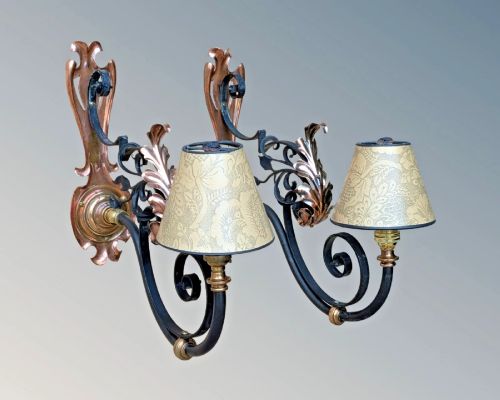
Beyond the gilded French sconces, four other groups run through the category. Bronze and gilded-bronze appliques account for about a fifth. Art Deco fittings in chrome, bakelite and moulded glass, including clamshell, skyscraper and cinema forms, sit under a tenth and cluster in the 1930s. Carved giltwood wall lights, Italian or specifically Florentine, are a smaller group again, as are English brass, silver-plate and lantern-form brackets.
Dating is the dealers' own. The stated range runs 1800 to 1950, but nearly four in five of the clean-year listings fall in the 1920s and 30s. Another few hundred are given only as 19th century, which is a bucket rather than a year, and named-reign labels add more of the same. A handful of titles claim 18th-century dates, and those are isolated one-offs.
Top And Bottom
Set size does more work than anything else. Singles sit at the bottom of the range, pairs are the middle ground, and sets of four and six run consistently at the top. Arm count moves in the same direction: single-arm brackets are the cheapest of the sampled titles, twin and triple arm the norm, and the four-, five- and six-arm examples appear only at the upper end.
Material separates the range too. Bronze, gilded bronze and ormolu gather toward the top; plain brass and small pairs gather at the bottom. Scale matters alongside it, with large, huge and monumental descriptions attached to the biggest pieces, and large on its own in nearly two hundred titles.
Hand-decoration is the other lift. Carved giltwood, much of it Italian or Florentine, is a small share of titles but sits noticeably high in the range, and the same is true of polychrome painting and toleware. A minority of titles advertise the fitting as rewired, though nothing in them describes the work done.
Retail Price Guide 2026
Typical UK retail prices for wall lights, calculated from the Sellingantiques database of over a million retail prices indexed since 2003. This retail price guide relies exclusively on Sellingantiques data; no external sources or auction records are used, so the figures do not describe the wider market.
Two-thirds of wall light titles on Sellingantiques say pair. Singles are the exception, and sets of three, four, six, seven and eight all appear.
The Antique Wall Lights Glossary
- Sconce
- A wall bracket carrying one or more lights. The plural turns up in several hundred titles, the singular in far fewer, since the pieces come in pairs.
- Twin arm / triple arm
- The number of branches the bracket carries. Twin arm is the commonest count in titles, triple arm next, with single arm well behind.
- Gilt brass
- Brass with a gold finish, written either way round in titles, as gilt brass or gilded brass.
- Ormolu
- Gilded bronze in the French manner, and one of the terms that clusters toward the upper end of the range.
- Giltwood
- Carved wood, gessoed and gilded, usually paired in titles with Italian or Florentine.
- Half lantern
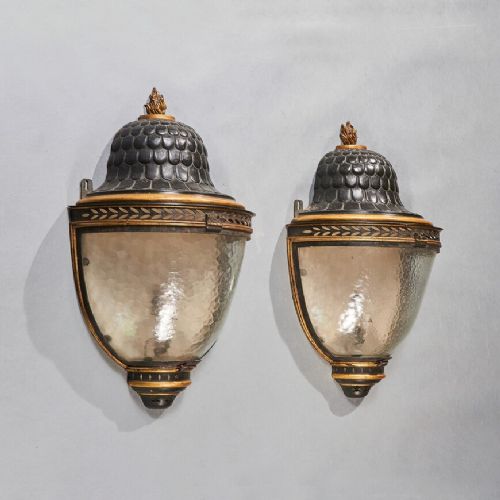
- A flat-backed lantern that sits against the wall, sometimes described as a convex half lantern. Copper, tin, brass, toleware and wrought iron all appear.
Frequently Asked Questions
Why are wall lights nearly always sold in pairs?
They were made and fitted in pairs, one either side of a chimneypiece, a mirror or a doorway, and they have stayed together. Two-thirds of titles on Sellingantiques say pair.
Only about one title in twenty-five says single. Larger matched sets of three, four, six, seven and eight also come up.
What does rewired mean in a listing?
It is the dealer's note that the fitting has been re-cabled for modern use. A minority of titles carry it, and a smaller handful add that the piece has been PAT tested.
The titles say no more than that. Nothing in them describes what the work involved.
How old are most of these fittings?
The dating given by dealers runs from 1800 to 1950, but it is heavily weighted to the interwar decades. The 1930s and 1920s between them account for nearly four in five of the listings that carry a clean year.
Several hundred more are dated only as 19th century, and Edwardian and Victorian labels add further imprecision. A few titles reach back to the 18th century, one set given as circa 1770, but those are one-offs.
Are Art Deco wall lights common in this category?
They are a real but minority presence, under a tenth of titles, and concentrated in the 1930s. Chrome, bakelite and moulded glass are the usual materials.
Titles name clamshell, skyscraper and tubular forms, along with cinema and odeon fittings.
What are Florentine wall lights?
Carved giltwood brackets, Italian in origin, with Florentine named in a couple of hundred titles across the wider giltwood group. Polychrome painting appears on some instead of plain gilding.
They are well under a tenth of the category. They do cluster toward the upper end of the range.
Do any unusual patterns turn up?
Yes, though only once or twice each. Mermaid and griffin sconces, ram-headed arms, wheatsheaf and rope-and-tassel patterns, lyre forms and spread-eagle giltwood all appear.
Railway carriage and coach lamps repurposed as wall lights come up as well.