
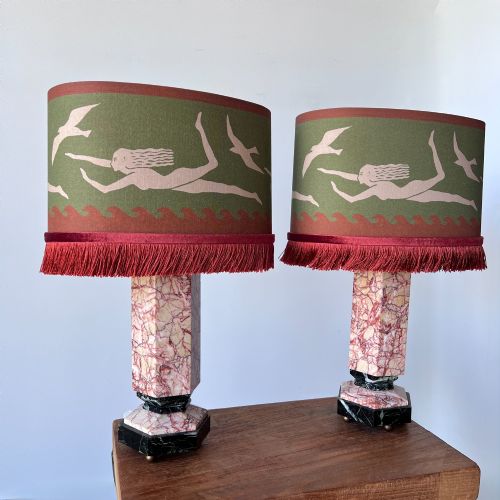
Antique Table Lamps
Electric lamps from the late Victorian, Edwardian and inter-war years, along with older candlesticks, vases and oil lamps rewired to stand on a table.

Antique Table Lamps
Around 397 table lamps are listed on Sellingantiques in an average year, handled by 241 different dealers, which makes them one of the most widely stocked things in the lighting section. Of 3,536 listings, 2,243 carry a clean year, and the dated field runs from 1750 to 1960.
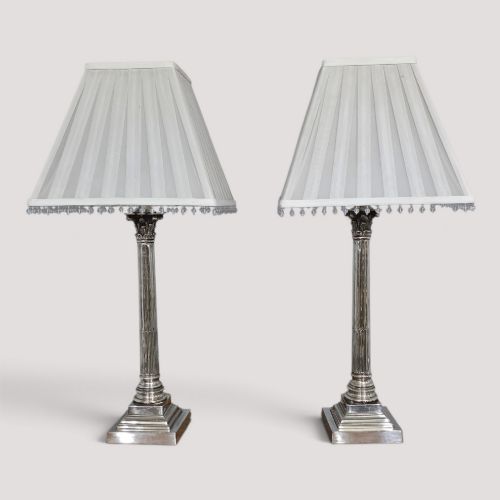
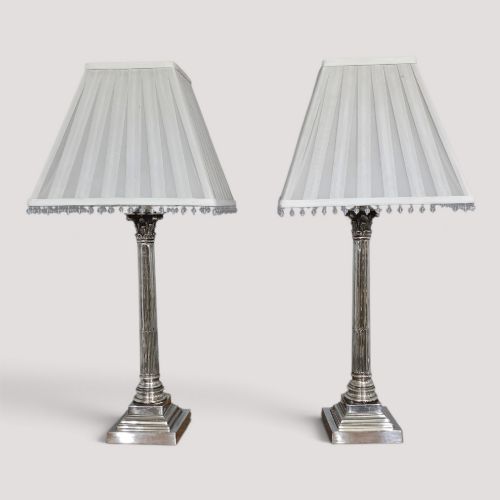
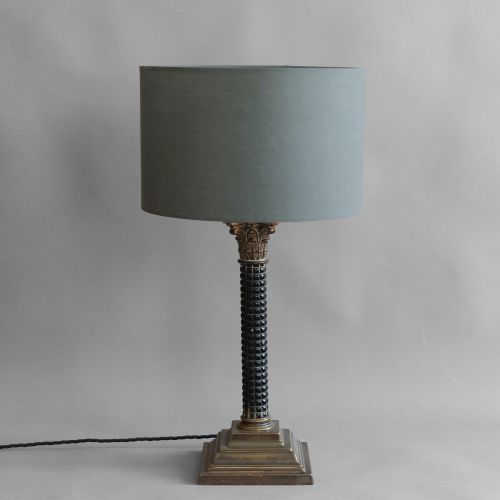
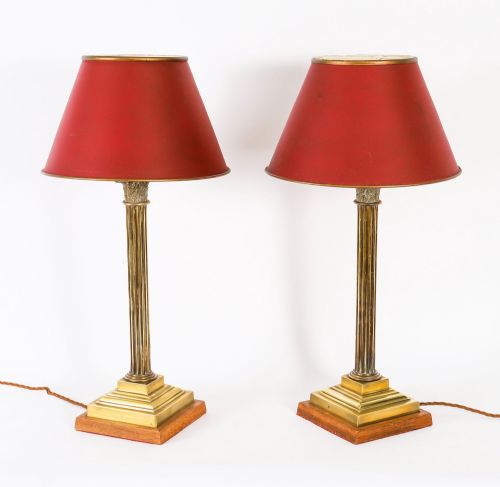
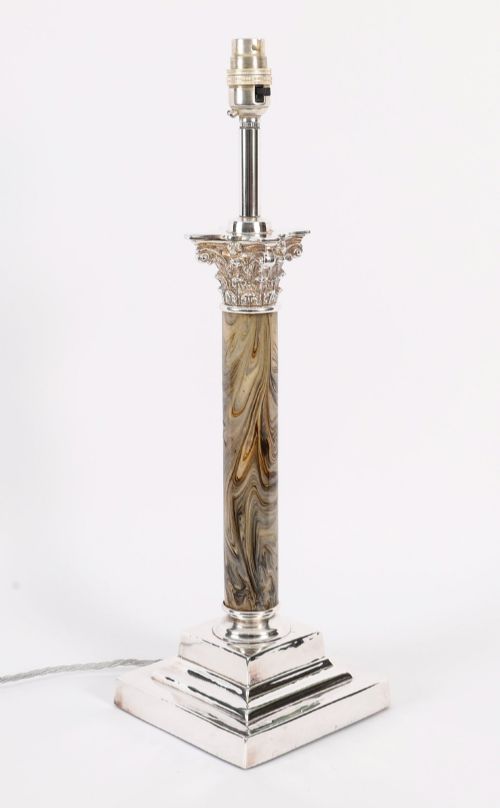
The category is metal first and foremost. Brass appears in 1,134 titles, close to a third of everything, with bronze, silver plate, ormolu, gilt and chrome behind it, and marble, glass, crystal and porcelain making up the remainder. The thing you are most likely to meet is a brass column lamp of about 1890 to 1930, and the Corinthian column is the single most repeated design, named in 291 titles, with reeded, fluted, doric and barley-twist stems behind it.
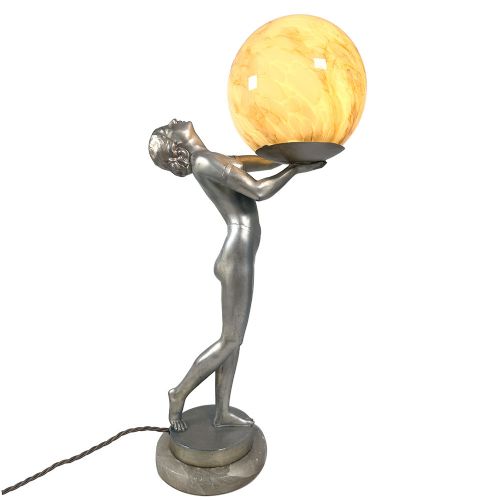
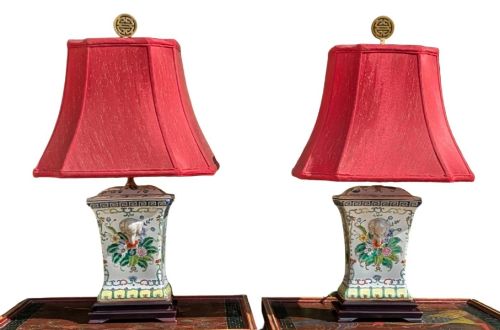
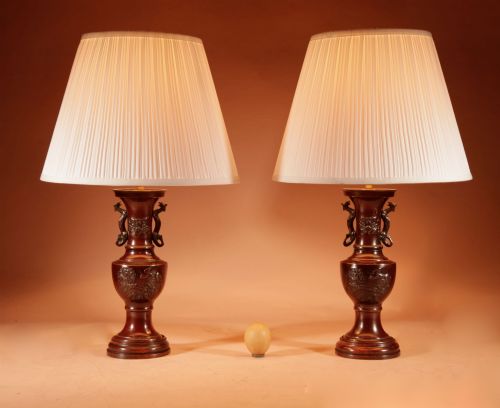
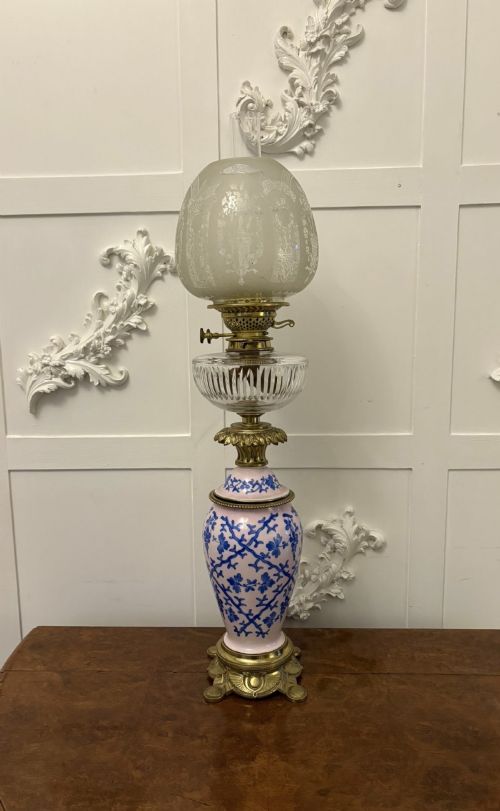
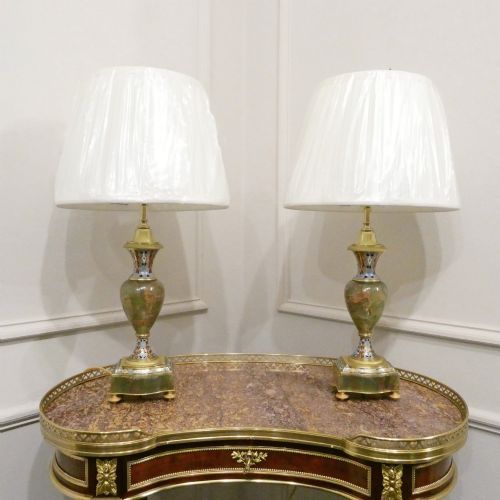
Beyond the brass columns, four smaller streams run through the archive. Art Deco and Art Nouveau lamps in chrome, glass and bakelite account for about a tenth. French gilt bronze, ormolu and marble lamps another tenth or so. Converted Chinese and Japanese vases in famille rose, celadon, Imari, Satsuma and blue and white sit lower by count but concentrate at the upper end. Pullman carriage lamps, gimbal and ship lamps, and adjustable desk and bankers lamps form a small steady trickle.
Dating leans early twentieth century: 641 listings from the 1920s, 512 from the 1930s, 409 from the 1910s, 322 from the 1900s, plus 367 labelled Edwardian. Nineteenth-century pieces are often dated only as "19th Century", a bare label used 500 times, so a good many pre-1900 lamps carry no decade. Pre-1850 dates turn up as one-offs rather than a population.

What Sets Them Apart
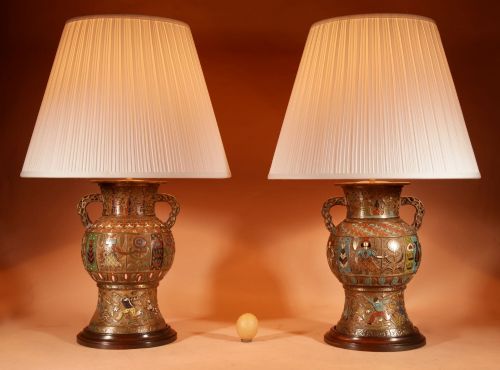
Pairs do the heavy lifting. Almost a quarter of all titles, 883 of them, describe a pair or near pair, and pairs account for nearly every listing at the top of the range. Marble, ormolu, bronze and Chinese vase lamps come two at a time far more often than one.
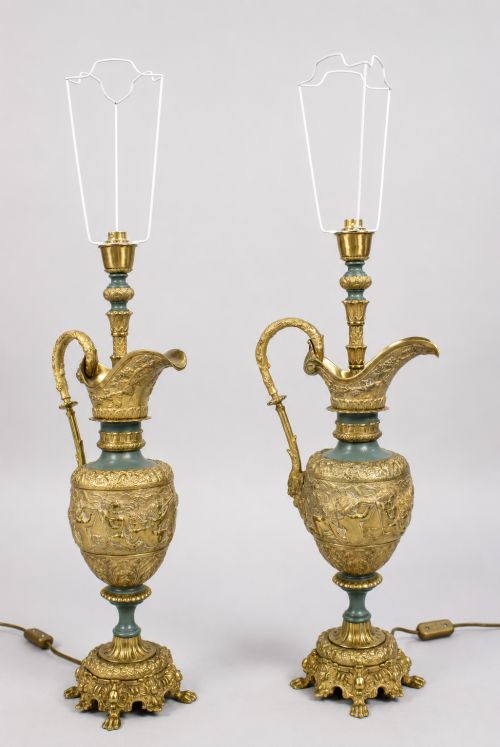
Material sorts the rest. Ormolu, gilt bronze, marble and oriental porcelain cluster at the upper end, while brass spans everything and fills the lower reaches alongside chrome, plaster and bakelite. Silver-mounted lamps are a small group of 230 titles, and those that appear carry assay years as precise as 1899, 1901, 1905, 1906, 1927 and 1928.
Form and scale count for something too. Cast brass and Corinthian columns are used in titles as a mark of quality against plainer reeded and twist stems, and "large" or "tall" appears in a few hundred listings. Shades are another matter: they feature in 4% of titles, so the base alone, or a base with a later shade, is the normal offering.
Antique Table Lamps Retail Price Guide 2026
Typical UK retail prices for table lamps, calculated from the Sellingantiques database of over a million retail prices indexed since 2003. This retail price guide relies exclusively on Sellingantiques data; no external sources or auction records are used, so the figures do not describe the wider market.
The 1920s is the period label used most on Sellingantiques for table lamps, with the 1930s next and 19th century third.
Faraday & Sons·Hinks & Sons·William McGeoch
The Antique Table Lamps Glossary
- Lamp base
- The lamp sold without a shade. Standard practice in this category, since shade is named in only a small fraction of titles.
- Rewired
- Fitted with new flex and fitting. The word appears in 590 titles.
- PAT tested
- Portable Appliance Test, the electrical safety check. It appears in 505 titles, unusually prominent wording for an antiques category.
- Corinthian column
- A lamp stem modelled as a classical column with an acanthus-leaf capital, named in 291 titles. A reeded column has parallel convex mouldings instead of the foliate top.
- Pullman
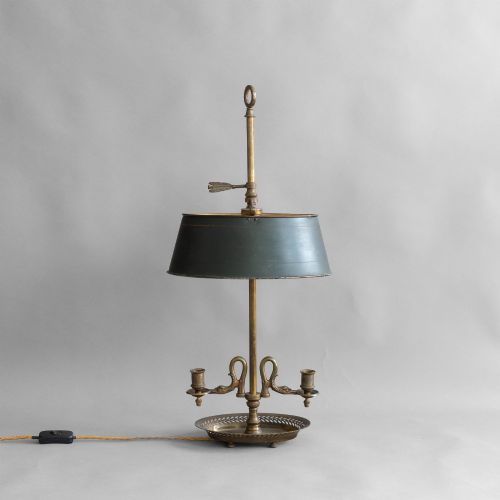
- The adjustable brass pattern associated with railway carriage tables, at 93 listings, roughly one title in forty.
- Ormolu
- Gilded metal mounts and castings, usually on marble, porcelain or glass. Named in 163 titles. Spelter, by contrast, is a zinc alloy used for cast figural bases and patinated to look like bronze.
Antique Table Lamps: Frequently Asked Questions
Which type is most common?
The brass column lamp of about 1890 to 1930. Brass appears in 1,134 of 3,536 titles and column in 401, with the Corinthian version accounting for 291.
Reeded, fluted, doric and barley-twist stems follow behind, and Edwardian and Victorian labels sit across the same span.
Do lamps come with shades?
Usually not. Shade is named in only a small fraction of titles, and the archive sells bases alone or a base paired with a later shade.
That is simply how the category trades on Sellingantiques.
Are pairs common?
Yes. Some 883 titles, almost a quarter of everything, describe a pair or a near pair rather than a single lamp.
Pairs also account for nearly every listing at the top of the range, particularly in marble, ormolu, bronze and Chinese porcelain.
What does rewired mean in a listing?
New flex and fitting. The word appears in 590 titles.
A further 505 say PAT tested, the portable appliance safety check. Electrical wording runs through this category more than most.
Were older objects turned into lamps?
Often. Candlesticks, vases, altar sticks and oil lamps were converted to electricity from the 1880s onward, which is why so many antique lamps are older objects on newer fittings.
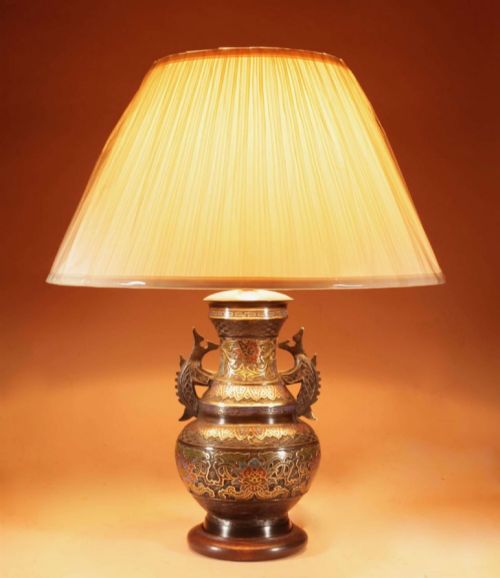
Converted Chinese and Japanese vases are the clearest group, with famille rose, celadon, Imari, Satsuma and blue and white all recurring, many titled as vase or lamp.
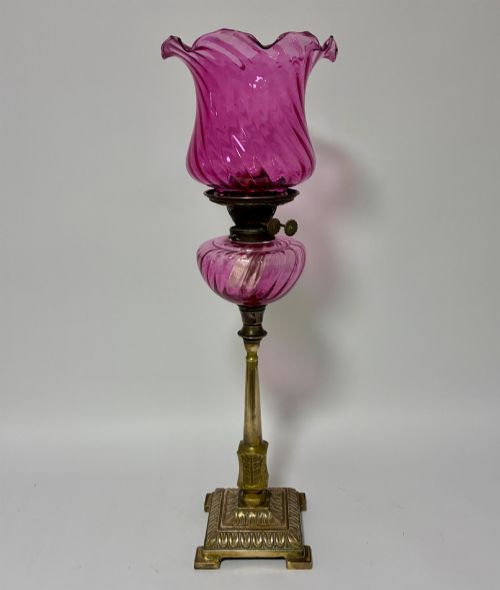
Oil appears in 144 titles, a reminder of what these shapes replaced.
What unusual lamps have turned up?
Kashmiri papier-mâché lamps form a pocket of 91 titles, and mushroom-domed cut-glass lamps another 72.
The true one-offs include a Rolls Royce car inspection light, a Cornish serpentine lighthouse, a Scottish tea-canister lamp, a billiard light and an oak newel-post lamp.