

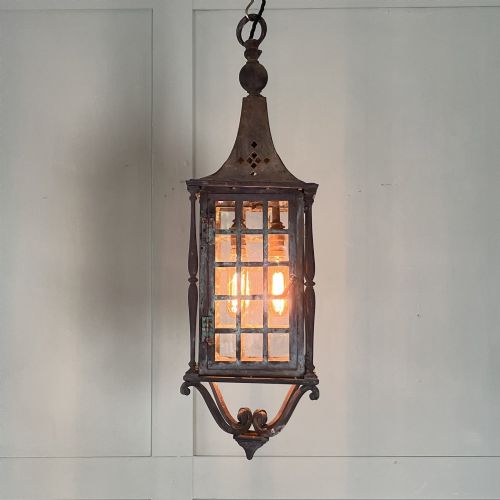
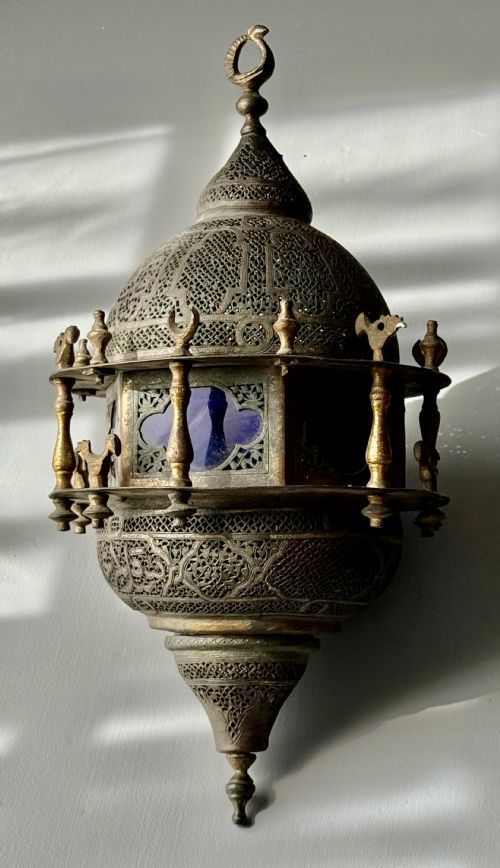
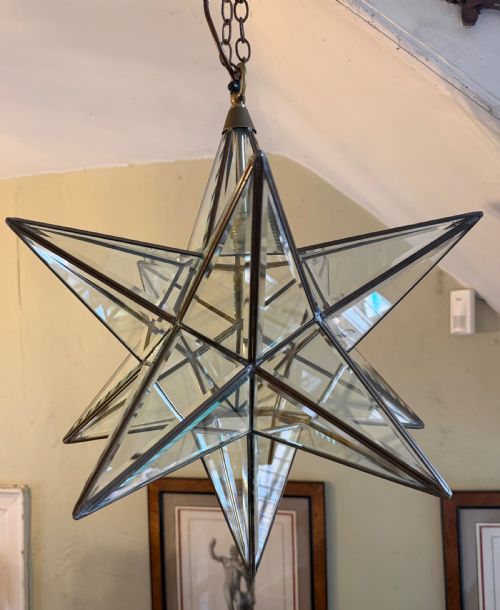
Antique Lanterns
A glazed lantern is a metal frame holding glass panels, built to shelter a flame from draught and now wired for electricity, hung in halls, stairwells and porches.
Antique Lanterns
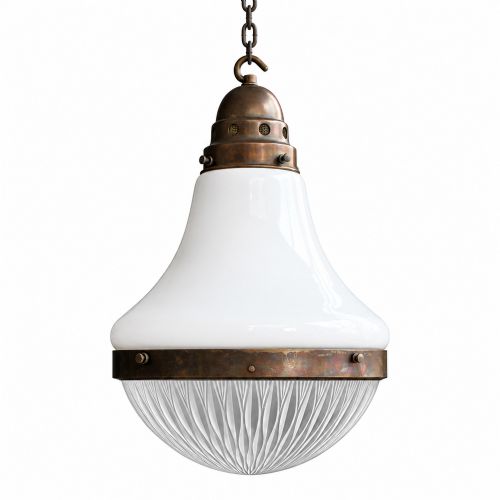
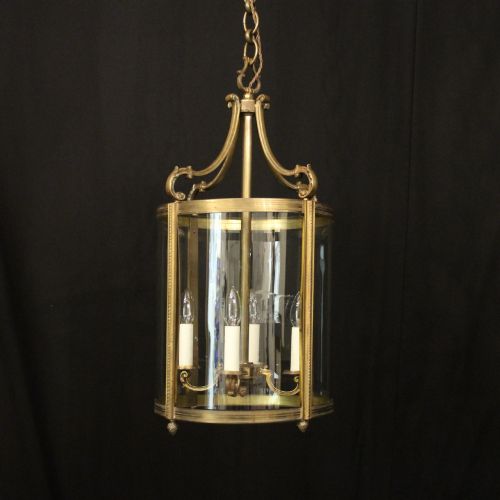
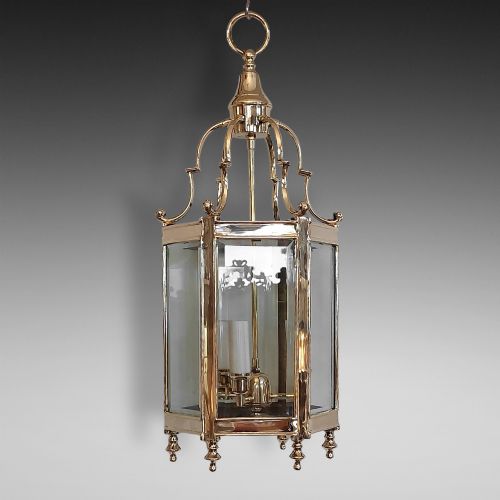
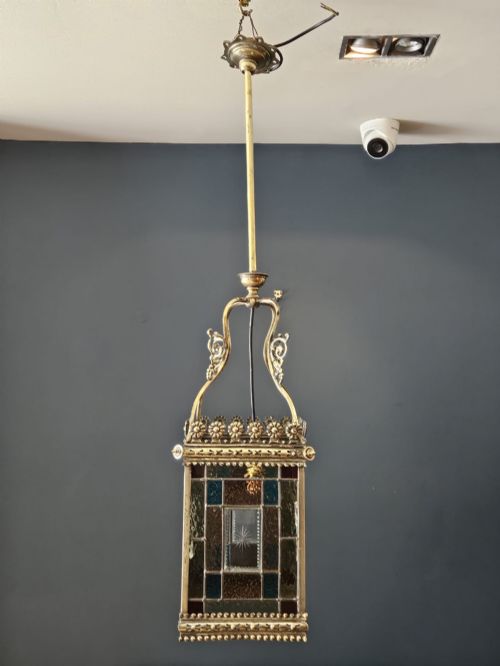
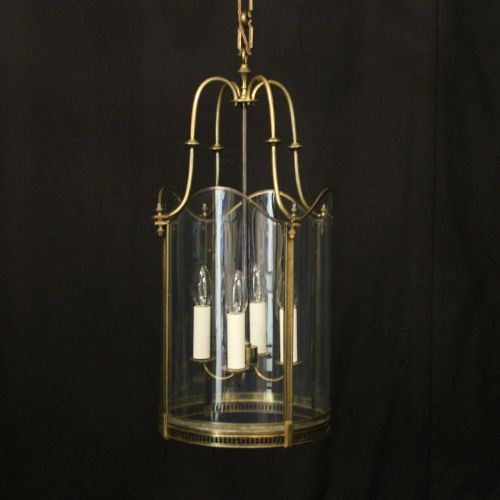
A lantern here means a framed, glazed light fitting: a cage of brass, gilded bronze, copper, wrought iron, steel or painted sheet metal holding flat, bevelled, convex, cut, opaque or stained glass. Dealers describe them by frame metal, finish, number of lamp-holders and glass shape rather than by maker, and titles follow that formula closely.
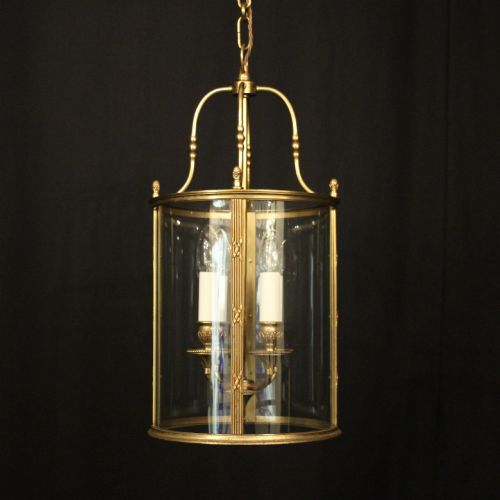
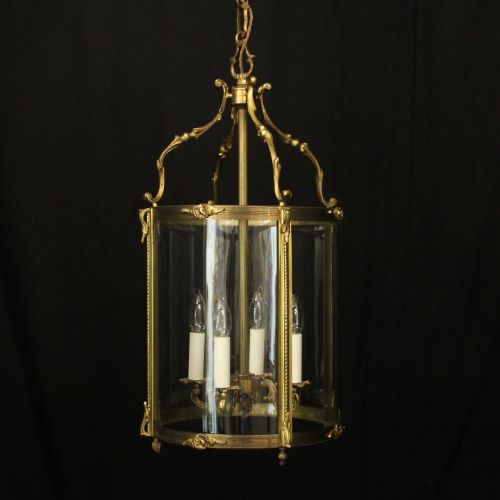
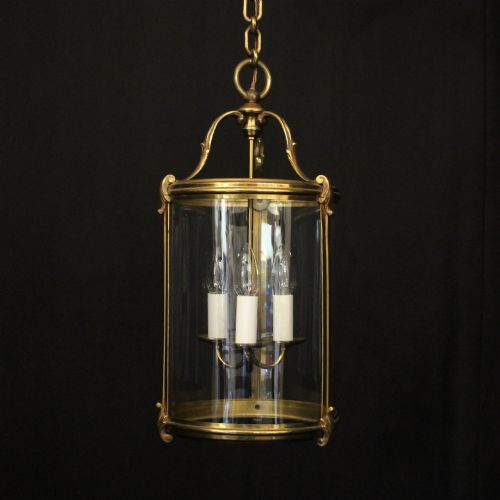
The form you'll meet most often is a French hall lantern, gilded or brass, with three lamp-holders and convex panels. "French" appears in nearly half the titles on Sellingantiques and "hall" in about a third, and the string "French Gilded Triple Light Convex Antique Hall Lantern" repeats verbatim dozens of times across the range.
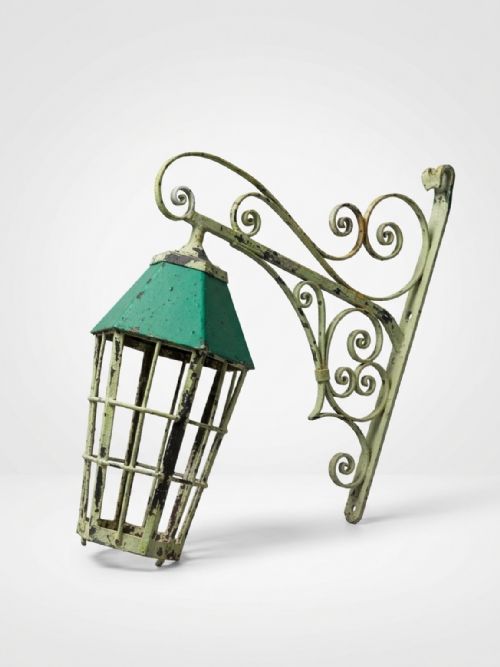
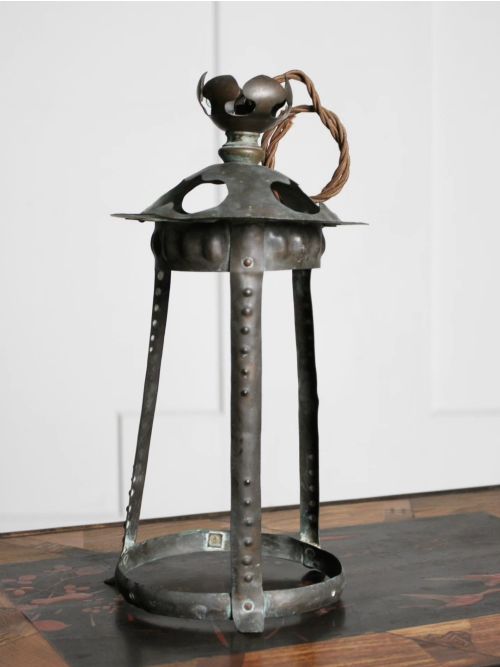
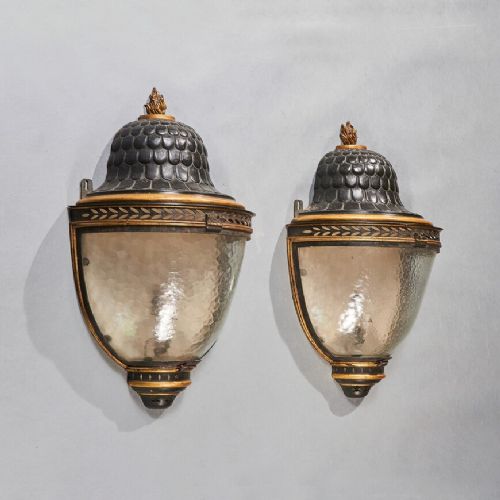
Behind that sit English and Arts and Crafts hall and porch lanterns, often hammered copper with leaded or stained panels, and a group of wall and half lanterns cut in section to sit flat against plaster. Pairs are a habit of the trade, with two offered in roughly one in six listings and the occasional set of three.
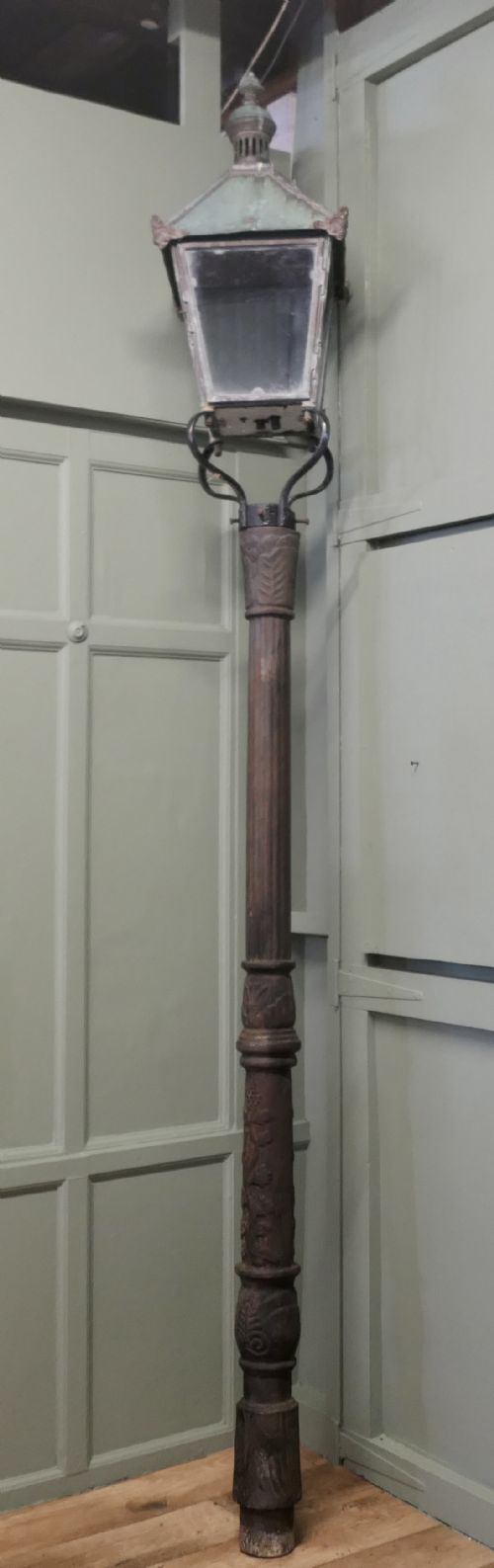
A smaller strand kept the lantern name without the domestic job: ship's, railway, street, carriage, coaching and oil lanterns, mostly at the lower end. Dating leans hard on the twentieth century, the 1920s and 1930s together making up well over half of listings with a clean year, while a bare "19th Century" tag is a decade-wide bracket rather than a date.

Where The Range Sits
Metal and finish set the floor and the ceiling. Gilded bronze concentrates towards the top of the sampled range, while small lanterns in plain, aged or polished brass sit at the bottom. Glass does similar work: convex, bevelled, cut and stained panels all read above plain glazing.
Count the lights. Single and twin fittings sit low, and four, five and six light bodies cluster high. Scale pulls the same way, stated loosely rather than measured, with "Large", "Huge", "Massive", "Monumental" and "Oversized" recurring at the top and "Small" and "Petite" at the bottom, down to 5-inch porch lanterns.
Number matters as much as quality. A pair or a set of three sits well above comparable singles, which is why 300 titles offer two. Only a small share of titles mention rewiring, a few of those adding that the fitting has been PAT tested, so the phrase is a stated feature rather than a norm.
Antique Lanterns Retail Price Guide 2026
Typical UK retail prices for lanterns, calculated from the Sellingantiques database of over a million retail prices indexed since 2003. This retail price guide relies exclusively on Sellingantiques data; no external sources or auction records are used, so the figures do not describe the wider market.
About 186 lanterns are listed on Sellingantiques each year, and 154 dealers have handled them.

The Antique Lanterns Glossary
- Hall lantern
- A glazed lantern hung from a hall or stairwell ceiling. It is the single commonest description in the category, named in over six hundred titles.
- Triple light
- Three lamp-holders inside one lantern body, and the most frequent light count on Sellingantiques. Twin, four, five and six light versions all turn up too.
- Convex
- Glass panels bowed outward rather than cut flat. It appears in around three hundred titles and pairs constantly with gilded French bodies.
- Half lantern
- A lantern cut in section so the flat back sits against a wall as a wall light. Around fifty titles use the term.
- Toleware
- Painted or japanned sheet metal used for the lantern body. It recurs across the French and Italian pieces in the archive.
- Strapwork
- Applied flat metal straps forming the frame rather than a cast or soldered cage. Named in several French brass lanterns.
Antique Lanterns: Frequently Asked Questions
What is the most common type of antique lantern?
A French hall lantern, gilded or brass, with three lamp-holders and convex glass panels. "French" shows up in nearly half of all titles and "hall" in about a third.
The wording is unusually repetitive. The same title string recurs dozens of times, from the lower middle of the range right up towards the top.
How old are most lanterns listed?
The dated field runs from 1800 to 1940, and nearly 1,300 listings carry a clean year rather than a vague period label.
Weight sits firmly in the interwar years: the 1920s and 1930s together account for 967 dated listings. The 1910s and 1900s follow, and the 1940s barely register.
Nineteenth-century pieces are recorded partly as a bare "19th Century", which covers a wide bracket, and partly under Victorian and Edwardian labels.
Are lanterns sold in pairs?
Often. Three hundred titles offer two, and a handful offer sets of three, so pairs count as a genuine sub-form rather than an occasional bonus.
Pairs and sets sit well above comparable singles in the range.
Which makers are found on antique lanterns?
None that the archive can stand behind. No maker or manufacturer name appears often enough across dealers to support an attribution, and lanterns here are described by metal, finish, light count and glass instead.
That is why titles read as specifications rather than signatures.
Do lanterns come rewired?
Some listings say so. Around 130 titles state that the fitting has had new flex, and a few of those add that it has been PAT tested.
The great majority say nothing on the subject, so rewiring is a stated feature in a minority of listings rather than a general condition of the category.
What unusual lanterns turn up?
Odd things surface among the sampled titles: an Arts and Crafts hand-stitched leather and vellum lantern, a cast-iron bat lantern, a giltwood Italian lantern and a Chinese hardwood lantern stand.
Origins outside France and England appear only occasionally, among them Italian, Dutch, Moroccan, North African, Japanese, Scottish, American and Amsterdam School examples.
At the very top of the recorded range sits a Regency gilt brass hall lantern with a St Helena provenance claim, an order of magnitude above everything else.