


Victorian Glass Lamp Font
These Victorian glass lamp font options bring period charm to a room, offering colourful vessels that once held paraffin for illumination.
Victorian Glass Lamp Font
A Victorian glass lamp font forms the oil-holding reservoir of a nineteenth-century lighting fixture, usually mounted on a metal column or base. These vessels sit at the heart of the assembly, supplying fuel to the burner while adding decorative colour and texture to the room.
Most examples encountered here date from the nineteenth century, spanning decades from the eighteen-sixties through to nineteen-hundred and beyond. They appear in forms ranging from simple table lamps to telescopic stands and cottage models.
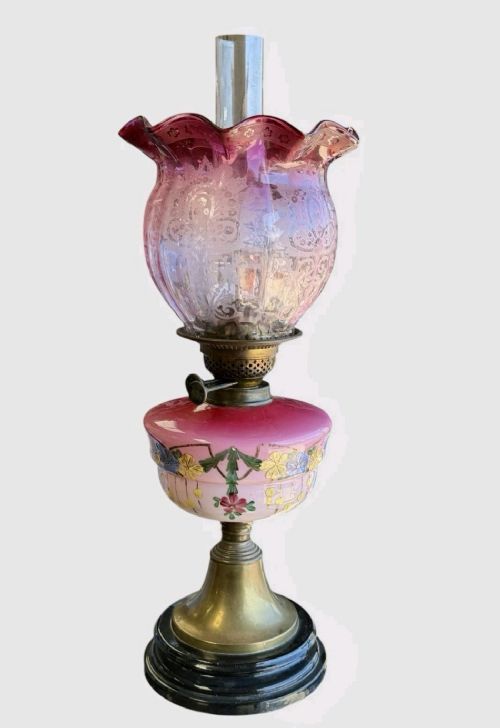
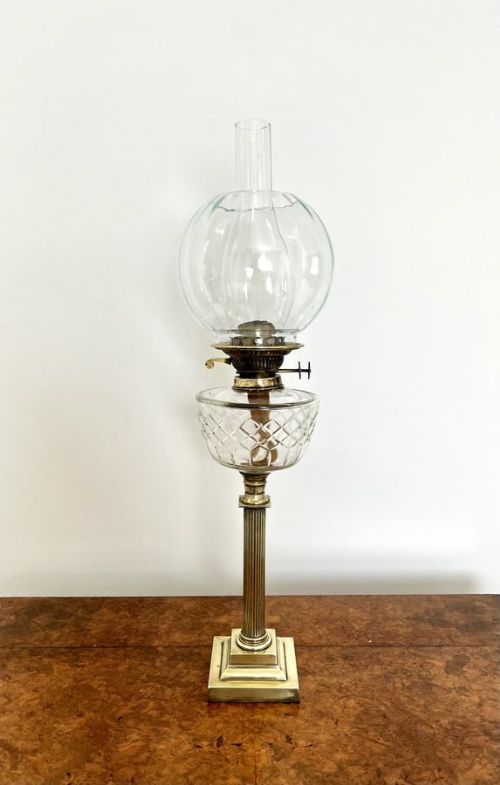
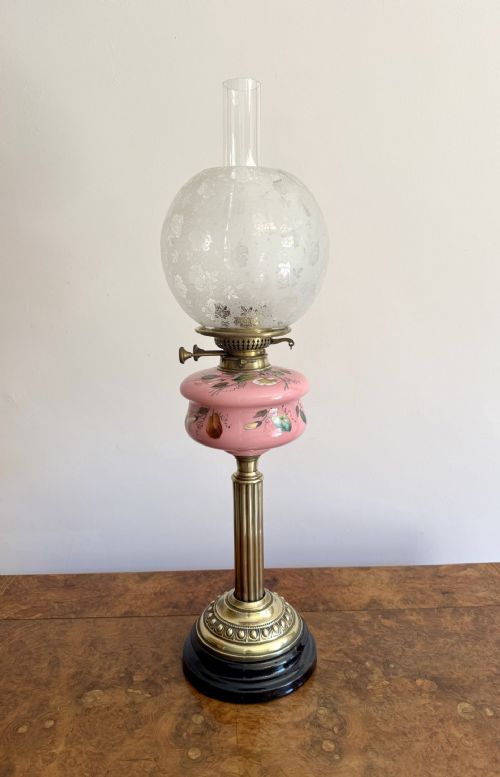
The reservoirs themselves come in notable varieties of glass, including vibrant cranberry, opaque milk glass, and hand-painted or coloured bowls in pink, blue, and green. Many incorporate cut glass patterns that catch the light, paired frequently with brass columns or ceramic bases.
How they were made
Makers utilised moulded and blown glass techniques to shape the reservoirs, sometimes applying hand-painted enamel details directly onto the surface. Coloured glass recipes achieved the deep cranberry, pink, blue, and green hues popular during the period.
Metal components like brass columns, often featuring classical details such as Corinthian capitals, were combined securely with the glass fonts and heavy bases made of slate or metal to ensure stability during use.
Listings feature items from the Victorian and Edwardian periods, utilising materials such as brass, slate, enamel, and cranberry glass.
What varies in quality
The depth of colour and precision of hand-painted enamel decoration set finer examples apart from simpler production pieces. Cut glass fonts exhibit sharper facets and greater clarity in the material.
Substantial brass columns, heavier bases, and integrated telescopic mechanisms indicate superior original manufacture compared to standard domestic table lamps.
Young's
The Victorian Glass Lamp Font Glossary
- Corinthian column
- A classical architectural column style with an ornate capital decorated with acanthus leaves. This design frequently forms the brass support beneath the glass reservoir.
- Milk glass
- An opaque or translucent white glass used for lamp fonts and shades. It provides a dense, porcelain-like appearance.
Victorian Glass Lamp Font: Frequently Asked Questions
How do I clean a glass lamp font?
Wash the glass gently in warm, soapy water using a soft cloth to avoid scratching any hand-painted decoration or enamel work. Take care to keep metal mounts dry to prevent tarnishing or corrosion.
Allow the reservoir to dry thoroughly before placing it back onto its stand or integrating it into a display.
Were these lamps converted to electricity?
Many surviving examples have been adapted over time to house electrical wiring rather than burning paraffin or oil. This allows them to function safely as modern table lamps while retaining their original nineteenth-century appearance.
Examine the collar and burner area to see whether the original mechanism remains intact or if wiring has been introduced through the font or column.
What colours of glass were popular?
Cranberry red remains one of the most distinctive colours seen in these nineteenth-century pieces, prized for its deep tone. Pink, blue, green, and opaque white milk glass also appear frequently across the period.
Some fonts feature multiple colours or hand-painted floral motifs applied over the base glass to enhance the visual effect when illuminated.
How can I tell the date?
Dating relies on stylistic clues such as the form of the brass column, the cut of the glass, and manufacturing techniques recorded in the period. Pieces from the eighteen-sixties often feature classical brass architecture, whilst later nineteenth-century examples introduce varied colours and simpler cottage forms.
Comparing the weight of the metal and the complexity of the glass cutting helps place the item within the broader Victorian or Edwardian timeline.