


Fluted Glass Shade Lamp
A fluted glass shade lamp brings together period brass and distinctive textured glass to light a room with genuine antique character.

Fluted Glass Shade Lamp
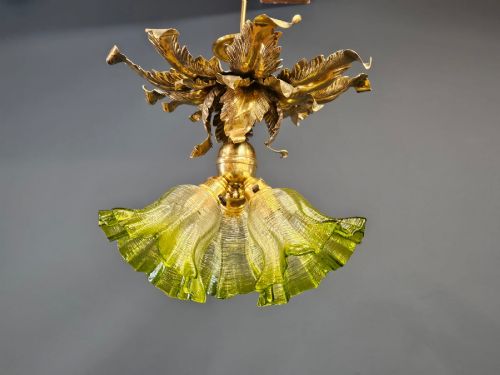
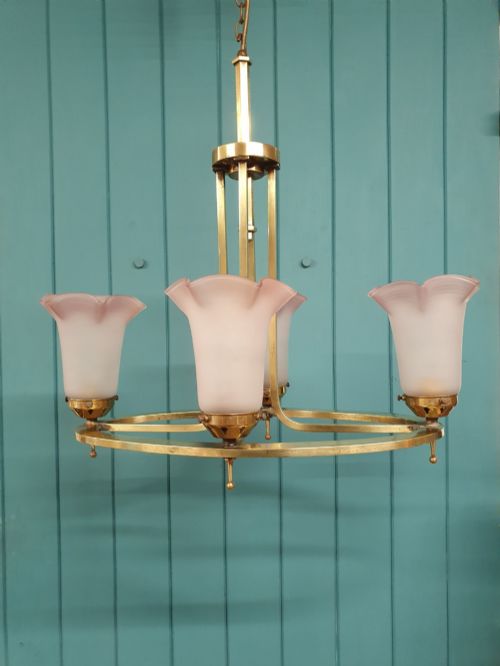
A fluted glass shade lamp is a lighting fixture defined by its shaped glass shade, which is most frequently encountered paired with a brass base or mounted as a ceiling pendant. These pieces draw from periods spanning the Victorian era through the Edwardian years and into the Art Deco epoch.
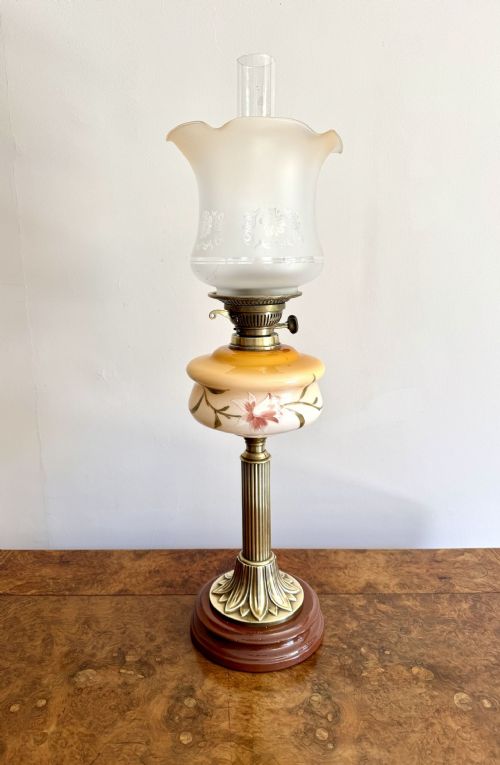
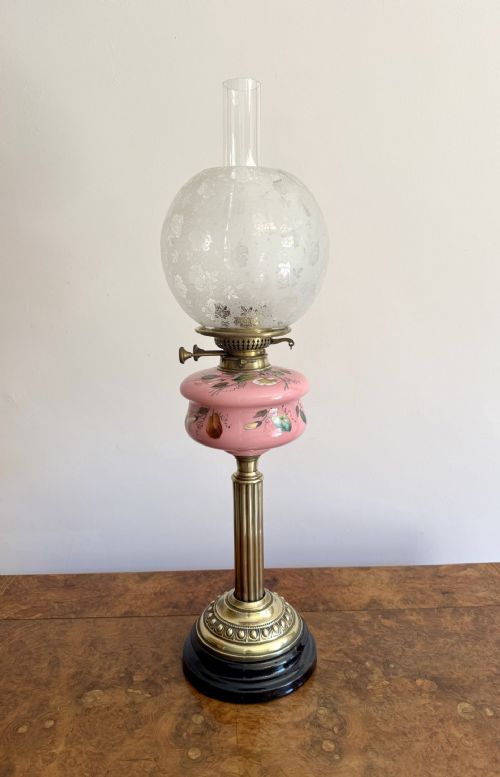
The form encompasses everything from tall brass oil lamps later converted for electricity to substantial chandeliers, desk lamps, and individual pendant lights. The version met most often on this page is the Victorian or Edwardian oil lamp, frequently featuring an opaline, cranberry, or clear glass shade supported by a heavy brass column.
Materials and construction
The structure of these lamps relies heavily on cast and spun brass, often combined with ceramic components, black glass bases, or ormolu mounts. Metalwork provides the stable armature, supporting the various fuel reservoirs or electrical fittings.
Shades are fashioned from specialised glass types including opaline, cranberry glass, frosted glass, moonstone, and cut glass. These glass elements are moulded, blown, or faceted to diffuse light evenly while creating the characteristic fluted or panelled profile.
Some Victorian oil lamps bear the name Messenger on their brass knobs, reminding us that even paraffin illumination required a reliable wick.
What separates the finest examples
Quality in these lamps rests upon the weight and crispness of the brass casting, alongside the depth and colour of the glass shade. Superior pieces display finely chased foliage, substantial gauge metal, and glass free of cloudiness or distortion.
The integrity of the original components also determines distinction. Examples retaining matching burners, unchipped frilled or moulded glass shades, and well-preserved surface patination stand clearly apart from assembled or altered pieces.
The Fluted Glass Shade Lamp Glossary
- Opaline glass
- An opaque or translucent white glass popular in nineteenth-century lighting. It diffuses light with a soft, milky glow.
- Cranberry glass
- A rich pinkish-red glass produced by adding gold chloride to the molten batch. It is commonly found in Victorian oil lamp shades.
- Ormolu
- Gilded bronze or brass applied to decorative objects and lamp bases. The technique gives a bright gold-coloured finish.
- Holophane
- A brand of prismatic glass designed to direct and diffuse light efficiently. These shades feature precise exterior ribs or prisms.
Fluted Glass Shade Lamp: Frequently Asked Questions
Are these lamps converted to electricity?
Many oil lamps from the Victorian and Edwardian periods have been safely adapted for modern electrical use to allow daily living with them.
Conversion methods vary, with some retaining original burners while others incorporate internal wiring through the main brass column.
How do I identify a Victorian oil lamp?
Victorian oil lamps typically feature heavy brass bases, sometimes combined with ceramic reservoirs or black glass plinths, paired with coloured or opaline shades.
Markings on the brass burner mechanisms and the presence of period manufacturing flaws in the glass help confirm the nineteenth-century origin.
What is cranberry glass?
Cranberry glass is a distinctively coloured transparent glass created through the use of gold during the melting process, yielding shades from pale rose to deep crimson.
It was widely utilised for decorative lamp shades during the late nineteenth century to cast a warm, coloured light.
How should I clean my antique glass shade?
Antique glass shades benefit from gentle washing in lukewarm water with mild soap, avoiding harsh abrasives that might damage the surface.
Care should be taken with frilled or delicate edges, and the glass must be dried completely before returning it to the lamp.