





Copper Table Lamp
A copper table lamp brings warmth and tactile weight to a room, grounding your lighting scheme in enduring metalwork.
Copper table lamp forms
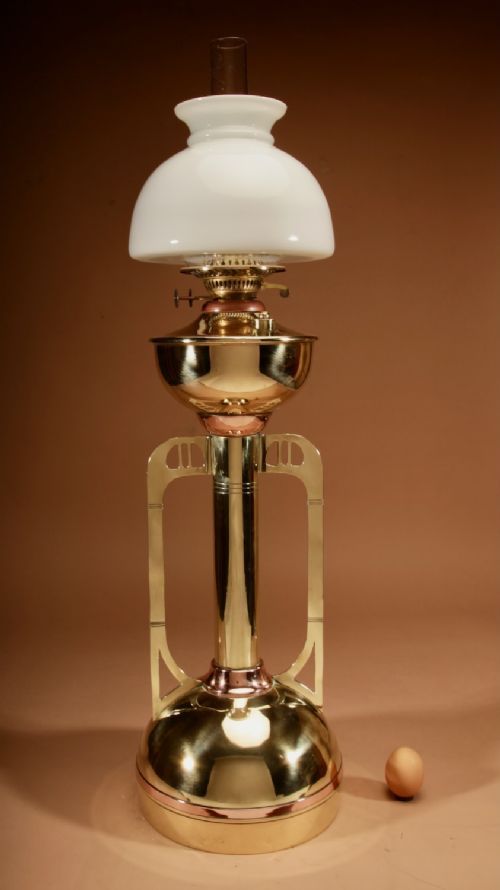
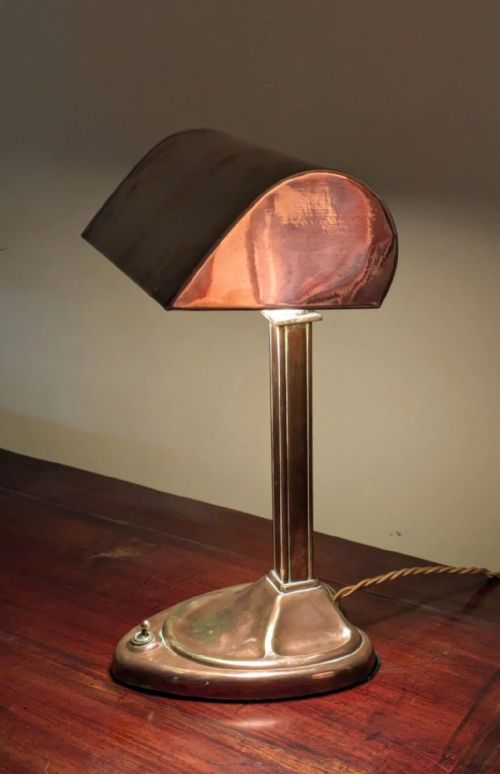
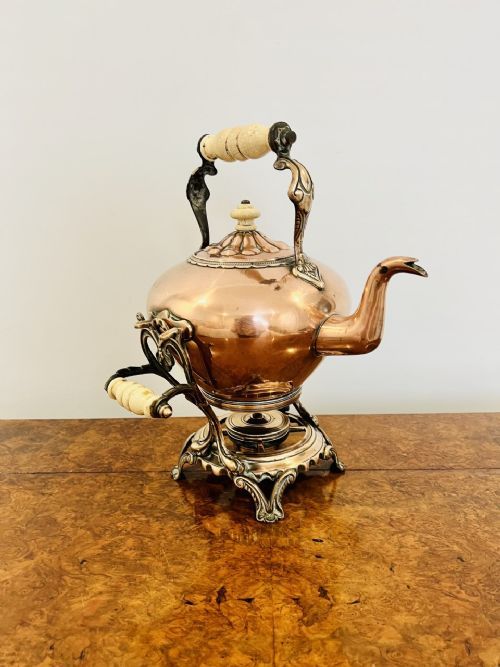
The version you are most likely to meet on this page is the Arts and Crafts or early twentieth-century design, often combining beaten copper with brass accents. These range from heavy, patinated desk models to slender standards and converted Victorian oil burners.
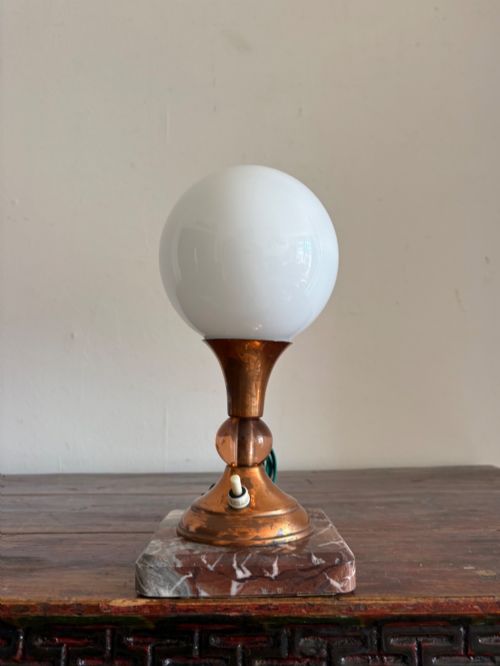
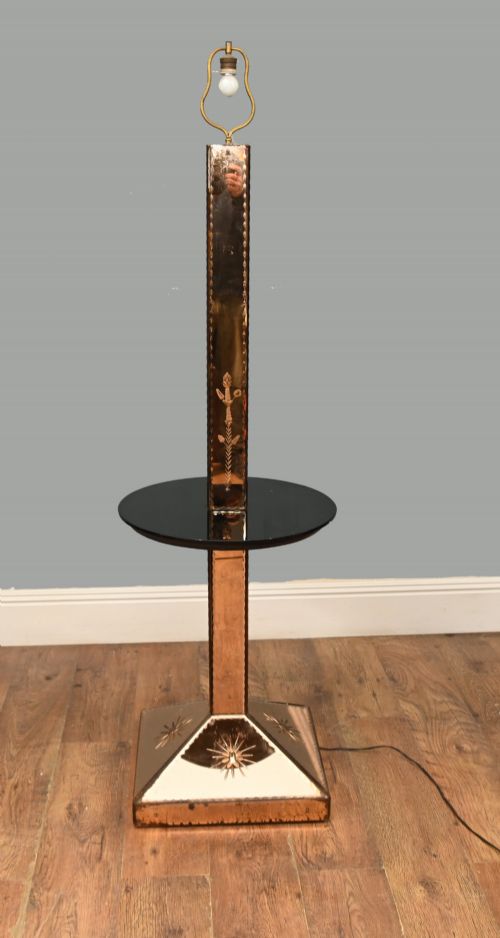
French Art Deco examples also appear, frequently pairing copper elements with contrasting marble bases and opaline glass shades. Alongside these, nineteenth-century Napoleon III pieces show how earlier functional lighting forms were adapted into decorative table pieces.
Construction and materials
These lamps utilise combinations of copper, brass, bronze and gunmetal, sometimes mounted on marble, walnut or oak bases. Shades appear in opaline glass, silk fringe, fabric and metal, while structural components rely on turning, spinning and hand-beating.
Makers employed techniques such as patination to darken surfaces, nickel plating, and silvering over copper bases. Many pieces incorporate adjustable arms, swivel joints or gimbal mechanisms to direct light precisely.
Retail Price Guide 2026
Typical UK retail prices for copper table lamp, calculated from the Sellingantiques database of over a million retail prices indexed since 2003. This retail price guide relies exclusively on Sellingantiques data; no external sources or auction records are used, so the figures do not describe the wider market.
Some nineteenth century lamps double as brass cherub orchestras playing tiny instruments around a copper column.
Quality and execution
The distinction between ordinary and exceptional work lies in the handling of the metal surface and the integrity of the construction. Hand-beaten Arts and Crafts models reveal the deliberate, rhythmic hammer marks of the artisan, whereas mass-produced pieces show uniform, mechanical stamping.
Weight and structural balance separate superior examples from lesser ones. A quality piece utilises heavy gauge copper or sits firmly upon a dense marble or timber base, ensuring stability when the adjustable arms or shades are moved.
Gustave Serrurier Bovy·WAS Benson·Richard Evered and Sons·Heals
The Copper Table Lamp Glossary
- Patinated copper
- Copper that has been treated chemically or naturally to darken the surface and create a rich, aged finish. This process highlights the relief of beaten or embossed details.
- Opaline glass
- A milky, translucent white glass used extensively for lamp shades to diffuse light softly. It softens harsh glares while maintaining a bright, clean glow.
- Gimbal
- A pivoted ring mounting that allows the lamp body or shade to remain horizontal regardless of the angle of the base or stand. This mechanism was particularly useful on ships or drafting tables.
- Secessionist
- An artistic movement from central and eastern Europe that rejected historicism in favor of geometric forms and clean lines. Objects in this style display restrained, modern ornamentation.
- Converted oil lamp
- A historic lighting fixture originally designed to burn paraffin or oil that has been adapted to house electrical wiring and lamp holders. These retain the original fuel reservoirs and burners as decorative elements.
Frequently Asked Questions
How do I date my copper table lamp?
Dating relies on examining the manufacturing techniques, electrical fittings, and stylistic markers such as Arts and Crafts hand-beating or Art Deco geometric lines. Reference periods seen in similar designs help narrow down the decade of production.
Material combinations like copper paired with walnut, oak, or opaline glass also point toward specific eras like the early twentieth century or the interwar period.
How do I care for antique copper?
Antique copper benefits from gentle dusting with a soft cloth to preserve its existing finish and patination. Avoid harsh chemical polishes that strip away historical surface character.
If the metal requires cleaning, a mild, non-abrasive cleaner suitable for historic metals can be used sparingly, though most collectors prefer to leave the aged surface untouched.
What styles of shade are correct?
Shades vary according to the period and function of the lamp, with opaline glass, silk fringe, and beaten metal shades being common. Art Deco and French pieces often feature spherical or flared opaline glass.
Arts and Crafts and standard desk models frequently utilise simple metal reflectors or fabric alternatives that complement the heavy copper and brass bases.