


Hammered Copper Light
These hammered copper light pieces bring unmistakable Arts and Crafts and Amsterdam School character to an interior.
Hammered Copper Light
When you search for hammered copper light, you are looking at metalwork fixtures shaped by hand during periods such as the Edwardian era, 1800, 1900, 1910, and 1920. The selection on this page consists primarily of pendant lights, ceiling lights, wall sconces, wall lights, table lamps, candlesticks, and chandeliers.
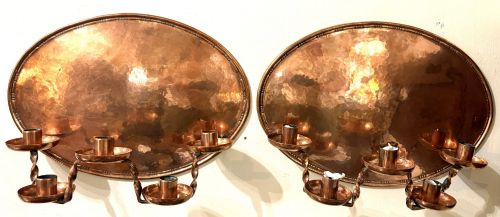
Most examples align with the Arts and Crafts movement, Arts and Crafts Gothic, Art Nouveau, Art Deco, and Amsterdam School styles. You will frequently encounter pendant lights and wall sconces featuring beaten or hand-chased surfaces that show the direct marks of the maker's hammer.
How they were made
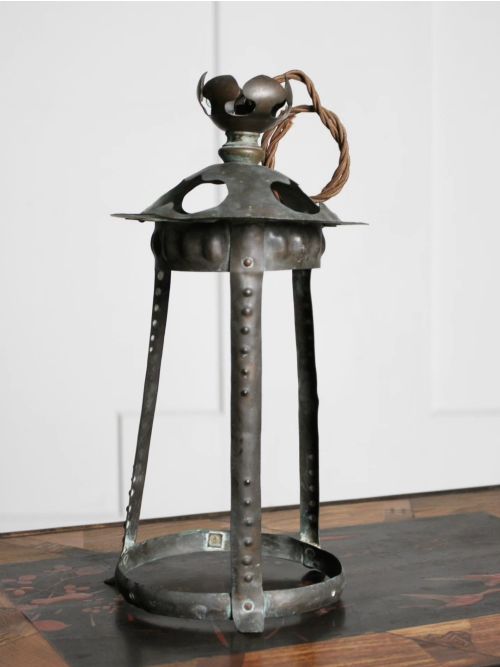
Makers shaped these fixtures using copper sheets, often combining brass, wrought iron, and silver details to add contrast. Components were joined with visible rivets and seams, celebrating the honest construction methods championed by the Arts and Crafts movement.
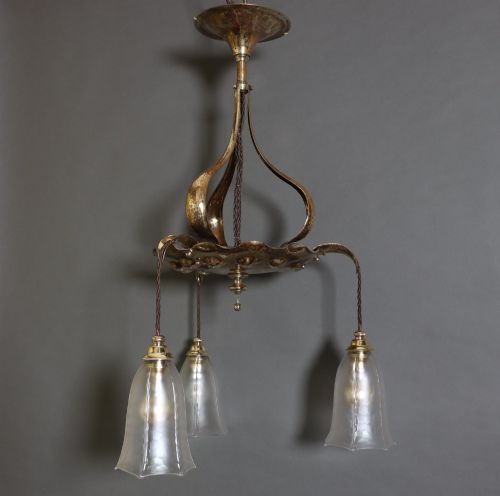
Surfaces were beaten by hand to create distinct textures, sometimes enhanced with gilding or paired with glass shades, fabric elements, and silk fringe. Metalwork was frequently left to age naturally, allowing the copper to develop an authentic patina over decades of use.
Listings feature copper, brass, wrought iron, and silver combined across pendant lights, candlesticks, and wall sconces.
What varies in quality
Quality in a hammered copper light lies in the depth and uniformity of the hand-beaten texture across the metal surface. Superior pieces display deliberate, skilled hammer marks that show complete control over the material rather than random indentations.
The integration of mixed materials also defines the grade of a piece, distinguishing standard production from exceptional work. Stronger examples incorporate complementary brass elements, silver accents, hand-chased details, or specialised glass components that remain true to period workshops.
Birmingham Guild of Handicraft
The Hammered Copper Light Glossary
- Arts and Crafts
- A design movement emphasising handcraftsmanship, simple forms, and traditional metalworking techniques over industrial mass production.
- Amsterdam School
- An architectural and design style originating in the Netherlands, known for expressive brickwork, rounded organic forms, and elaborate metal details.
- Pricket Candlestick
- A candleholder featuring a sharp metal spike or central pin upon which the base of the candle is pressed.
- Hand Chased
- A decorative technique where metal is worked from the front using hammers and punches to sink lines and patterns into the surface.
- Beaten Copper
- Sheet copper that has been shaped and textured by repeated hammer blows, leaving visible artisan marks across the exterior.
Hammered Copper Light: Frequently Asked Questions
What is a hammered copper light?
A hammered copper light is a period lighting fixture made from sheet copper shaped by hand, commonly associated with the Arts and Crafts and Amsterdam School styles. These pieces range from ceiling pendants and wall sconces to table lamps and lanterns.
They utilise visible metalwork techniques and often incorporate brass, glass, or wrought iron. Their defining characteristic is the textured, beaten surface created by the maker's hammer.
How do I date a copper light?
Dating a copper light involves examining its stylistic markers, such as the curved geometry of the Amsterdam School or the medieval-inspired details of Arts and Crafts Gothic designs. Construction methods like hand-beaten surfaces and visible riveting help place pieces within the late nineteenth and early twentieth centuries.
Reference points include specific periods like the Edwardian era and the decades spanning 1800 to 1920. Comparing the form, hardware, and accompanying materials to documented period examples provides the most accurate timeframe.
Where were these lights used?
These lighting fixtures were designed for domestic and public interiors that favoured handcrafted, honest materials. Wall sconces and lanterns were typically mounted in hallways, porches, and principal reception rooms.
Ceiling lights and pendants served as primary illumination sources in living spaces and dining areas. Candlesticks and table lamps were placed on desks, sideboards, and tables to provide localized task or ambient lighting.
How do I clean antique copper?
Antique copper is best maintained by gently dusting the surface with a soft, dry cloth to remove accumulation. Avoid using harsh chemical polishes that strip away the aged patina built up over generations.
Leaving the natural oxidation intact preserves the historical character of the metalwork. If cleaning is necessary, consult a specialist to ensure the finish and any applied gilding remain undisturbed.