




Classical Brass Floor Lamp
A classical brass floor lamp brings architectural dignity and warm illumination to a room, drawing the eye with stately proportions.
Classical Brass Floor Lamp
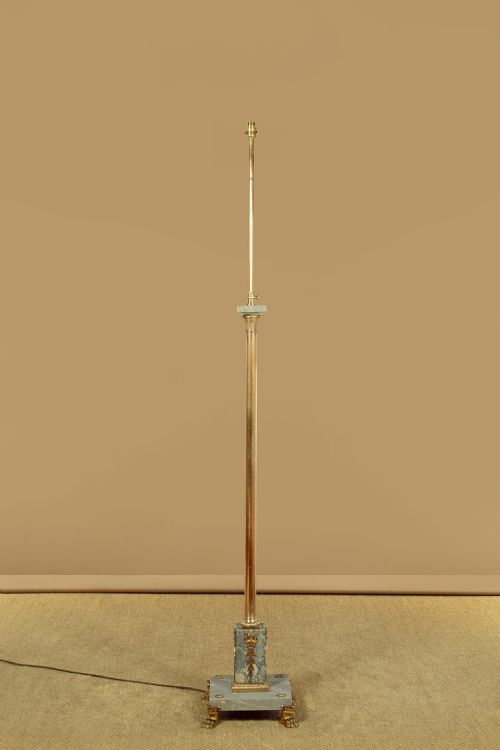
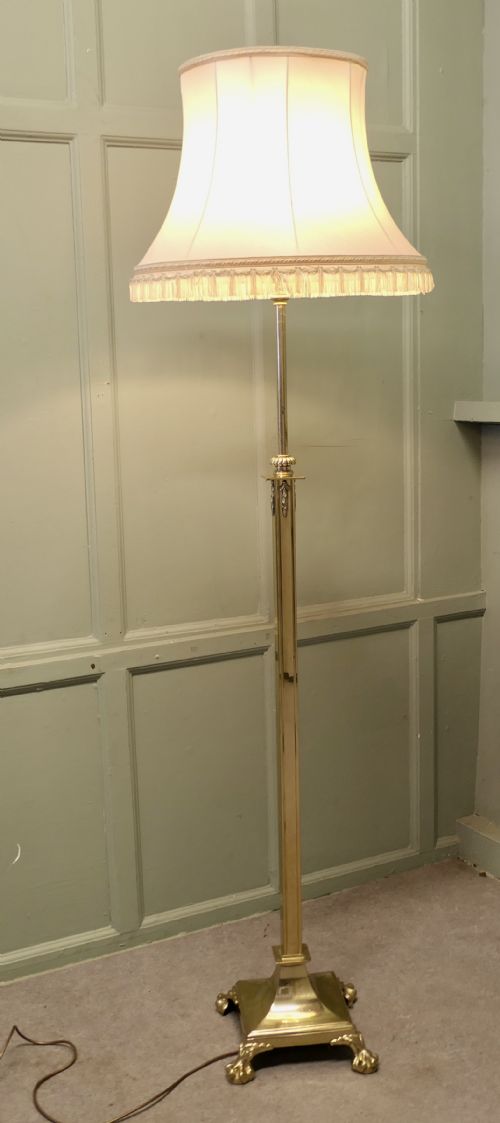
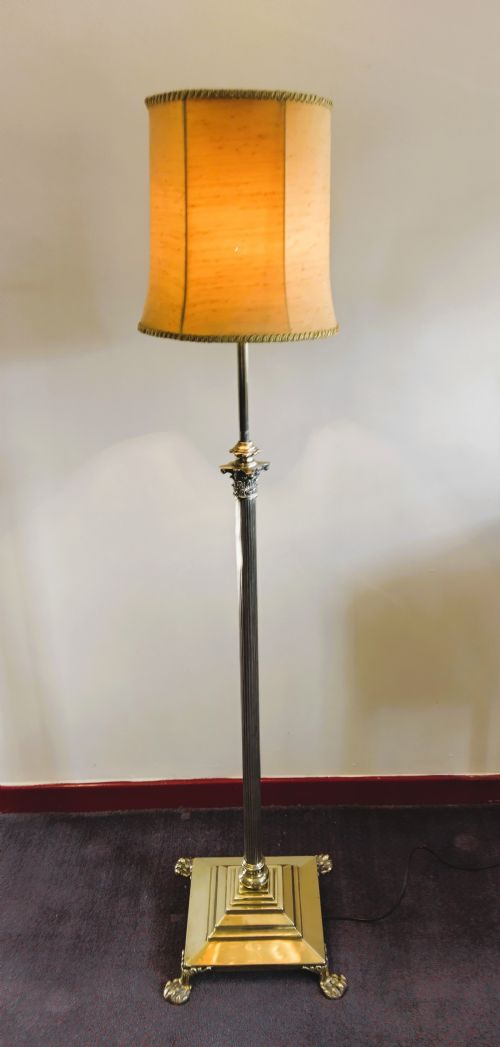
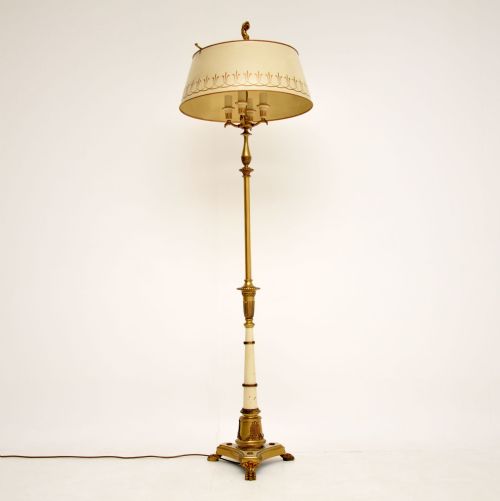
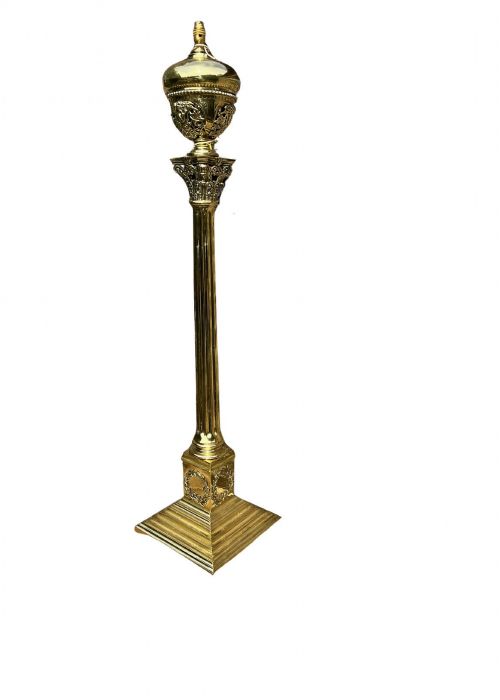
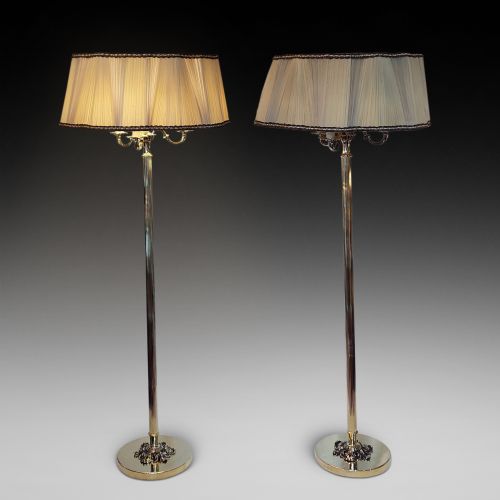
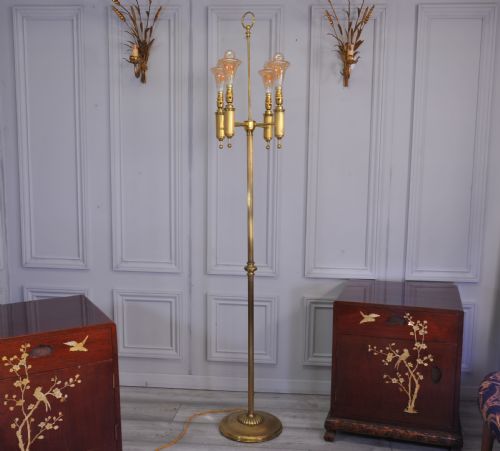
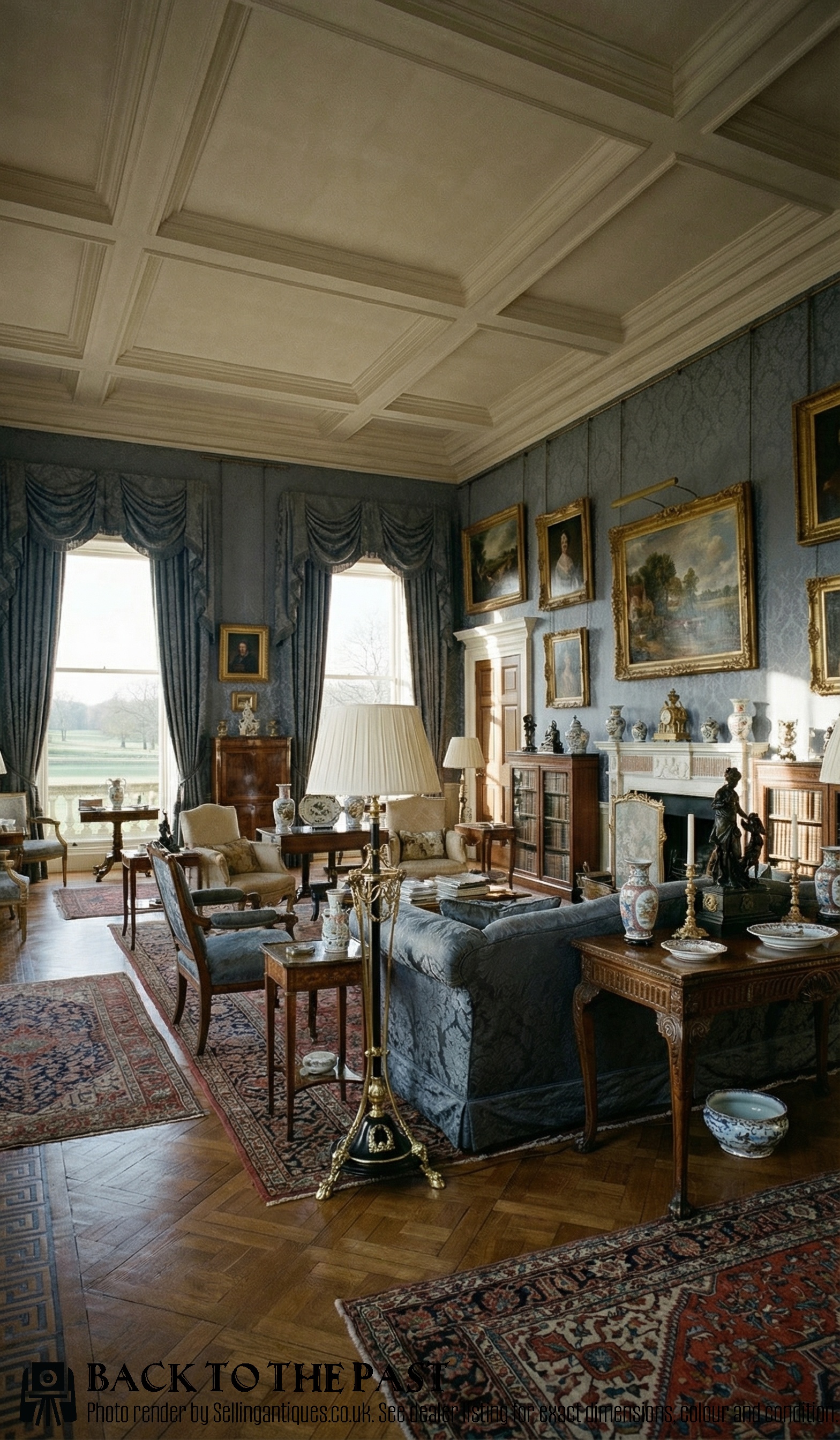
A classical brass floor lamp combines upright columnar supports with heavy metallic bases to provide both stability and presence in a room. These pieces borrow heavily from architectural traditions, frequently utilising column forms or telescopic shafts that allow for height adjustment.
The versions most commonly met here span the Victorian, Edwardian, and early twentieth-century periods, often finished in neoclassical or revivalist styles. Many examples incorporate classical motifs such as Corinthian capitals or cast rams heads to echo ancient stone structures in forged metal.
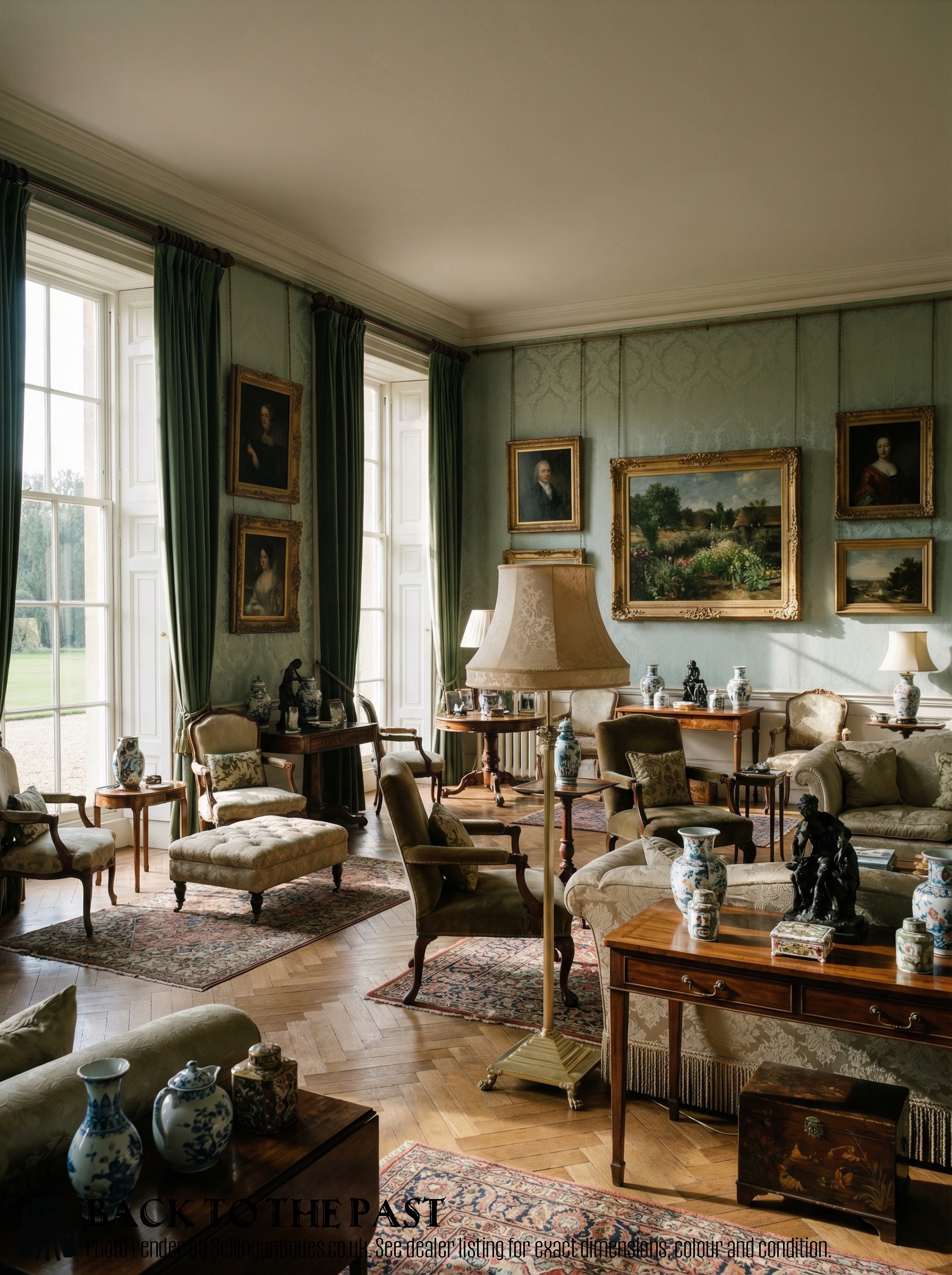
Makers designed these standard lamps to sit beside reading chairs or illuminate dark corners of reception rooms, utilising fabric shades or glass components to diffuse the light. The surviving examples demonstrate how domestic lighting shifted toward formal elegance during the late nineteenth and early twentieth centuries.
Materials and Construction
Brass serves as the primary structural and visual medium, often cast in heavy sections to support the upward reach of the standard without tipping. Some pieces integrate marble columns or bronze elements alongside the brass to create visual contrast and additional ballast at the base.
Telescopic mechanisms rely on precision metalworking, allowing the upper shaft to slide smoothly within the lower column and lock securely into position. Decorative details such as Corinthian capitals and rams heads demonstrate advanced foundry casting techniques common in period metalwork.
Classical Brass Floor Lamp Retail Price Guide 2026
Typical asking prices for classical brass floor lamp among the pieces listed under this phrase on Sellingantiques today, from the lower quarter to the upper quarter. They describe what is for sale here now, not the wider market.
Some Edwardian standards include cast metal rams heads, offering a faintly pastoral yet stately greeting to anyone walking past in the dark.
Factors of Distinction
The weight of the casting and the density of the metal determine the foundational solidity of the piece, distinguishing heavy, substantial standards from lighter alternatives. Superior examples feature crisp definition in chased or cast ornaments, whereas lesser pieces show softer, shallower detailing in the surface decoration.
Functionality within the telescopic mechanism separates utilitarian lighting from superior examples that retain smooth, precise adjustments. The inclusion of combined materials, such as integrated marble shafts or fine bronze mounts, elevates the ambition of the design.
The Classical Brass Floor Lamp Glossary
- Telescopic
- A construction method allowing the vertical shaft to extend or contract in height. This mechanism uses internal sleeves to hold the upper column steady at various elevations.
- Corinthian
- A classical architectural order featuring ornate capitals decorated with acanthus leaves. On these standards, the capital sits immediately below the light fitting as a decorative collar.
- Neoclassical
- A revival style drawing inspiration from the art and architecture of classical antiquity. Pieces in this idiom display symmetry, restraint, and classical vocabulary such as fluted columns.
- Standard Lamp
- The traditional British term for a floor lamp. It denotes a tall vertical support designed to stand independently on the floor.
- Uplighter
- A lighting configuration designed to cast illumination upward toward the ceiling rather than downward. This arrangement creates ambient room lighting rather than direct task illumination.
Classical Brass Floor Lamp: Frequently Asked Questions
How do I adjust the height?
Many period examples feature a telescopic mechanism that lets you raise or lower the upper brass column by loosening a central key or collar.
Carefully support the top section while adjusting to ensure the internal mechanism moves without binding or damaging the internal wiring.
Where should I place it?
These tall standards suit corners, beside reading armchairs, or flanking large pieces of furniture where their vertical height balances the room.
Ensure the heavy brass base rests on a level surface so the considerable weight remains stable during everyday use.
How do I identify the period?
Look to the casting details, base shapes, and overall proportions to connect the lamp to Victorian, Edwardian, or later twentieth-century manufacturing standards.
Victorian and Edwardian versions frequently employ Corinthian columns and heavier cast brass bases, while later examples often adopt simpler lines.
Can I use modern lamp shades?
Most standard fittings accommodate contemporary shades provided the inner ring matches the gallery or harp attachment of the lamp.
Consider the heavy proportions of the brass column when selecting a shade to ensure the visual weight remains balanced from top to bottom.