





Corinthian Column Floor Lamp
These corinthian column floor lamp pieces bring classical architecture into the room, standing tall as stately pillars of light.
What They Are
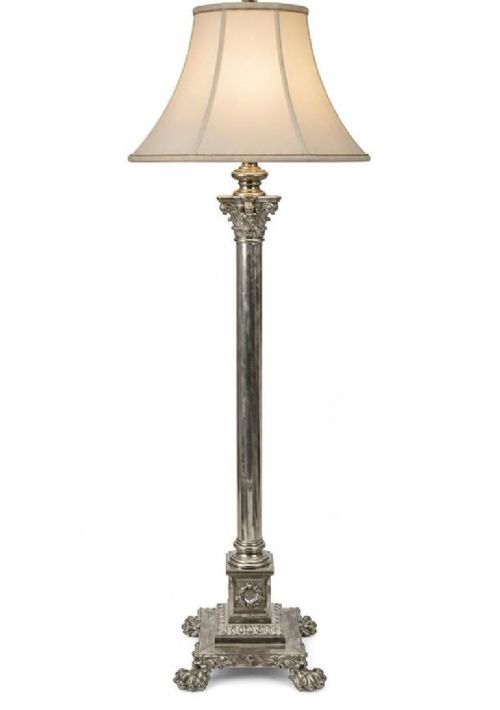
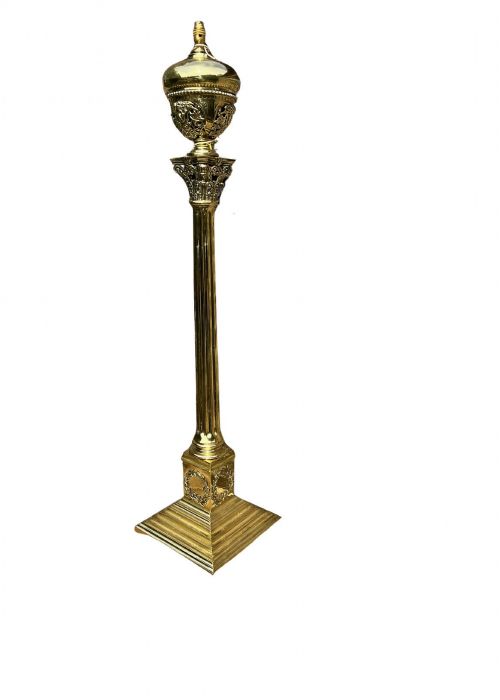
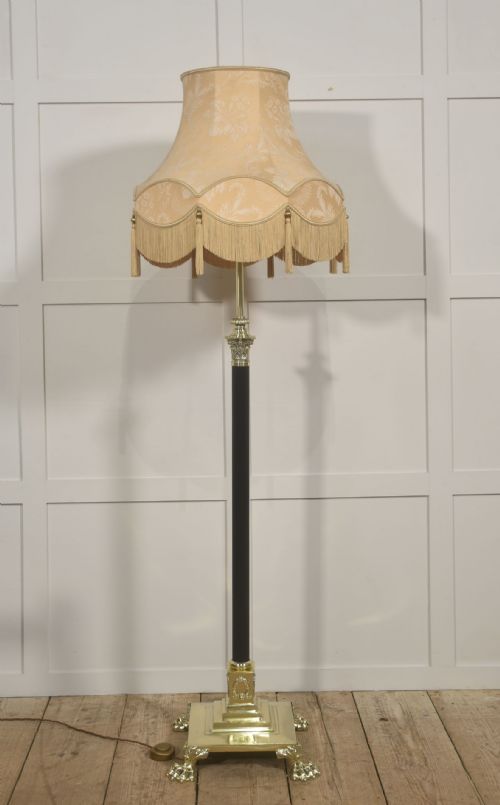
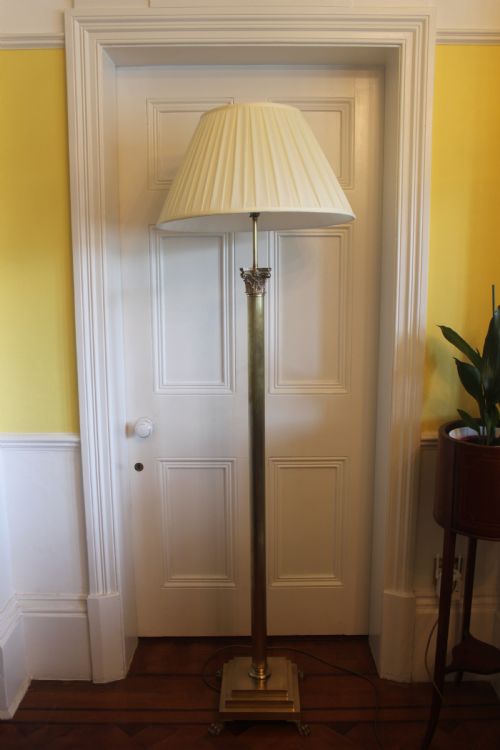
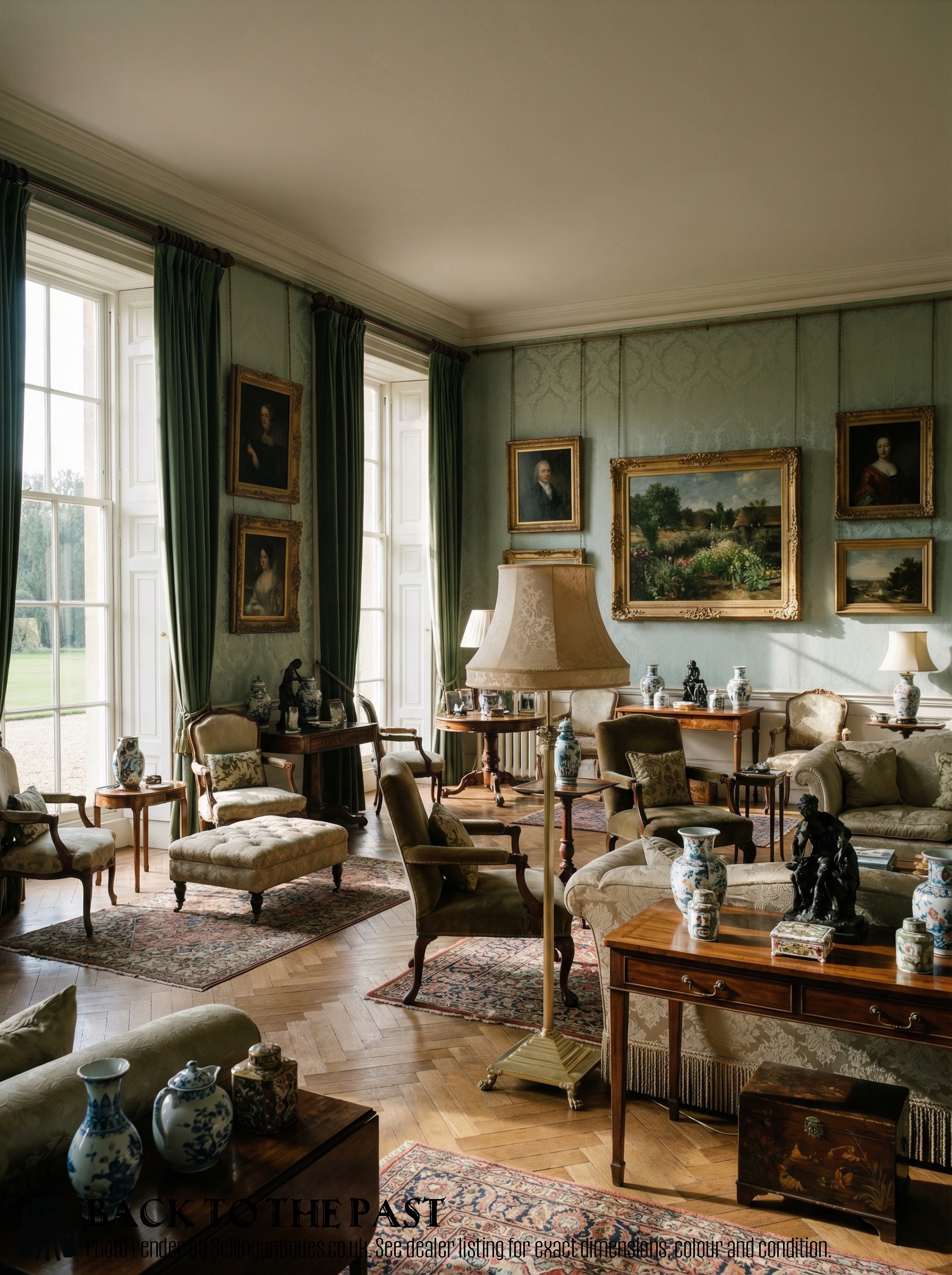
A corinthian column floor lamp takes the classical proportions of ancient temple architecture and scales them up to illuminate a high-ceilinged room. Standing upright on a stepped or heavy base, the shaft mimics fluted stonework before culminating in an ornate capital heavy with acanthus leaves. These vertical lighting fixtures appear most frequently in brass, often with the telescopic mechanisms that let the homeowner adjust the height to suit the room.
The listings and archives record these pieces crossing through the Victorian, Edwardian, and later periods up to nineteen-twenty. Makers such as Hinks produced notable examples, sometimes incorporating ruby glass oil fonts before later conversions to electricity. Neoclassical and classical revival styles dominate the design vocabulary, turning a functional light source into a substantial piece of architectural furniture.
How They Were Made
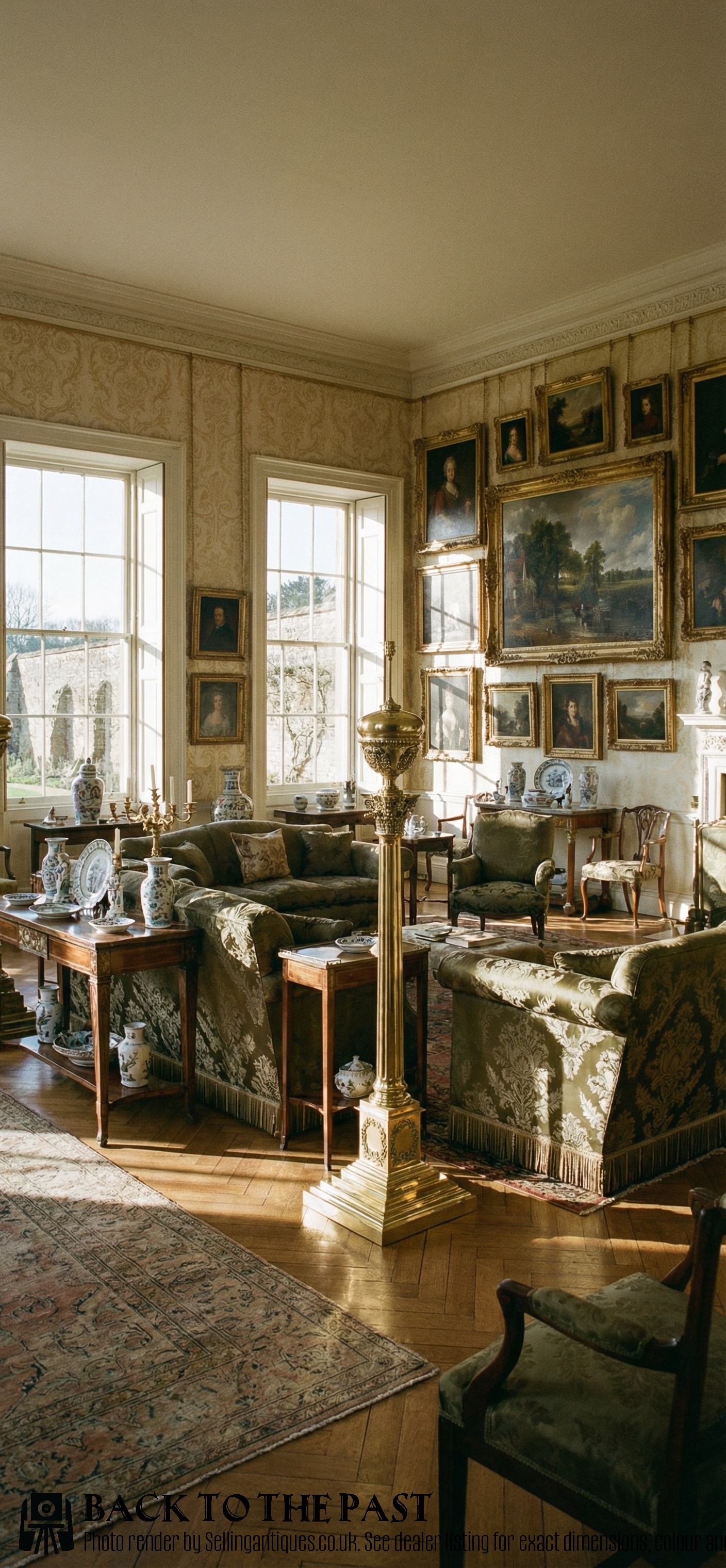
Makers constructed these tall standards primarily from cast and sheet brass, occasionally utilising silver plate or gilt bronze over a heavy metal core to ensure stability. The capitals required intricate casting work to achieve the distinct scrolls and foliage associated with the order of architecture, while the shafts often featured precise fluting running down the metal tube. Telescopic models relied on internal sliding brass tubes secured by a tightening key, allowing the height to shift smoothly without sagging under the weight of the shade.
Heavy weighted bases, sometimes augmented with marble, anchored the tall structures to the floor to prevent tipping. The metal surfaces were polished, chased, or left with a warm patination that deepens over decades of handling and cleaning. Fabric shades completed the construction, sitting atop standard galleries designed to hold the upper fittings securely.
Retail Price Guide 2026
Typical UK retail prices for corinthian column floor lamp, calculated from the Sellingantiques database of over a million retail prices indexed since 2003. This retail price guide relies exclusively on Sellingantiques data; no external sources or auction records are used, so the figures do not describe the wider market.
Recorded periods span from the Victorian era through Edwardian times and into the early nineteen-twenties.
What Varies in Quality
The distinction between ordinary production and superior craftsmanship rests heavily on the crispness of the capital casting and the weight of the metal. Finer examples display deeply undercut acanthus leaves and sharply defined volutes that catch the light, whereas lesser pieces show smoothed or softened details from worn moulds. The gauge of the brass used in the shaft and base dictates the overall heft and rigidity of the standard when fully extended.
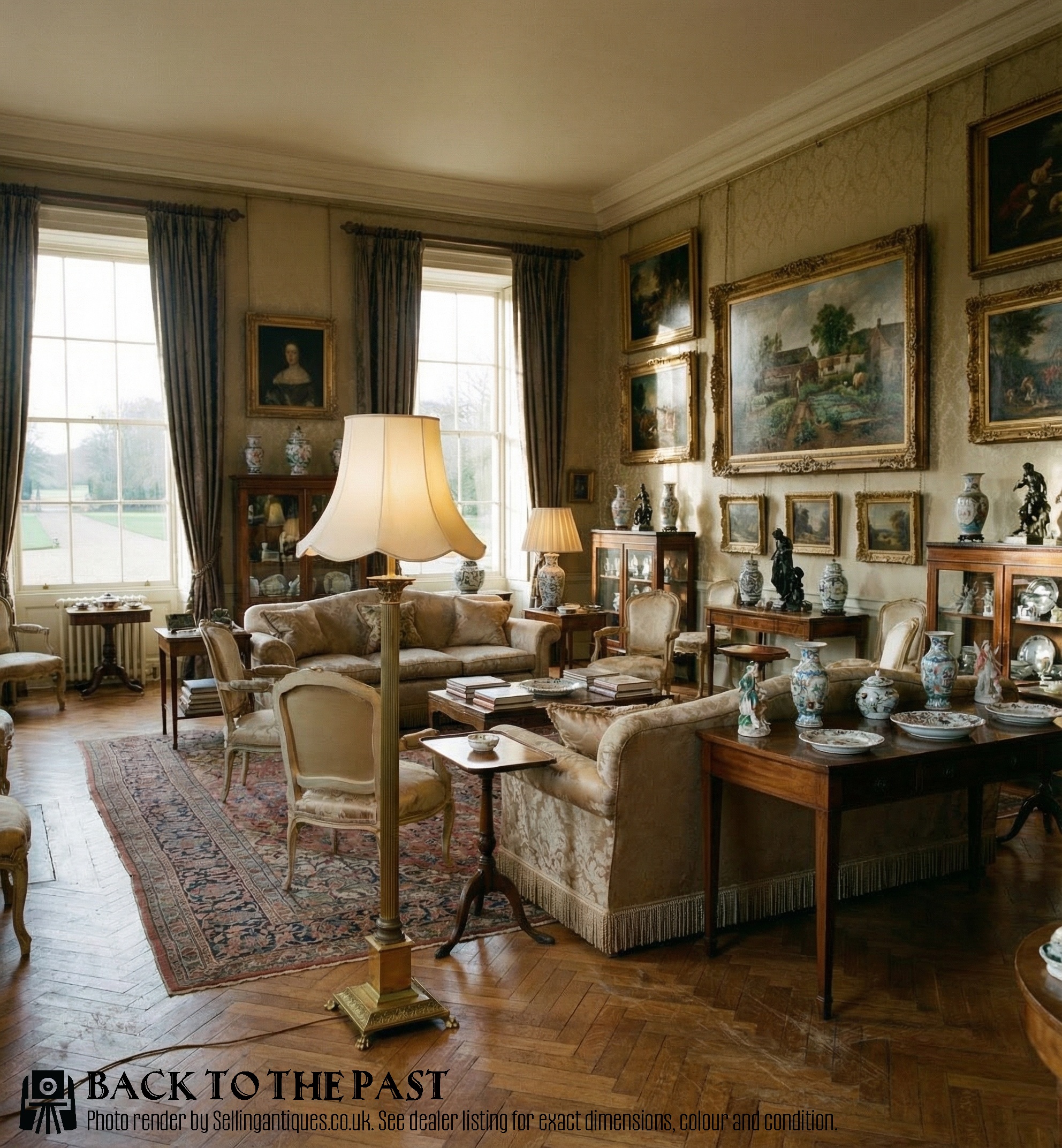
Maker attribution elevates certain pieces, particularly those bearing the mark of Hinks, whose mechanical ingenuity in burner and adjuster design translated into superior structural hardware. The presence of original plating techniques, such as heavy silver or fire gilding, separates exhibition-grade objects from standard commercial brassware. Proportional balance also matters, as better models maintain a harmonious diameter from base to capital rather than appearing pinched or top-heavy.
Hinks
The Corinthian Column Floor Lamp Glossary
- Capital
- The topmost member of a column, carved or cast with acanthus leaves and scrolls in the Corinthian order. It forms the decorative crown directly beneath the lamp fitting.
- Fluting
- The series of shallow, vertical parallel grooves run down the shaft of the column. This technique mimics the stone carving of classical antiquity.
- Telescopic
- An adjustable construction allowing the upper section of the lamp shaft to raise or lower within a lower sleeve. This mechanism provided adaptable illumination for reading or ambient light.
- Neoclassical
- A revival style drawing inspiration from the classical art and architecture of ancient Greece and Rome. It emphasises symmetry, proportion, and classical orders.
- Standard lamp
- The traditional British term for a floor lamp, describing a tall vertical post supporting a light source and shade. These fixtures anchor the furniture layout of a reception room.
Frequently Asked Questions
How do I adjust a telescopic floor lamp?
Telescopic standards feature an internal sliding mechanism secured by a thumbscrew or collar key on the shaft. Loosening this fastener allows the upper column to rise or lower gently to the desired height before tightening again to hold the position.
Care must be taken to support the heavy upper assembly and shade with one hand while adjusting the height to prevent sudden drops that might strain the internal wiring or metal threads.
Were these lamps originally electric?
Many nineteenth-century and Edwardian examples began life as oil lamps, utilising glass reservoirs to hold fuel beneath the burner assembly. As households modernized during the early twentieth century, these metal standards were commonly converted to accept electrical wiring and bulb holders.
This conversion history means surviving examples often display subtle adaptations around the burner gallery and collar where the electrical flex enters the central brass column.
How do I clean brass standard lamps?
Routine maintenance requires only a soft, dry cloth to remove dust from the intricate folds of the capital and the vertical flutes of the shaft. Aggressive metal polishes should be avoided on antique surfaces to preserve the natural oxidation and warm patination accumulated over the decades.
If cleaning is necessary, a gentle non-abrasive metal cleaner applied sparingly will maintain the lustre without stripping away the historical character of the brass or silver plate.
Where should I place a heavy brass lamp?
These tall architectural standards suit principal reception rooms, studies, or libraries where their height and classical proportions complement substantial period furniture. Because they rely on a weighted base rather than floor-fixing, they perform best on level floorboards or firm carpets away from high-traffic walkways.
Positioning them near seating areas allows the extended height to cast downward light effectively across a reading chair or small table.