
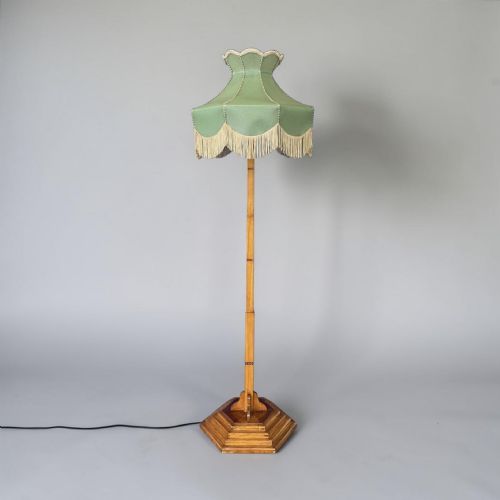
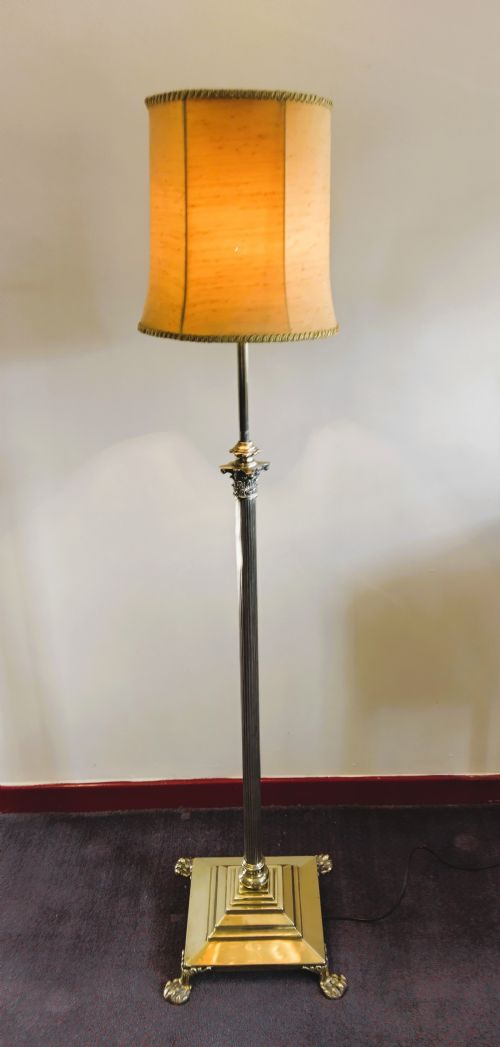
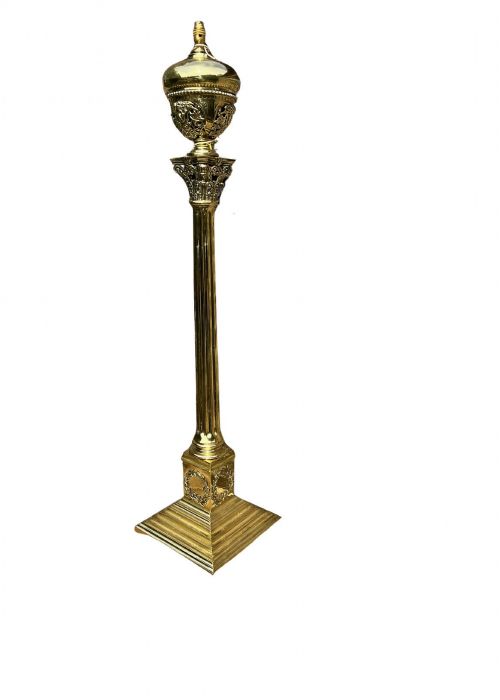


Stepped Base Standard Lamp
These stepped base standard lamp pieces bring period presence to a room, offering tall illumination rooted in architectural design.
Stepped Base Standard Lamp
A stepped base standard lamp provides upright lighting supported by a multi-tiered foundation. These floor lamps combine height with a grounded footprint, drawing the eye upward.
You are most likely to encounter pieces from the early twentieth century alongside older Victorian examples. The selection spans styles from the neoclassical revival through to distinct art deco designs.
Makers utilised various timbers and metals to build these stands. Oak, walnut, and solid or cast brass appear frequently across the current inventory.
How They Were Made
Craftsmen shaped solid oak and golden walnut into sturdy wooden columns and tiered ploonts. Brass components were cast or turned to create slender shafts and Corinthian capitals.
Telescopic mechanisms allowed brass columns to adjust in height. Fabric shades, sometimes finished with fringe, completed the construction of these floor-standing fixtures.
The listings span four distinct periods: Victorian, Edwardian, nineteen-twenty, and nineteen-thirty.
What Varies in Quality
The weight and purity of the metal separate standard examples from heavier pieces. Solid brass and cast brass elements provide greater stability than lighter alternatives.
The choice of timber defines the visual character of wooden variants. Golden walnut and figured oak exhibit richer grain patterns than plain secondary woods.
The Stepped Base Standard Lamp Glossary
- Stepped base
- A foundation formed of successive decreasing tiers. This architectural feature lowers the visual centre of gravity.
- Standard lamp
- A tall floor-standing lamp designed to illuminate a room from a fixed position. These fixtures combine utility with decorative presence.
- Corinthian column
- A classical column style featuring ornate carved capitals adorned with acanthus leaves. This decorative order originates from ancient Greek architecture.
- Telescopic
- An adjustable mechanism allowing inner and outer metal shafts to slide past each other. This enables the overall height of the lamp to change.
- Odeon style
- A design aesthetic inspired by streamline moderne architecture and skyscraper forms. It favours geometric stepped profiles and vertical emphasis.
Stepped Base Standard Lamp: Frequently Asked Questions
How do I date a lamp?
Look to the materials, styling, and construction methods used in the base and column. Details like Corinthian capitals point to classical revivals, while stepped profiles suggest the art deco era.
Examine the wiring and metal joints for clues about manufacture. Older Victorian pieces often show heavier brass casting compared to later twentieth-century iterations.
Where should I place a standard lamp?
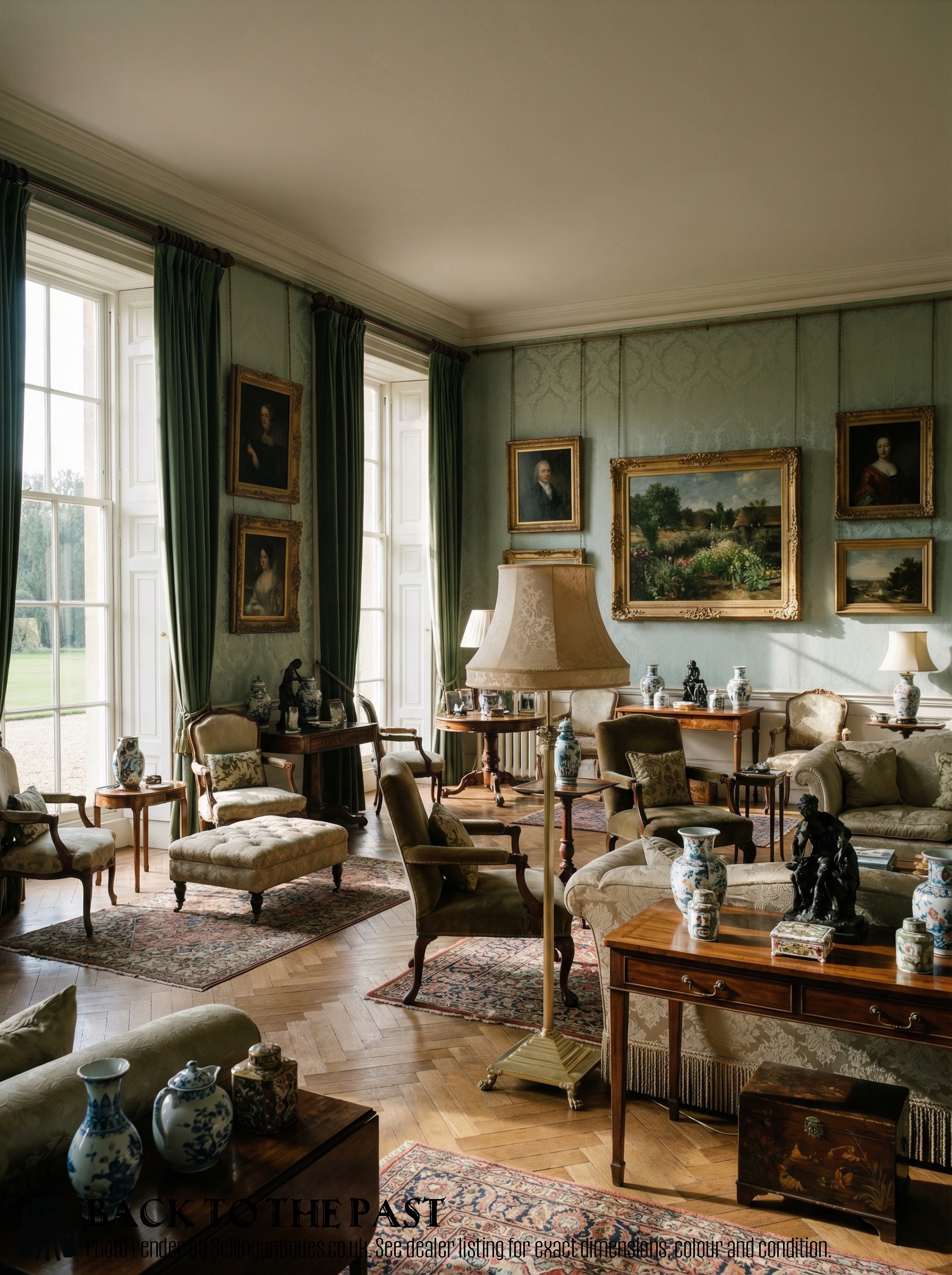
Position these tall fixtures in corners or beside seating areas where they can provide ambient room lighting. Their height makes them suitable for framing furniture groupings.
Ensure the stepped base rests on level flooring so the vertical column remains stable. Keep the shade proportioned to the scale of the surrounding space.
Are these lamps adjustable?
Certain brass examples feature telescopic columns that alter the height of the fixture. This mechanism allows you to raise or lower the light source according to your needs.
Fixed-height wooden stands rely on their initial construction for elevation. Check the upright shaft to see whether a sliding adjustment mechanism is present.
What styles are available?
The selection ranges from Victorian Corinthian column designs to geometric art deco and skyscraper forms. Edwardian and neoclassical revival pieces also appear across the inventory.
Materials shift between polished brass and warm timbers such as oak and walnut. Each style brings a distinct architectural influence to the room.