
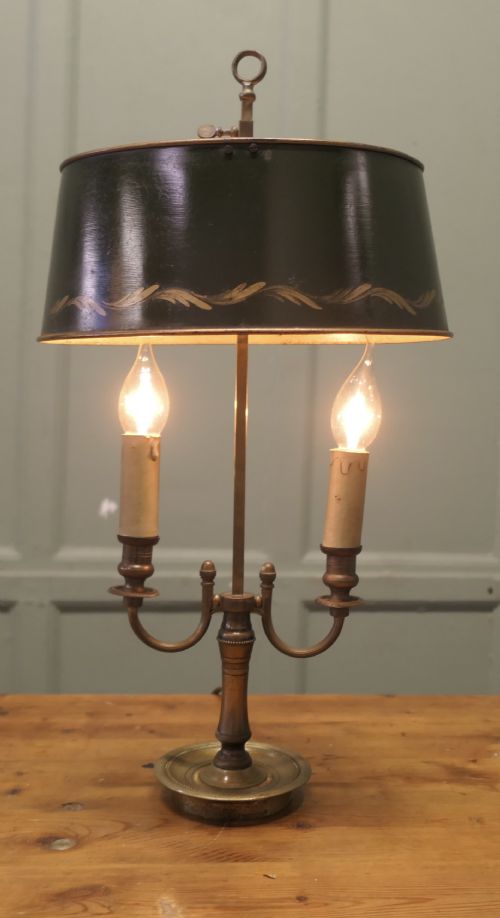
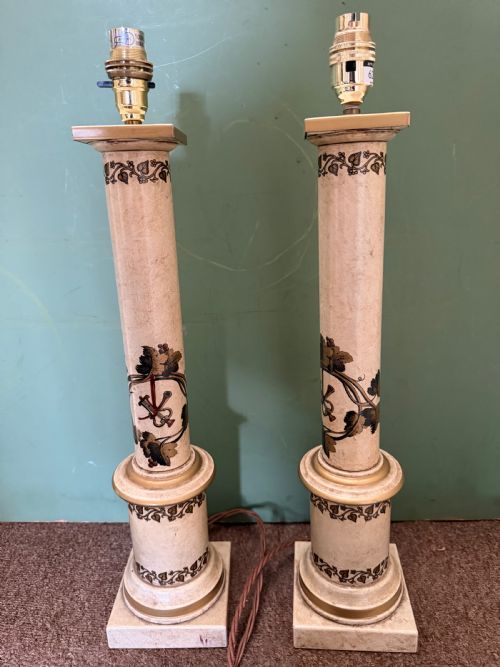


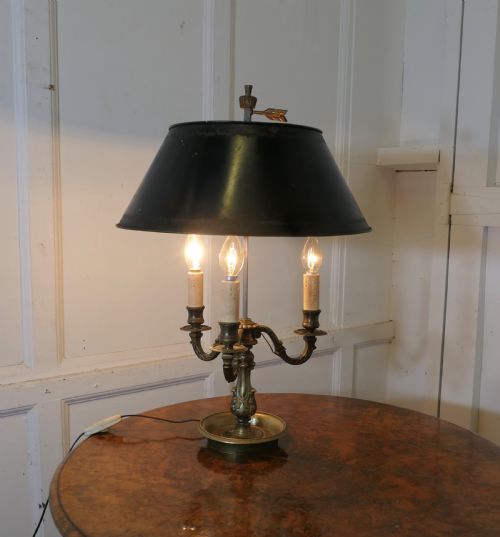


Toleware Table Lamp
These toleware table lamps combine painted metal shades with brass or gilt mounts, bringing classic French lighting into a room.

Toleware Table Lamp
A toleware table lamp brings painted metal lighting into domestic spaces, drawing on traditional forms like the bouillotte desk lamp, the tea canister, and the column lamp. These pieces emerge in styles including French Empire, Neoclassical, Chinoiserie, and Art Deco, reflecting decades of decorative design from the nineteenth century through the early twentieth century.
Most examples found here originate from France, often pairing painted green, black, or red metal bodies with brass, bronze, or gilt metal components. Buyers frequently encounter adjustable bouillotte desk lamps with twin or triple lights alongside urn-shaped and column table lamps from the Victorian era and the 1920s and 1930s.
Materials and construction
Makers formed the lamp bodies from sheet metal, toleware, or tole-peinte, applying painted and lacquered finishes in colours such as deep green, black, and red, sometimes accented with gilt highlights or Chinoiserie motifs. These metal surfaces were combined with brass, bronze, silver plating, or gilt metal for the structural columns, bases, and candle arms.
Many designs incorporated adjustable shades, allowing users to slide the metal shade up and down a central brass rod to direct the light. Additional elements like porcelain figures, glass beads, marble bases, and macassar wood appear in select pieces from the early twentieth century.
Listings feature brass, gilt metal, porcelain, glass, and lacquer combined with painted toleware across the nineteenth and early twentieth centuries.
Assessing quality in toleware lighting
Quality rests in the crispness of the hand-painted decoration, the weight and finish of the brass or gilt metal mountings, and the structural integrity of the adjustable mechanisms. Finer examples display meticulous brushwork on the toleware shades and substantial cast brass components rather than thin, pressed sheet metal.
The sophistication of the stylistic execution distinguishes the range, from restrained Neoclassical column lamps to elaborate Chinoiserie lacquerwork and multi-light bouillotte forms. Original surfaces with honest patination on both the painted tole and the underlying metal command greater interest than modern repainting.
The Toleware Table Lamp Glossary
- Toleware
- Painted or lacquered tinplate or sheet metal objects. The term derives from the French phrase tole peinte, meaning painted metal.
- Bouillotte lamp
- A traditional desk or table lamp featuring a central standard, candle arms, and an adjustable painted metal shade. It originates from the French card game of the same name.
- Tole-peinte
- Painted sheet metal decorated with floral motifs, pastoral scenes, or Japanned designs. This finish characterises the shades and bodies of antique French lighting.
- Chinoiserie
- European interpretations of Chinese and East Asian artistic traditions. This style appears on lacquered black and gold toleware lamp bodies.
- Empire style
- A neoclassical design movement spanning the late eighteenth and early nineteenth centuries. It favours classical architectural motifs, columns, and gilt bronze mounts.
Toleware Table Lamp: Frequently Asked Questions
What is a bouillotte lamp?
A bouillotte lamp is a traditional desk or table light featuring a central metal shaft, two or three candle arms, and a distinctive painted metal shade that slides up and down on a vertical rod.
Originally designed for card players in eighteenth-century France, these lamps provide focused, adjustable illumination that suits modern desks and side tables.
How do I clean a painted toleware shade?
Clean painted metal shades gently using a soft, dry microfibre cloth to remove dust. Avoid chemical cleaners, abrasive pads, or excessive water, which can damage the aged paint and gilt decoration.
Preserving the original painted surface requires a light touch and regular, careful maintenance rather than heavy cleaning methods.
Are these lamps wired for modern use?
Most antique lamps found on the marketplace have been rewired to meet contemporary electrical standards. It remains sensible to have any vintage lighting inspected by a qualified electrician before plugging it in.
Rewiring typically preserves the original switches and key components while ensuring safe operation in a modern home.
How do I date an antique toleware lamp?
Dating relies on stylistic clues, manufacturing techniques, and materials such as heavy cast brass versus lighter pressed metal. Pieces from the nineteenth century often show hand-finishing and simpler column or tea canister forms, while 1920s and 1930s examples introduce Art Deco lines or Chinoiserie lacquer.
Comparing the wiring channels, base construction, and wear patterns on the painted surface helps narrow the period of manufacture.