


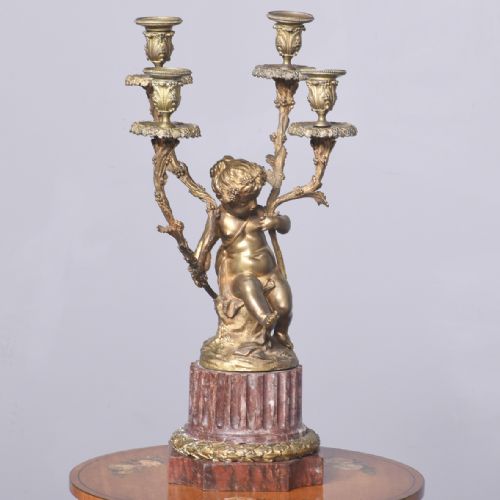


Antique Putto Candle Holder
An antique putto candle holder brings figural charm to a room, cast in bronze or sculpted in porcelain to support light with winged grace.
Antique Putto Candle Holder
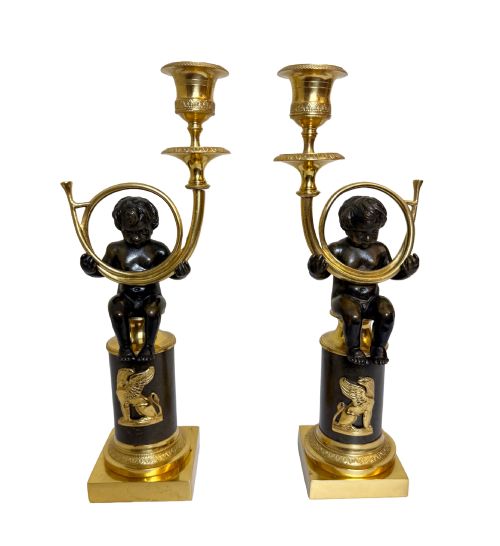
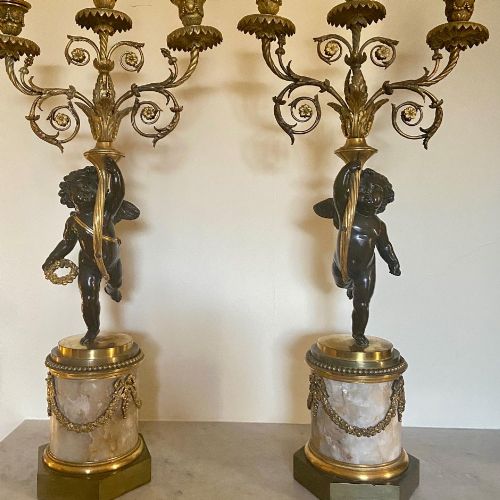
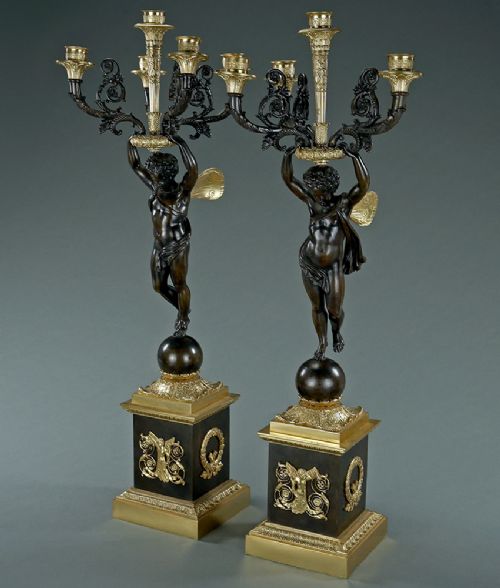
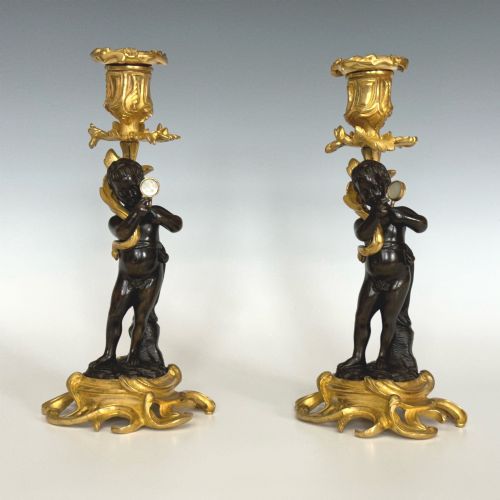
An antique putto candle holder depicts winged cherubs or putti supporting sconces, branches, or drip pans. These figural works appear primarily as pairs intended for mantelpieces, desks, or side tables.
Most examples found on this page date from the nineteenth century, drawing heavily on French Empire, Louis XVI, and Rococo Revival styles. Makers rendered these cherubic figures in varying scales, from single desk candlesticks to elaborate multi-light candelabra.
The objects frequently combine sculptural metalwork with heavy stone elements, mounting bronze or ormolu figures upon marble bases. Porcelain variants also occur, showing glazed ceramic putti holding floral candle sockets.
Materials and Technique
Foundries employed bronze, ormolu, and gilt metal to cast the figural putti, applying patination or gold leaf to achieve tonal depth. These metal elements were often chased by hand to sharpen feather details on wings and curls in hair.
Marble and fluorspar served as substantial plinths, anchoring the balanced weight of multi-armed candelabra. Porcelain pieces relied on ceramic moulding and delicate glaze work, as seen in blanc de chine and painted porcelain editions.
Listings combine gilt bronze, marble, and porcelain forms across nineteenth-century French and German aesthetic movements.
Assessing Quality
The integration of materials dictates distinction, separating standard brass or spelter items from heavier, fire-gilded ormolu and finely turned marble combinations. Original patination and fire gilding retain a depth that lesser secondary coatings lack.
Francois Redmond·Chelsea·Minton·Triebner ENS and Eckert Volkstedt·Sitzendorf·Claude Clodion
The Antique Putto Candle Holder Glossary
- Putto
- A plump, naked child figure, frequently winged, derived from classical art. Sculptors employed this motif extensively in Renaissance and nineteenth-century decorative metalwork.
- Ormolu
- Finely ground high-carat gold applied to a bronze base using a mercury amalgamation technique. This process produced a durable, warm metallic finish common on French decorative objects.
- Candelabra
- A branched candlestick holding multiple lights. These fixtures often feature central putti figures supporting twin or triple branches.
- Clock Garniture
- A matching set comprising a central mantel clock flanked by side pieces such as candlesticks or candelabra. These sets share uniform stylistic details and materials.
- Blanc de Chine
- A white porcelain type originating from China and later emulated by European factories. It displays a smooth, milky glaze over moulded figural subjects.
Antique Putto Candle Holder: Frequently Asked Questions
How do I clean bronze candle holders?
Dust gently with a soft, dry cloth to protect patinated surfaces and delicate gilding. Avoid using harsh chemical cleaners or abrasive polishes that strip historic finishes from the metal.
For marble bases, use a slightly damp cloth followed by immediate drying. Keep moisture away from any joined metal pins or adhesive areas.
Were these designed for daily use?
Nineteenth-century households utilised these figural pieces for illumination in salons and dining rooms. They functioned as both practical lighting and decorative statements on prominent surfaces.
Over time, many transitioned into pure decorative objects. Collectors today frequently display them unlit on mantelpieces or within clock garniture sets.
How can I date an ormolu piece?
Examine the quality of the chasing and the colour of the underlying bronze alloy. Nineteenth-century interpretations of earlier French styles often exhibit machine tooling alongside hand finishing.
Look at the construction methods of the sconces and base fixings. Hand-cut screws and heavy cast components generally point to earlier production periods.