



Gilded Bronze Candle Stands
Gilded bronze candle stands bring genuine warmth to a room, offering rich metalwork and period character.
Gilded Bronze Candle Stands
Gilded bronze candle stands encompass heavy cast lighting pieces produced across the eighteenth and nineteenth centuries, including pairs designed for desks, mantels and grand reception rooms. When you examine gilded bronze candle stands on this page, you meet French and Victorian examples spanning various decorative revivals.
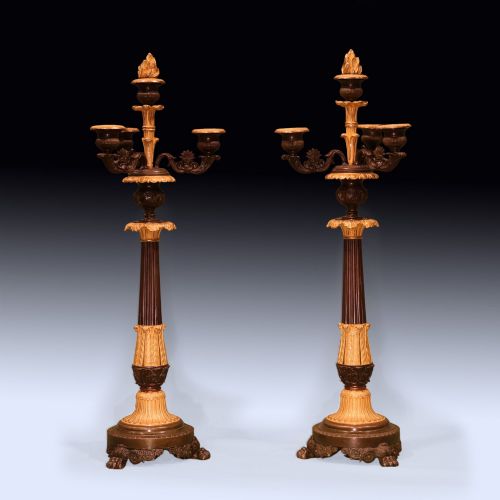
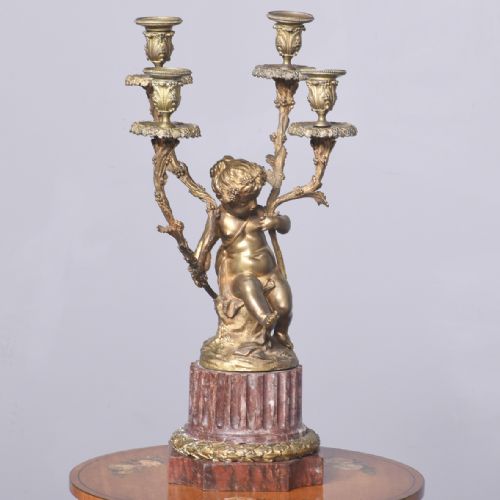
The objects take several distinct forms, from single candlesticks and multi-light candelabra to inkstands incorporating candle fittings, alongside occasional standard lamps. Many pieces pair the metallic structure with contrasting materials like white marble or onyx.
Origins stretch from eighteenth-century Regence and Louis XVI workshops through to Victorian interpretations of Gothic, Baroque and Rococo styles. French pieces dominate the selection, often carrying the sculptural refinement associated with Paris makers.
Materials and Manufacture
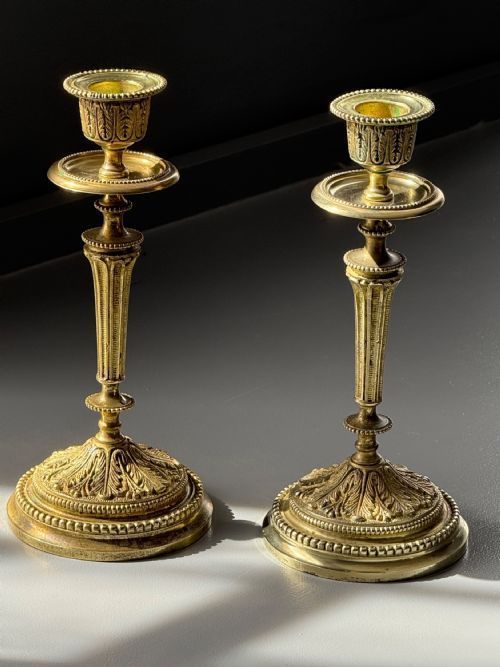
The foundational structure relies on bronze or brass, shaped through metal casting to create intricate figures, foliate scrolls and architectural bases. Artisans then applied fire gilding or ormolu finishes to impart a deep, durable metallic lustre.
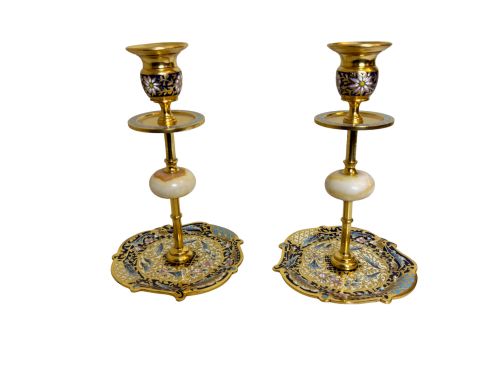
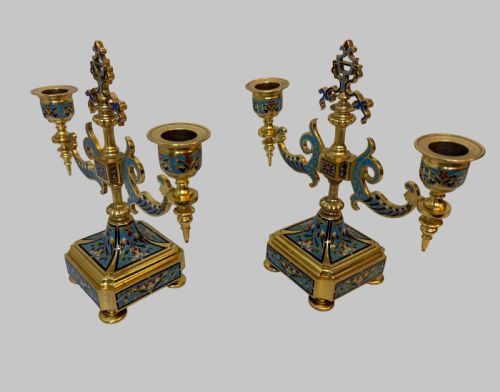
Secondary elements frequently enter the construction to add weight and textural contrast, notably white marble, onyx and champleve enamel panels. Patinated bronze surfaces appear alongside the bright gilt sections to accentuate the modeled details.
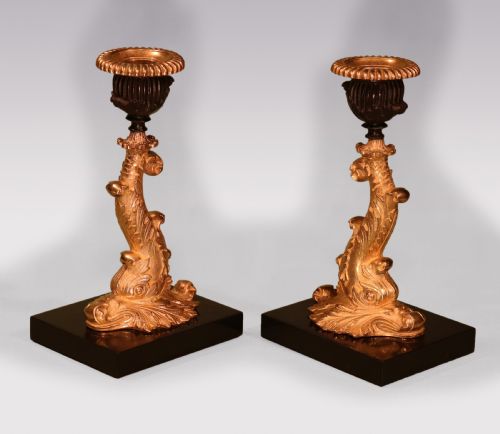
A pair of early nineteenth-century dolphin candlesticks brings marine wildlife straight into the formal drawing room.
Judging Quality
Quality rests primarily on the crispness of the bronze chasing and the depth of the original gilding. Finer pieces display sharp relief work where every leaf and facial feature remains distinct, whereas lesser examples show softer, smoothed-over casting contours.
The choice of secondary materials also elevates a piece, such as substantial marble bases or intricate multi-light arrangements with original bobeches. The cohesion of the design, whether following a strict Louis XVI scheme or a balanced Victorian revival, defines the upper tier.
The Gilded Bronze Candle Stands Glossary
- Ormolu
- Gilded bronze produced through mercury amalgamation or modern electroplating methods. This surface treatment gives French lighting pieces their characteristic golden glow.
- Champleve
- An enamelling technique where troughs are dug into a metal surface and filled with vitreous paste before firing. It creates vibrant decorative bands on nineteenth-century stands.
- Pricket
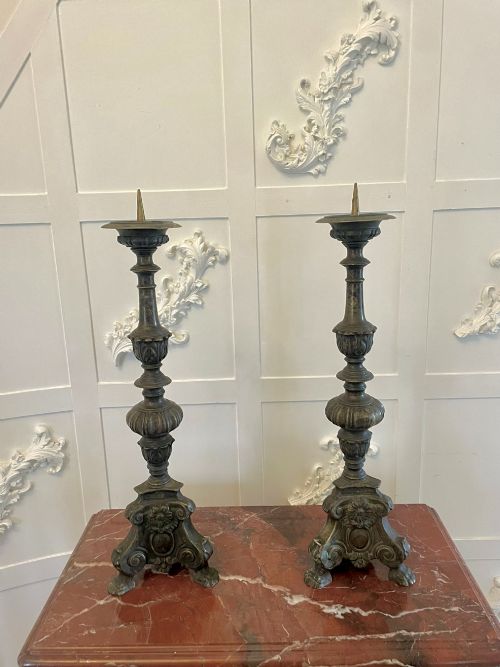
- A sharp metal spike atop a candlestick designed to impale the base of a large candle. These are common on ecclesiastical or heavy Gothic revival pieces.
- Bobeche
- A small removable disc fitted just below the candle nozzle to catch melting wax. Surviving matching pairs indicate an item retains its original components.
- Caryatid
- A sculpted female figure serving as an architectural support or pillar. They frequently form the central shaft of Grand Tour candlesticks.
Gilded Bronze Candle Stands: Frequently Asked Questions
How do I clean gilded bronze?
Dust gently with a soft, dry brush to prevent accumulation in the crevices of the cast ornament. Avoid all metal polishes and harsh commercial cleaners, which strip away the delicate gilt surface.
Water can damage underlying materials like marble or exposed brass. Keep moisture away from the joints and decorative enamel panels during routine maintenance.
What is the difference between ormolu and gilt bronze?
Ormolu specifically refers to the traditional French method of applying finely ground gold mercury amalgam to a bronze base. Gilt bronze serves as the broader descriptive term for any bronze object coated in gold.
Both terms describe the same golden finish seen on nineteenth-century salon pieces. Historical context usually dictates which term a dealer applies to an item.
How do I identify French versus Victorian pieces?
French pieces often follow specific historical revival styles like Louis XVI or Regence, showing refined symmetry and classical motifs. Victorian items frequently blend Gothic or heavy Baroque influences with diverse materials like onyx.
Weight, casting sharpness and stylistic cues provide the clearest clues to origin. French workshops exported heavily to Britain during the nineteenth century, creating some stylistic crossover.