




Bronze Putti Candlesticks
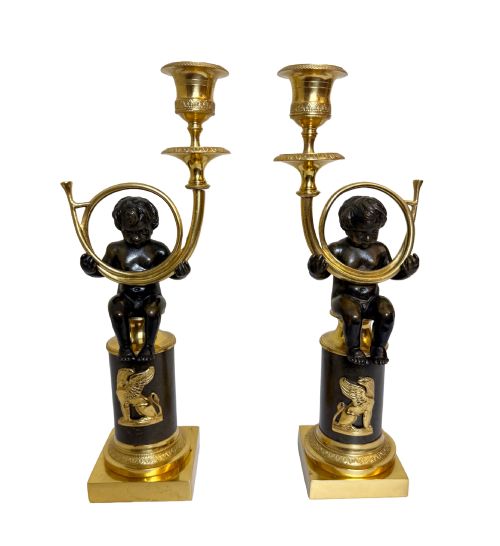
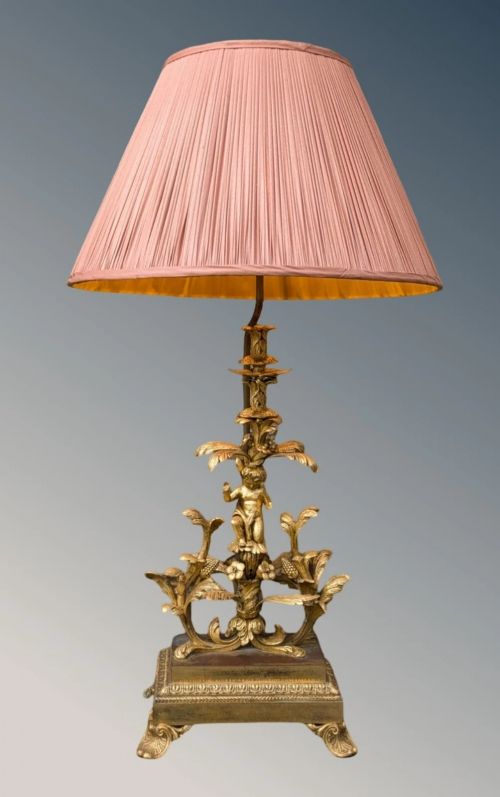
Bronze putti candlesticks bring figural charm to any interior, pairing sculpted cherubs with metal candle holders from the nineteenth century and earlier.
Bronze Putti Candlesticks
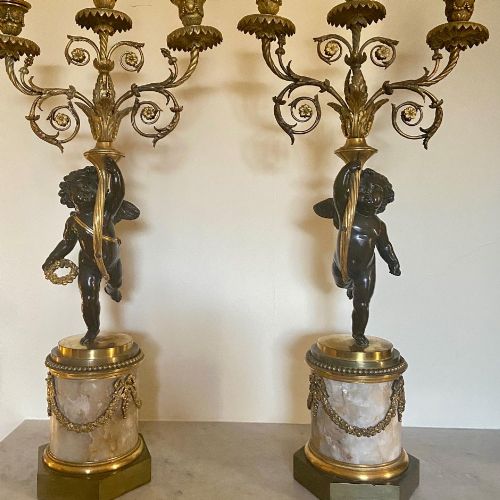
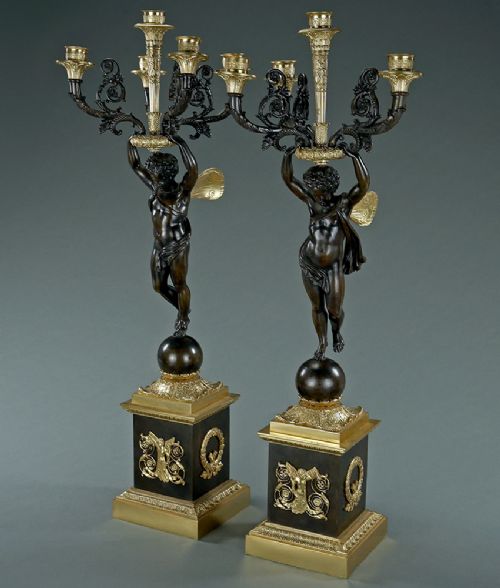
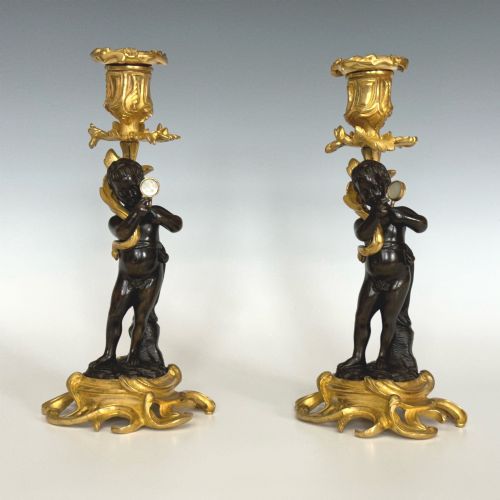
Bronze putti candlesticks combine figural sculpture with functional lighting, frequently taking the form of winged cherubs supporting candle sockets or branch arms. You will most commonly encounter nineteenth-century pairs emanating from French workshops, executed in styles that hark back to the periods of Louis XVI and the French Empire.
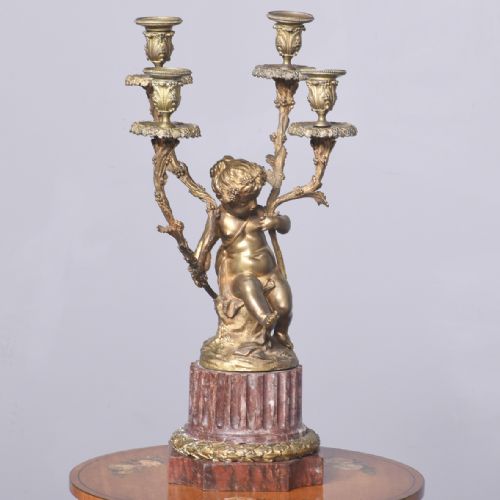
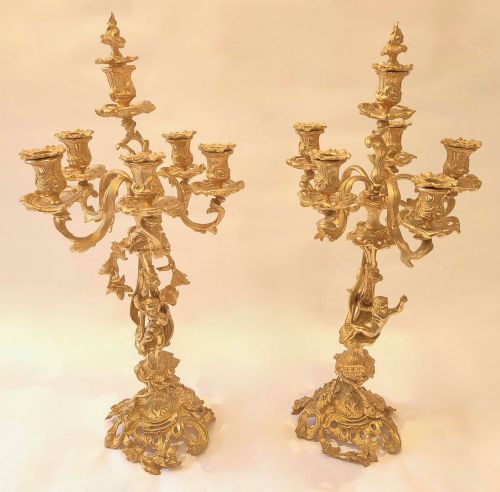
The objects span single-light sticks to multi-armed candelabra, often mounted upon shaped marble bases. Examples range from compact desk models to large floor or table pieces standing with considerable presence.
How They Were Made
Foundries utilised casting techniques in bronze, brass, and spelter to shape the figures and mounts. Artisans then applied patination, fire gilding, or ormolu finishes to create the characteristic contrasting surface textures.
Many designs incorporate mineral elements such as marble and fluorspar for the plinths, requiring precise stone-cutting and turning to support the heavy metalwork securely.
The listings feature nineteenth-century French Empire and Louis XVI style pieces constructed from gilt bronze, patinated bronze, ormolu, and marble.
What Varies in Quality
The refinement of the chiselling on the bronze figure dictates much of the visual success, distinguishing finely detailed faces and feathered wings from softer, mass-produced casts. Crisp definition in the chasing around the acanthus mounts and candle nozzles demonstrates superior craftsmanship.
The choice of secondary materials plays a role, with solid marbles and heavy fire-gilt ormolu marking out the more ambitious commissions against simpler patinated bronzes on standard bases.
Francois Redmond·Claude Clodion
The Bronze Putti Candlesticks Glossary
- Putti
- Plumed or unwinged infant spirit figures, often resembling cherubs, commonly depicted in Renaissance and revival decorative arts. They form the central sculptural element of these candle holders.
- Ormolu
- Finely ground high-carat gold mercury-gilded to a bronze object, creating a bright yellow metallic finish. This technique was widely employed in French workshops during the eighteenth and nineteenth centuries.
- Candelabra
- A multi-branched candle holder designed to support several lights from a central shaft. They frequently share design vocabulary with single candlesticks of the same period.
- Patinated Bronze
- Metal darkened or coloured intentionally through chemical application to simulate age or create tonal contrast. It highlights the modelling of the cast figure against brighter gilt details.
- Fluorspar
- A colourful halide mineral sometimes used for decorative bases or urn components on high-end candelabra. It adds distinct natural banding beneath the metal mounts.
Bronze Putti Candlesticks: Frequently Asked Questions
What are bronze putti candlesticks?
These are decorative lighting accessories cast in metal, featuring human infant figures holding or standing beside candle sockets.
They combine sculpture with utility, produced predominantly in nineteenth-century France during revival design movements.
How were they used?
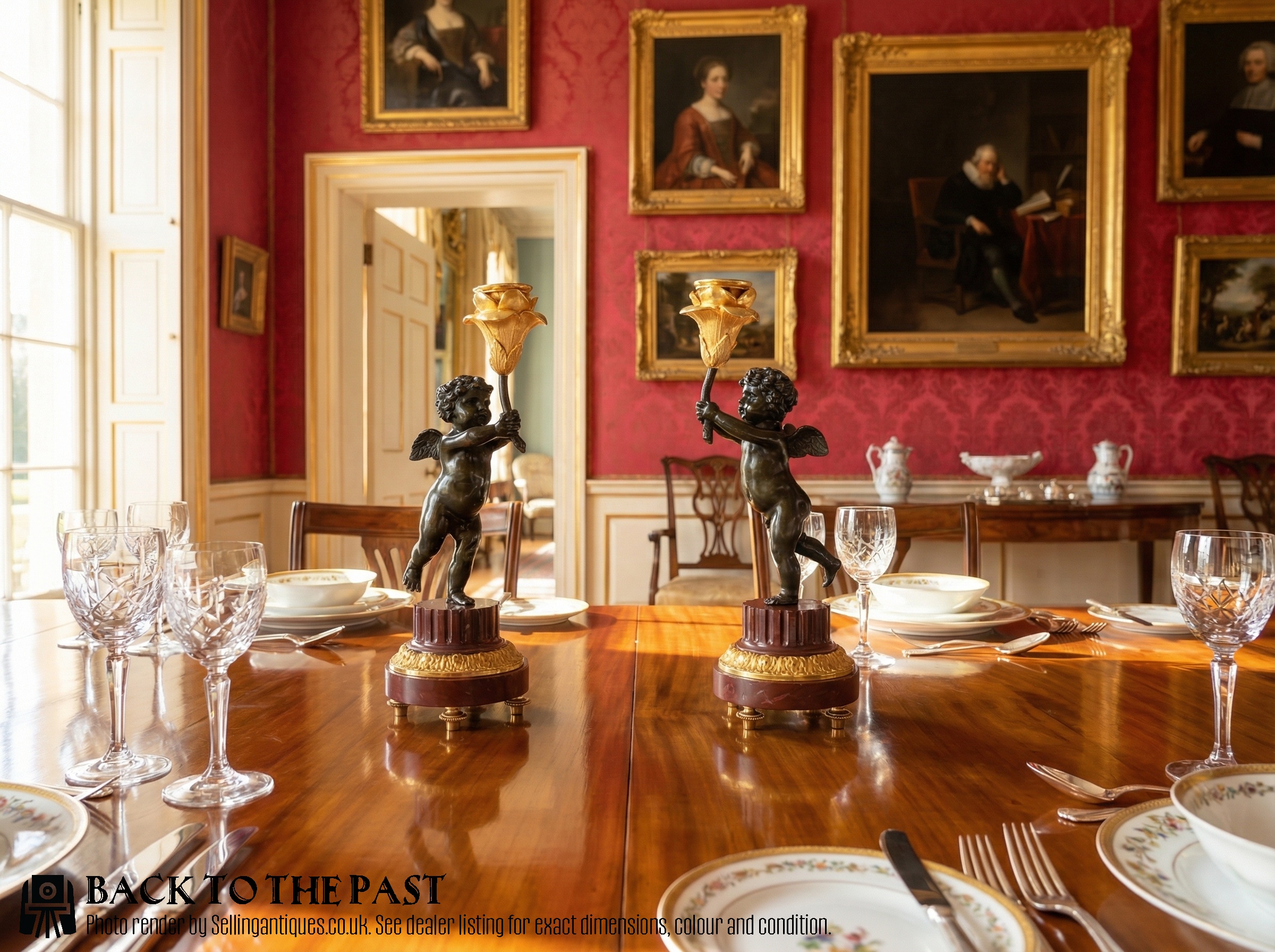
Owners placed them upon mantlepieces, side tables, and desks to provide illumination alongside decorative visual weight.
Multi-armed versions functioned as prominent centrepieces for dining tables and formal rooms.
How do I live with them?
Position them away from direct heat sources and moisture to protect the delicate gilt and marble surfaces.
Dust them gently with a dry, soft cloth rather than using liquid cleaning products that might damage the patination.
How do I tell periods apart?
Stylistic cues such as neoclassical proportions point towards Louis XVI revival aesthetics, while heavier cast ornamentation often suggests Napoleon III or French Empire periods.
Material combinations, including specific types of marble and gilding, help narrow down the decade of manufacture.