


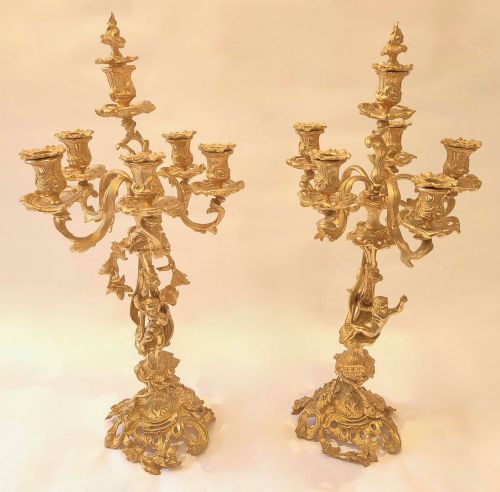

Multi Arm Candelabra
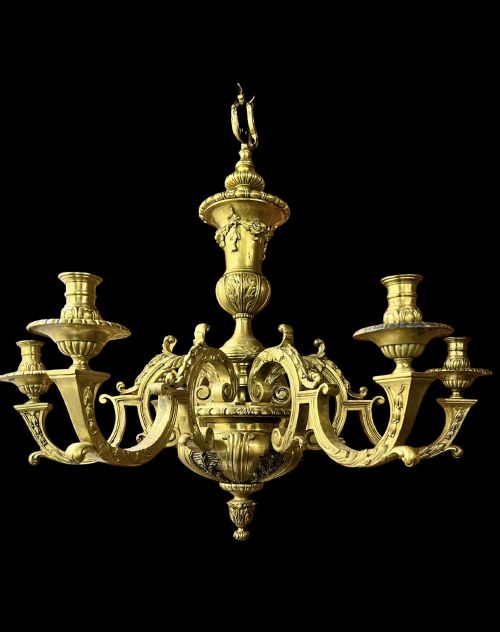
These multi arm candelabra pieces bring monumental illumination to a room, cast in heavy metals and gleaming with French ormolu.
Multi Arm Candelabra
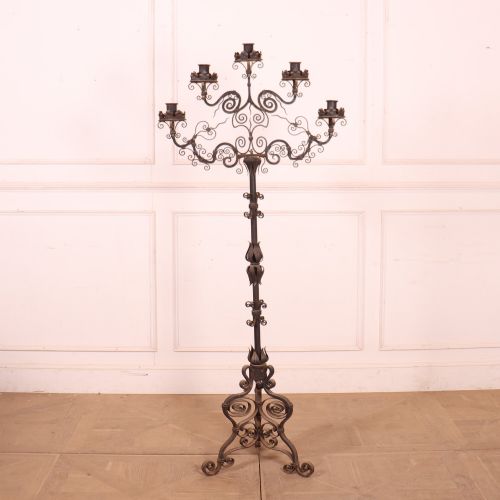
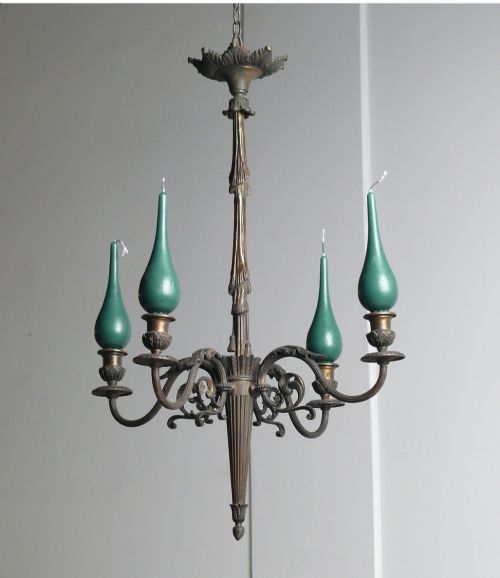
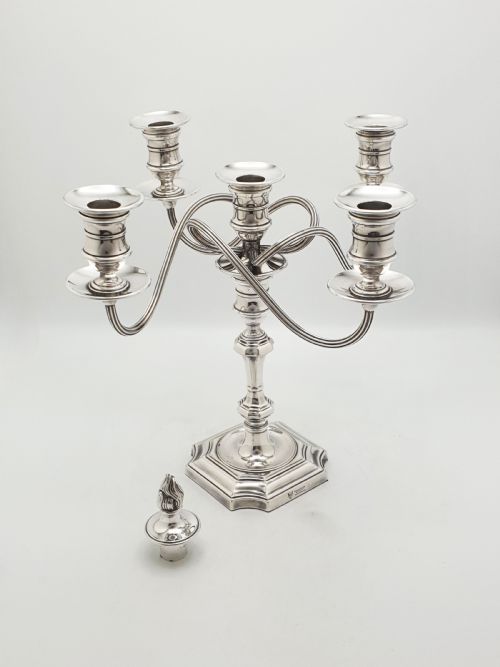
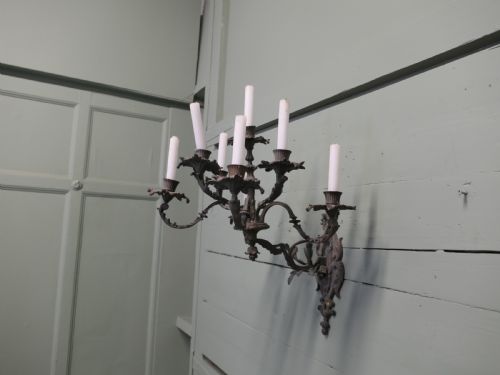
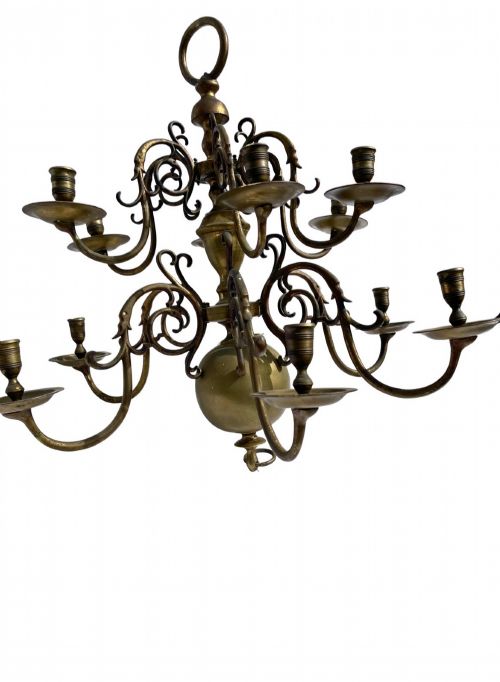
When you search for multi arm candelabra, you encounter monumental lighting pieces designed to hold multiple candles or bulbs across branches, sconces, and sconce arms. These branched fixtures take several physical forms, ranging from imposing floor-standing altar pieces and large pairs of table candelabras to wall sconces and multi-branch chandeliers.
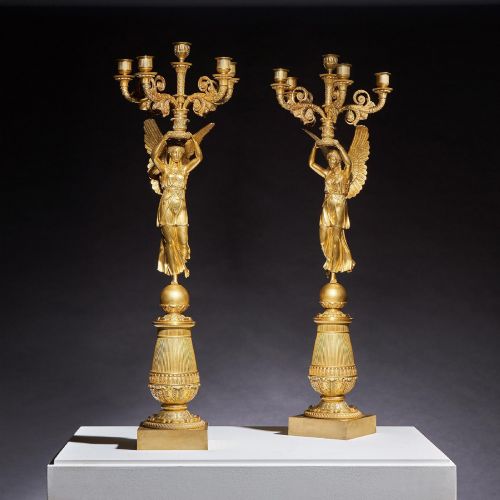
The selections span distinct historical periods and stylistic revivals, with nineteenth-century French designs appearing most frequently alongside Edwardian silver plate and Georgian style brass work. Makers drew upon varied idioms including French Empire, Gothic Revival, and Dutch Baroque to ornament these heavy metal fixtures.
How they were made
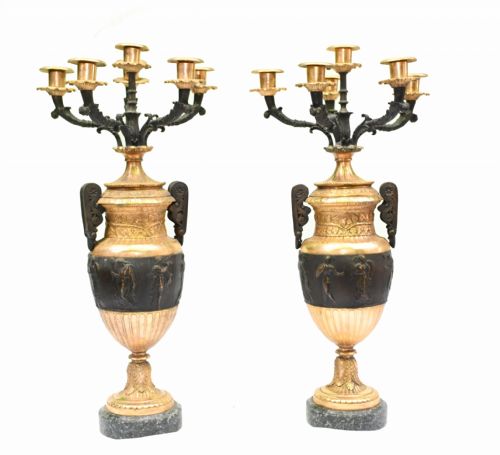
Makers utilised cast bronze, brass, and wrought iron as structural foundations, frequently applying fire gilding to create rich ormolu surfaces alongside patinated bronze details. Silver plating methods such as EPNS and traditional plating over base metals provided a bright reflective finish for later Victorian and Edwardian examples.
Decorative elements often incorporate cut glass drops hanging from bobeches, alongside chased foliate motifs and classical figural mounts cast in parts and assembled with threaded pins.
Current listings feature multi arm candelabra spanning the eighteenth through the twentieth centuries, utilising gilt bronze, ormolu, silver plate, and brass.
What varies in quality
The refinement of the casting and chasing work dictates the sharpness of detail in foliate scrolls and figural mounts across different examples. Heavier gauge metals and more complex multi-tier branch assemblies distinguish substantial display pieces from simpler domestic lighting.
The depth and preservation of the original gilding or patination layer significantly influence the visual impact of bronze and ormolu pieces.
Pierre Philippe Thomire·Thomas Hope
The Multi Arm Candelabra Glossary
- Ormolu
- Finely ground high-carat gold applied to a bronze base using a mercury amalgamation technique, yielding a warm golden lustre.
- Candelabrum
- A branched candlestick designed to hold multiple candles simultaneously on separate arms or lights.
- Bobeche
- A small collar or drip pan fitted beneath the candle nozzle to catch melting wax.
- EPNS
- Electroplated nickel silver, a common base metal process used for silver-plated items from the Victorian period onward.
- Patinated bronze
- Bronze treated with chemical solutions to produce a controlled surface colour or dark protective finish.
Multi Arm Candelabra: Frequently Asked Questions
What is a multi arm candelabra?
A multi arm candelabra is a branched lighting fixture or candle holder featuring multiple stems extending from a central shaft. These pieces were designed to illuminate large rooms and dining tables.
They appear in formats ranging from heavy floor-standing altar standards to table-top candelabras and wall sconces.
How were multi arm candelabra used?
These pieces served as functional light sources in grand interiors, holding tallow or beeswax candles before the widespread adoption of gas and electric lighting. Their substantial metal construction also allowed them to function as decorative centrepieces.
Many examples were later adapted for electricity while retaining their original branched frames and candle nozzles.
How do I date a multi arm candelabra?
Dating relies upon stylistic markers such as Empire cast ornaments, Gothic Revival tracery, or Edwardian silver plating techniques. The construction methods of the metal base and the style of assembly screws also offer clues to the period of manufacture.
Comparing the casting sharpness with known pieces from specific decades helps narrow the production era.
Where should I place a large candelabra?
Large multi arm candelabra suit prominent positions such as heavy sideboards, entrance halls, or as floor-standing accent pieces. Their visual weight requires stable placement on robust furniture or directly upon the floor.
Ensuring adequate clearance around the arms protects surrounding furnishings from heat or wax drips.