
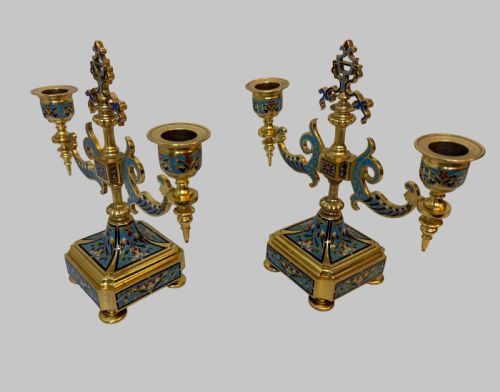
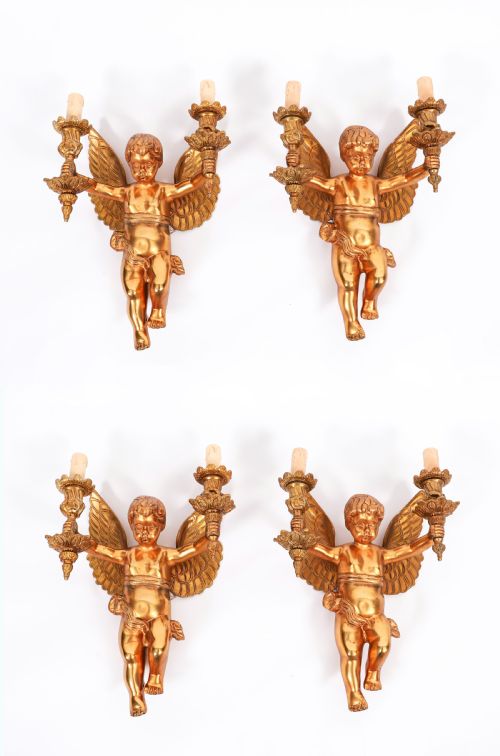
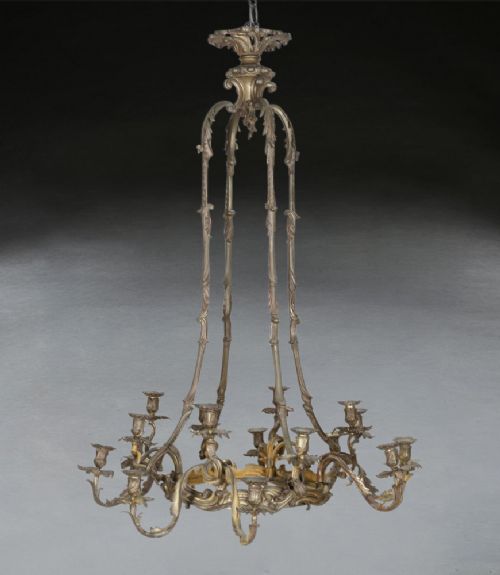


Gilded Bronze Candelabra
Gilded bronze candelabra are substantial multi-light candle fittings created to illuminate grand interiors with a warm, reflective metallic glow.
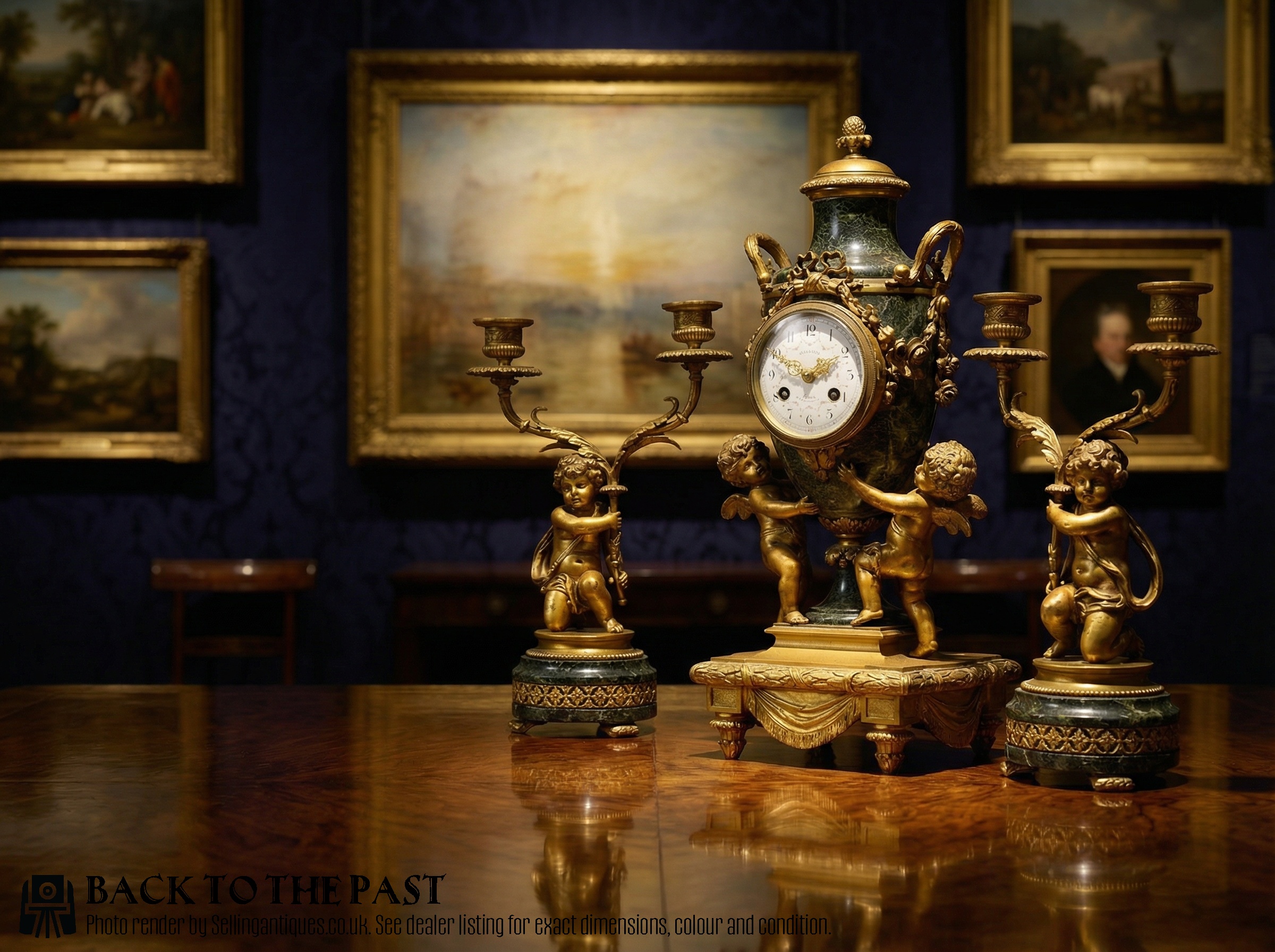
Gilded Bronze Candelabra
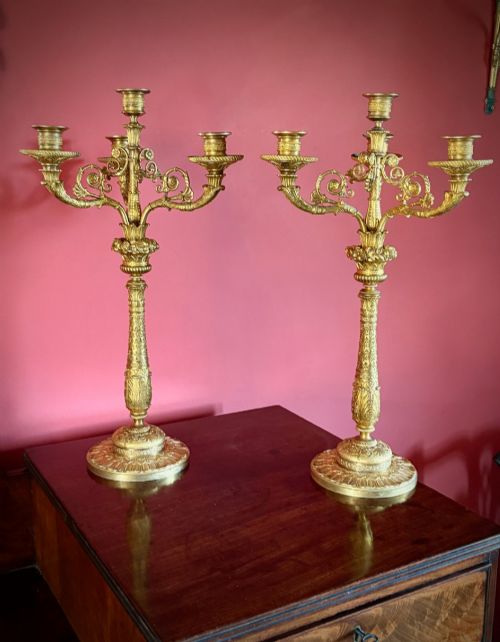
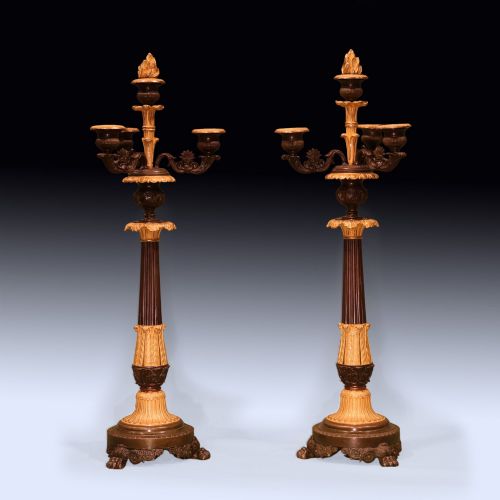
Gilded bronze candelabra take various multi-light forms designed for tables, walls, and mantelpieces during the nineteenth century and earlier. Buyers encounter French Rococo, Empire, and Victorian variations most frequently on this page.
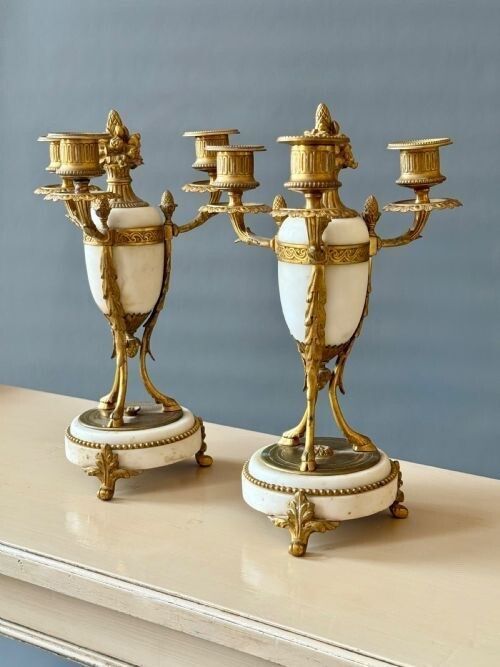
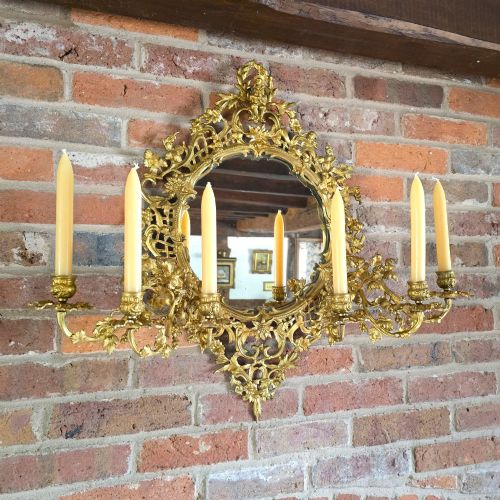
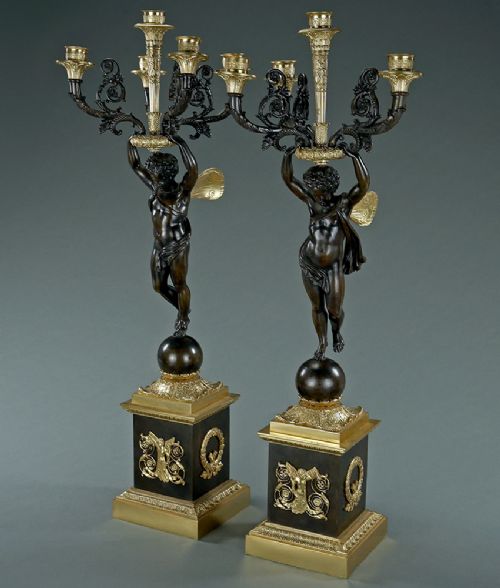
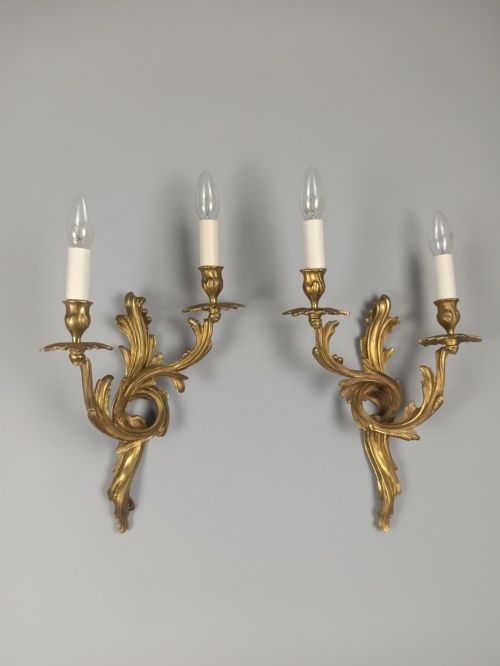
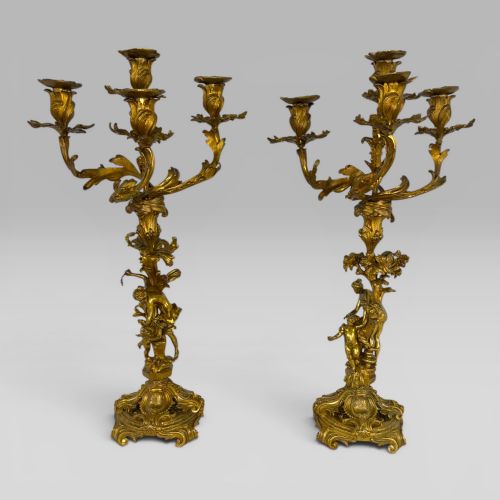
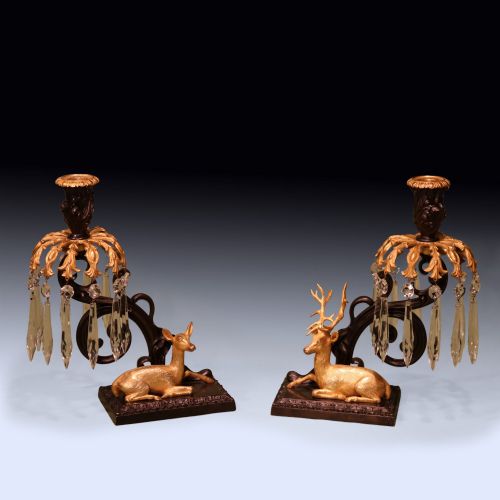
The objects span paired table candelabra, wall lights, sconces, and larger garniture sets incorporating marble, crystal, and enamel. Many examples display figural details such as cherubs, stags, and musicians integrated into the casting.
Origins heavily lean towards French workshops following classical or revivalist decorative schemes, alongside occasional Italian and Swedish pieces. These items function both as functional lighting fixtures and sculptural works of interior art.
Materials and technique
Makers cast metal components in bronze, brass, or ormolu before applying gold gilding to achieve a lustrous, durable finish. This metallic foundation frequently combines with white marble bases, crystal drops, and champlevé enamel detailing.
Artisans combined bronze casting with mercury gilding or electroplating techniques to create the characteristic golden surface sheen. Hand-chasing refined the cast details, sharpening the acanthus leaves, figures, and architectural motifs.
Gilded Bronze Candelabra Retail Price Guide 2026
Typical asking prices for gilded bronze candelabra among the pieces listed under this phrase on Sellingantiques today, from the lower quarter to the upper quarter. They describe what is for sale here now, not the wider market.
Listings feature items dated across the nineteenth century, including specific years like 1850, 1860, 1870, 1880, 1890, 1900, 1910, 1920, and 1930.
Variations in quality
Superior examples display crisp hand-chasing across the cast bronze surface, giving definition to foliage and figures that weaker castings lack. The depth and evenness of the gilt layer also distinguish finer workshop output from simpler production.
The integration of secondary materials like white marble plinths, enamel work, or cut crystal determines the ambition of the piece. Heavier gauge metalwork and harmonious proportions separate standard decorative objects from high-end salon pieces.
The Gilded Bronze Candelabra Glossary
- Ormolu
- Finely ground high-carat gold applied to a bronze base using a mercury amalgamation process. This technique produces a deep, lasting golden lustre characteristic of antique French metalwork.
- Garniture
- A coordinated set of ornamental objects, typically comprising a central clock flanked by matching candelabra or vases. These sets balanced mantelpieces and sideboards in formal nineteenth-century rooms.
- Champlevé
- An enamelling technique where troughs are dug into a metal surface and filled with vitreous paste before firing. The resulting coloured patterns complement the surrounding gilded bronze.
- Candelabrum
- A branched candlestick designed to hold multiple candles simultaneously. The plural form is candelabra.
- Sconce
- A wall-mounted lighting fixture with branches that project outwards to hold candles. They often incorporate mirrors to maximise the spread of light.
Gilded Bronze Candelabra: Frequently Asked Questions
Can these candelabra be wired for electricity?
Many buyers choose to convert antique pieces into table lamps or wired fittings for modern daily use. Professional conversion avoids damaging the original structure and ensures safe electrical connections.
It is wise to retain the original wax-catching drip pans and removable nozzle inserts if possible. Reversible wiring methods allow the fixture to return to its original candle-holding state later.
What is the difference between ormolu and gilded bronze?
Ormolu specifically refers to mercury-gilded bronze produced primarily in France during the eighteenth and nineteenth centuries. The term denotes a very specific historic technique yielding a rich, matte golden finish. NINETEENTH CENTURY Gilded bronze is a broader descriptive term covering any bronze object coated in gold, including later electroplated variations. Both terms appear frequently in descriptions of nineteenth-century decorative metalwork.
Where were these candelabra originally placed?
Grand nineteenth-century interiors positioned large pairs of candelabra on mantelpieces, often flanking matching clocks as part of a garniture set. Dining tables and sideboards also hosted multi-branch pieces to provide ambient illumination.
Wall lights and sconces were fixed directly to drawing-room walls, frequently positioned above mirrored surfaces to multiply the flickering candle glow. Their heavy construction required secure mounting into solid masonry or panelled walls.