

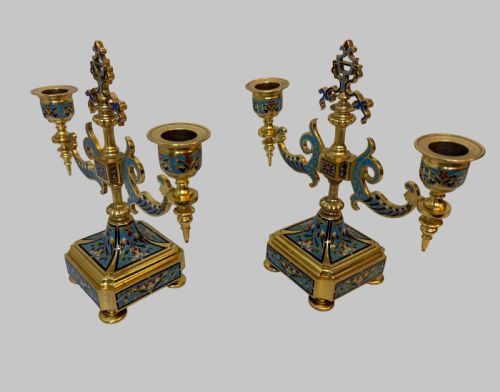


Ornate Bronze Candelabra
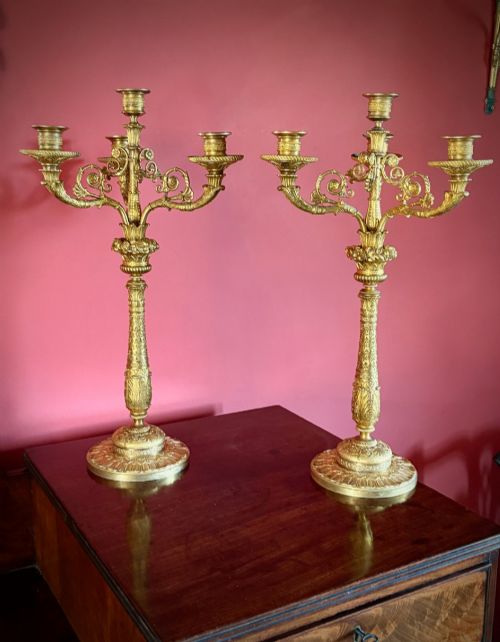
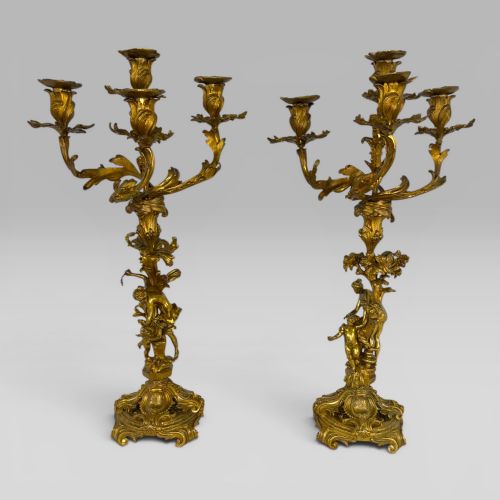
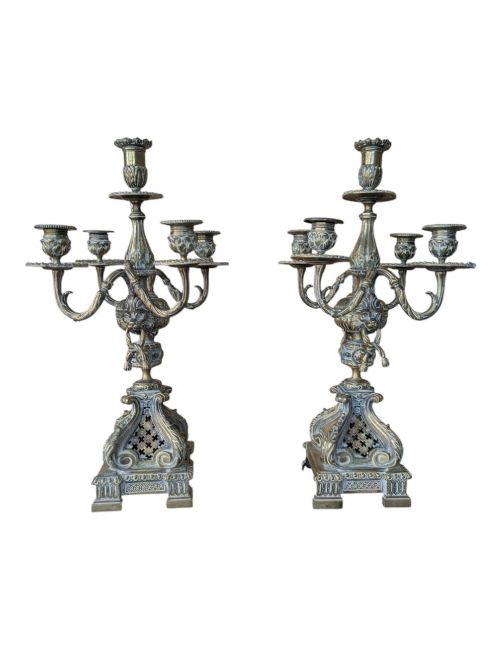
These ornate bronze candelabra bring weight and intricate metalwork to a room, drawing the eye with period forms and rich gilding.
Ornate Bronze Candelabra
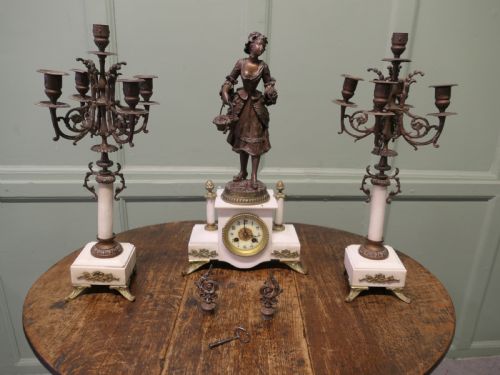
When you search for ornate bronze candelabra, you find multi-branch lighting pieces designed to hold several candles at once. These objects served both practical illumination and decorative display in nineteenth-century interiors, often forming part of larger clock garniture sets or sitting upon mantelpieces.
The pieces on this page lean heavily towards French designs, spanning styles from French Rococo Revival and Louis XVI to Empire and Victorian interpretations. You will frequently encounter matched pairs featuring figural elements, scrollwork arms, and integrated marble bases.
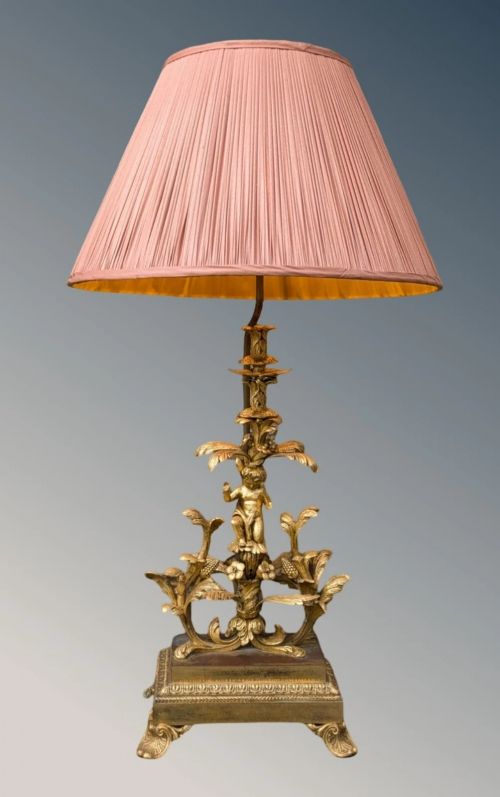
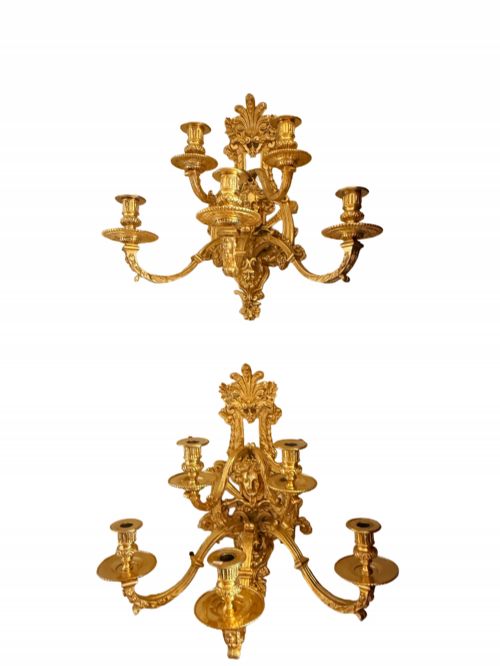
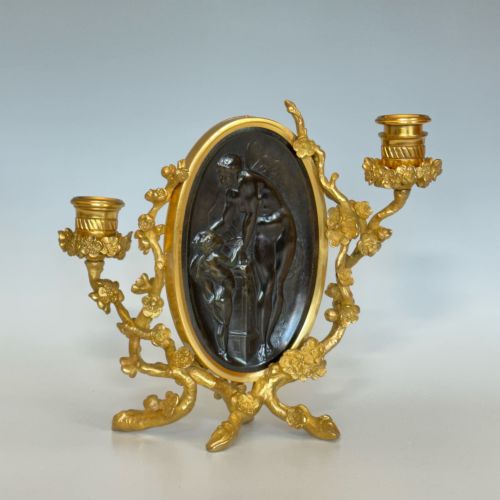
Beyond standard candelabra, the selections extend into related wall sconces, clock garnitures, and table lamps that share the same heavy metal casting and ornate surface decoration. These items originate predominantly from nineteenth-century workshops utilising classical motifs.
How they were made
Makers cast these pieces using bronze, brass, and gilt metal, often applying an ormolu finish where a layer of gold was amalgamated onto the base metal through mercury gilding. This technique produced a deep, lasting lustre that survived decades of polishing.
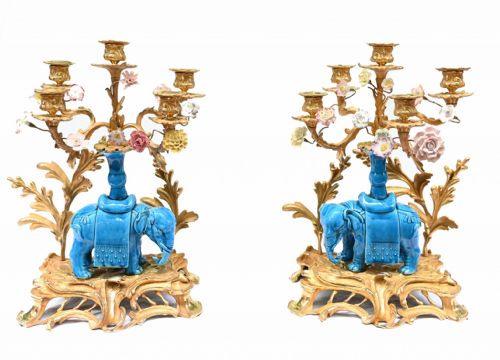
Many examples combine cast metal with contrasting materials such as marble, porcelain, champlevé enamel, and crystal drops. Artisans assembled these components mechanically using threaded rods and screws, allowing complex multi-arm structures to remain stable.
Listings feature 19th-century periods alongside materials like gilt bronze, ormolu, marble, and enamel.
What varies in quality
The integrity of the surface finish also defines the upper tier, where original fire gilding retains its warm, varied tone rather than a flat, modern plating. Weight, balanced proportions, and the inclusion of original matching components like marble plinths separate standard production from exceptional workshop output.
Thiebaut Freres·Auguste Cain
The Ornate Bronze Candelabra Glossary
- Ormolu
- A technique of applying finely ground high-carat gold to a bronze object using a mercury amalgam. It creates a rich, golden surface finish characteristic of fine French decorative arts.
- Garniture
- A set of decorative objects designed to be displayed together, typically comprising a mantel clock flanked by matching candelabra or vases. These sets anchored nineteenth-century interior mantelpiece arrangements.
- Champlevé
- An enamelling technique where troughs or cells are hollowed out of the metal surface and filled with coloured glass paste before firing. The resulting design sits flush with the surrounding bronze borders.
- Sconce
- A wall-mounted lighting fixture featuring arms that project outward to hold candles or lamps. These fixtures mirror the stylistic details of freestanding candelabra.
- Casting
- The process of pouring molten metal into a mould to form a desired shape. Intricate pieces required multiple cast sections joined together.
Ornate Bronze Candelabra: Frequently Asked Questions
How do I clean ornate bronze candelabra?
Dust the metal gently with a soft, dry brush to prevent dirt accumulation in the recessed areas of the casting. Avoid harsh chemical cleaners or abrasive polishes that can strip away historic gilding and patination.
For pieces with marble or crystal components, wipe those specific surfaces with a damp cloth while keeping moisture away from any exposed joints. Regular, gentle maintenance preserves the original finish without altering the surface character.
What is a clock garniture set?
A clock garniture set consists of a central mantel clock accompanied by two matching side pieces, such as candelabra, urns, or vases. These matched suites were designed to create a balanced display across a fireplace mantel or sideboard.
In nineteenth-century interiors, garnitures provided both functional timekeeping and symmetrical decoration. The side candelabra matched the clock in material, style, and ornamental detail.
Were these candelabra electrified later?
Many nineteenth-century candelabra and related lighting pieces underwent conversion to electricity during the twentieth century to suit modern homes. This often involved running wiring through the central column or down the candle nozzles.
Collectors encounter both converted examples and untouched pieces that still retain their original candle sockets. Evaluating a piece requires checking how any wiring alterations were executed.
How do I identify French Rococo Revival style?
French Rococo Revival pieces feature asymmetrical designs, curving scrollwork, and naturalistic motifs like shells, foliage, and flowers. The forms avoid straight lines in favour of fluid, serpentine contours.
This nineteenth-century style drew inspiration from earlier eighteenth-century French decorative arts under Louis XV. The castings are typically heavier and more robust than their antique precursors.