

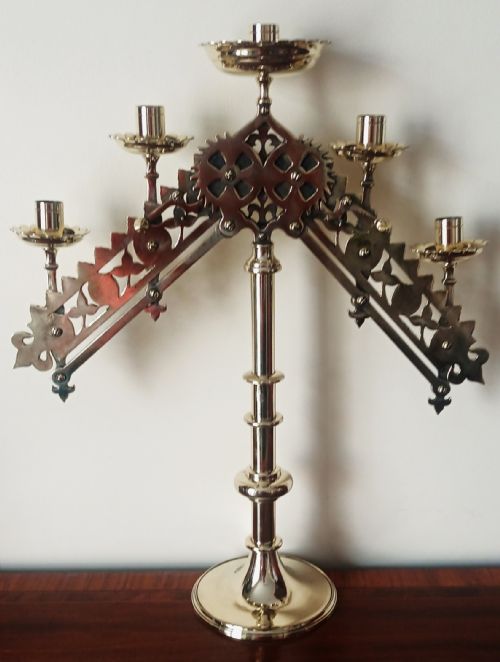


Ecclesiastical Altar Candlestick
These ecclesiastical altar candlestick pieces bring architectural presence and devotional history to a room.
Ecclesiastical Altar Candlestick
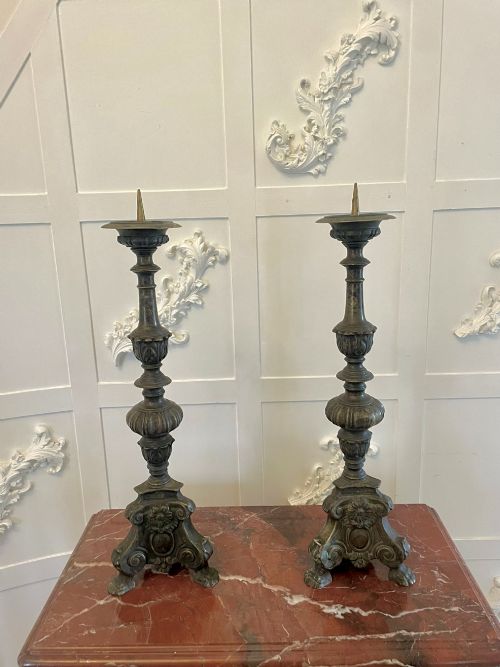
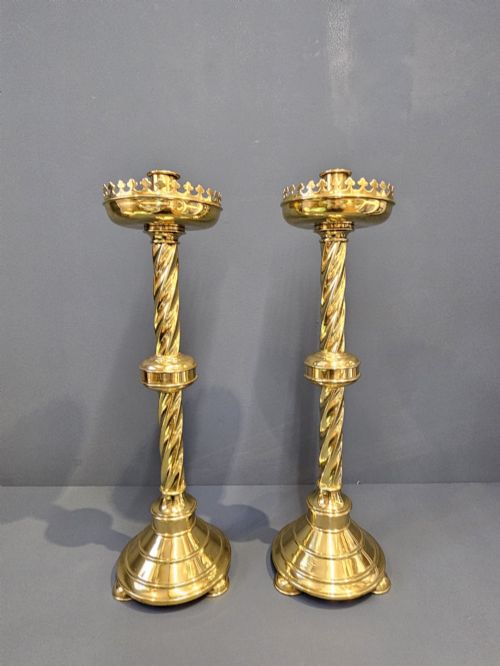
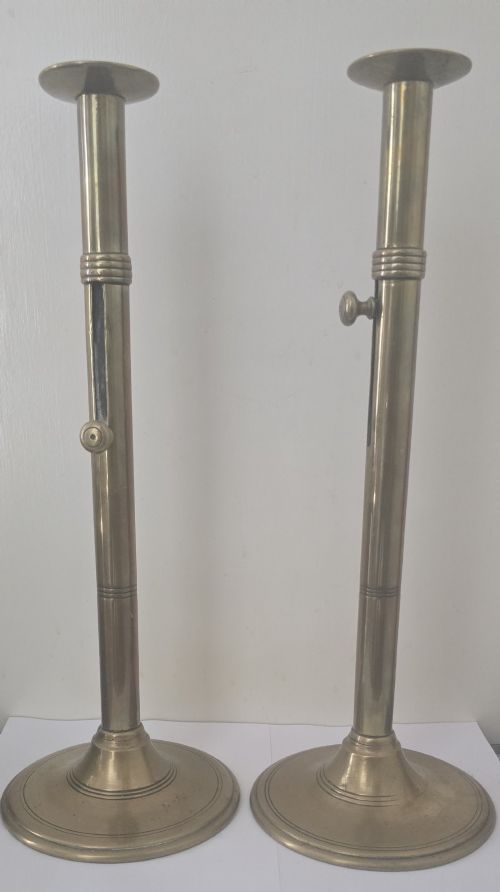
An ecclesiastical altar candlestick is a heavy, commanding metal or wooden light-holder designed originally for church altars, frequently seen here in pairs and sets from the Victorian and nineteenth century periods. These items range from simple socket sticks to tall pricket forms with spikes designed to hold large wax candles.
The dominant style on this page is Gothic Revival, marked by pointed arches, trefoils, and heavy ecclesiastical proportions borrowed from medieval architecture. Alongside these, French, Spanish, and Italian pieces bring continental baroque and giltwood influences to the selection.
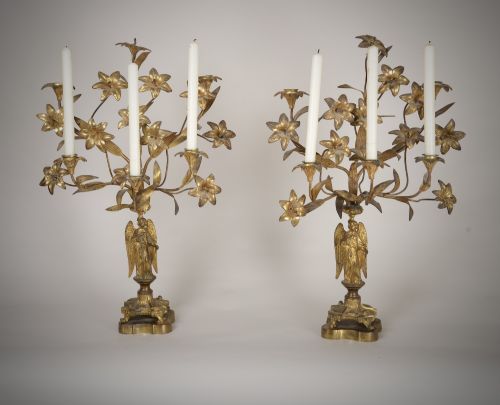
Buyers will encounter standard table candlesticks alongside converted lamp bases and articulated candelabra. Many items trace their origins to the nineteenth century, with occasional eighteenth-century wooden and gilt examples appearing in the listings.
Distinctions in craftsmanship and material weight
The distinction between ordinary production and superior quality rests in the crispness of casting detail and the sheer heft of the metal. Heavier brass and bronze castings retain sharper architectural mouldings and more complex chased enrichment.
Proportion and integrity of surface finish also set examples apart, particularly where gilding, silver plating, or original patination remains intact. Sets of four maintain a higher level of desirability compared to single pieces or mismatched pairs.
Angels carved from wood occasionally hold the candle aloft, bringing a distinct heavenly presence to the sideboard.
T Thomason & Co
The Ecclesiastical Altar Candlestick Glossary
- Pricket
- A candlestick featuring a sharp metal spike at the top that pushes directly into the base of a thick candle. This form is common on church altars.
- Knop
- A distinct bulging knob or decorative swelling on the stem of a candlestick, providing grip and visual balance. They often feature floral or architectural embossing.
- Giltwood
- Timber that has been coated with a thin layer of gold leaf or gold paint over a gesso ground. This finish provides a warm, reflective surface.
- Treen
- Small handmade wooden objects and household wares produced from local timbers. It denotes utilitarian or decorative turned wood items.
- Candelabra
- A branched candlestick holder designed to support multiple candles from a single base. These branch arms often articulate or pivot.
Ecclesiastical Altar Candlestick: Frequently Asked Questions
What is a pricket candlestick?
A pricket candlestick uses a central spike instead of a traditional socket to secure the candle. This design requires candles with a hollow base or a pushed-in dimple to mount safely.
Such pieces originate from liturgical settings where large, thick altar candles were standard practice.
How do I clean antique brass?
Antique brass requires minimal intervention to preserve its accumulated oxidation and age. Dusting with a soft dry cloth is usually sufficient for regular maintenance.
Avoid harsh commercial metal polishes that strip away historical patina and leave a bright, unnatural shine.
Are these items converted to lamps?
Several listings on this page note conversion to electric table lamps, often retaining the original pricket or socket structure above. This adaptation allows these tall forms to function safely with modern wiring.
Buyers should inspect the listing details to determine if a piece remains in its original candle-holding state.
How do I identify Gothic Revival style?
Gothic Revival pieces borrow heavily from medieval ecclesiastical architecture, featuring pointed arches, quatrefoils, and heavy geometric decoration. The metalwork often mimics stone tracery and structural buttressing.
This aesthetic dominated Victorian church metalwork and domestic revival interiors.