


Louis XVI Clock Garniture
A louis xvi clock garniture brings symmetrical elegance to a mantelpiece, pairing a central timepiece with matching flanking ornaments.
Louis XVI Clock Garniture
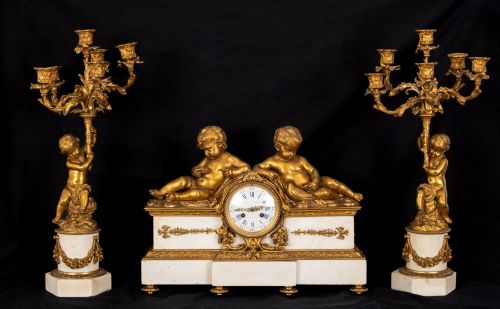
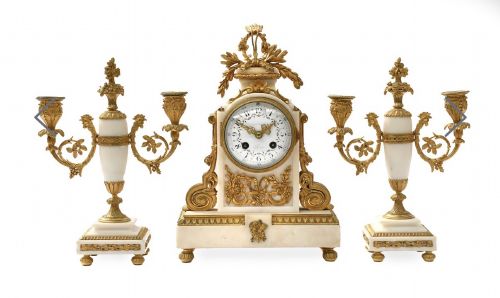
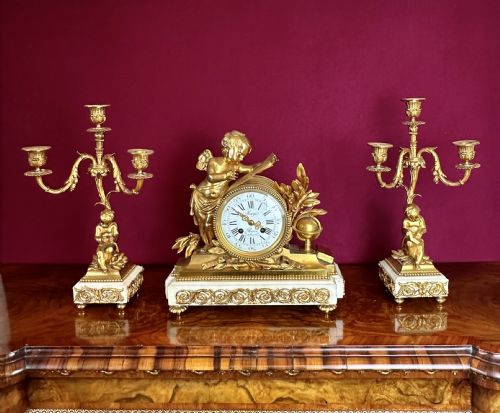
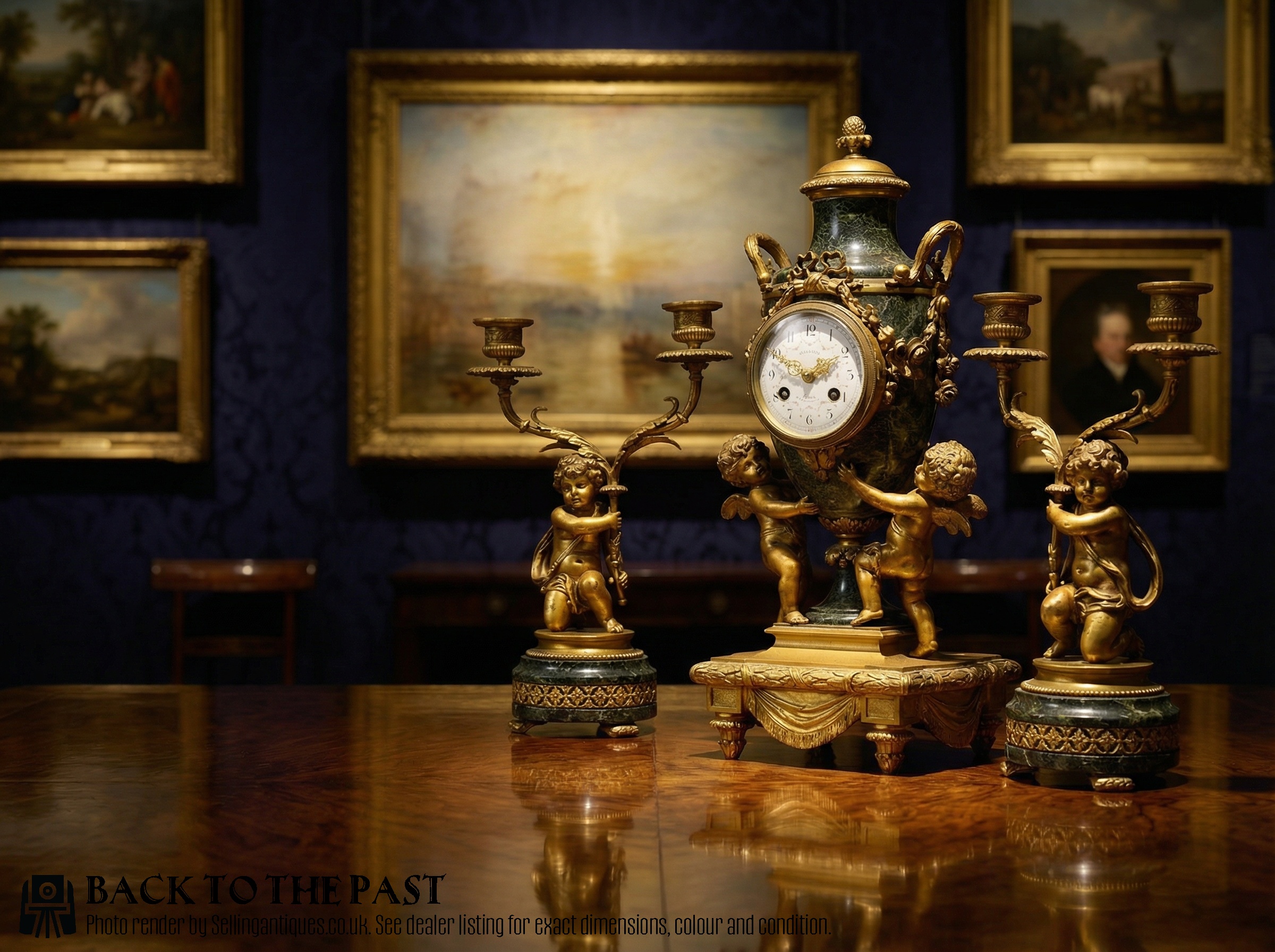
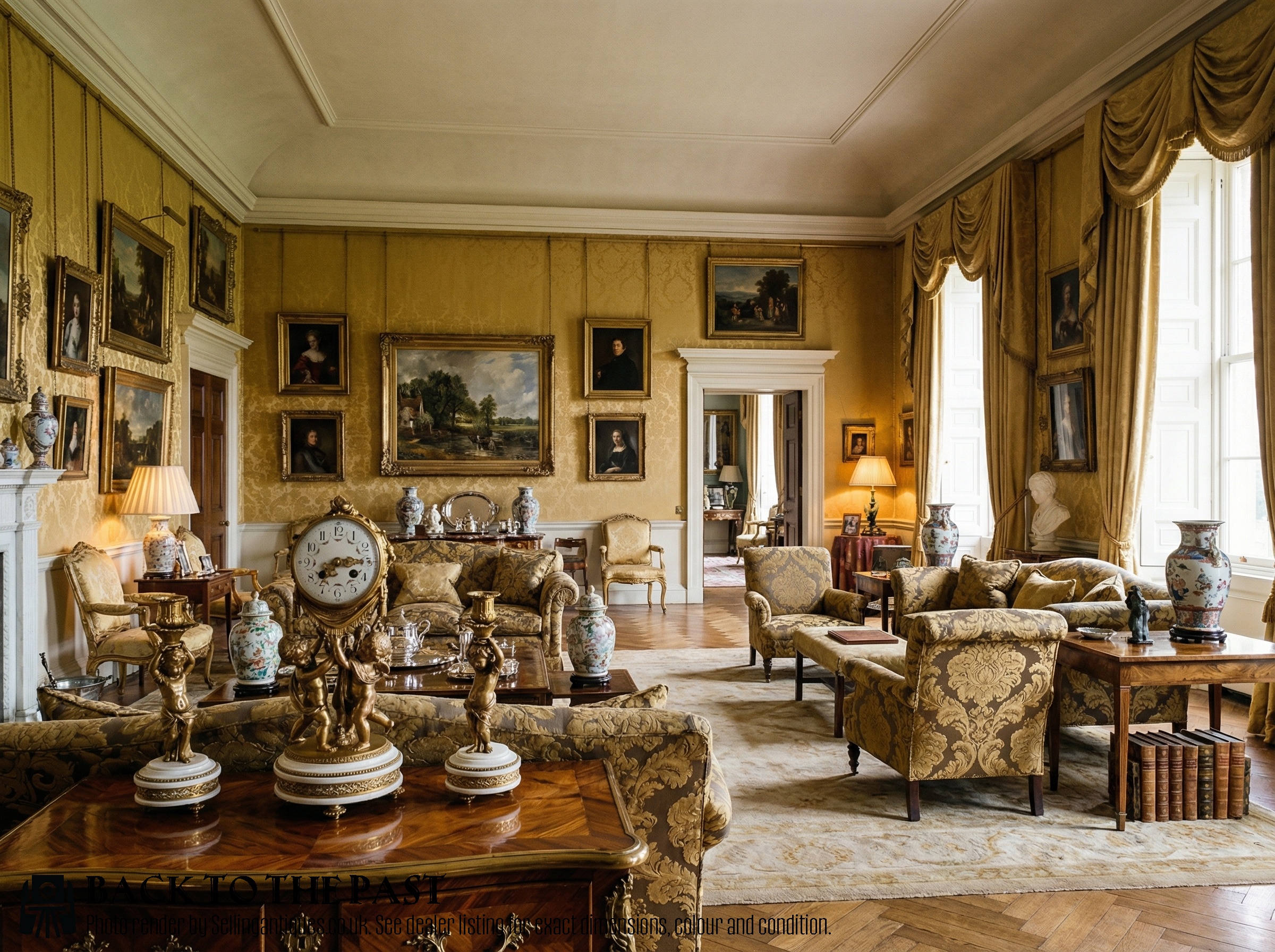
When you examine a louis xvi clock garniture, you encounter a matching ensemble designed to dress a chimney piece with classical proportion and coordinated detail. The group typically consists of a central mantel clock accompanied by a pair of matching candelabras, urns or side pieces.
The pieces appearing on this page belong predominantly to the nineteenth century, including revivals from the Victorian era alongside pieces dated around eighteen eighty and nineteen hundred. These later interpretations faithfully reproduce the classical restraint, architectural symmetry and refined decorative vocabulary of the original eighteenth-century French aesthetic.
Forms span from compact boudoir sets to monumental compositions featuring white or red marble bases, gilt bronze mounts and porcelain elements. The unifying characteristic is the deliberate visual harmony shared between the central timekeeper and its accompanying side ornaments.
Materials and construction methods
Maker workshops built these sets using substantial foundations of white, red or variegated marble paired with cast brass, gilt bronze and ormolu mounts. The heavy stone plinths provided stability and a cool classical contrast to the warm, shimmering surface of the gilded metalwork.
Decorative enrichment relied heavily on hand-chiselled bronze details, fired enamel clock faces with delicate numeric indicators, and painted porcelain panels such as Sevres inserts or Bleu de Roi bodies. Movement gears and visible pendulums required precise mechanical engineering housed securely within the stone and metal chassis.
Louis XVI Clock Garniture Retail Price Guide 2026
Typical asking prices for louis xvi clock garniture among the pieces listed under this phrase on Sellingantiques today, from the lower quarter to the upper quarter. They describe what is for sale here now, not the wider market.
Listings demonstrate a strong preference for white marble foundations paired with gilt bronze mounts and cherub motifs.
Distinguishing tiers of craftsmanship
Quality reveals itself in the crispness of the gilt bronze chasing and the weight and purity of the marble foundations. Superior sets display deeply sculpted cherubs, acanthus leaves and classical motifs where every edge remains sharp and well-defined rather than soft or cast from worn moulds.
The integration of renowned movement makers and named Parisian retail houses elevates an assemblage significantly. Furthermore, the harmonious proportion between the central clock and its matching side pieces determines the overall visual success of the composition.
Henry Dasson·H Luppens Paris·AD Mougin Paris·Ferdinand Berthoud·Vincenti·Japy Freres
The Louis XVI Clock Garniture Glossary
- Ormolu
- Gilt bronze produced by applying a finely ground high-carat gold mercury amalgam to a bronze base and heating it to vaporise the mercury. This technique creates a rich, enduring golden surface.
- Bleu de Roi
- A deep, saturated royal blue ceramic glaze developed at the Sevres porcelain factory in France. It frequently serves as a rich backdrop for gilded mounts on clock bodies and vases.
- Lyre clock
- A mantel clock shaped like the ancient musical instrument, featuring an open-frame body that often reveals the swinging pendulum within. These pieces are frequently mounted with gilt bronze and porcelain.
- Candelabra
- A branched candlestick designed to hold multiple tapers, produced as the matching side ornaments in a complete clock garniture. They mirror the decorative motifs and metal finish of the central timepiece.
Louis XVI Clock Garniture: Frequently Asked Questions
What is a clock garniture?
A clock garniture is a matched decorative set consisting of a central mantel clock and two accompanying side ornaments, such as candelabras or urns. These pieces were designed to be displayed together on a mantelpiece to create a balanced, symmetrical arrangement.
The concept allowed nineteenth-century households to achieve a cohesive interior aesthetic through coordinated materials like gilt bronze, marble and porcelain. Each component shares identical stylistic motifs, ensuring the entire grouping reads as a single artistic statement.
How do I style a garniture?
Position the central clock in the exact centre of the mantelpiece, then place the matching candelabras or urns symmetrically on either side. Ensure the surrounding space is uncluttered so the classical lines and gilded details can catch the light without competition.
Keep in mind that these sets possess considerable visual weight and require a sturdy surface such as a wooden mantel, marble console or large sideboard. Their formal symmetry works best when centred beneath a mirror or a piece of large wall art.
Are these clocks still functional?
Many nineteenth-century mantel clocks retain their original mechanical movements and can keep time accurately when properly wound and serviced by a professional horologist. The mechanisms typically feature spring-driven or weight-driven gear trains with pendulum regulation.
Regular maintenance ensures the brass gears, escapements and striking trains continue to operate smoothly. Even when unkeyed or used purely for decorative display, the visible pendulums and enamelled dials contribute to the rich character of the room.
How do I identify Louis XVI style?
Louis XVI style is defined by a return to classical straight lines, geometric symmetry and restrained architectural motifs inspired by ancient Rome and Greece. Look for fluted columns, laurel wreaths, ribbons, urns and crisp rectangular or circular marble bases rather than the swirling asymmetry of earlier rococo designs.
The palette relies on the contrast between white or coloured marble and the warm gleam of ormolu and gilt bronze mounts. Cherubs, swags and classical urns frequently appear cast in high relief across the bronze components.