




Putti Mantel Clock Garniture
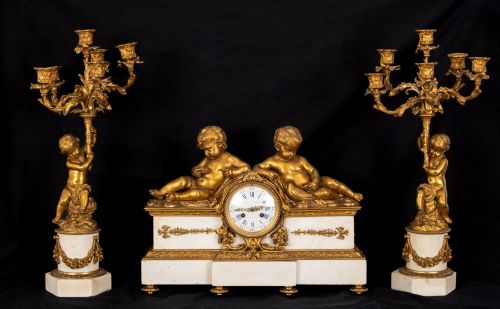
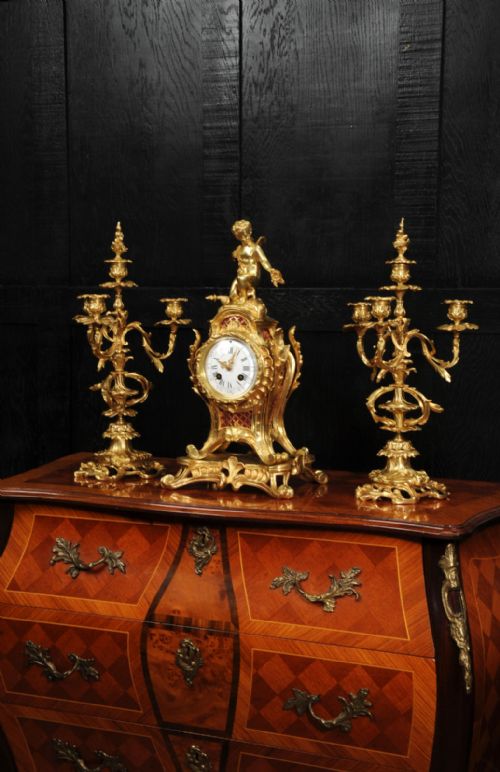
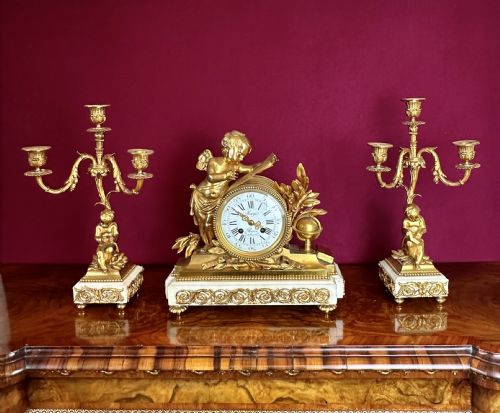
These putti mantel clock garniture sets bring nineteenth-century French bronze, ormolu and marble into a room with figural cherubs and matching candelabras.
Putti Mantel Clock Garniture
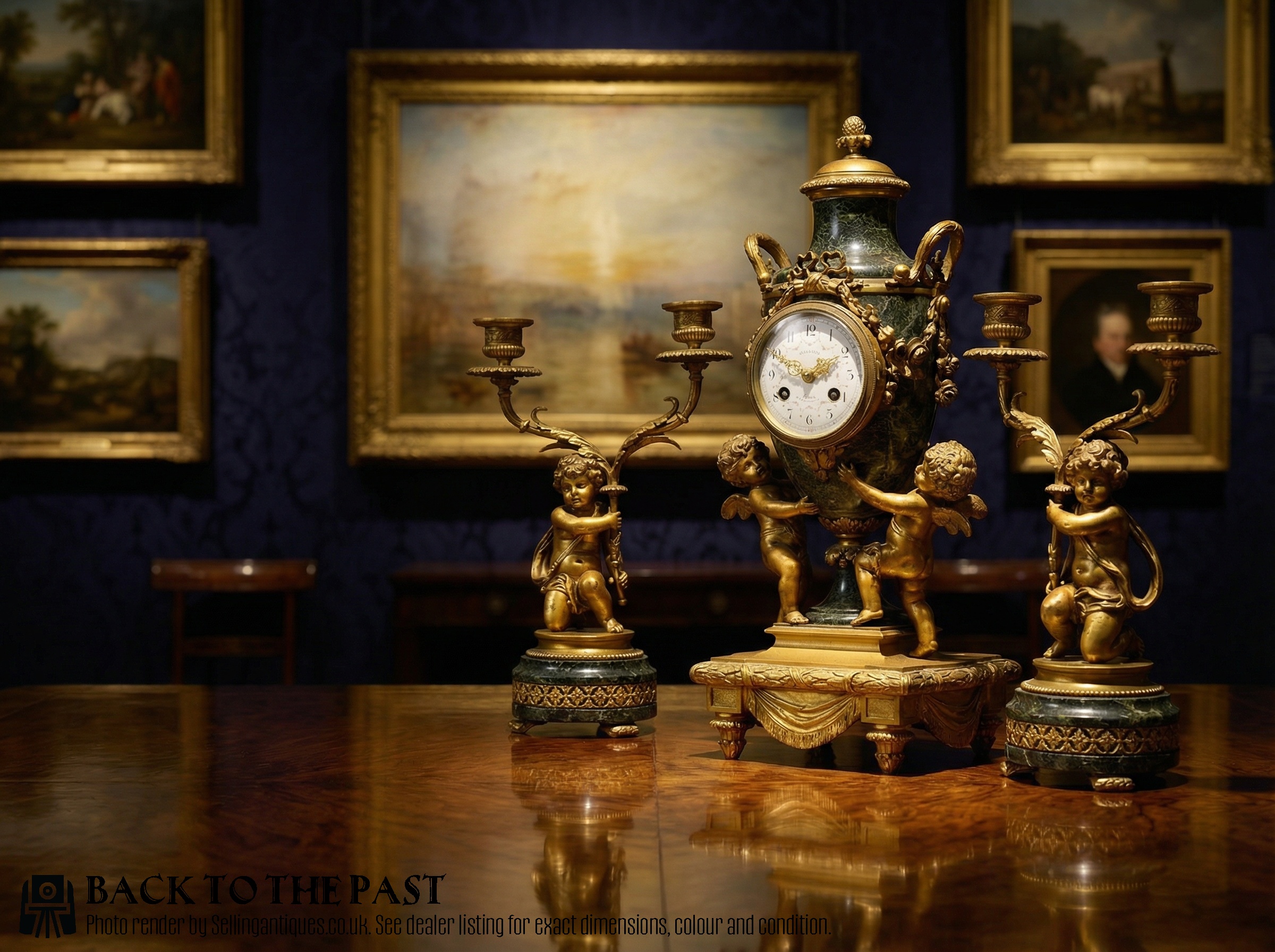
When you search for putti mantel clock garniture, you encounter nineteenth-century decorative sets comprising a central mantel clock flanked by matching candelabras or urns. The pieces seen here date from the Victorian era, specifically the 1870s, 1880s, 1890s, and broader nineteenth-century periods.
You are most likely to meet French Louis XVI style, Louis XVI Revival, and French Rococo Revival forms on this page. These setups frequently feature cherubs, cupids, and putti figures cast in ormolu, gilt bronze, or gilt metal.
The materials paired with these gilt metals include white marble, green marble, red marble, and enamel dial faces. Clock sets appear alongside individual clock garnitures and candelabra combinations, anchored in nineteenth-century European craftsmanship.
Materials and construction
These garnitures rely on metal casting techniques to form intricate ormolu, gilt bronze, and bronze components shaped into putti and rococo scrollwork. The metal surfaces receive heavy gilding to produce the characteristic bright, reflective finish seen across the Victorian period.
Natural stones such as white marble, green marble, and red marble are carved and polished to form the substantial bases and column bodies of the clocks and candelabras. Dial faces incorporate enamel work with detailed numeric markings, housing mechanical movements often featuring visible pendulums.
Every cherub watches the room with distinct chubby cheeks, cast to remind observers of eighteenth-century court indulgence.
Markers of quality
The cohesion of the design determines the visual success of the garniture set, particularly how well the central clock matches the flanking candelabras in gilt tone and stylistic detail such as Louis XVI or Rococo Revival motifs.
Meissen
The Putti Mantel Clock Garniture Glossary
- Ormolu
- A gilded bronze technique utilising finely ground gold mercury amalgam applied to a cast bronze base. This process creates the rich, metallic golden sheen characteristic of French decorative objects.
- Garniture
- A set of decorative matching objects designed to be displayed together on a mantelpiece. Typically, this includes a central clock accompanied by two side pieces such as candelabras or urns.
- Putti
- Depictions of plump, winged infant figures, often appearing as cherubs or cupids in nineteenth-century sculpture and metalwork. These motifs feature prominently across Louis XVI and Rococo revival designs.
- Candelabra
- A branched candlestick holder designed to match the central timepiece in a garniture set. They share the same stylistic vocabulary, materials, and metal finishes as the clock.
- Louis XVI Revival
- A nineteenth-century design movement drawing inspiration from the neoclassical motifs of the eighteenth-century French court. Pieces in this style utilise symmetrical geometry, ribbon twists, and classical urns alongside gilt bronze.
Putti Mantel Clock Garniture: Frequently Asked Questions
What is a putti mantel clock garniture?
A putti mantel clock garniture is a matched set consisting of a central clock and side candelabras featuring decorative cherub or cupid figures. These ensembles were designed for domestic display on mantelpieces during the nineteenth century.
They combine cast bronze or ormolu mounts with marble bases and enamel dials, reflecting popular French revival styles of the period.
How do I date a nineteenth century clock set?
Dating these pieces involves examining the styling cues, such as whether the piece follows Louis XVI neoclassical symmetry or ornate French Rococo Revival asymmetry. Material combinations like red marble with gilt bronze often point towards specific decades within the Victorian era.
Maker marks on the movement gears or backplates, along with the composition of the enamel dial, help narrow down the production period.
Where were these clock sets displayed?
These garniture sets were traditionally placed on the mantelpiece above a fireplace in Victorian drawing rooms and formal reception rooms. The central clock sat flanked by the matching candelabras to create a balanced decorative arrangement.
Their reflective ormolu surfaces and white marble bodies were intended to catch candlelight and illuminate nineteenth-century interiors.
How do I care for marble and ormolu?
Maintaining ormolu and gilt bronze requires gentle dusting with a soft, dry cloth to protect the delicate gilded surface from abrasion. Moisture and chemical cleaners should be kept away from both the metal gilding and the enamel dial faces.
Marble bases benefit from occasional wiping with a damp cloth followed immediately by a dry one, avoiding acidic substances that can etch the polished stone.