



Dark Bronze Candelabra
Dark bronze candelabra bring sculptural presence and warm illumination to a room, spanning Regency, Victorian and French Empire styles.

Dark Bronze Candelabra
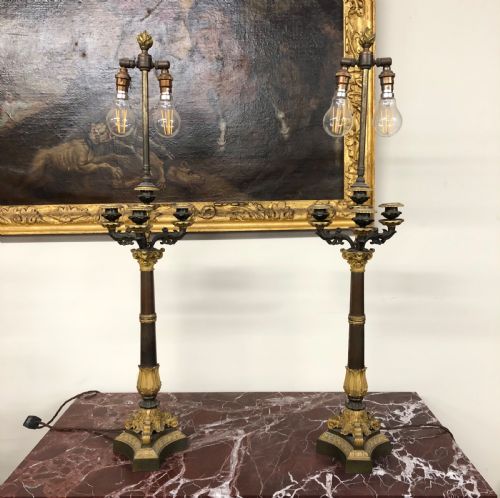
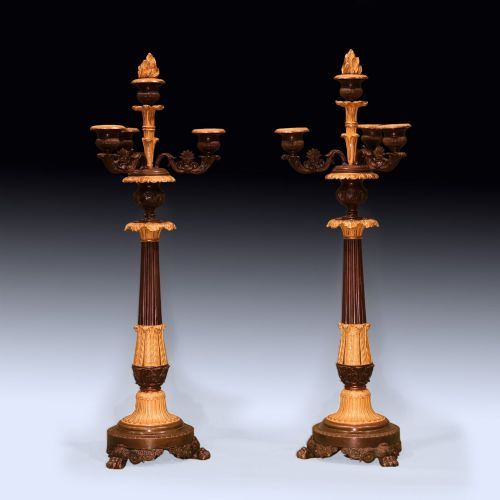
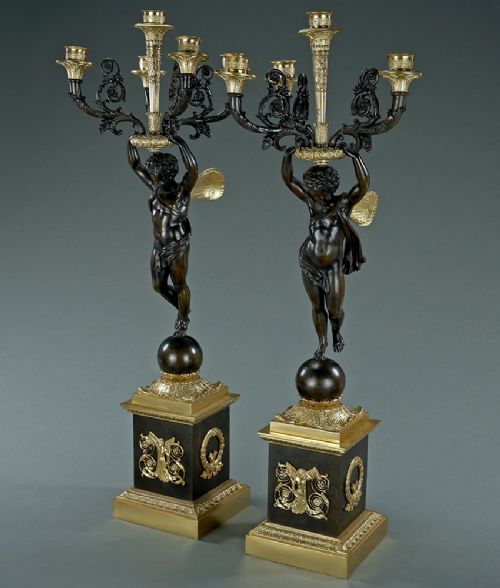
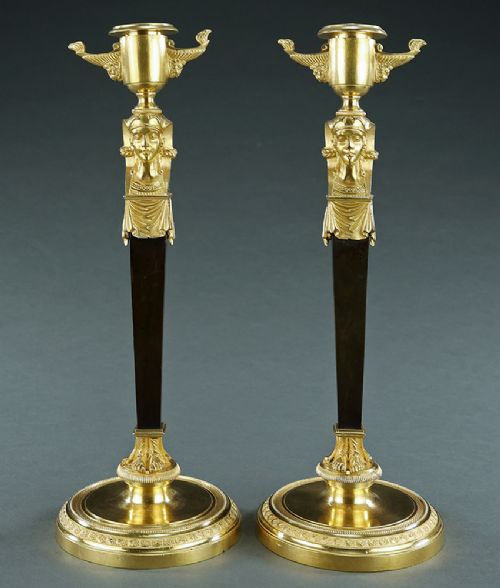
When you examine dark bronze candelabra on this page, you are looking primarily at 19th century pairs fashioned in French Empire, Regency, and Neoclassical styles. These pieces combine cast metal figures with multiple candle arms or conversion fittings for electricity.
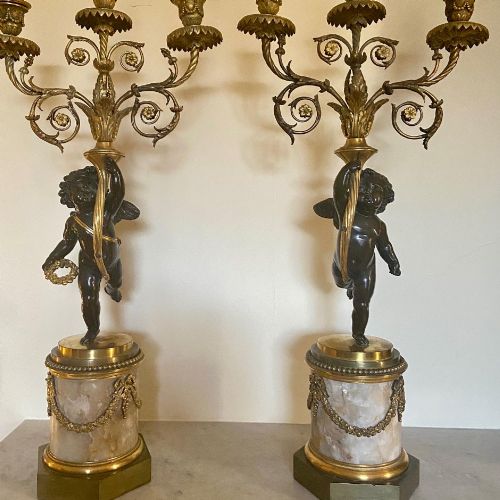
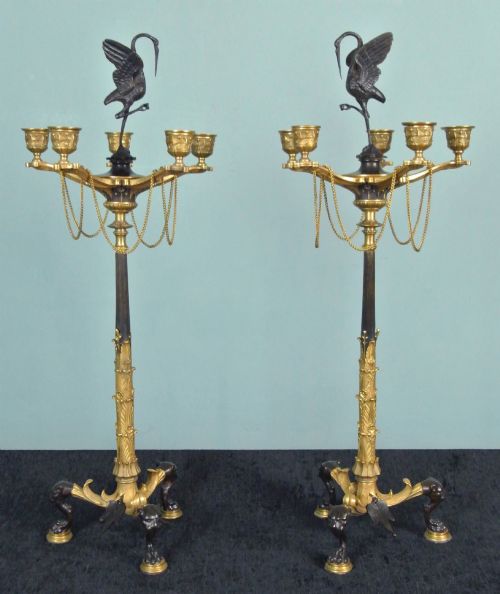
The most common form met here is the paired set, frequently incorporating patinated bronze bodies paired with contrasting ormolu mounts, marble bases, or carved stone elements. Makers drew heavily on classical antiquity, depicting putti, figures and architectural motifs.
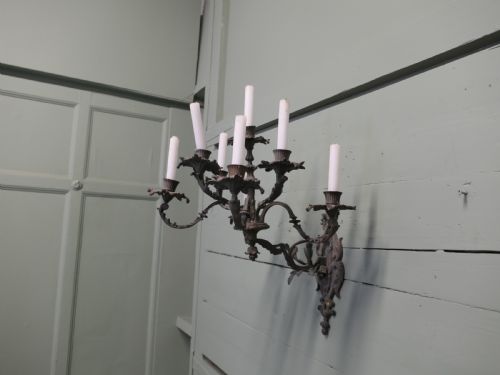
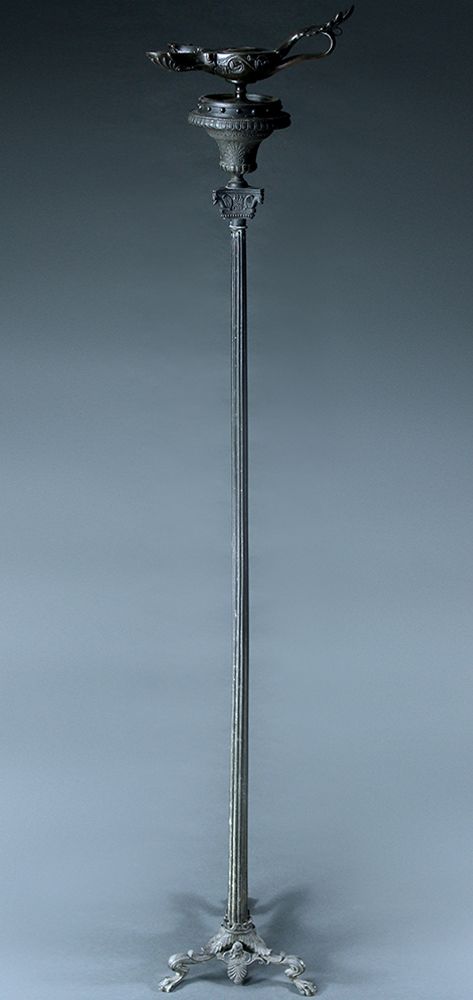
Beyond standard table candelabra, the selections stretch to include wall sconces, floor-standing torcheres, and mantel clock sets sharing the same dark bronze palette. These lighting forms served both utilitarian and decorative functions in grand interiors.
How they were made
Foundry workers utilised traditional lost-wax or sand-casting techniques to shape the heavy bronze components, achieving deep patination through chemical treatments or heat application. This dark surface creates a sharp visual contrast when set against bright gilt ormolu highlights.
Dark Bronze Candelabra Retail Price Guide 2026
Typical asking prices for dark bronze candelabra among the pieces listed under this phrase on Sellingantiques today, from the lower quarter to the upper quarter. They describe what is for sale here now, not the wider market.
Winged putti and mermans persistently shoulder heavy multi-branch candle loads without a single complaint.
What varies in quality
Quality rests heavily on the crispness of the bronze chasing and the fidelity of the casting, where superior examples exhibit finely defined musculature and sharply articulated foliage rather than soft, blurred edges. The weight and choice of secondary materials, such as solid marble or genuine fluorspar rather than lesser substitutes, mark the distinction between standard production and masterwork output.
Proportion and architectural balance dictate the visual success of a pair, with better pieces maintaining harmonious symmetry across their multi-branch structures. The depth and stability of the dark patination, coupled with the refined integration of parcel gilt or ormolu mounts, separate workshop output of consequence from ordinary commercial goods.
Barbedienne·Francois Redmond·Humphrey Hopper·Thomas Hope
The Dark Bronze Candelabra Glossary
- Ormolu
- Gilded bronze produced by applying a mercury and gold amalgam to the metal surface and heating it to drive off the mercury. This technique creates a rich, matte golden finish frequently paired with dark patinated bronze.
- Patinated bronze
- Metal treated with chemical solutions to produce a dark, stable surface colour rather than relying on paint. It forms the primary dark body of these candelabra.
- Torchere
- A tall stand or floor lamp designed to hold lights aloft. Several examples utilise figural bronze shafts to support the illumination.
- Fluorspar
- A colourful mineral occasionally utilised as a decorative base or column material in high-status 18th and 19th century lighting. It brings translucent crystalline colour beneath the bronze work.
- Putto
- A plump, often winged male child figure frequently cast in bronze to support candle branches or decorate bases. These motifs derive from classical sculpture traditions.
Dark Bronze Candelabra: Frequently Asked Questions
What periods do these candelabra cover?
The listings on this page span the 18th, 19th, and early 20th centuries, with a heavy concentration of pieces originating in the Victorian and Regency eras. Styles draw heavily upon French Empire, Louis XVI, and classical revival movements.
Buyers will find that mid-19th century French manufacture dominates the selection, reflecting a period of intense revivalism and sophisticated metal casting techniques.
How were these candelabra used originally?
These pieces functioned primarily as dining table centerpieces or mantel illumination, holding wax candles to light grand rooms before the arrival of electricity. Their substantial weight and multi-branch forms ensured stability and generous light output.
Many surviving examples have since been adapted to function as table lamps while retaining their original bronze and marble structures.
Are these candelabra wired for electricity?
The inventory includes both unadapted candle-holding pieces and those converted into lamps or torcheres over the course of their history. Conversion methods vary from removable fittings to permanent wiring channels.
Buyers should examine individual listings to confirm whether a piece retains its original candle sockets or has received electrical conversion.
How do I identify French Empire style?
French Empire pieces display strict symmetry, military motifs, and heavy classical references drawn from ancient Rome and Egypt. You will often spot patinated bronze figures paired with rich ormolu mounts and architectural bases.
This aesthetic flourished during the early 19th century and heavily influenced later Victorian revivals.