


Classical Bronze Candelabra
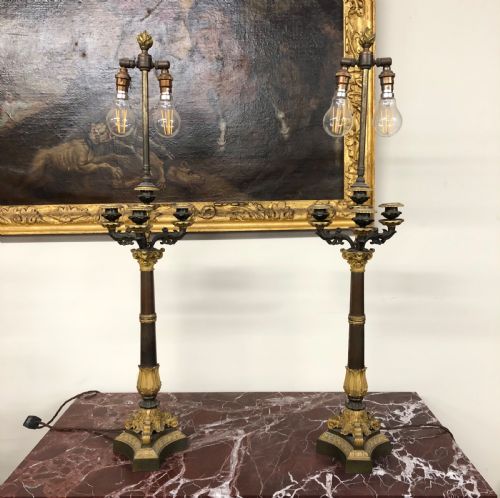
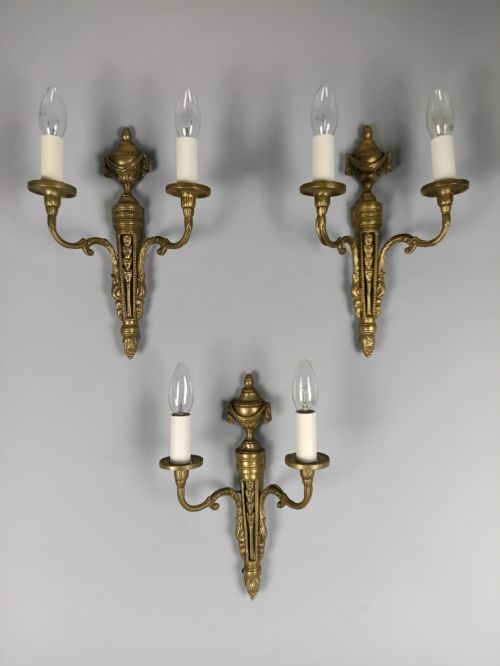
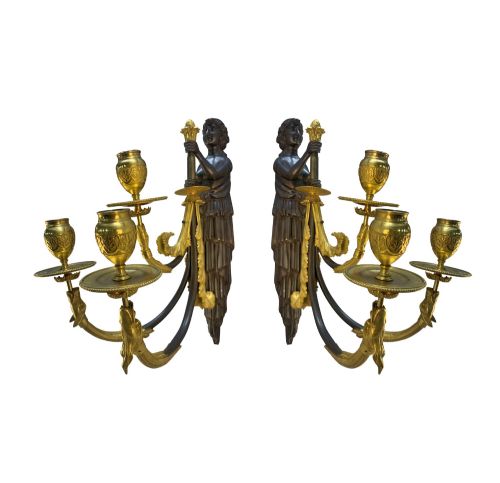
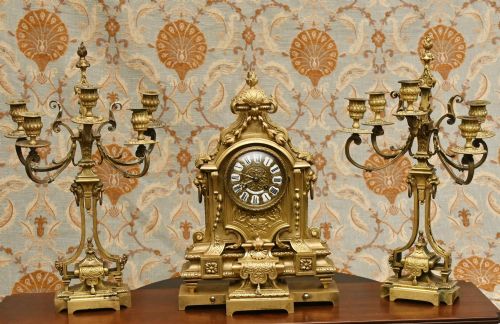
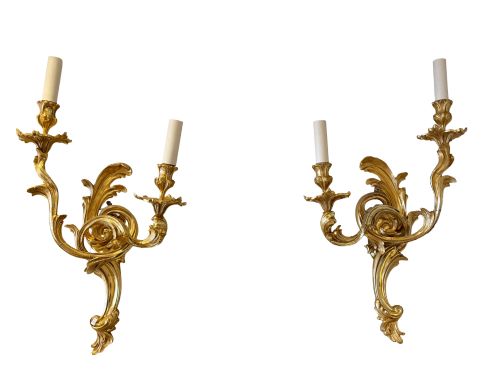
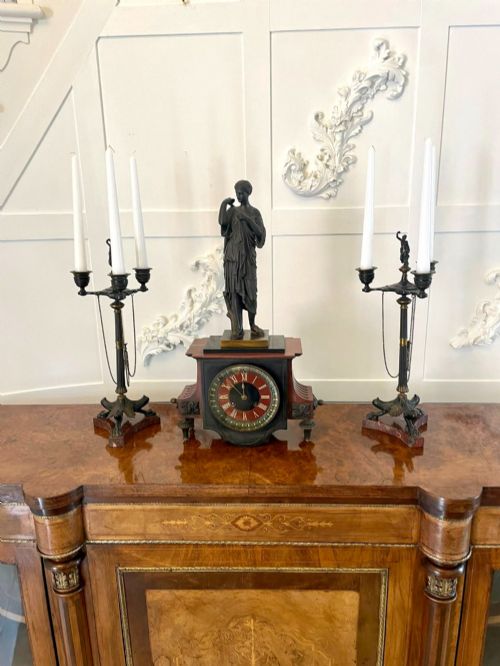
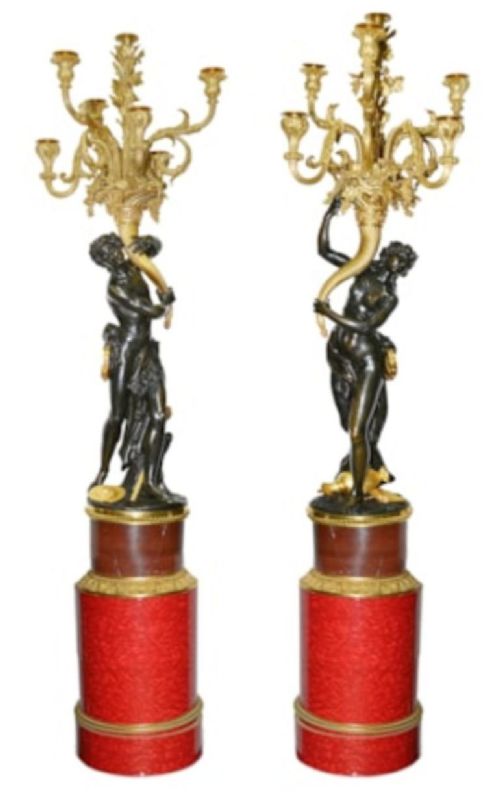
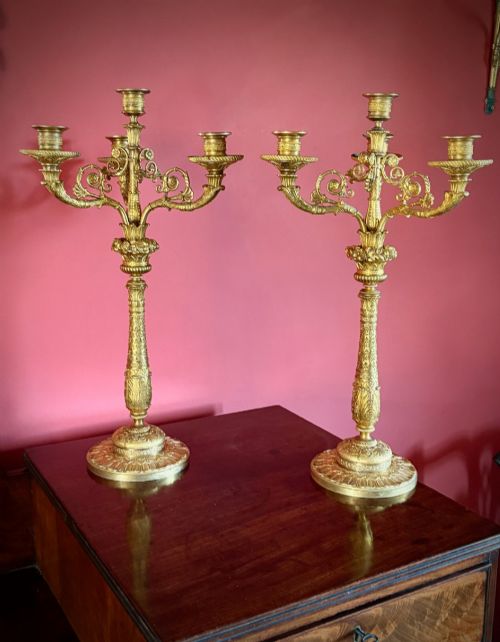
Classical bronze candelabra bring the weighty presence of the nineteenth century into a room with their dark metal and warm gilding.
Classical Bronze Candelabra
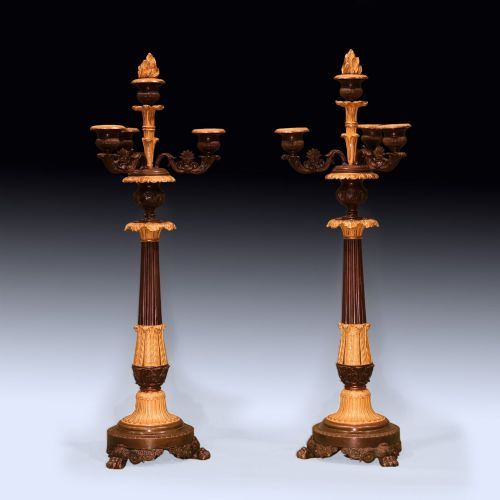
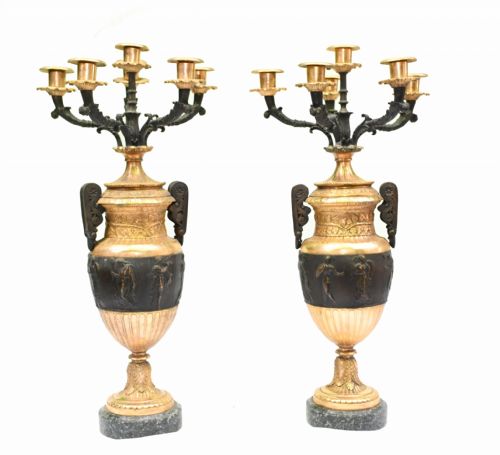
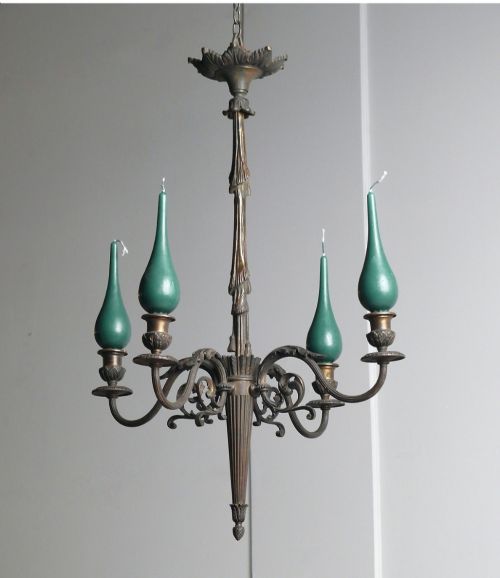
When you search for classical bronze candelabra, you are looking at nineteenth-century lighting fixtures designed to hold multiple candles, combining dark cast metal with bright gilt highlights. The examples seen here belong predominantly to the nineteenth century, including specific dates such as eighteen seventy, and take the form of pairs designed for balanced mantelpiece or table placement.
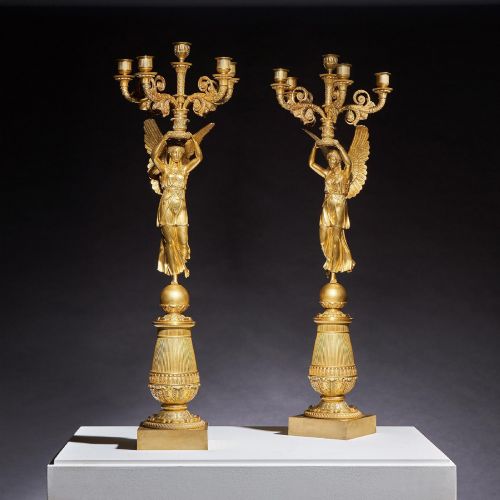
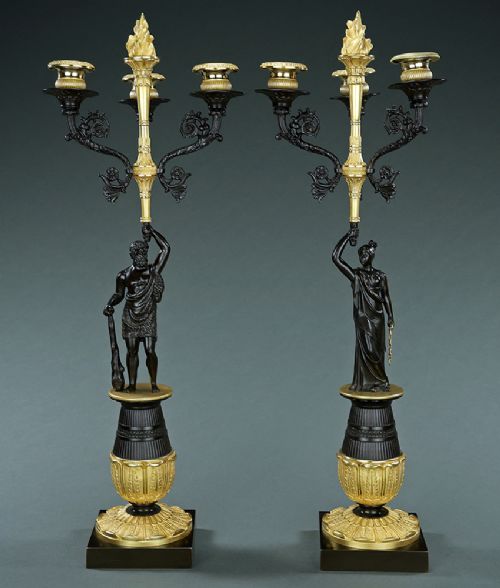
The dominant aesthetic draws heavily on the French Empire style and the Regency period, echoing classical antiquity through architectural bases, foliate motifs and figural supports. Alongside standard four-light and five-branch configurations, the selection includes related forms such as associated candlesticks.
Originating largely from French and English design traditions, these pieces often reflect the influence of notable designers like Thomas Hope. Buyers encounter them as substantial decorative objects that anchor a traditional interior scheme with period authority.
How they were made
Makers constructed these pieces using cast bronze, which was frequently finished with a dark patination or combined with ormolu and gilt bronze to create tonal contrast. The casting process allowed for crisp detailing of classical ornaments, acanthus leaves and figural elements.
Many compositions incorporate stone bases, specifically utilising sienna marble and other fine marbles to provide a stable footing and an additional layer of colour and texture. Gilt elements were applied through mercury gilding or fire-gilding techniques, producing a durable, luminous surface that complements the dark patinated bronze.
Classical Bronze Candelabra Retail Price Guide 2026
Typical asking prices for classical bronze candelabra among the pieces listed under this phrase on Sellingantiques today, from the lower quarter to the upper quarter. They describe what is for sale here now, not the wider market.
Rabiat signed his work so firmly into the bronze that nineteenth-century mantelpieces have been holding him up ever since.
What varies in quality
The division between ordinary production and superior work lies in the crispness of the chasing and the depth of the casting. Finer pieces display sharply defined foliage and smooth, even patination alongside cleanly gilded ormolu sections that retain their original lustre.
Integration of materials also dictates the grade of a piece, particularly where bronze meets marble or ormolu. Superior examples feature tightly fitted joints, heavy gauge metal that resists flexing, and signatures from recognised makers such as Rabiat that confirm workshop provenance.
Rabiat·Thomas Hope
The Classical Bronze Candelabra Glossary
- Bronze
- An alloy of copper and tin used for casting sculpture and decorative objects. It takes a dark patina well and forms the structural body of these pieces.
- Ormolu
- Gilt bronze produced by applying a gold and mercury amalgam to a bronze base and heating it to drive off the mercury. This technique creates a rich, matte gold surface characteristic of nineteenth-century French work.
- Patinated bronze
- Metal treated with chemical solutions to produce a controlled, darkened surface finish. It provides contrast against bright gilt elements.
- Sienna marble
- A yellow-brown decorative marble quarried in Italy, featuring dark veining. It appears in the bases of classical candelabra to add geological colour and weight.
Classical Bronze Candelabra: Frequently Asked Questions
How many candles do they hold?
Most pieces listed are configured with four lights or five branches, designed to distribute illumination evenly across a table or mantelpiece.
Buyers should inspect the individual nozzle and drip pan assemblies to confirm they match the original branch count.
What materials are used?
The primary materials are cast bronze, ormolu, gilt bronze, and patinated bronze, frequently mounted on sienna marble or other decorative stone bases.
This combination of dark metal and bright gilding defines the visual language of the nineteenth-century classical style.
Are they French Empire style?
Several pieces directly reflect the French Empire style, while others align with the Regency period or draw inspiration from designers like Thomas Hope.
These design traditions share a vocabulary rooted in classical architecture and antiquity.
How do I date a pair?
Dating relies on stylistic markers associated with the nineteenth century, manufacturing techniques in the bronze casting, and occasional maker signatures such as Rabiat.
Comparing the handling of the ormolu and the composition of the marble base helps narrow the period.