



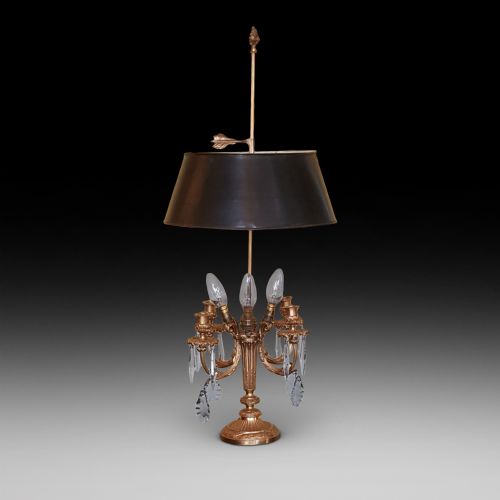
Four Light Candelabra
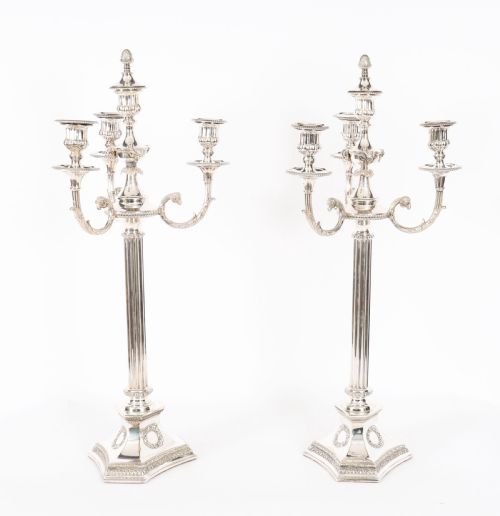
These four light candelabra provide grand illumination and formal symmetry, forming the centrepiece of a well-dressed dining table or mantelpiece.
Four Light Candelabra
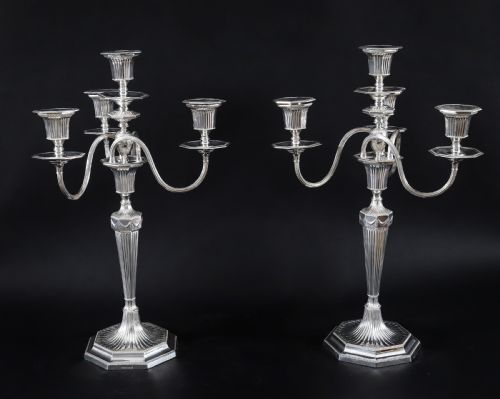
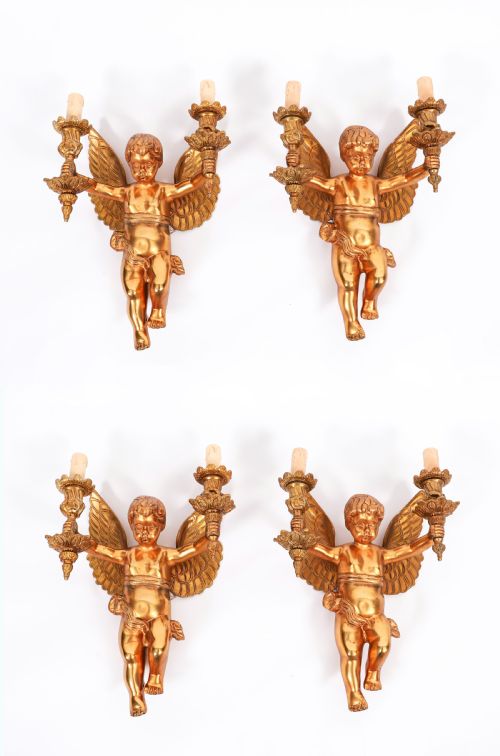
When you search for four light candelabra, you are looking at branched lighting fixtures designed to hold four candles simultaneously, often arranged in pairs to balance a room. The examples on this page span the nineteenth century into the twentieth, taking forms such as table candelabra, wall sconces and convertibles.
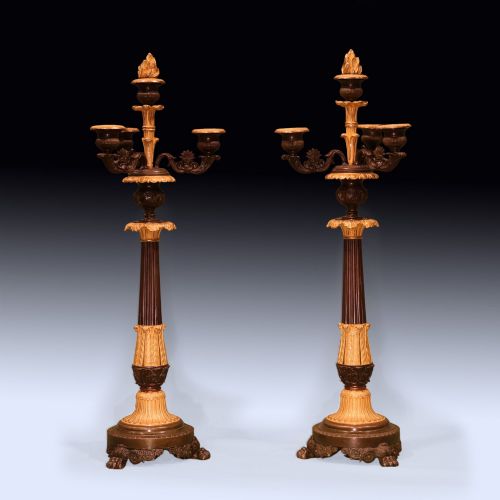
Most pieces you meet here date from the nineteenth century, rendered in heavy cast metals and styled with the motifs of Classical Revival, Regency, Rococo Revival and French Empire. You will also find Edwardian interpretations and mid-century Italian silver pieces alongside Dutch brass and porcelain figures.
Makers such as Hawksworth Eyre, Smith & Sissons & Co, and Matthew Boulton appear in the records, demonstrating the transition from Georgian workshops to Victorian silver plate and bronze production. These items served both practical illumination and decorative display in formal interiors.
What varies in quality
The distinction between standard production and the top of the range lies in the crispness of the metal chasing and the depth of the gilding or silver plating. Finer pieces retain sharp relief in cast acanthus leaves, figures and classical drapery without smoothing from polishing.
Weight and structural integrity also separate the categories, as superior examples employ heavy bronze or solid brass rather than lighter alloys. Original gilding and untouched patination carry more authority than later re-plating or domestic painting.
Listings feature items spanning the eighteenth century through to nineteen-fifty, predominantly utilising gilt bronze, silver plate, ormolu, and brass.
Hawksworth Eyre·Smith & Sissons & Co·Sitzendorf Porcelain·Matthew Boulton
The Four Light Candelabra Glossary
- Ormolu
- Finely ground high-carat gold applied to a bronze base using a mercury amalgamation technique, or later electroplating. It creates a warm, non-tarnishing golden finish seen on Regency and French Empire pieces.
- Candelabrum
- A branched candlestick designed to hold multiple candles from a single base. The plural form candelabra is frequently used for single items or pairs in trade descriptions.
- Sconce
- A wall-mounted lighting fixture with arms projecting outward to support candles. These direct light across wood panelling and wallpaper in formal rooms.
- Regency
- A British design period spanning the early nineteenth century, characterised by strict classical symmetry and Greco-Roman motifs. Pieces from this era often employ bronze and ormolu contrasts.
Four Light Candelabra: Frequently Asked Questions
How do I clean antique ormolu?
Dust gently with a soft, dry microfibre cloth to remove surface particles without disturbing the protective skin.
Avoid liquid metal polishes entirely, as chemical cleaners strip away the thin layer of historical gilding on bronze bases.
Can these candelabra hold modern candles?
Most standard drip candles fit into nineteenth-century nozzles, though slight variations in socket diameters occur across different periods.
Utilise beeswax or paraffin dinner candles paired with paper or foil shims if the fit requires adjustment.
How do I identify Regency style?
Regency items display disciplined classical proportions, crisp cast bronze details, and strict symmetry drawn from Roman antiquity.
Look for combinations of dark patinated metal and bright ormolu mounts rather than the exuberant curves of later Rococo revivals.
Were these originally wired for electricity?
These pieces were designed exclusively for wax candles before domestic electric lighting existed in the nineteenth century.
Many examples now feature discreet internal wiring for conversion into table lamps, though untouched candle sockets remain common.