




Neoclassical Silver Candelabra
Neoclassical silver candelabra bring solemn architectural grace and disciplined symmetry to a dining table.
What neoclassical silver candelabra are
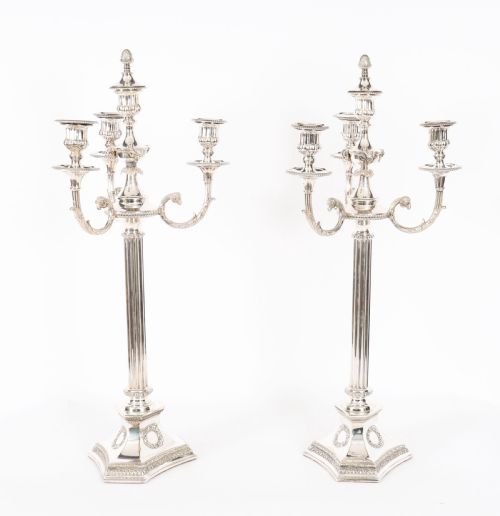
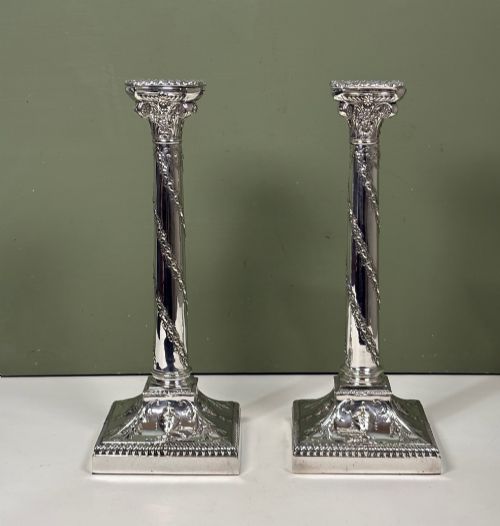
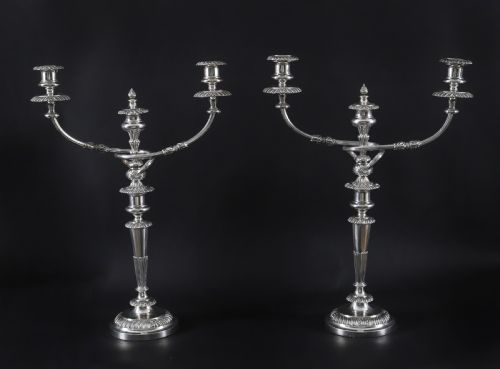
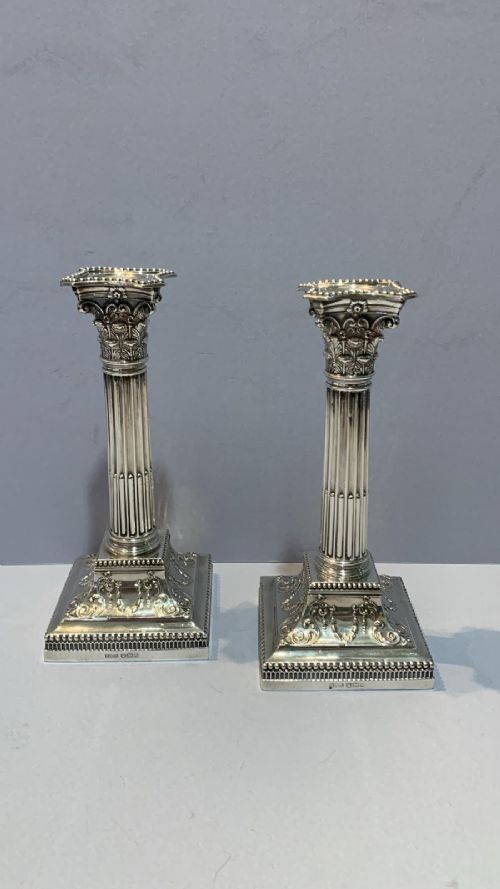
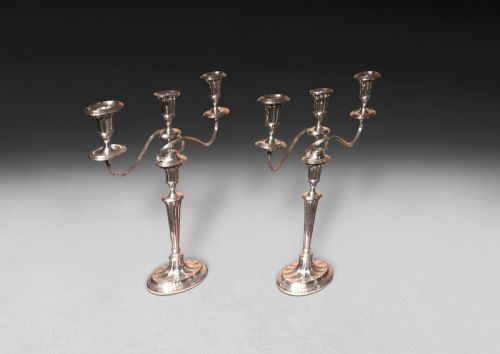
When you search for neoclassical silver candelabra, you look at stately multi-light candleholders designed with architectural discipline, classical urn motifs, and clean symmetrical lines. The pieces available range from substantial George III creations to later Victorian and vintage revivals, capturing the austere dignity of ancient Greece and Rome.
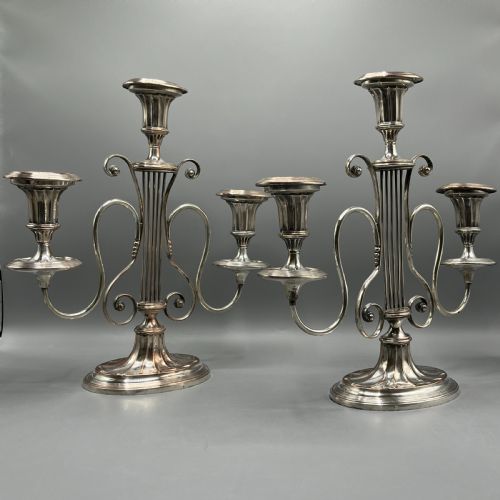
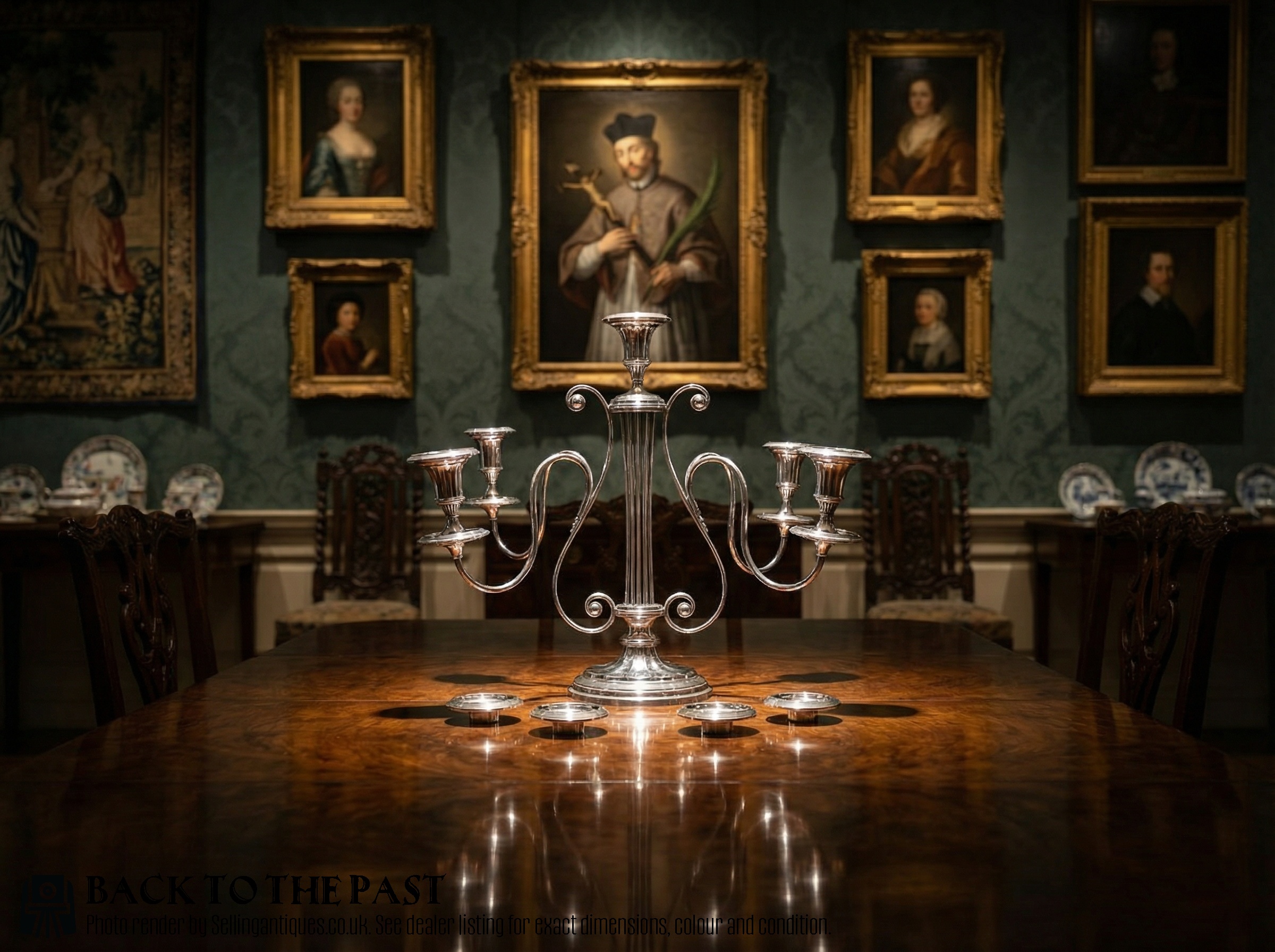
You are most likely to meet silver-plated or Old Sheffield plate examples on this page, often configured as three-light, four-light, or five-light candelabra. Many feature distinctive lyre-shaped centre columns or classical urn standards supported by stepped bases.
The objects stem predominantly from the eighteenth and nineteenth centuries, alongside mid-twentieth-century iterations by makers such as Barker Ellis. They serve both as functional lighting and as commanding centrepieces that reflect the enduring appeal of classical design.
How they were made
The construction of these pieces combines solid sterling silver, silver plate, Old Sheffield plate, and copper cores. Makers fused thin sheets of silver to copper bases in traditional Old Sheffield plate, or applied silver plating over base metals and EPNS.
Craftsmen utilised casting, hammering, and soldering techniques to shape distinct elements like detachable branch arms, drip pans, and nozzles. Decorative details such as beaded borders, fluting, and neoclassical foliage were stamped, chased, or applied by hand.
Retail Price Guide 2026
Typical UK retail prices for neoclassical silver candelabra, calculated from the Sellingantiques database of over a million retail prices indexed since 2003. This retail price guide relies exclusively on Sellingantiques data; no external sources or auction records are used, so the figures do not describe the wider market.
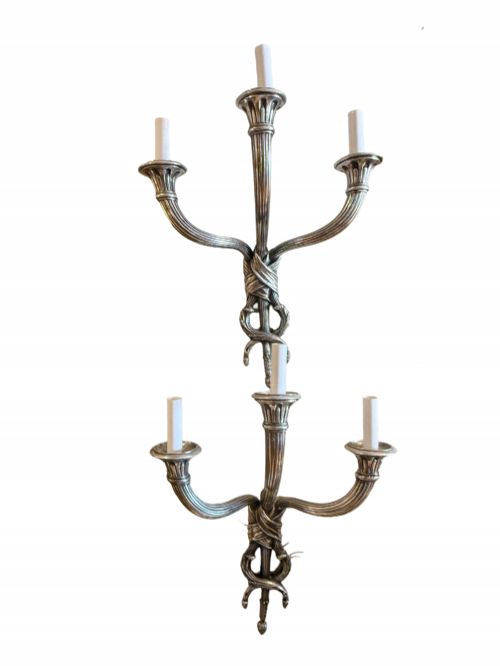
Some candelabra quietly hide their musical side through lyre-shaped frames that channel ancient Greek instrumentation onto the dining table.
What varies in quality
Quality in neoclassical silver candelabra rests upon the crispness of the cast classical ornamentation and the structural integrity of the branch arms. Superior pieces exhibit deeply chased acanthus leaves, sharp fluting, and heavy gauge metal that maintains balance across multiple lights.
The choice of materials also defines the tier of the piece, distinguishing solid sterling silver constructions by prominent workshops from silver-plated copper or later electroplated white metal. Preserved original plating without excessive base metal exposure separates exceptional survivors from heavily worn examples.
Matthew Boulton·Barker Ellis·Hunt and Roskell
The Neoclassical Silver Candelabra Glossary
- Old Sheffield Plate
- A fused composite material made by melting a thin sheet of silver onto a thicker copper ingot before rolling them together into sheets. This technique was widely used in the eighteenth and nineteenth centuries.
- EPNS
- Electroplated Nickel Silver, a base metal alloy of copper, nickel, and zinc coated with a layer of pure silver through electrolysis. This process became common after the introduction of electroplating in the mid-nineteenth century.
- Lyre-shaped
- A form resembling an ancient musical instrument, frequently utilised as the central frame or column within neoclassical candelabra design. It introduces openwork symmetry to the silhouette.
- Candelabra
- A branched candlestick designed to hold multiple candles simultaneously from a single central stem. They often feature removable upper branches to allow conversion into simple candlesticks.
- Neoclassical
- A style spanning the eighteenth and nineteenth centuries that draws inspiration from the classical art and architecture of ancient Greece and Rome. It emphasises straight lines, urns, swags, and geometric symmetry.
Frequently Asked Questions
What periods do these candelabra represent?
The pieces span from the eighteenth century George III period through the nineteenth-century Victorian era and into mid-twentieth-century vintage production. They reflect successive waves of classical revival taste across these decades.
Collectors encounter both original Georgian items and later nineteenth-century interpretations sharing the same architectural vocabulary.
How were Old Sheffield plate pieces made?
Old Sheffield plate was created by thermally fusing a sheet of silver to a copper ingot, then rolling the combined metals into workable sheets. This method differs fundamentally from later electroplating.
Makers often concealed the exposed copper edges at seams with thin strips of silver wire, known as riding edges.
How do you distinguish solid silver from plated examples?
Solid sterling silver pieces carry official hallmarks indicating the silver standard, maker, and assay office. Plated versions rely on base metals like copper or nickel alloy beneath the silver layer.
Over time, polished plated pieces may show a rosy copper tone where the silver coating has worn thin on high points.
How should I live with silver candelabra?
These candelabra function well as dining table centrepieces or mantel ornaments, providing ambient candlelight through multiple arms. Regular gentle dusting preserves the surface without requiring aggressive cleaning.
Using fitted drip pans prevents wax from accumulating on the delicate silver or plated surfaces during use.