



Silver Three Light Candelabra
Silver three light candelabra bring undeniable presence to a dining table, combining practical illumination with sculptural grace.
Understanding silver three light candelabra
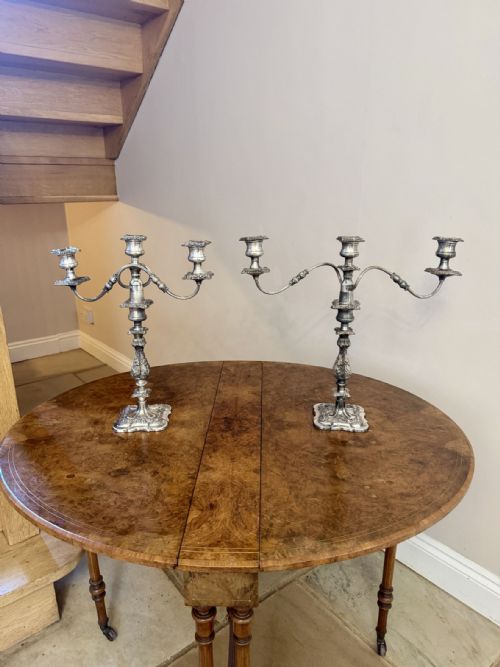
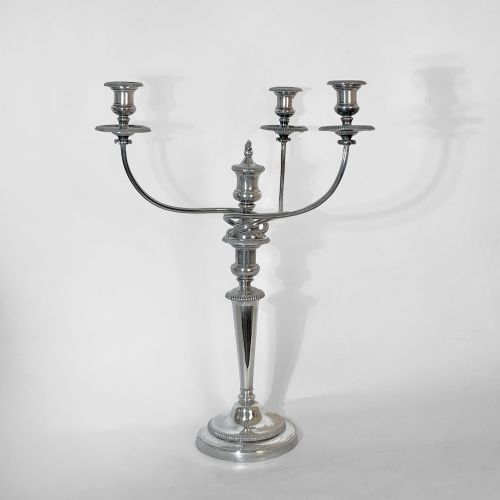
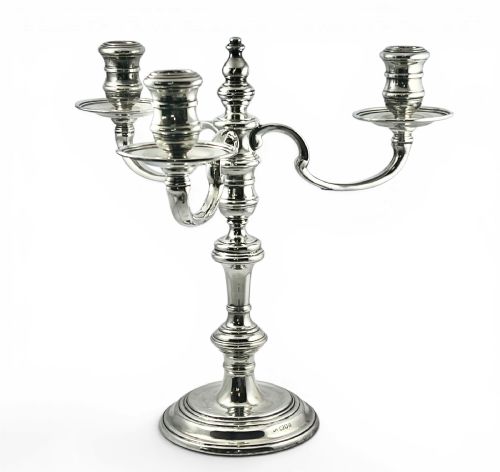
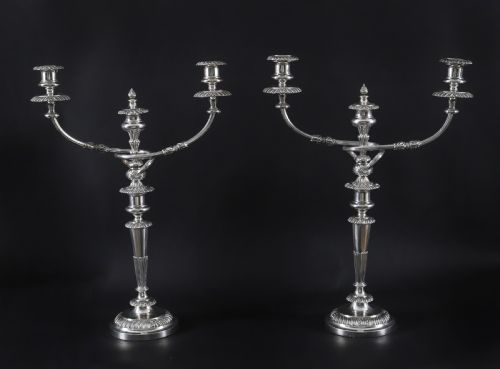
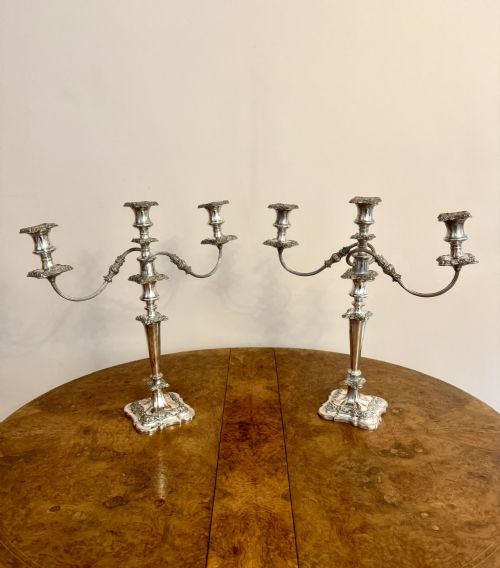
A silver three light candelabra is a branched lighting fixture designed to hold three candles simultaneously, typically featuring a central socket flanked by two arms. When you search for silver three light candelabra, you encounter items designed for formal dining and interior display across multiple centuries. The pieces on this page span the eighteenth century, nineteenth century, and twentieth century, reflecting enduring domestic utility.
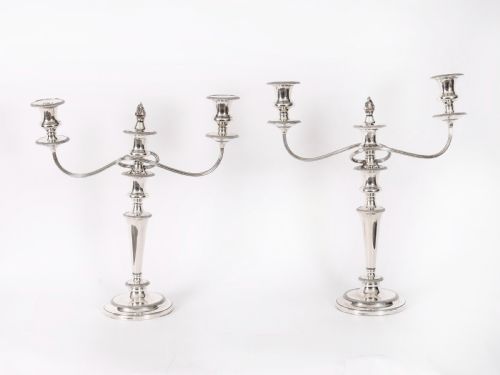
Most examples appear as matched pairs rather than single pieces, intended to balance a mantelpiece or sideboard symmetrically. You will find forms ranging from strict Regency and George III iterations to later revivals and mid-century manufacture. The origins stretch from English workshops in Sheffield and London to continental European makers.
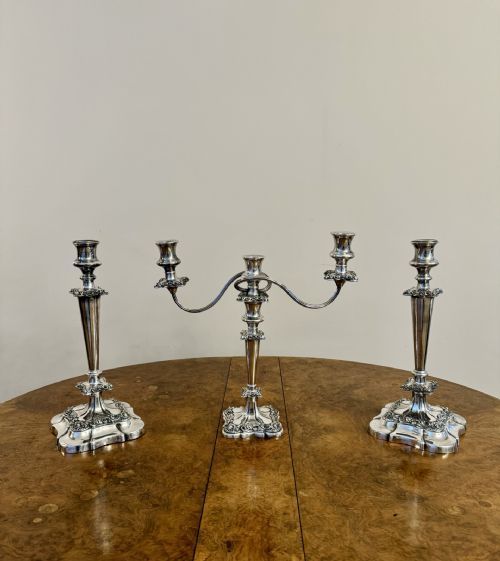
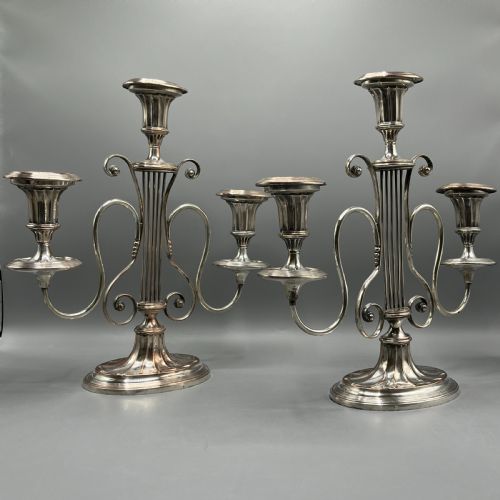
Object variations include standard multi-branch units and specialised designs such as lyre-shaped frames or detachable branches that convert a candlestick into a candelabrum. The surviving stock demonstrates a persistent preference for three-light configurations across both solid sterling silver and plated wares. Each period imprints its distinct aesthetic onto the basic form, from neoclassical restraint to ornate rococo curves.
Materials and construction methods
The physical construction relies heavily on sterling silver, silver plate, old Sheffield plate, and standard copper cores. Manufacturers utilised both solid casting and plating techniques, applying thin layers of silver over copper or base metals in older Sheffield pieces. Ninth-grade continental standards such as 916 silver also appear among the continental imports.
Smiths and silversmiths shaped the branches and stems through casting, hammering, and soldering individual components together. Detachable parts required precise engineering to ensure the branches fitted securely into the main socket without wobble. Cast decorative elements like dolphins or foliate motifs were soldered onto the primary structure.
Retail Price Guide 2026
Typical UK retail prices for silver three light candelabra, calculated from the Sellingantiques database of over a million retail prices indexed since 2003. This retail price guide relies exclusively on Sellingantiques data; no external sources or auction records are used, so the figures do not describe the wider market.
Design styles include Regency, George III, Rococo Revival, and Neoclassical, alongside unassigned nineteenth-century interpretations.
Assessing craftsmanship and finish
Quality separates mass-produced plated items from bespoke cast sterling pieces by renowned workshops. The crispness of chased and cast detail dictates the visual success of the piece, particularly where rococo or neoclassical motifs are applied. Heavier gauge metal provides structural integrity to the branching arms, preventing the sag often seen in lighter variants.
The method of plating tells a story of technological evolution, with old Sheffield plate displaying distinct copper lines where the fused metal edges meet. Maker marks stamped into the base or drip pans confirm the provenance and standard of the metal used. Superior examples maintain balance and proportion across all three lights, whereas lesser pieces can feel top-heavy or misaligned.
Matthew Boulton·Odiot Paris·Thomas Bradbury·James Dixon and Son·Barker Ellis·Henry Wilkinson and Co
The Silver Three Light Candelabra Glossary
- Sheffield plate
- A fused composite material made by melting a sheet of silver onto a copper ingot before rolling them together into plates. This technique was largely superseded by electroplating in the nineteenth century.
- Old Sheffield plate
- An early form of plated silver produced before the invention of electroplating, valued for its sandwich structure of real silver over copper. Items made this way often reveal a thin copper line at the cut edges.
- Sterling silver
- An alloy consisting of ninety-two point five percent silver and seven point five percent other metals, usually copper, chosen for durability. This standard grade is stamped with hallmarks on quality British pieces.
- Candelabrum
- A branched candlestick holding multiple candles, though the plural form candelabra is frequently used for a single item in trade parlance. The central column supports arms that branch out to hold the outer lights.
- Drip pan
- A small circular tray fitted beneath the candle nozzle to catch melting wax before it reaches the arms or table. These components are often removable for cleaning.
Frequently Asked Questions
How do I clean silver candelabra?
Use a soft microfibre cloth and a reputable silver polish formulated to remove tarnish without stripping thin plating layers. Avoid harsh abrasive pastes that can damage engraved details or wear through old Sheffield plate.
Take extra care around soldered joints and cast ornamental elements where polish can accumulate and dry white. Cotton buds help clear residue from tight crevices on ornate arms and drip pans.
How do I identify old Sheffield plate?
Examine the edges and undersides for faint pinkish lines where the underlying copper core shows through the silver layer. This reveals the traditional fusion method used prior to nineteenth-century electroplating.
Old Sheffield pieces generally lack standard sterling hallmarks, carrying instead maker marks or dummy stamps. The weight feels substantial due to the copper core beneath the silver surface.
What is the difference between solid silver and plated?
Solid sterling silver contains a high purity standard throughout the entire thickness of the object and bears official hallmarks. Plated items consist of a base metal like copper or Britannia metal coated with a thin layer of silver.
Over decades of cleaning, plated pieces may show copper telegraphing through worn high points. Solid silver maintains its metal composition permanently despite surface polishing.