


Silver Plate Candelabra
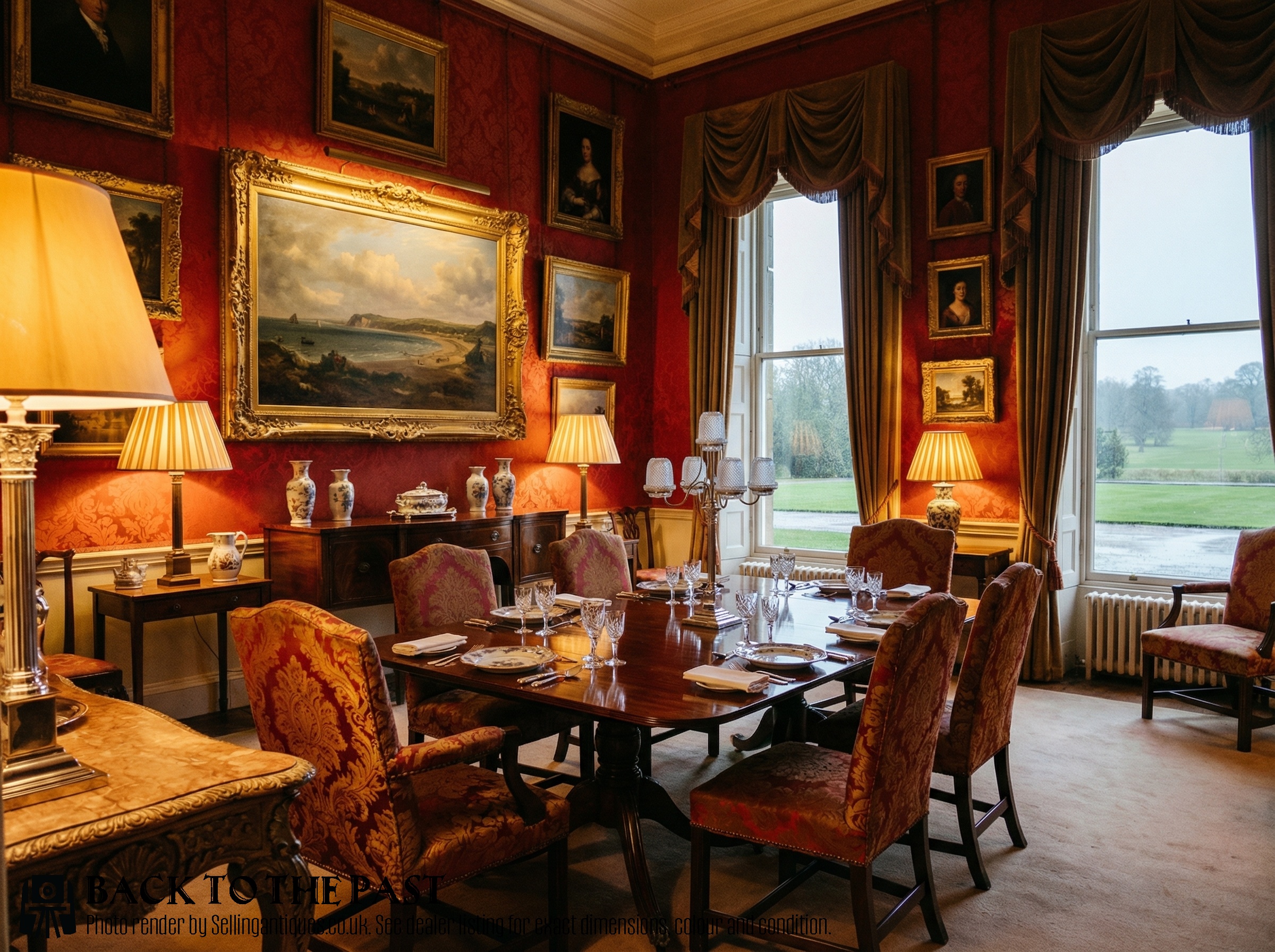
These silver plate candelabra bring grand illumination and striking focal points to dining tables and mantelpieces through centuries of design.
Silver plate candelabra types and origins
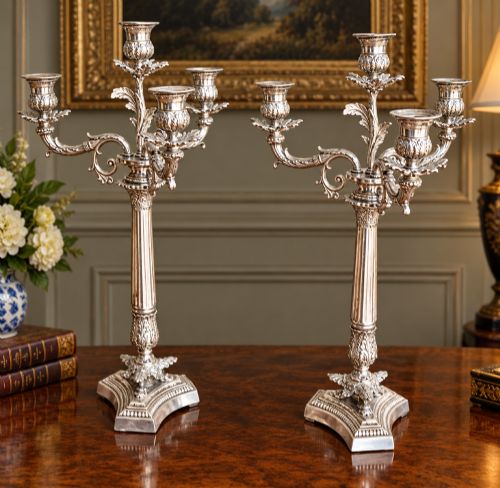
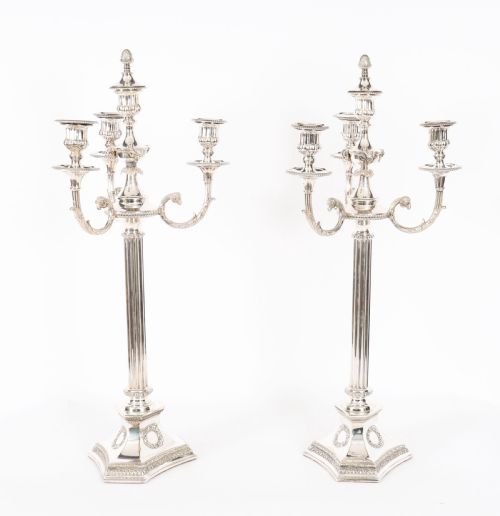
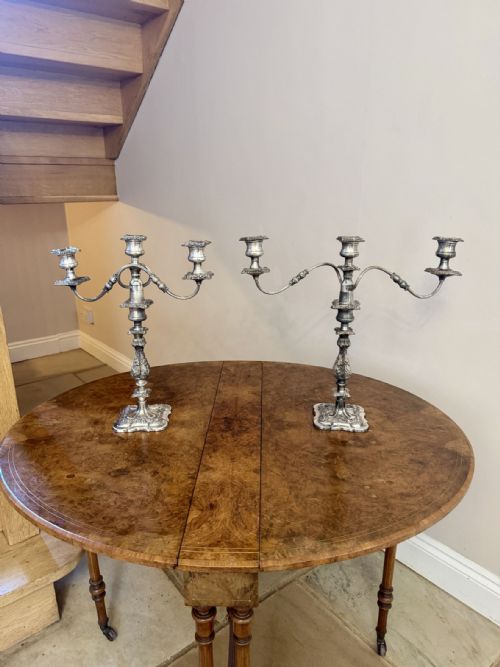
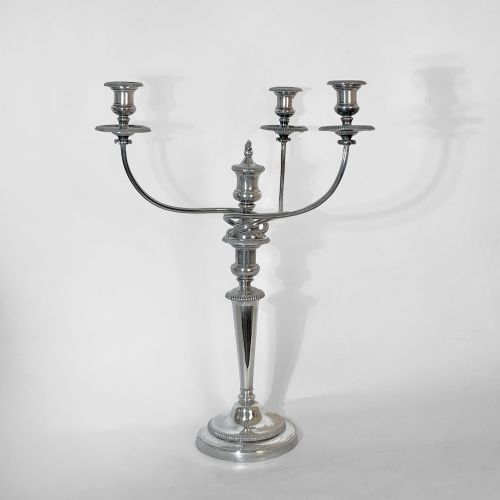
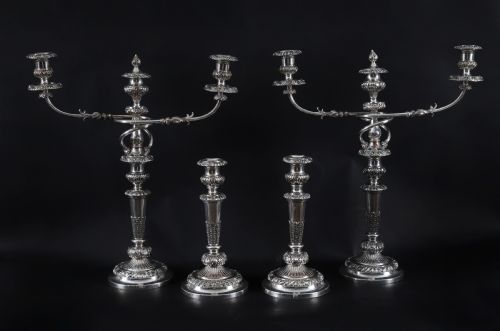
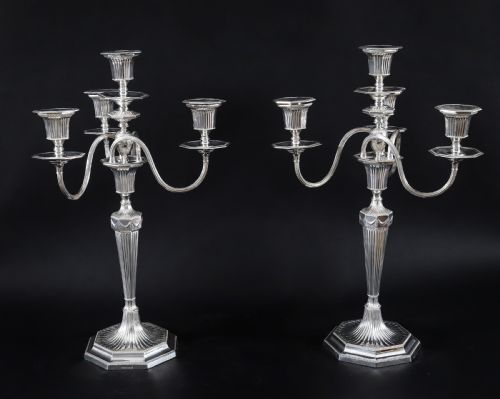
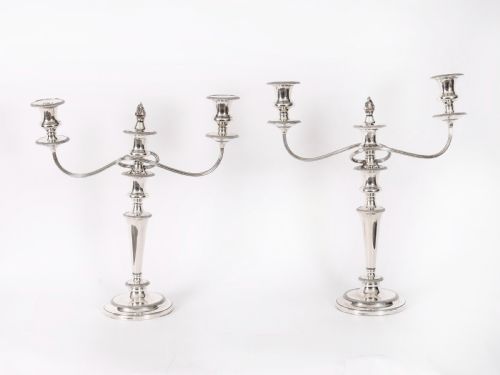
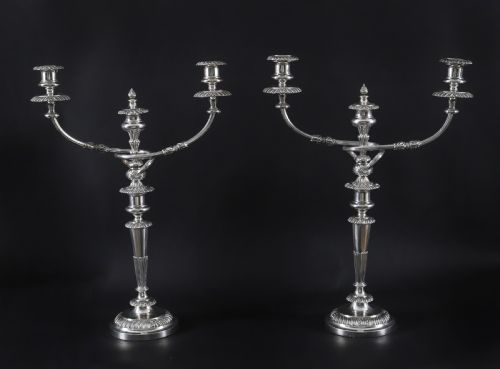
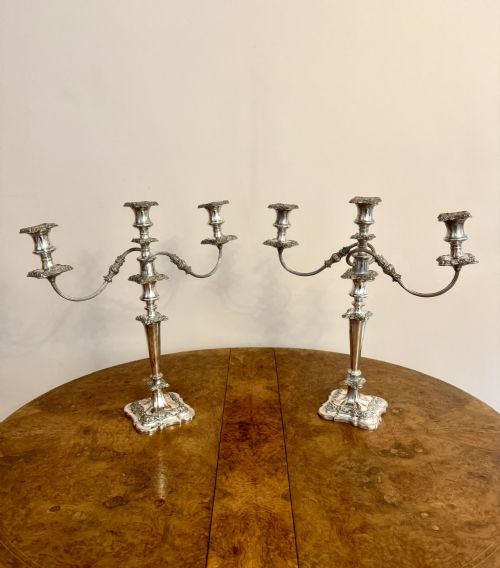
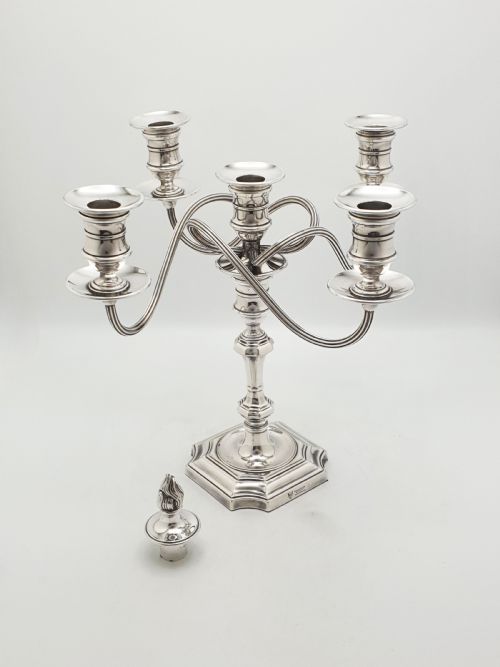
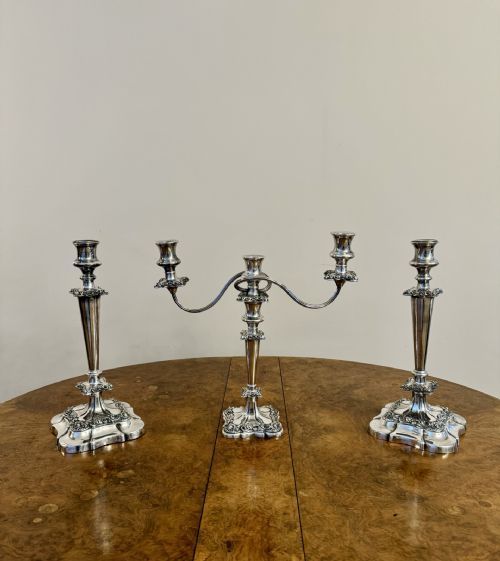
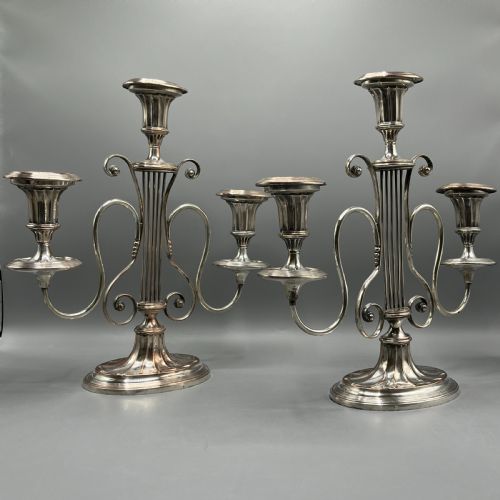
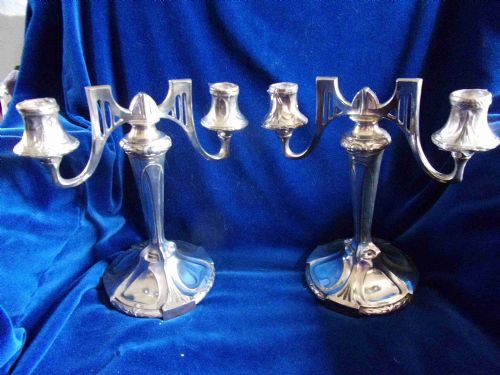
Silver plate candelabra span the eighteenth century, Regency, and Victorian periods, appearing frequently in pairs for formal table settings. The pieces listed include large three-light, five-branch, and convertible forms that adapt from candlesticks to multi-arm light fittings.
Makers and workshops across England, Sweden, France, and Italy produced these branched candle holders using base metal, copper, and glass combinations. Buyers encounter ornate Victorian examples alongside earlier George III designs and Old Sheffield Plate pieces.
Materials and construction techniques
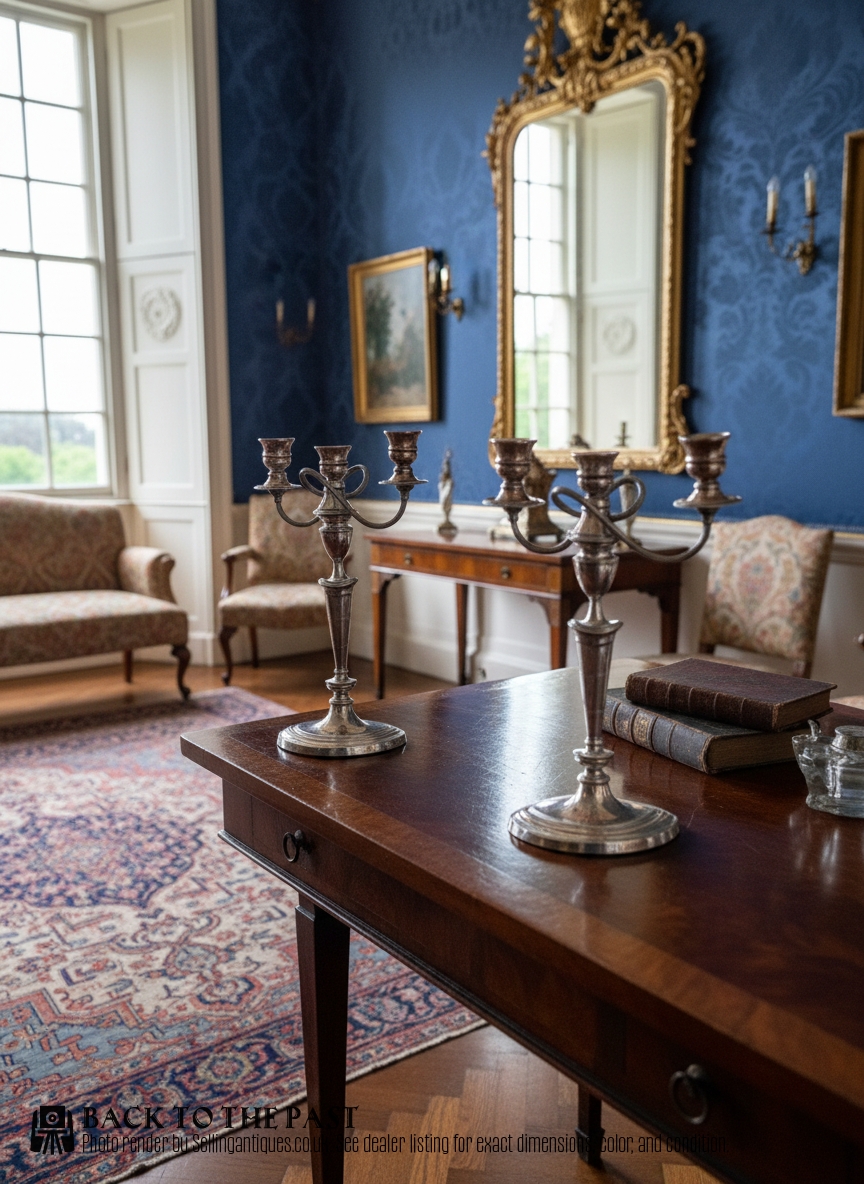
Makers constructed these objects using silver plate over copper, base metal, or silver-plated bronze, sometimes incorporating cut glass elements into centrepieces. Old Sheffield Plate methods involved fusing a thin sheet of silver to a thicker copper ingot before rolling and shaping.
Later nineteenth-century pieces often utilised electroplating techniques, where an electrical current bonded silver to a base metal foundation. Workshops employed casting for ornate branches and sconces, resulting in detailed rococo and neoclassical revival motifs.
Retail Price Guide 2026
Typical UK retail prices for silver plate candelabra, calculated from the Sellingantiques database of over a million retail prices indexed since 2003. This retail price guide relies exclusively on Sellingantiques data; no external sources or auction records are used, so the figures do not describe the wider market.
Listings feature silver plate candelabra spanning the 18th Century, Regency, and Victorian periods, alongside Old Sheffield Plate and copper.
Factors of distinction
The division between standard production and top-tier items rests on the weight of the metal, the crispness of cast ornamentation, and the preservation of the original plated surface. Superior examples retain full silver coverage without copper bleed-through on raised high points.
Design complexity and maker reputation separate ordinary candelabra from exceptional ones, particularly pieces bearing marks from noted silversmiths and electroplaters. Well-balanced branches and secure fitting sockets indicate superior craftsmanship and careful assembly.
Matthew Boulton·Clarke's Cricklite·Elkington·Blagden Hodgson And Co·A G Dufva·Mappin And Webb·Walker And Hall·F Green And Sons
The Silver Plate Candelabra Glossary
- Old Sheffield Plate
- An early method of fusing silver to copper developed in the eighteenth century. This technique predates nineteenth-century electroplating and often reveals a subtle hint of copper along cut edges.
- Electroplate
- A process introduced in the nineteenth century using electrical current to apply a silver coating onto base metal or copper. This innovation allowed workshops to produce ornate candelabra more efficiently.
- Candelabra extension
- A detachable branched lighting unit designed to fit into standard candlesticks. These components converted simple single-light sticks into multi-arm candelabra.
- Rococo Revival
- A nineteenth-century design style characterised by asymmetrical scrolls, naturalistic shell motifs, and flowing floral curves. Candelabra in this style display high levels of cast ornamentation.
Frequently Asked Questions
How do I clean silver plate candelabra?
Clean these items using a soft cloth and a specialised silver polish formulated for plated items. Avoid harsh abrasive cleaners that strip the thin silver layer from the underlying base metal.
Take care around soldered joints and ornate cast decoration where polish can accumulate. Gentle wiping preserves the historic surface finish over time.
What is Old Sheffield Plate?
Old Sheffield Plate refers to a specific eighteenth and early nineteenth-century technique where a sheet of silver is mechanically fused to a copper core. Items made this way show distinctive layered edges where the copper base is visible.
This method produces a warm, deep tone that differs visually from later electroplated items. Collectors value these pieces for their historical manufacturing process.
Can I use modern candles in antique candelabra?
Modern dinner candles often vary in thickness compared to historical standards. Check the diameter of the drip pan and nozzle before inserting a candle to ensure a stable fit.
Use candle rings or slightly pare down the base of modern wax tapers to prevent leaning. Stability protects both the wax and the antique metal arms from accidental damage.
How do I identify a Victorian candelabra?
Victorian examples often display heavy cast ornamentation, neoclassical revival details, or elaborate rococo scrollwork. The introduction of electroplating during this era allowed workshops to produce deeply embossed and patterned surfaces.
Examine the base metal and construction marks for clues to the nineteenth-century production date. Pieces from this era frequently feature four or five branch configurations.