
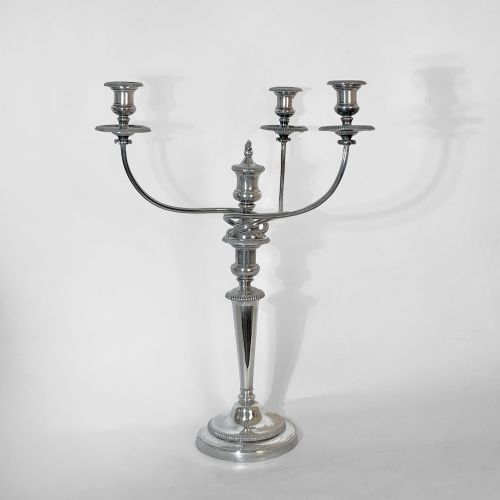
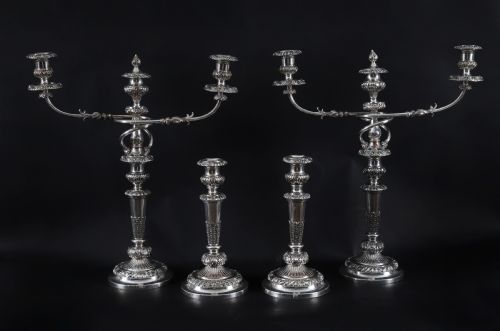
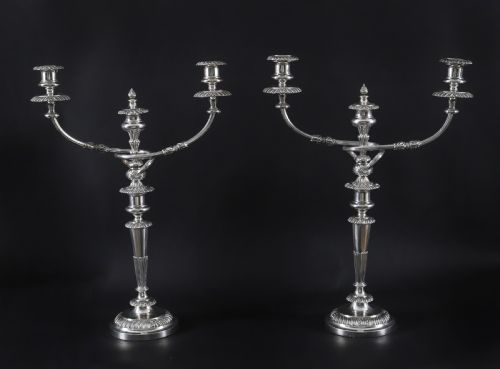
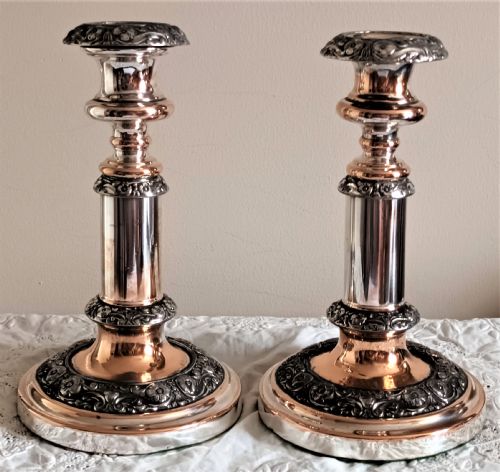
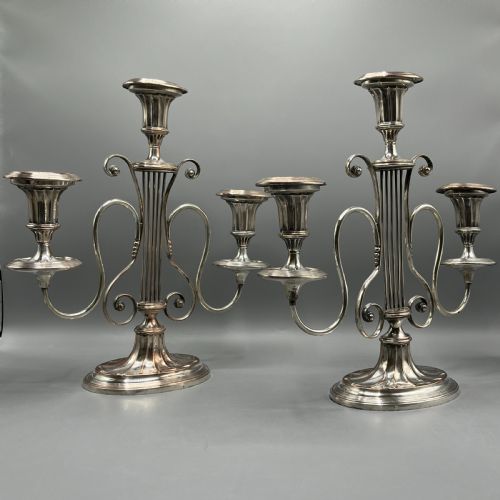


Sheffield Plate Candlesticks
Sheffield plate candlesticks bring Georgian and Victorian elegance to a table, combining a copper core with fused silver to create durable and classic lighting.
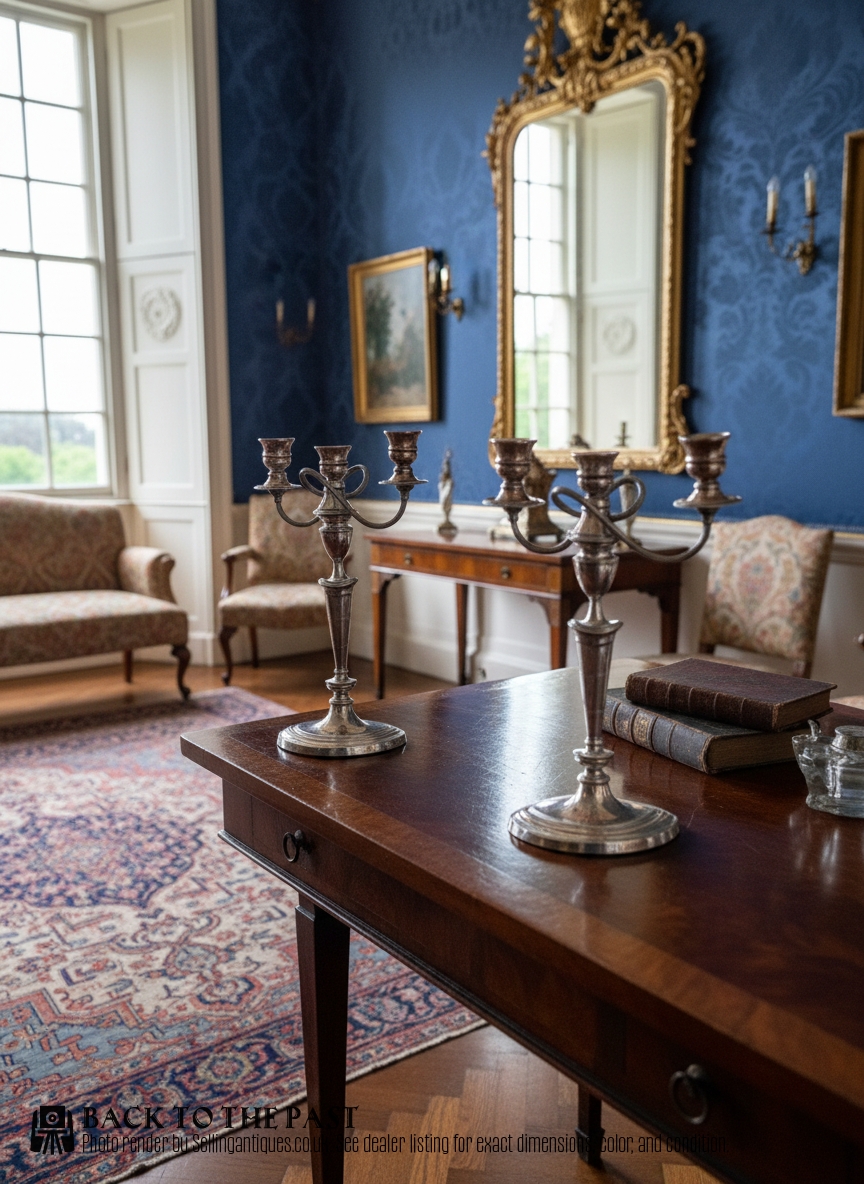
Sheffield Plate Candlesticks
Sheffield plate candlesticks encompass paired standards, extending designs, chambersticks, and multi-light candelabra produced across the eighteenth and nineteenth centuries.
The selections on this page span Georgian, Regency, and Victorian periods, showcasing forms from simple tapering columns to elaborate lyre shapes and ornate candelabra suites.
Buyers encounter traditional pillar models alongside functional telescopic versions and low chambersticks fitted with extinguishers, originating from distinct workshops and manufacturing eras.
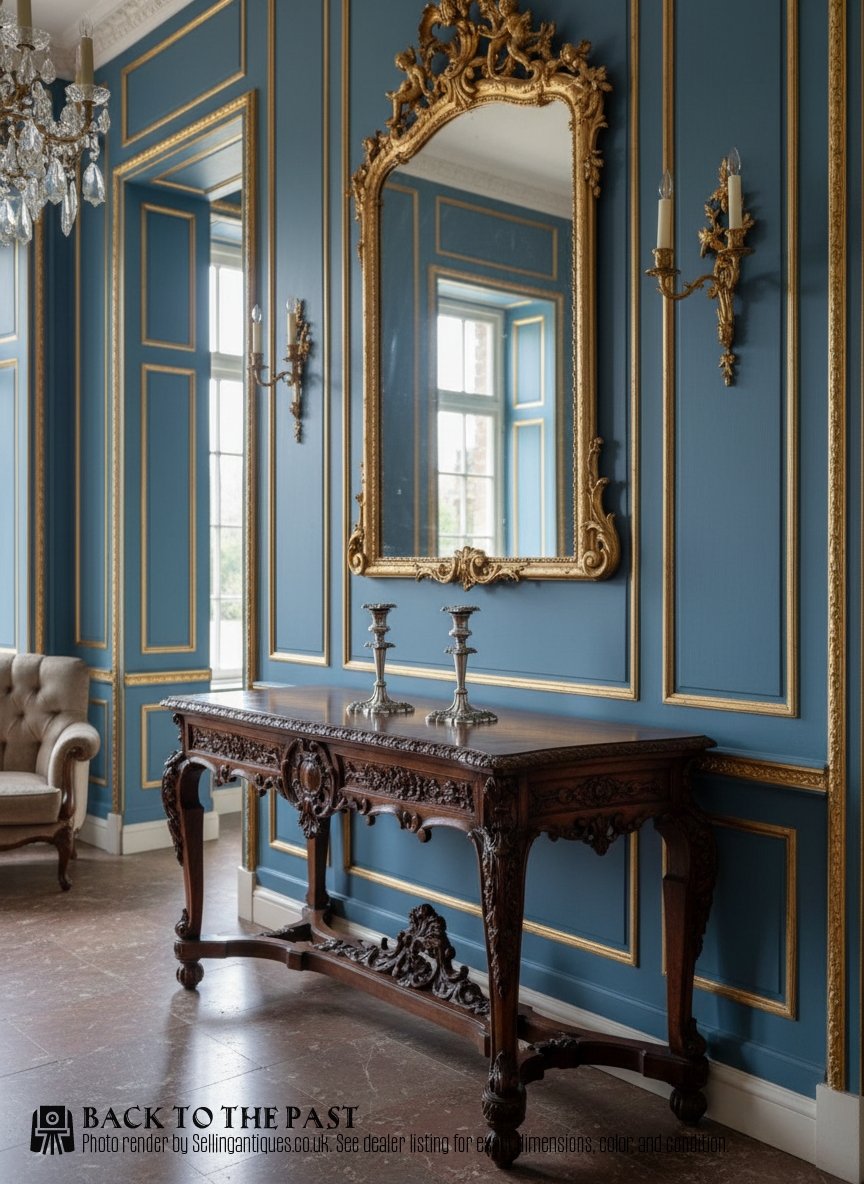
How They Were Made
Makers produced original Old Sheffield plate by fusing a sheet of silver to a thicker copper ingot under heat and rolling them together into combined sheets.
Artisans shaped these composite metals into candlesticks, concealing exposed copper edges with thin silver wire and adding weighted bases for stability.
Sheffield Plate Candlesticks Retail Price Guide 2026
Typical asking prices for sheffield plate candlesticks among the pieces listed under this phrase on Sellingantiques today, from the lower quarter to the upper quarter. They describe what is for sale here now, not the wider market.
Listings feature items spanning the eighteenth, nineteenth, and twentieth centuries, utilising copper, silver plate, and standard silver materials.
What Varies in Quality
Quality rests upon the crispness of the chased and cast ornamentation, particularly around the drip pans, sconces, and base borders.
The degree of silver wear revealing the underlying copper changes the visual character of each piece, while mechanics such as smooth telescopic sliding action dictate functional integrity.
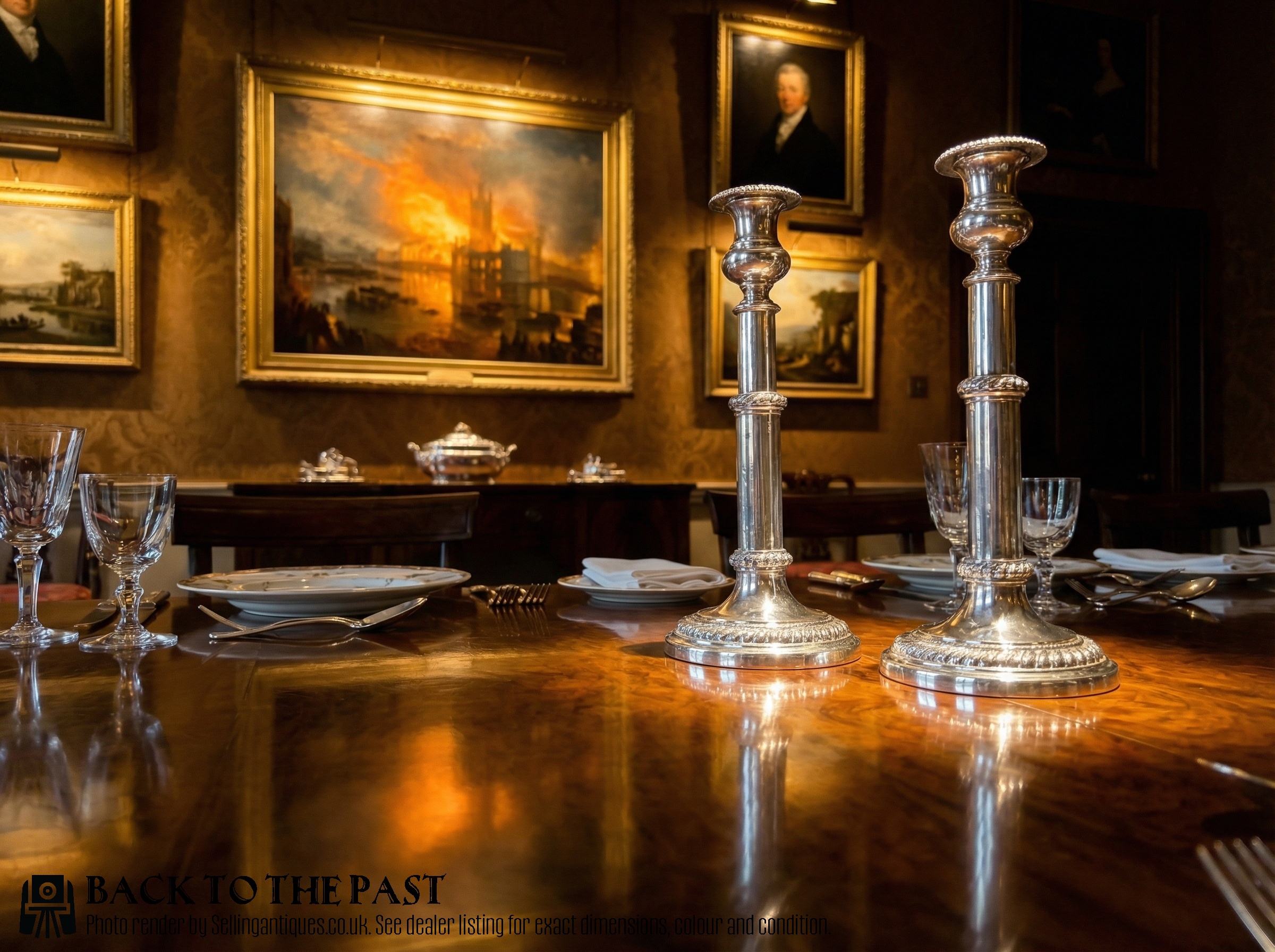
Matthew Boulton·Blagden Hodgson And Co·Walker Knowles·Dixon And Sons·Thomas Bradbury And Sons·Waterhouse
The Sheffield Plate Candlesticks Glossary
- Sheffield Plate
- A composite material made by fusing silver and copper together through heat and rolling, invented in the eighteenth century.
- Telescopic
- A sliding shaft design allowing the height of the candlestick to be adjusted upwards or downwards.
- Chamberstick
- A low, handheld candleholder featuring a fitted saucer base and a ring handle for carrying around a house.
- Sconce
- The detachable top nozzle inserted into the socket of a candlestick to catch melting wax.
- Candelabra
- A branched lighting fixture holding multiple candles upon a single central stem.
Sheffield Plate Candlesticks: Frequently Asked Questions
How do I spot real old Sheffield plate?
Examine the edges and high points for faint traces of a reddish copper base metal showing beneath the worn silver layer. Genuine old pieces utilise the fused plating method rather than modern electroplating techniques.
Look closely for soldered seams and silver wire edging applied to conceal the raw copper boundary. These construction markers distinguish authentic eighteenth and nineteenth-century examples from later reproductions.
Why do some candlesticks extend in height?
Telescopic mechanisms allowed users to adjust the height of the light source for different social settings or writing desks. The inner sliding sleeve moved smoothly within the lower shaft.
This practical innovation appeared frequently on Georgian and Regency designs intended for versatile domestic use.
What is a chamberstick used for?
Chambersticks provided portable illumination for lighting a path to bed or navigating dark hallways at night. The wide saucer base caught dripping wax while the attached handle allowed safe carrying.
Many examples included a small conical extinguisher resting in the tray to snuff the flame.
Can I use standard candles in these?
Most antique sockets accommodate standard taper candles, though minor variations in nineteenth-century sizing occur. Removable sconces help secure tapers of slightly different diameters.
Checking the inner diameter of the nozzle prevents buying candles that prove too wide for the antique fittings.