


Ornate Silver Candelabra
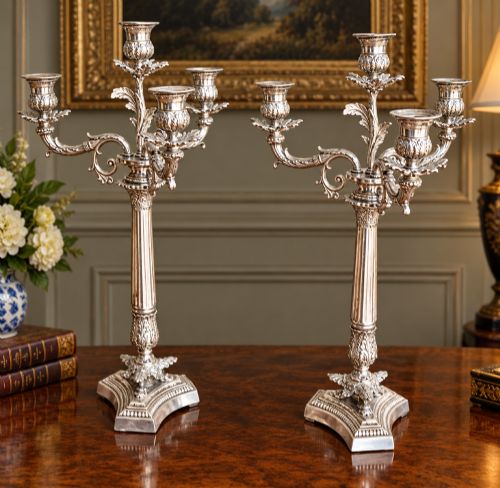
These ornate silver candelabra bring weight and shine to a room, cast in heavy plate from the nineteenth and early twentieth centuries.
Ornate Silver Candelabra
When you search for ornate silver candelabra, you are looking at multi-light table lights and wall sconces designed to illuminate a dining table or formal interior with branching arms. The examples you meet here are predominantly nineteenth-century Victorian productions, alongside Regency pieces and later Edwardian variations.
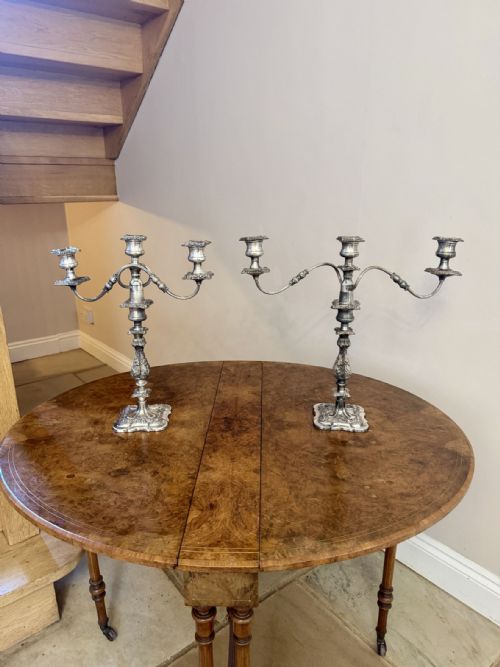
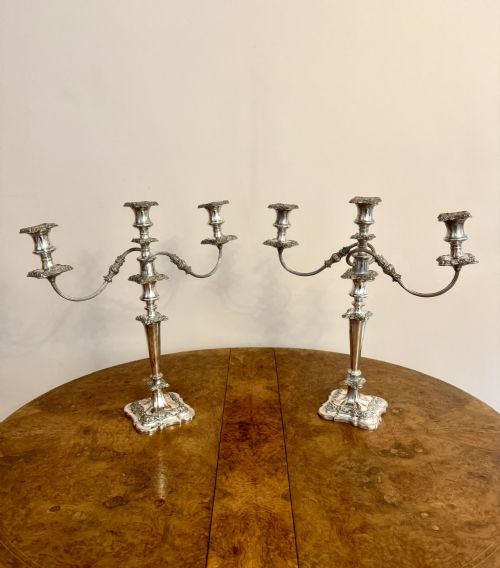
Most pieces seen on this page take the form of paired candelabras or convertible candlesticks with removable branches, often featuring elaborate Rococo Revival or Neoclassical ornamentation. They originate from British workshops and include significant makers working in silver plate, Old Sheffield plate, and electroplated nickel silver.
The object types range from five and six-light candelabra to grand centrepieces and wall sconces, reflecting the heavy entertaining habits of the periods they represent. Buyers choose them to anchor a sideboard or bring period character to a formal setting.
What varies in quality
Quality in these pieces rests on the crispness of the casting and the depth of the metalwork beneath the plate. Pieces from established makers display sharply rendered ornamentation on the cast nodes and branches, whereas simpler production shows softer, less defined detailing.
The weight and balance of the candelabra also dictate the tier, with higher-grade examples utilising substantial base metals that keep the heavy branching steady. Preservation of the underlying silver plate across prominent surfaces and high-relief decoration distinguishes the top of the range.
Recorded object types include multi-light candelabras, candlesticks, centrepieces, and wall sconces.
Smith & Sissons & Co·Elkington·Blagden Hodgson & Co
The Ornate Silver Candelabra Glossary
- Old Sheffield Plate
- A method of fusing a thin sheet of silver to a thicker copper ingot by heat and pressure before rolling it into sheets for smithing.
- Electroplated Nickel Silver
- A process introduced in the nineteenth century where a silver coating is applied via electrical current to a nickel alloy base.
- Rococo Revival
- A nineteenth-century design style drawing on eighteenth-century French motifs, characterised by asymmetrical scrolls, C-curves, and naturalistic shell work.
- Neoclassical
- A decorative style inspired by classical Greece and Rome, favouring symmetry, urn motifs, columns, and crisp geometric detailing.
- Wall Sconce
- A light fixture fixed to a wall rather than resting on a table, designed with branching arms to project candle illumination into a room.
Ornate Silver Candelabra: Frequently Asked Questions
How do I clean tarnished silver plate?
Use a soft cloth and a gentle silver cream formulated specifically for plated items to preserve the thin metal layer.
Avoid abrasive dips or harsh scrubbing brushes that can strip the silver plating down to the base copper or nickel alloy underneath.
Can these candelabra hold modern candles?
Most antique sockets are sized for standard taper candles, though slight variations in nineteenth-century diameters may require minor adjustments.
Using dripless beeswax or paraffin tapers helps protect the ornate arms and drip pans from heavy wax accumulation.
How do I date a silver plated candelabra?
Examine the construction methods, style motifs, and any maker marks stamped into the base metal or underside of the drip pan.
Sheffield plate and early electroplating point to mid-nineteenth-century origins, while later Victorian pieces show heavier cast ornamentation.
Are the branches removable on these pieces?
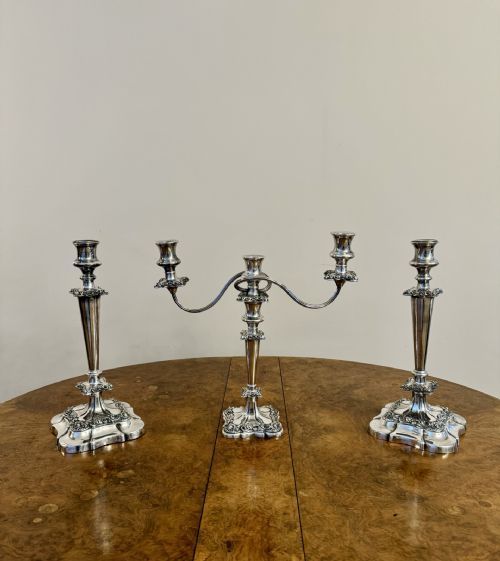
Many Victorian candelabra feature a central nozzle that unscrews, allowing the multi-light branch section to be removed entirely.
This conversion turns the item from a branched candelabra into a single candlestick for alternative table arrangements.