
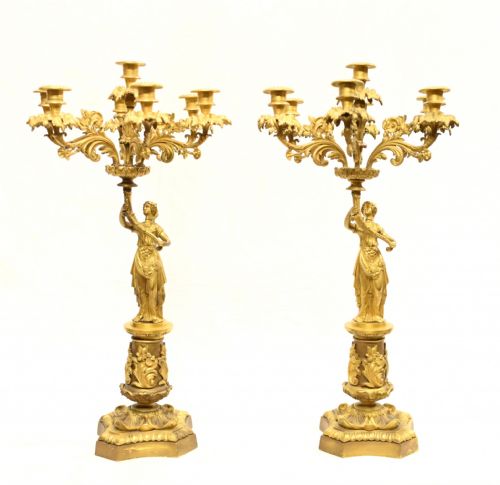


Antique Metal Candleholder
These antique metal candleholder examples bring centuries of domestic illumination into modern rooms, offering robust materials and sculptural presence.
Identifying your antique metal candleholder
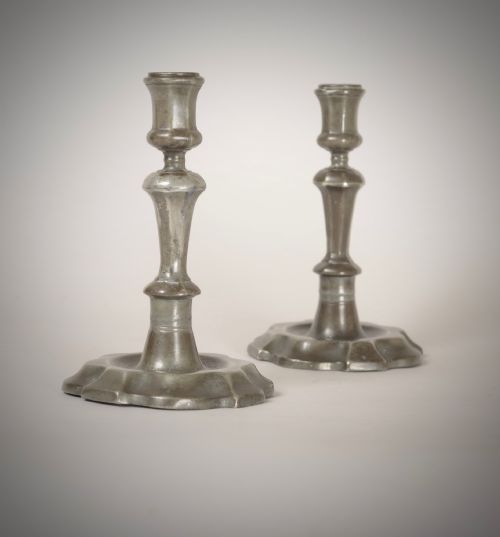
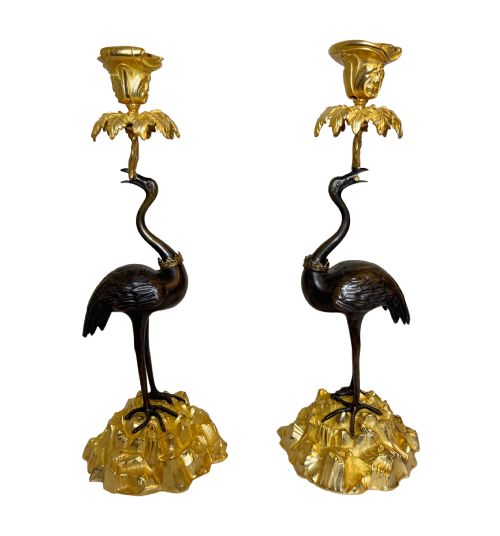
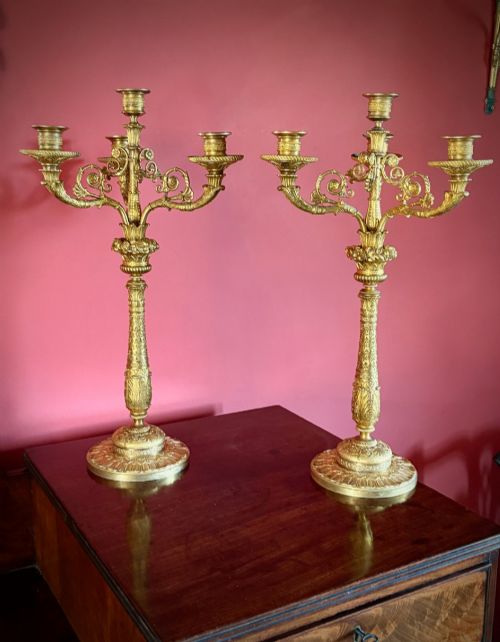
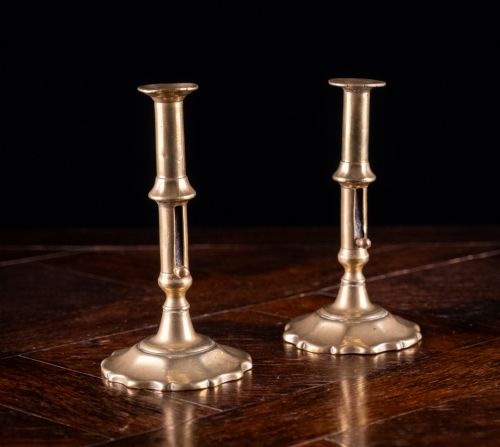
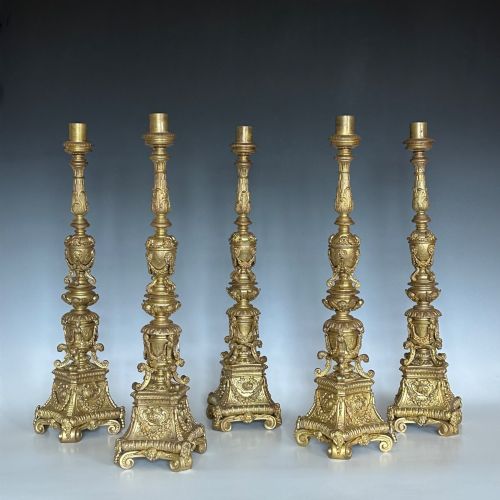
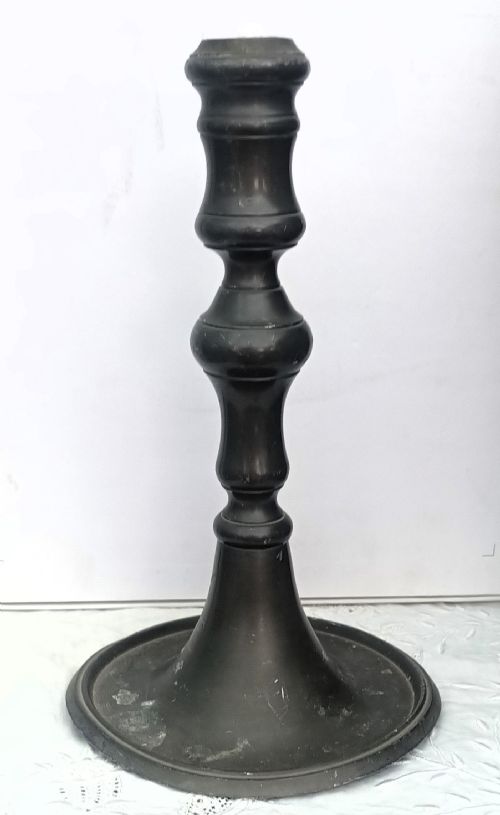
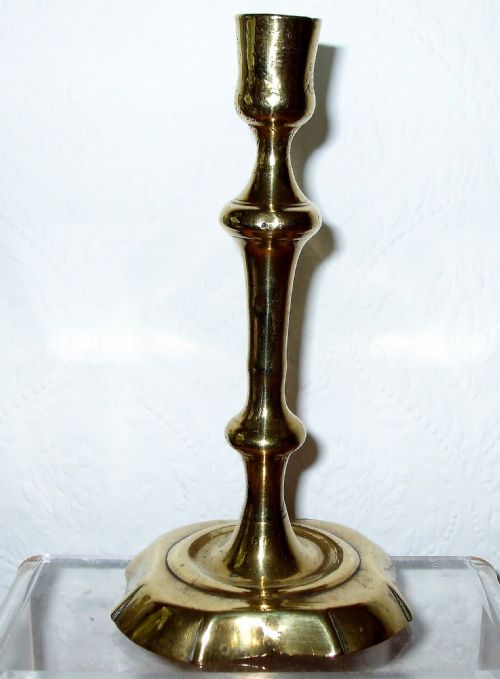
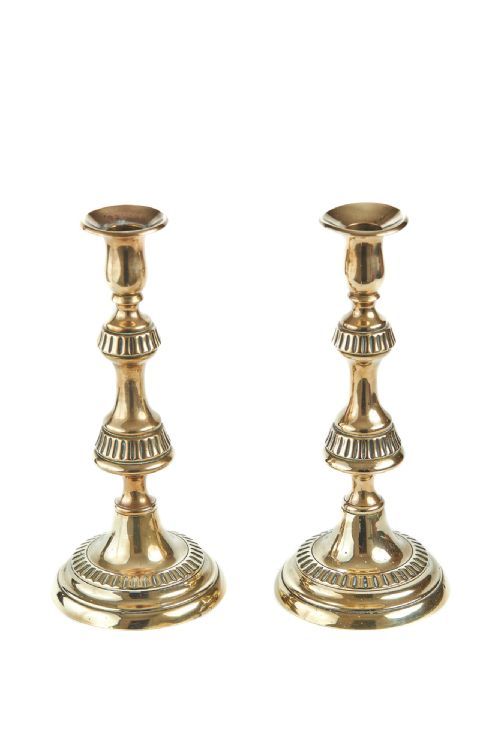
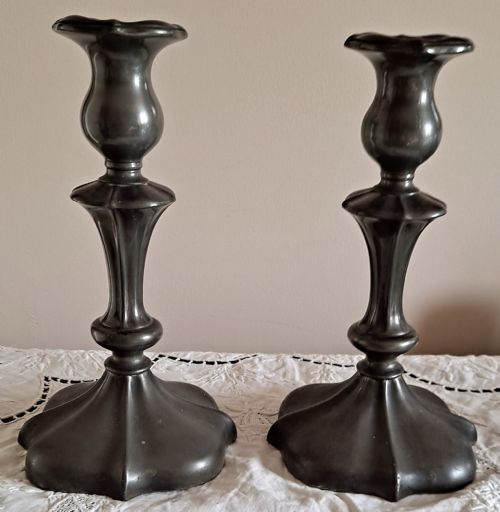
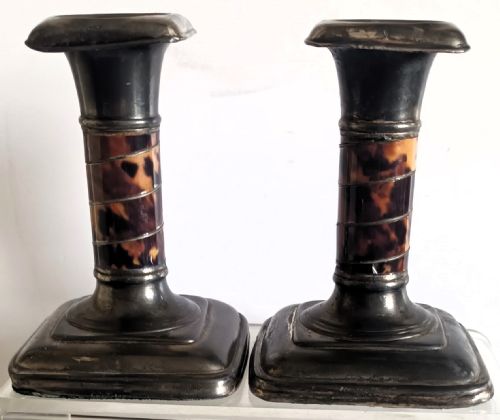
When you search for an antique metal candleholder, you encounter a varied selection of functional lighting spanning the seventeenth, eighteenth, and nineteenth centuries. The pieces on this page range from simple chambersticks designed for carrying through dark corridors to grand candelabra meant for formal dining tables.
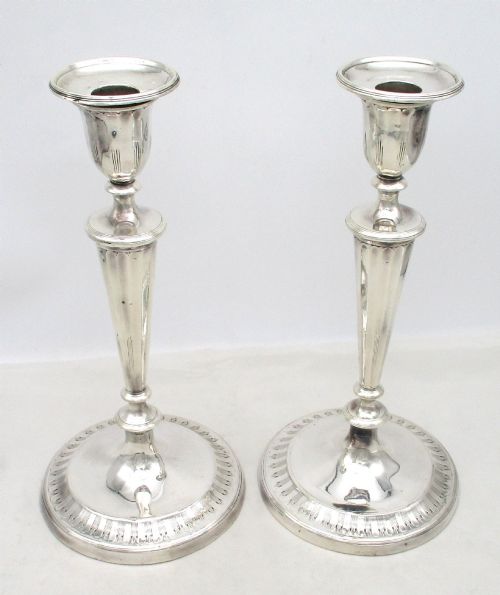
You are most likely to meet brass and wrought iron interpretations, alongside rarer metals such as paktong and Old Sheffield Plate. Styles stretch from restrained Georgian and Regency designs to ornate Victorian and Gothic Revival creations.
Forms include single candlesticks, chambersticks with handle and pan, and multi-branched candelabra. Origins span English, Swedish, French, and Dutch workshops.
Construction and materials
Makers utilised a variety of metalworking techniques depending on the chosen material, from the heavy casting of bell brass and bronze to the skilled forging of wrought iron. Seamed construction appears on nineteenth-century bronze candlesticks, while chambersticks often combine sheet metal components with applied sockets and handles.
Silver plating and fusion techniques created Old Sheffield Plate items, bonding thin layers of silver to copper bases. Paktong, an imported zinc-copper-nickel alloy, required specialised smelting before being cast and finished by hand.
Retail Price Guide 2026
Typical UK retail prices for metal candleholder, calculated from the Sellingantiques database of over a million retail prices indexed since 2003. This retail price guide relies exclusively on Sellingantiques data; no external sources or auction records are used, so the figures do not describe the wider market.
Materials across the listings include brass, wrought iron, bronze, copper, paktong, and Old Sheffield Plate.
Assessing quality and character
Quality rests upon the integrity of the metalwork, the weight of the casting, and the preservation of original surfaces. Finer pieces demonstrate crisp detail in cast elements, such as tulip-shaped sconces or drip pans, without heavy modern intervention.
The distinction between standard utility items and superior examples often lies in the choice of alloy, such as the use of resonant bell brass or scarce paktong, and the elegance of the original proportions.
Blagden, Hodgson & Co
The Antique Metal Candleholder Glossary
- Chamberstick
- A low portable candleholder fitted with a saucer base and a loop handle for carrying room to room.
- Pricket
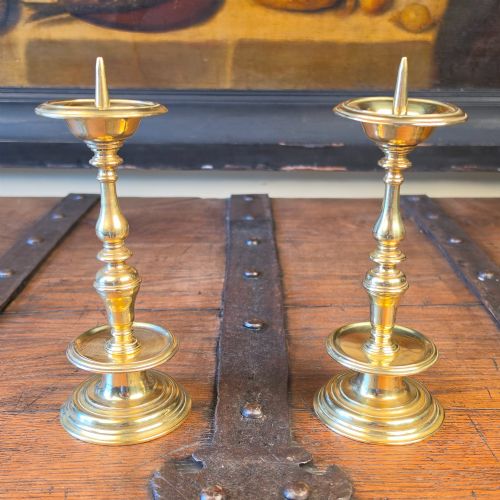
- A sharp metal spike upon which a large candle is impaled, common in earlier ecclesiastical and domestic lighting.
- Paktong
- A heavy copper-nickel-zinc alloy originating from China, highly prized in the eighteenth century for its bright, silver-like appearance.
- Old Sheffield Plate
- An early form of composite metal made by fusing a thin sheet of silver to a copper ingot before rolling.
- Sconce
- The cup or socket at the top of a candleholder designed to catch wax and hold the candle secure.
Frequently Asked Questions
What is a chamberstick?
A chamberstick is a portable candleholder featuring a shallow pan to catch dripping wax and a loop handle for carrying. They were essential for navigating unlit hallways before the arrival of electric lighting.
Victorian and Georgian examples often include a small conical snuffer resting in a dedicated clip beside the socket.
How do I date an iron candleholder?
Dating iron lighting relies upon examining forge marks, construction methods, and the degree of oxidation. Eighteenth-century pieces frequently employ hand-wrought iron techniques combined with rushnippers or simple spikes.
Nineteenth-century examples tend toward heavier cast iron components and more standardised industrial assembly methods.
How were old candelabra used?
Candelabra provided primary illumination for dining tables, parlours, and formal entertaining spaces. Their multiple branches allowed a single base to project significantly more light than a standard stick.
They stood as centrepieces of interior decoration, reflecting candlelight off polished wood and silver surfaces.