
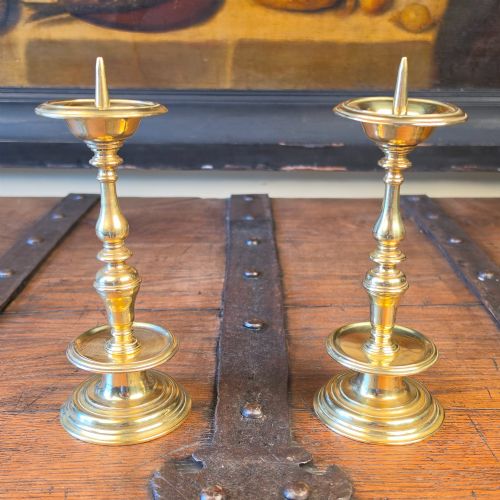
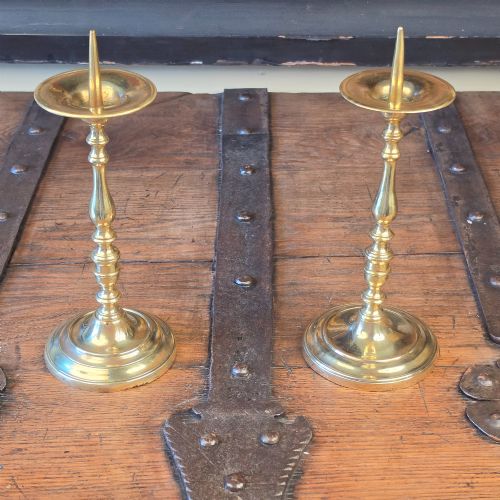

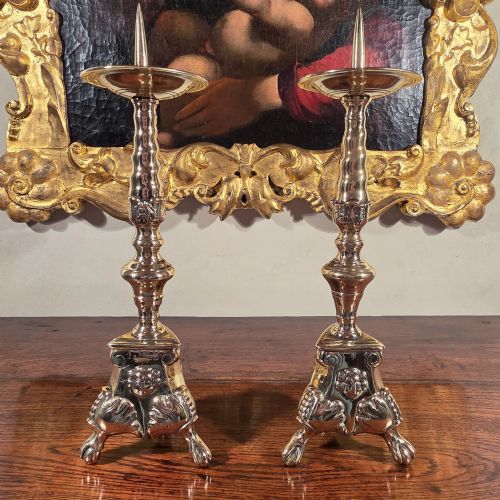


Baroque Brass Candlestick
A baroque brass candlestick brings heavy cast metalwork and centuries of domestic illumination straight into a modern interior.
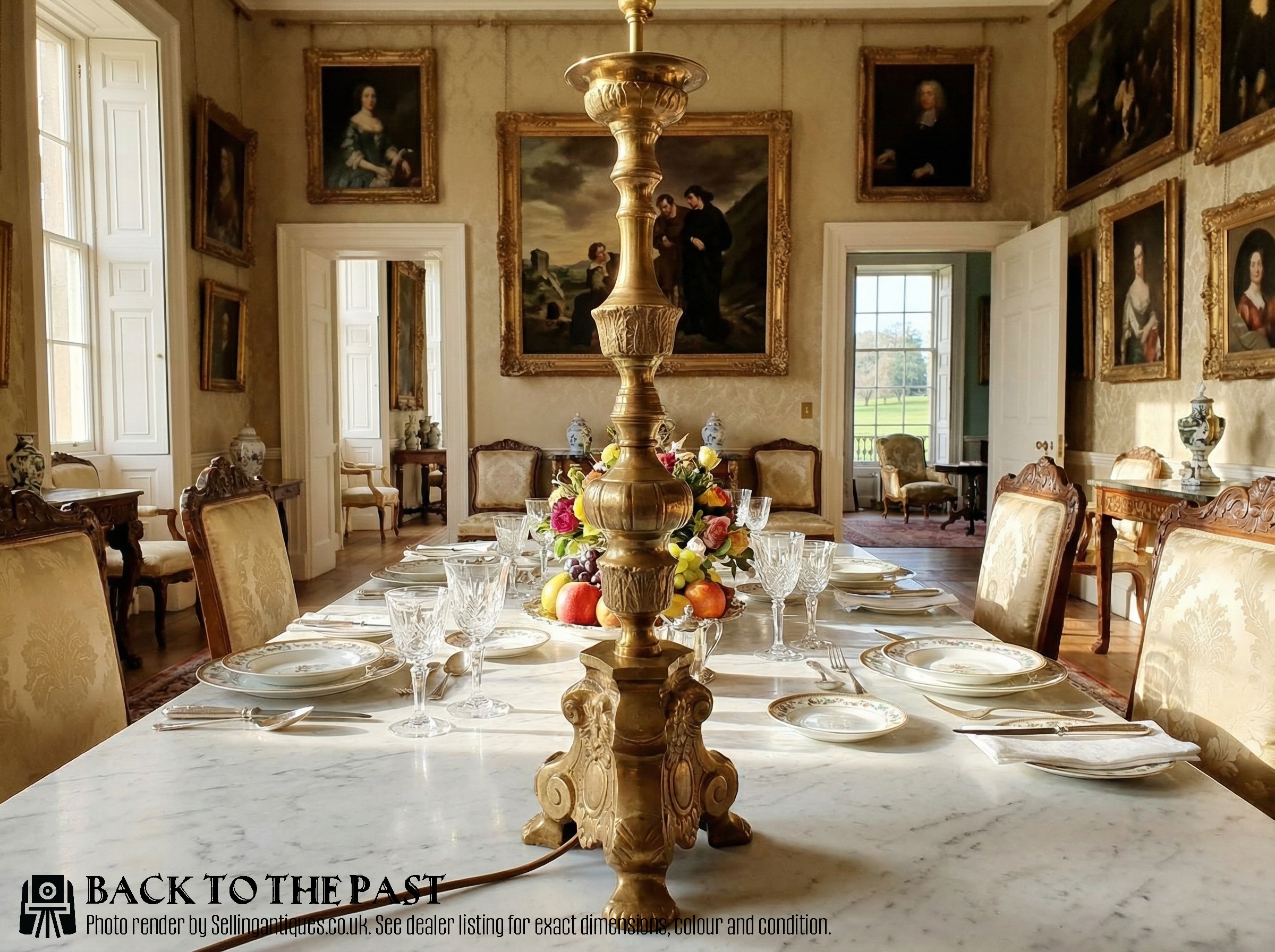
Baroque Brass Candlestick
When you search for a baroque brass candlestick, you encounter heavy cast metal objects spanning from the seventeenth century through to later revival periods. The selections include genuine seventeenth century Flemish and Dutch pieces alongside nineteenth century interpretations and twentieth century adaptations.
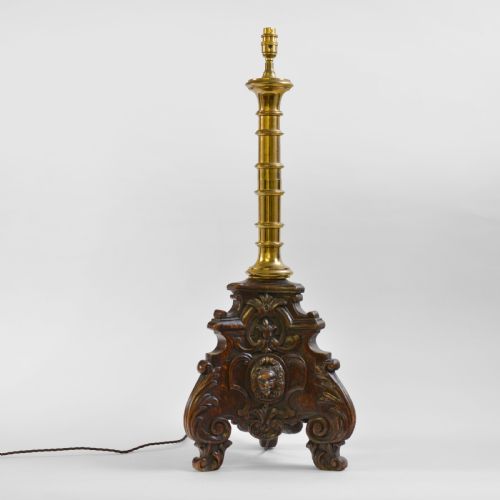
Forms range from standard candle holders and pricket sticks with central spikes to pieces later converted into table lamps and standard lamps. Most pieces display the robust turned stems and wide drip pans characteristic of early lighting.
Materials and construction methods
These items rely primarily on cast brass, bell brass, and gilt bronze, shaped through traditional foundry methods into knopped stems and broad bases. Workshops utilised durable copper alloy compositions designed to withstand the heat and weight of heavy wax candles.
Secondary materials such as carved oak and giltwood appear in related lamp adaptations, whilst surface finishes range from polished ormolu to aged patinated metal.
Baroque Brass Candlestick Retail Price Guide 2026
Typical asking prices for baroque brass candlestick among the pieces listed under this phrase on Sellingantiques today, from the lower quarter to the upper quarter. They describe what is for sale here now, not the wider market.
Regional variations in these collections include Dutch, Flemish, German, and Swedish metalwork traditions.
Distinguishing quality in early lighting
Quality rests in the crispness of the casting and the proportional balance of the turned components, from the base to the drip pan. Heavier gauge metalwork and sharply defined mouldings separate superior period examples from simpler revival pieces.
Condition and originality dictate value, particularly where surface wear aligns with genuine seventeenth or eighteenth century age rather than later mechanical intervention.
The Baroque Brass Candlestick Glossary
- Pricket
- A candlestick featuring an upright metal spike designed to impale the base of a candle rather than sit inside a socket.
- Heemskerk
- A specific type of seventeenth century brass candlestick named after the Dutch admiral, characterised by a bell shaped base and prominent central drip pan.
- Knop
- A rounded protuberance or knob on the stem of a candlestick, providing grip and structural decoration.
- Ormolu
- Finely ground high carat gold applied to a bronze base, creating a rich golden surface finish seen on later revival pieces.
Baroque Brass Candlestick: Frequently Asked Questions
How do I clean an old brass candlestick?
Maintenance requires minimal intervention to preserve the historic surface patination built up over centuries of handling.
Harsh chemical polishes remove the aged dark tones that collectors value, so gentle dusting with a soft dry cloth is usually sufficient.
Were these used for church or home?
Surviving examples served both domestic households and ecclesiastical settings depending on their height and whether they used sockets or prickets.
Pricket sticks often associate with church altars, whilst smaller domestic versions lit seventeenth century dining tables and chambers.
How can I tell a seventeenth century piece from a revival?
Period pieces display the uneven surface textures and hand finished tool marks typical of early sand casting and lathe work.
Revival pieces from the nineteenth and twentieth centuries often exhibit more uniform machine finishing and standardised thread fittings.
Can I still burn candles in them?
Original sockets and prickets accommodate standard taper candles, though the heat should be monitored near antique metal.
Many buyers choose to display them unlit or utilise professional conversions into electric lamps.