


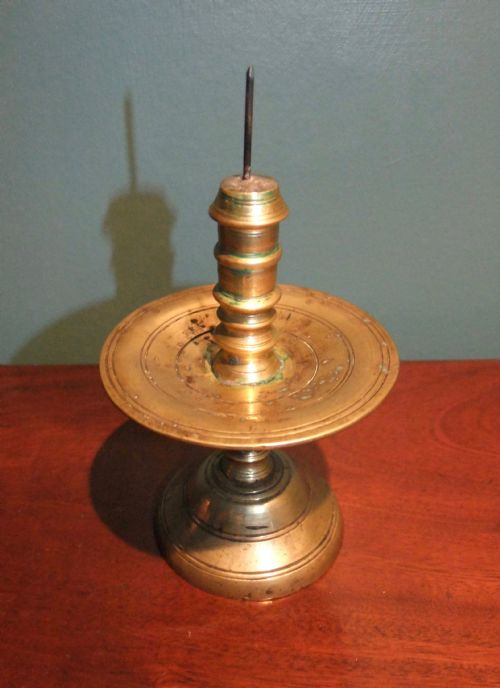
17th Century Brass Candlestick
These 17th century brass candlestick examples bring heavy cast metal and period form to a table, offering solid weight and historical presence.
17th Century Brass Candlestick
When you search for a 17th century brass candlestick, you are looking at domestic lighting fixtures cast from copper alloys during the seventeenth century or created later in revival styles. The pieces on this page span both authentic period items from regions like the Low Countries, Germany, and Sweden, alongside nineteenth-century interpretations built to echo earlier designs.
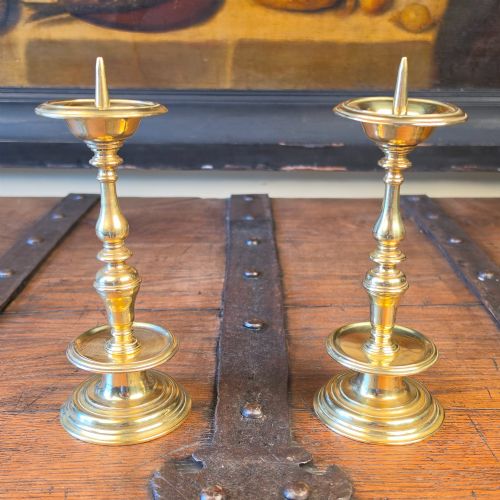
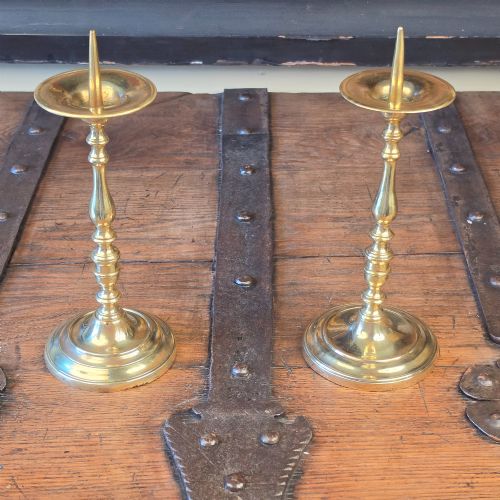
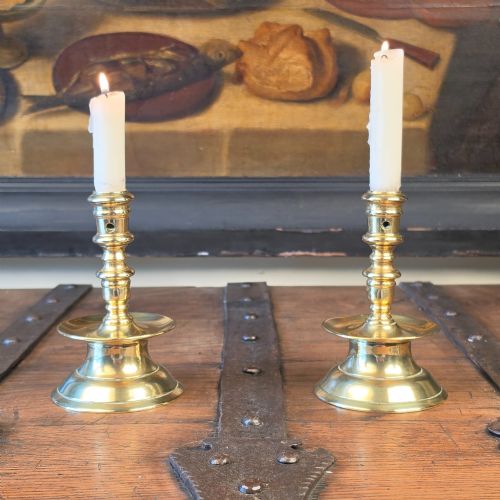
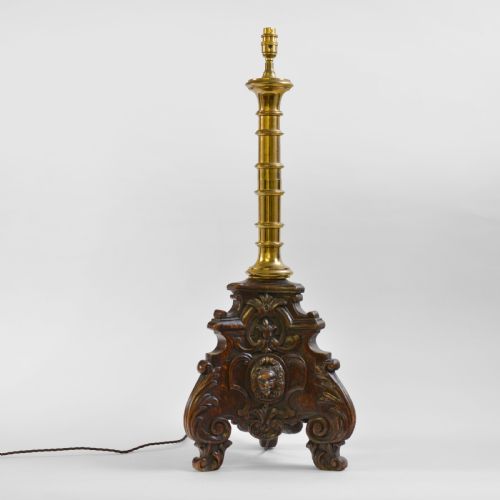
Forms range from sturdy pricket sticks with spikes for holding candles to socket candlesticks featuring prominent baluster knops and wide drip pans. You will encounter single examples and matched pairs, with some variants modified later into table lamps using materials like oak.
What varies in quality
Quality rests upon the crispness of the casting and the thickness of the metal used in the construction. Superior examples retain their original proportions and heavy weight without excessive wear to the turned details on the knops and bases.
The integrity of the construction also distinguishes better items, particularly where socket components, stems, and drip pans meet. Original patination and the absence of modern repairs separate period originals from later revival interpretations.
Listings feature items originating from the 17th century alongside 19th-century revival pieces, constructed from brass, copper alloy, cast brass, iron, and oak.
The 17th Century Brass Candlestick Glossary
- Pricket candlestick
- A lighting device featuring a vertical spike, or pricket, upon which a candle is impaled rather than dropped into a socket. This form appears frequently in early continental European metalwork.
- Heemskerk candlestick
- A distinctive style of seventeenth-century Dutch candlestick characterised by a central drip pan placed midway up a baluster stem. These items were widely exported and copied.
- Knop
- A rounded or bulbous decorative projection on the stem of a candlestick. Baluster knops provide both visual weight and a secure grip.
- Copper alloy
- A broad category of metal mixtures including brass and bell metal utilised for casting durable household objects. It forms the primary material basis for these pieces.
- Low Countries
- A historical region encompassing parts of modern-morrow Belgium and the Netherlands. Workshops here produced notable brass lighting fixtures during the seventeenth century.
17th Century Brass Candlestick: Frequently Asked Questions
What is a Heemskerk candlestick?
A Heemskerk candlestick is a specific seventeenth-century Dutch design featuring a prominent drip pan positioned midway along a baluster stem. These pieces were manufactured in the Netherlands and distributed widely across Europe.
The form is recognised by collectors for its sturdy proportions and practical design, which kept molten wax away from the user's hand during use.
How do I spot a reproduction?
Distinguishing period pieces from nineteenth-century revival examples involves examining the casting quality, the weight of the metal, and the method of construction. Revival pieces often display different wear patterns and lighter overall mass compared to seventeenth-century originals.
Looking closely at the junction points and the composition of the brass alloy helps clarify the age and origin of the item.
What is a pricket candlestick?
A pricket candlestick uses a sharp metal spike at the top to secure the candle, unlike modern sockets that hold candles from the sides. This was the standard method for securing candles in many European households before socket designs became dominant.
These sticks often include wide drip pans positioned beneath the spike to catch falling wax.
Where were these candlesticks made?
Manufacturing centres during the seventeenth century included the Low Countries, German towns such as Nuremberg, and workshops in Sweden and France. Each region developed distinct stylistic traits in their casting and turning techniques.
Later nineteenth-century revival makers across Europe subsequently reproduced these regional forms for collectors.
How do I care for antique brass?
Antique brass requires minimal intervention to preserve its historical surface and stable patination. Dusting with a dry cloth and avoiding harsh chemical polishes protects the metal skin accumulated over centuries.
Keeping the pieces away from excessive moisture ensures the alloy remains stable in a modern home environment.