



Antique Dutch Candle Stand
These antique dutch candle stand options bring centuries of metalwork and timber craft into a room, offering both practical light-holders and display surfaces.
Antique Dutch Candle Stand
When searching for an antique dutch candle stand, buyers encounter a mix of forms including torcheres, occasional tables, pedestals and pricket candlesticks. These pieces span centuries of production from the seventeenth century through to the early twentieth century.
The assortment on this page ranges from tall wooden pedestals and marquetry wine tables to heavy brass and copper pricket sticks originating from the Low Countries and Amsterdam schools. Walnut, fruitwood marquetry and patinated metal dominate the selection.
Buyers are most likely to meet either seventeenth-century brass church-style pricket sticks or eighteenth-century walnut torcheres and occasional tables. Each variety carries distinct regional characteristics associated with Flemish Baroque, Dutch Rococo and the later Amsterdam School.
How they were made
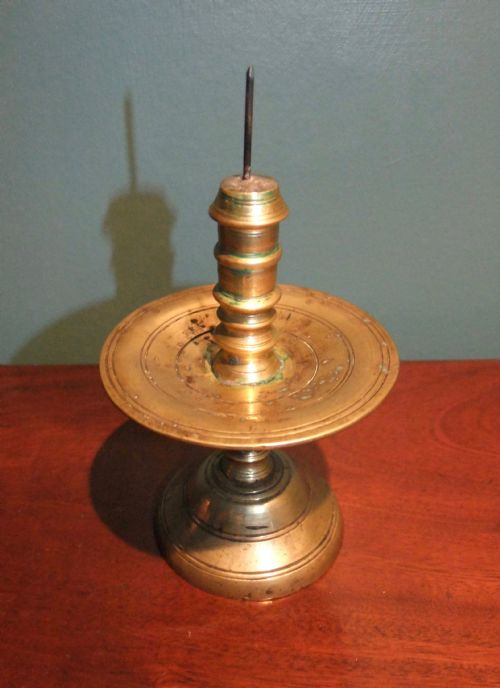
Metal items rely on foundry casting and hand-working in brass, copper, iron and patinated metal. Smiths and founders shaped pricket candlesticks with solid collars and spikes to hold heavy tapers.
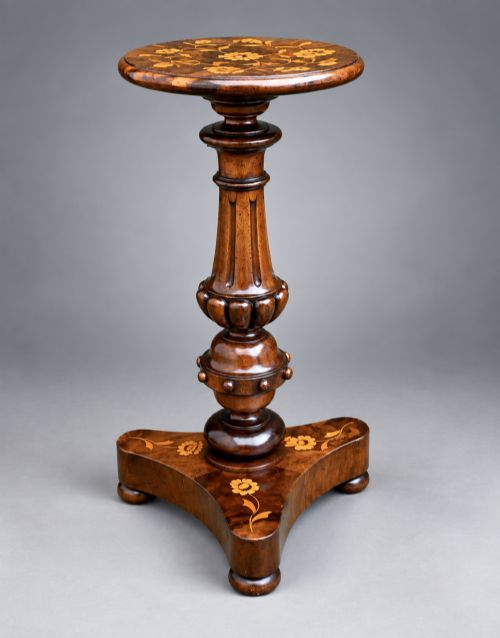
Wooden examples utilise timber framing, turning and intricate marquetry. Craftsmen laid veneers of walnut, fruitwood and kingwood onto carcases to create patterned surfaces on occasional tables and torcheres.
Candles once sat directly on iron spikes, meaning early seventeenth-century lighting required a steady hand and zero draughts.
What varies in quality
The standard of timber work separates basic furniture from finer examples. Precision in fruitwood and kingwood marquetry dictates the refinement of occasional tables and torcheres.
In metalwork, the weight and crispness of cast brass or copper define the better examples. Pricket candlesticks with original patination and robust construction sit above simpler productions.
The Antique Dutch Candle Stand Glossary
- Pricket candlestick
- A metal candle holder featuring an upward-pointing spike that secures the base of a candle rather than a socket. This form is common in seventeenth-century pieces from the Low Countries.
- Torchere
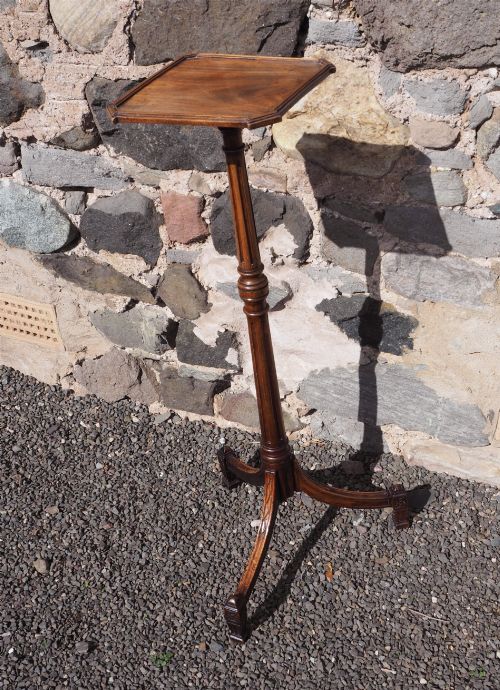
- A tall stand designed to elevate a light source or decorative object in a room. These tall wooden pedestals often date from the eighteenth century.
- Dutch marquetry
- A decorative technique employing inlaid pieces of fruitwood, walnut and kingwood to form floral or pictorial patterns on furniture surfaces. It appears frequently on nineteenth-century occasional tables.
- Amsterdam School
- An architectural and design movement from the early twentieth century influencing metalwork and furnishings. Pieces from this tradition display distinct expressionist forms in brass and copper.
- Collar candlestick
- A candle holder featuring a defined ring or collar along the shaft. These examples often date to the mid-eighteenth century in the Low Countries.
Antique Dutch Candle Stand: Frequently Asked Questions
What is a pricket candlestick?
A pricket candlestick uses an upright metal spike to hold a candle in place instead of a traditional socket. This design has roots in ecclesiastical and domestic lighting from the seventeenth century.
These metal pieces were cast in brass, copper and iron, often displaying heavy patination built up over centuries of handling and use.
How do I date a brass candlestick?
Dating relies on observing manufacturing techniques, weight, form and material combinations. Seventeenth-century examples from the Low Countries typically feature solid cast brass construction with pricket tops.
Later pieces from the twentieth century show the distinct stylised forms of the Amsterdam School or Art Deco movements, utilising patinated metal and mixed brass with iron.
Where were these pieces made?
The items originate from the Netherlands, Amsterdam and the broader Low Countries, including Flanders. Workshops in these regions produced both domestic furnishings and metal lighting.
Regional styles range from Flemish Baroque and Dutch Rococo to later twentieth-century Amsterdam School designs.
How do I use a torchere today?
A torchere functions as an elevated display surface for plants, sculpture or lighting fixtures in a room. Their tall proportions draw the eye upward and suit corners or empty wall spaces.
Placed beside seating or in hallways, wooden torcheres and occasional tables add architectural height and display space to an interior.