



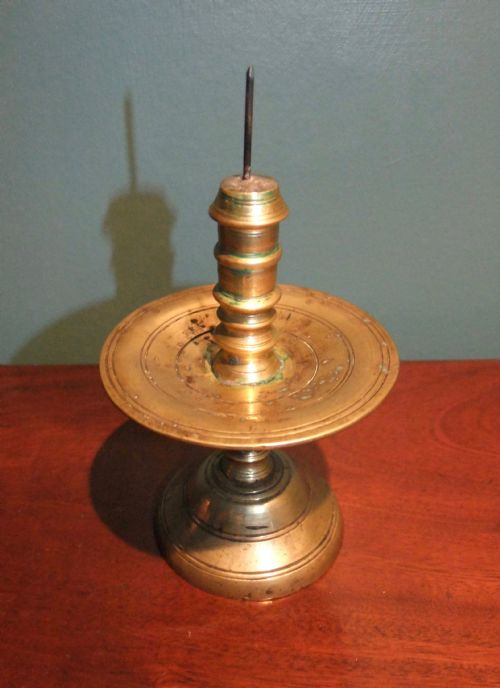
17th Century Candle Holder
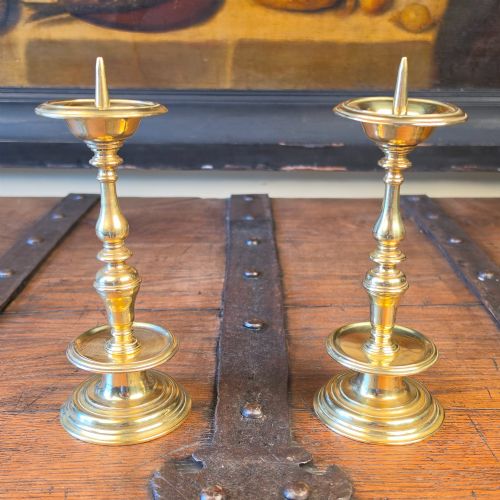
These 17th century candle holder examples bring heavy cast brass, forged iron and Stuart pewter straight into a room, offering genuine historical weight for your lighting.
17th Century Candle Holder
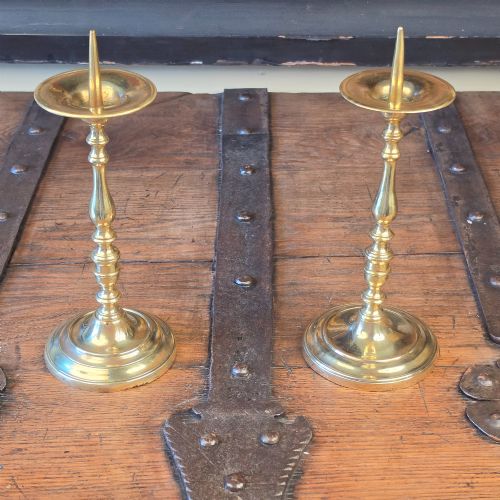
When you search for a 17th century candle holder, you encounter heavy functional pieces designed to burn tallow or wax in domestic and ecclesiastical spaces. The selection includes sturdy brass sticks with prominent knops, iron rushlight combinations, and wall sconces that once hung in period interiors.
You are likely to meet both genuine seventeenth-century survivals and later nineteenth-century revival interpretations. The genuine examples span English Stuart pewter, Low Countries brass prickets, and German bell metal, while the revival pieces capture the same heavy proportions.
Materials and construction methods
Makers utilised cast brass and copper alloy for the most durable sticks, often pouring molten metal into multi-part moulds before turning and finishing the components on a lathe. Iron pieces relied on blacksmiths forging and welding wrought iron to create functional rushlight and candle combinations.
Pewter vessels and sticks were cast from tin alloys, while wooden examples featured carved construction. Individual components like drip pans, stems, and bases were then assembled mechanically through threading, pinning, or soldering.
Current listings feature pieces spanning the 17th, 18th, and 19th centuries, utilising brass, pewter, iron, and carved wood.
Distinguishing quality in period lighting
Quality rests in the crispness of the casting and the thickness of the metal wall. Superior brass sticks display sharp mould lines and well-defined knops without excessive wear from centuries of cleaning.
Proportion and original surface integrity separate exceptional pieces from lesser examples. Unpolished metal retaining natural patination holds greater integrity than over-buffed surfaces that have lost their original casting details.
The 17th Century Candle Holder Glossary
- Pricket
- A sharp metal spike on a candlestick designed to impale the base of a wax candle. This form predates socket holders and remains common in ecclesiastical lighting.
- Knop
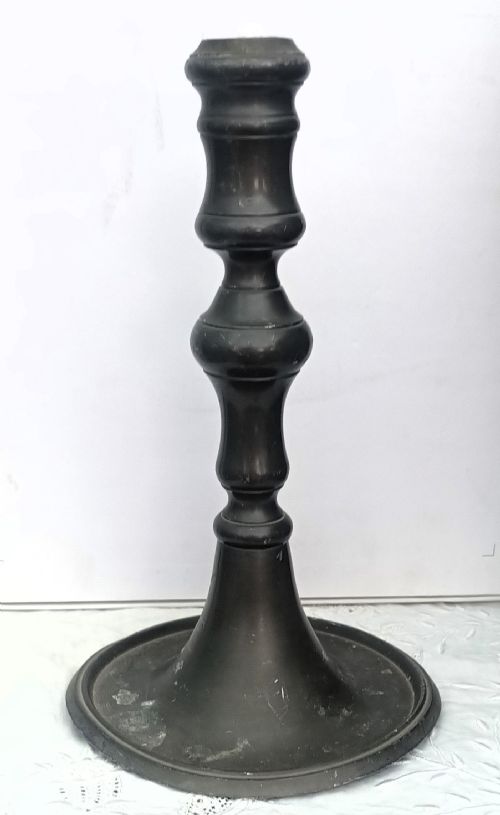
- A prominent swelling or bulbous decorative projection on the stem of a candlestick. It provides a secure grip for lifting and adds sculptural weight to the silhouette.
- Heemskerk
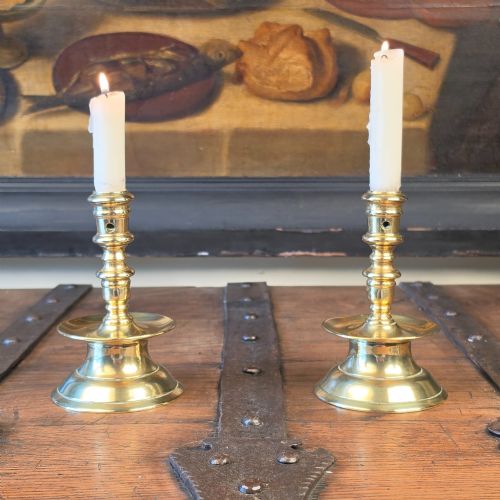
- A specific Dutch brass candlestick type characterised by a bell-shaped base, a central drip pan, and a heavy knopped stem. These originated in the Netherlands during the seventeenth century.
- Rushlight
- A simple lighting device utilising a pivoted iron clip to hold a dried rush dipped in animal fat. They represent utilitarian domestic lighting from the period.
- Bell metal
- An alloy of copper and tin traditionally used for casting bells, known for its resonant quality and durability. Seventeenth-century makers utilised this dense alloy for robust candlesticks.
17th Century Candle Holder: Frequently Asked Questions
How do I clean an old brass candlestick?
You should generally leave the natural patination untouched, as collectors value the dark oxidation built up over centuries. Gentle dusting with a dry cloth is sufficient for daily maintenance.
Avoid abrasive metal polishes that strip away the historical surface and soften the crisp casting details. Preserving the original skin protects the character of the metal.
What is a Heemskerk candlestick?
A Heemskerk candlestick is a distinctive Dutch brass lighting form featuring a prominent central drip pan placed between a bell-shaped base and a socket. These sturdy pieces were exported widely across Europe during the seventeenth century.
Their heavy construction made them stable on oak tables and chests. Surviving examples remain sought after by collectors of domestic brasswork.
Are these candle holders safe to use?
Most period candle holders accommodate modern taper candles with minor adjustments, though stability varies due to irregular hand-cast sockets. You must place them on secure, heat-resistant surfaces away from draughts.
Because antique metal conducts heat rapidly, supervise burning candles closely to prevent damage to the base or surrounding furniture.
How do I distinguish a revival piece?
Nineteenth-century revival pieces often display cleaner, more uniform machine turning and lack the slight asymmetries typical of seventeenth-century work. Examining the wear patterns and tooling marks helps reveal the actual age of the metal.
Comparing the weight and alloy composition against documented examples clarifies the manufacturing period. Dealers note these stylistic revivals directly in the attribution.