
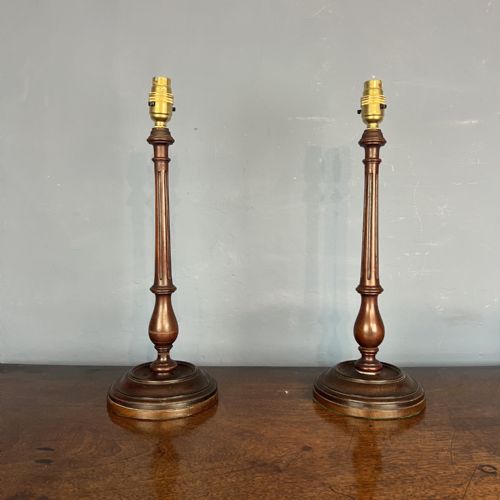
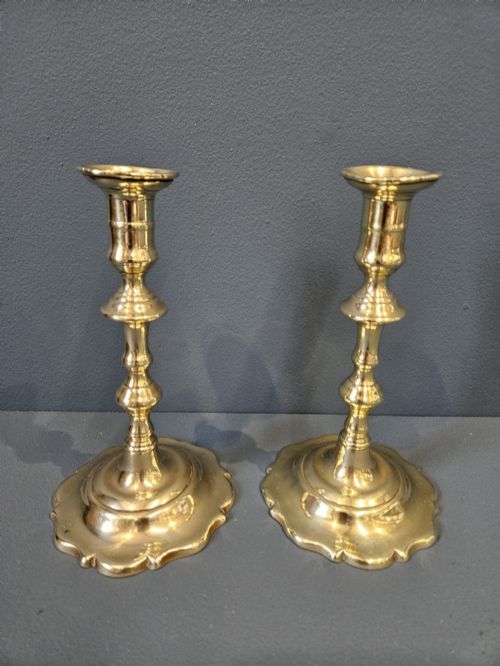
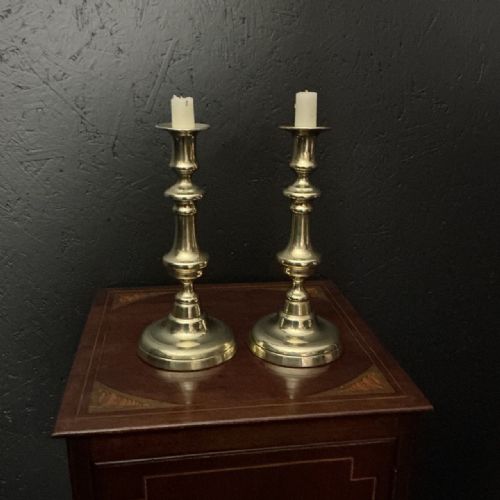
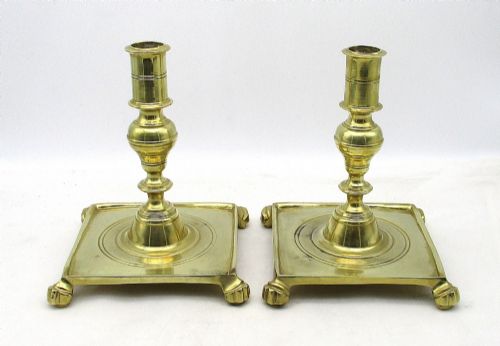
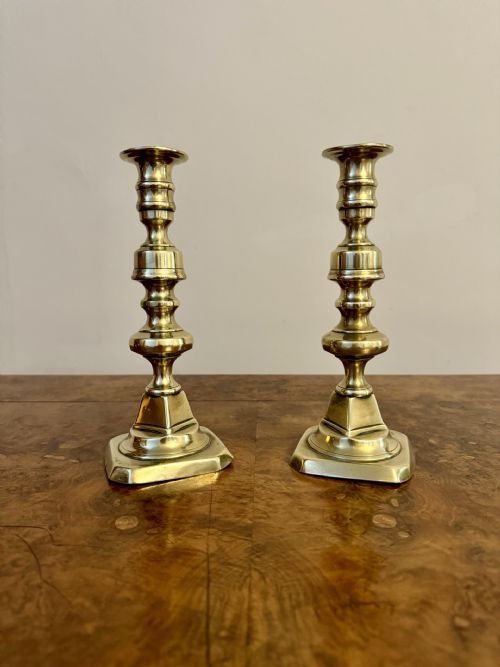
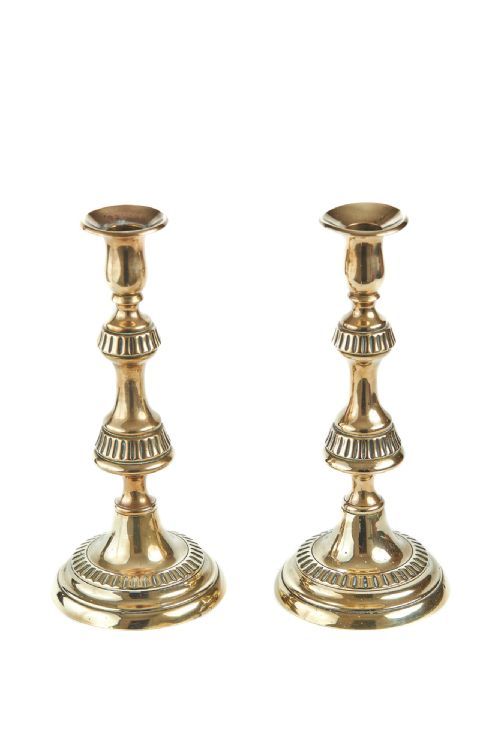
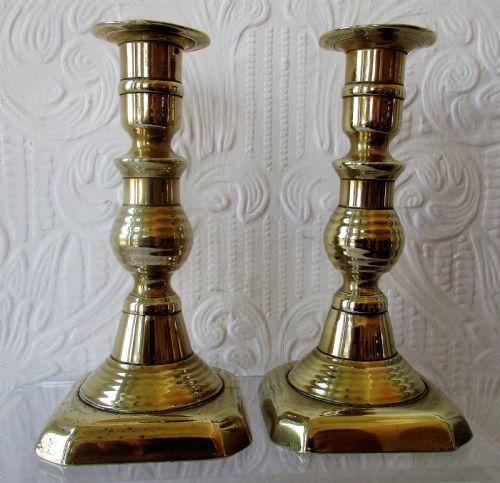
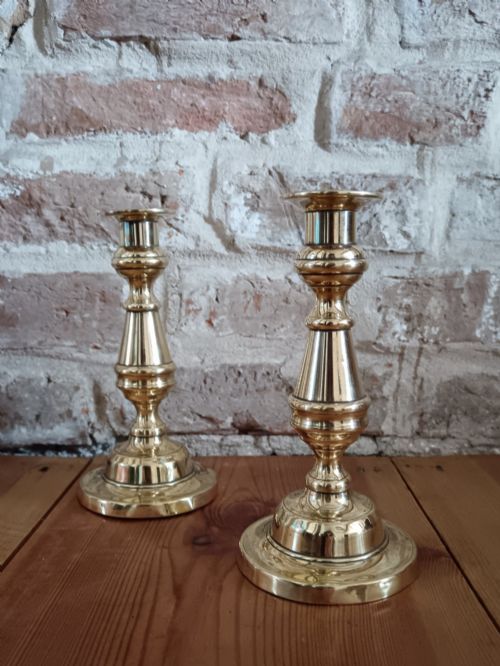
Turned Brass Candlestick
These turned brass candlestick examples bring tactile weight and warm metal tones to any room, offering genuine historical character for daily use.
What a turned brass candlestick is
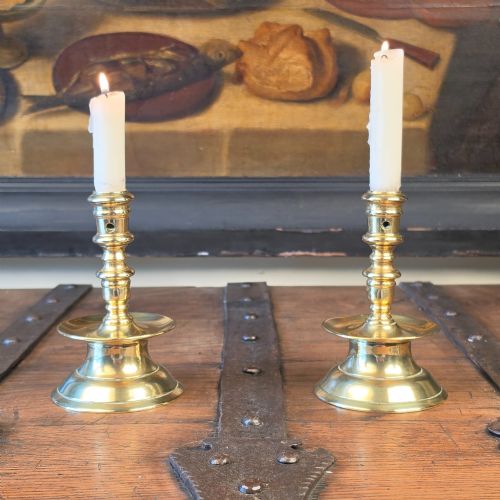
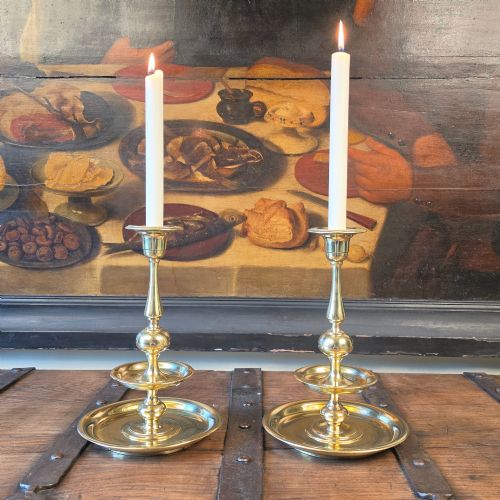
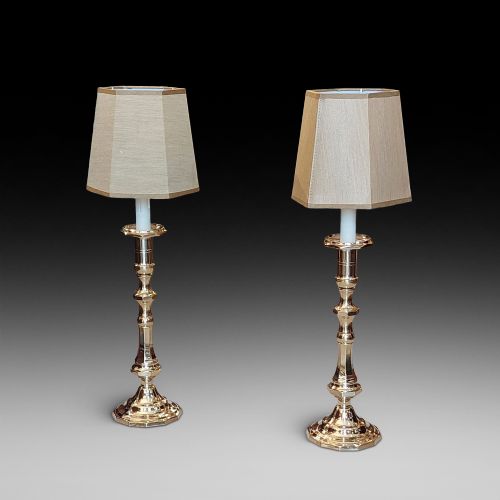
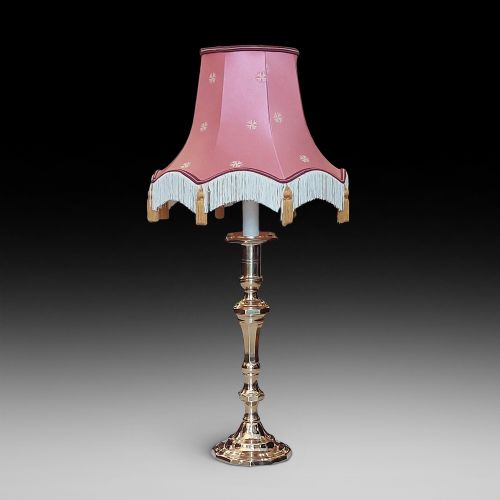
A turned brass candlestick is a domestic lighting piece shaped on a lathe, appearing across the sixteenth, seventeenth, and eighteenth centuries. These items range from sturdy pillar forms to delicate knop and collar designs.
Buyers on this page most frequently encounter seventeenth-century European examples, including Low Countries work alongside French pieces. The selection spans utilitarian brass forms as well as hybrid pieces incorporating iron and copper alloy.
How they were made
Casting provided the primary foundation for these items, using copper alloy and brass before lathe-turning refined the profile. Artisans shaped the metal components while cold or warm on a lathe to create sharp mouldings and smooth shafts.
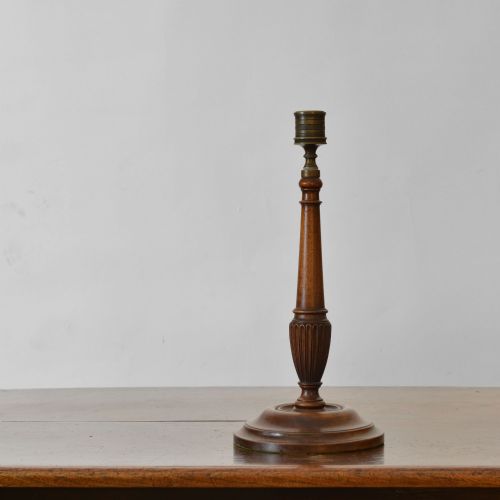
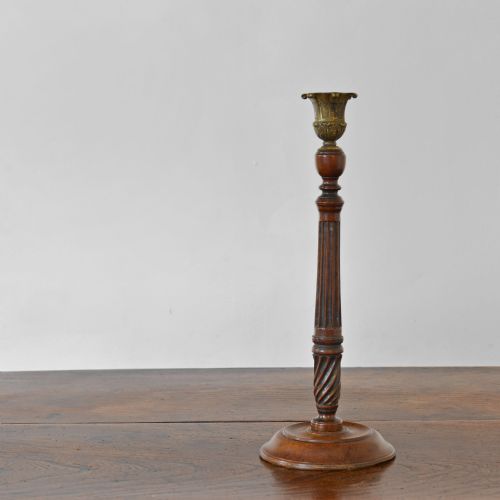
Some variants integrate turned wood elements like oak and walnut alongside brass mounts, showing multi-material construction. Assembly typically involved interlocking fitted sections and threaded pins rather than modern adhesives.
Retail Price Guide 2026
Typical UK retail prices for turned brass candlestick, calculated from the Sellingantiques database of over a million retail prices indexed since 2003. This retail price guide relies exclusively on Sellingantiques data; no external sources or auction records are used, so the figures do not describe the wider market.
Some seventeenth-century specimens retain ancient wax drips frozen inside their sockets for four hundred years.
What varies in quality
Subtle differences in lathe work and casting weight distinguish the finest pieces from ordinary production. Heavier gauge metal and crisper turned rings show superior craftsmanship during manufacturing.
Proportion and balance define the aesthetic success of each piece, where stem heights match base diameters harmoniously. Wear patterns and original surface patination further separate honest early survivals from later reproductions.
The Turned Brass Candlestick Glossary
- Knop
- A bulging, decorative knob or swelling on the stem of a candlestick. This feature provides a secure grip for the hand.
- Pricket
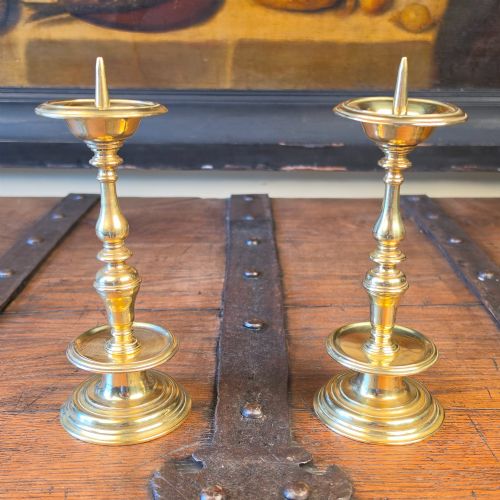
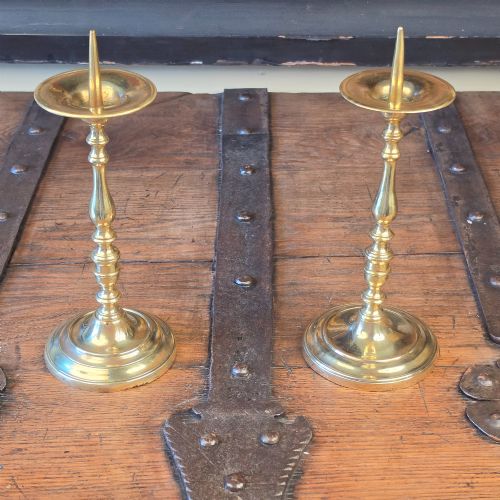
- A sharp metal spike set in the drip pan to skewer a wax candle. This medieval form remained in use through the seventeenth century.
- Collar
- A prominent horizontal ring or flange encircling the shaft. It breaks up the vertical line and often catches melting wax.
- Low Countries
- A historical designation for the region covering modern Belgium and the Netherlands. Workshops here produced notable brasswork during the seventeenth and eighteenth centuries.
Frequently Asked Questions
How do I date a turned brass candlestick?
Dating relies on stylistic markers such as base shape, knop placement, and assembly methods. Sixteenth and seventeenth-century items typically feature broader bases and heavier castings.
Later eighteenth-century examples introduce slender profiles and collar details. Comparing construction marks helps verify the period.
Were these used for dining or desks?
These pieces served multiple domestic purposes depending on their size and form. Heavier pillar and pricket styles lit large rooms from tables and hearths.
Smaller desk variants provided focused illumination for reading and writing. Their portability allowed movement around the home.
How should I clean brass candlesticks?
Maintenance requires minimal intervention to preserve the historic surface and patination. Gentle dusting with a soft dry cloth is usually sufficient.
Avoid aggressive metal polishes that strip away age and character. Natural wax can protect the metal without altering its tone.
Why do some have prickets instead of sockets?
Prickets held thick beeswax candles that lacked hollow bases for socket insertion. The spike held the candle firmly upright atop a drip pan.
Socket designs gradually replaced prickets as manufacturing techniques evolved. Sockets offered better security for standard taper candles.