
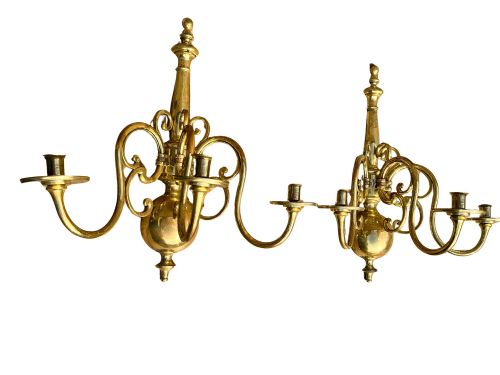


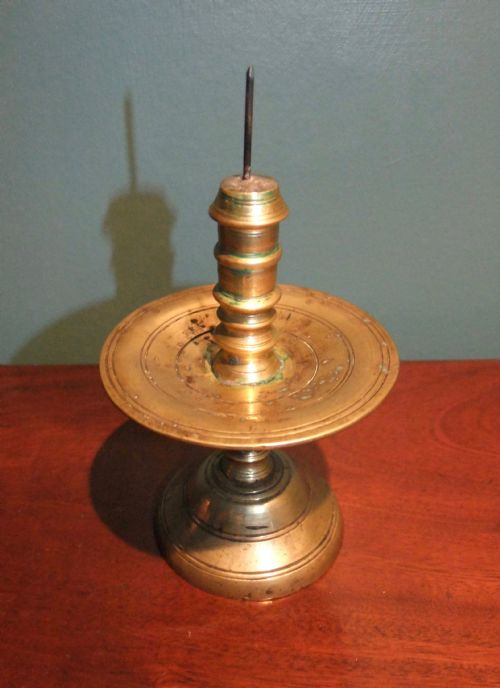

Dutch Brass Candle Holder
A dutch brass candle holder brings warm, aged metalwork into a room, spanning seventeenth-century domestic forms to twentieth-century Amsterdam School designs.
Dutch Brass Candle Holder
A dutch brass candle holder encompasses seventeenth-century stem candlesticks with central drip pans alongside nineteenth-century wall tidies and twentieth-century pricket designs. Collectors encounter seventeenth-century Heemskerk types, eighteenth-century collar sticks, and later Amsterdam School interpretations on this page.
The selection ranges from functional table candlesticks and wall brackets to hanging spill boxes and tinderboxes intended for domestic lighting and hearth use. Most examples originate from the Low Countries, showing regional variations in casting and construction across several centuries.
How they were made
Metalworkers utilised cast and wrought brass, often combining copper, wrought iron, and patinated metal components within a single object. Early pieces relied on heavy brass casting techniques, while later twentieth-century items incorporated mixed metal elements and applied patination.
Construction methods evolved from seventeenth-century multi-part turned stems and drip collars to twentieth-century Amsterdam School assembly involving iron and brass elements. Surface finishes developed naturally through use or received specific treatments to enhance the underlying metal.
Some seventeenth-century burghers required wall brackets simply to keep wandering tallow out of the linen chest.
What varies in quality
Quality rests in the heaviness of the casting, the integrity of the original construction, and the depth of the metal's natural patina. Early seventeenth-century examples demonstrate superior weight and proportion in their turned components compared to later mass-produced alternatives.
The distinction between standard domestic items and important workshop pieces lies in the sophistication of the design, such as Amsterdam School geometric forms or early Flemish pricket configurations. Preserved surface integrity and minimal historical alteration elevate specific examples above standard utility wares.
The Dutch Brass Candle Holder Glossary
- Heemskerk candlestick
- A distinct seventeenth-century Dutch brass candlestick form featuring a wide drip pan positioned midway up a turned stem. This design protected the user's hand from wax drips during domestic tasks.
- Pricket candlestick
- A lighting device that uses an upright metal spike to secure the candle base rather than a socket. Early Low Countries examples frequently employ this configuration.
- Spill box
- A small container mounted to a wall or kept on a surface to hold thin wooden matches or spills for lighting candles. Eighteenth and nineteenth-century Dutch versions often combine this function with a candle holder.
- Amsterdam School
- A twentieth-century Dutch architectural and design movement known for expressive, organic forms and expressive use of materials. Candlesticks from this tradition display distinct sculptural qualities.
- Collar candlestick
- A lighting form featuring a prominent horizontal flange or collar around the stem. This feature serves to catch melting wax and provides structural stability to the turned brass body.
Dutch Brass Candle Holder: Frequently Asked Questions
How do I date an early brass candlestick?
Dating relies upon construction methods, base formations, and stylistic traits associated with specific centuries in the Low Countries. Seventeenth-century examples typically show heavier casting and specific stem profiles like the Heemskerk.
Later eighteenth and nineteenth-century pieces introduce collar forms, wall brackets, and refined socket shapes that reflect contemporary domestic lighting habits.
What is a pricket candle holder?
A pricket holder uses an upright metal spike to impale and secure the candle rather than enclosing it in a socket. This traditional format appears frequently in seventeenth-century Low Countries metalware.
Users would press the base of the candle directly onto the sharp point to keep it upright during burning.
Where were these candle holders made?
These items originated in the Low Countries, encompassing the historical regions of the Netherlands and Flanders. Workshops in cities like Amsterdam produced both utilitarian domestic lighting and distinct artistic styles.
Regional metalworking traditions dictated the specific alloys, casting thickness, and decorative motifs found on surviving pieces.
How should I clean antique brass?
Historic metalware benefits from minimal intervention to preserve the accumulated patina developed over centuries of age and handling. Gentle dusting with a soft cloth removes surface debris without stripping the underlying oxidation.
Harsh chemical polishes remove the aged character that collectors value in seventeenth and eighteenth-century brass.
What is an Amsterdam School candlestick?
An Amsterdam School candlestick reflects early twentieth-century Dutch design principles emphasising expressive forms and sculptural metalwork. These pieces often combine brass and iron elements with patinated surfaces.
They represent a departure from traditional domestic utility toward more artistic, architecturally inspired decorative objects.