



17th Century Candlestick
These 17th century candlesticks bring solid brass, pewter, and wrought iron into domestic spaces with authentic period weight.
17th Century Candlestick
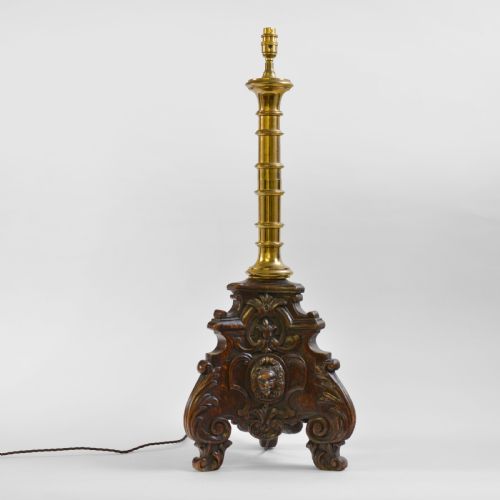
When you search for a 17th century candlestick, you encounter functional lighting hardware forged or cast from durable metals and carved from oak. The selection encompasses original examples from the Low Countries, England, Germany, and Sweden alongside later revival pieces produced in the nineteenth century.
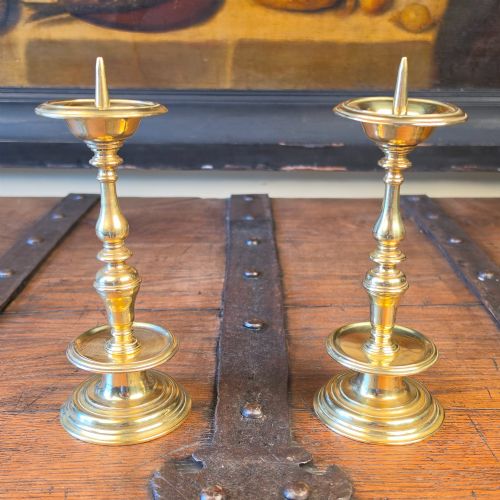
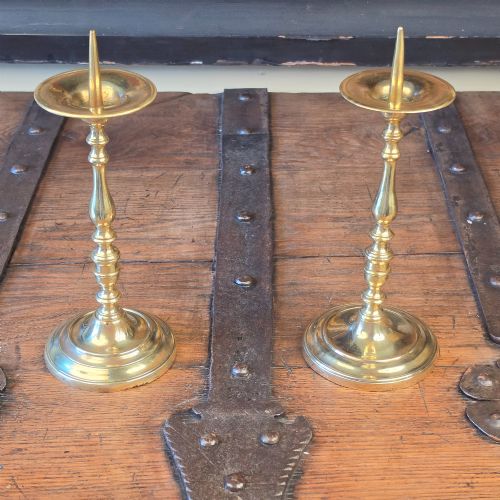
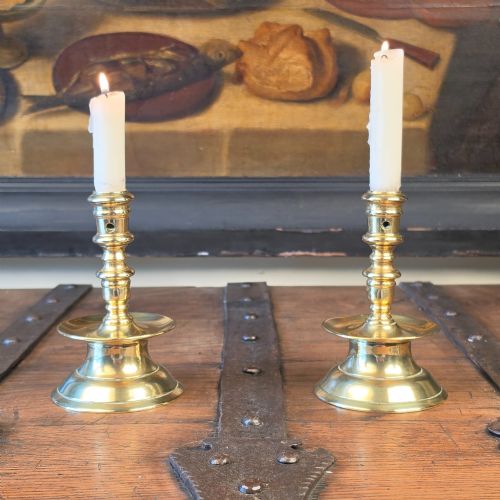
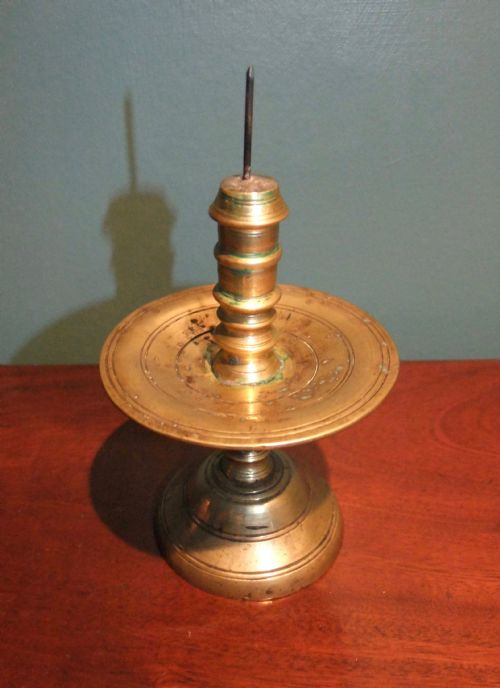
Brass dominates the selection, appearing frequently in heavy forms such as the Heemskerk type with its characteristic central drip pan. Collectors also find pewter Stuart examples, iron rushlights, and pricket sticks designed to impale wax candles directly onto a central spike.
Revival pairs from the nineteenth century offer the aesthetic of the Stuart and Baroque eras for daily domestic use. Original period survivals demonstrate the heavier casting methods and distinctive patination accrued over centuries of use.
How they were made
Metal items such as brass and copper alloy candlesticks rely on sand casting or multi-piece mould techniques, producing substantial baluster knops and wide bases. Workers then turned these cast blanks on lathes to smooth the profile and define the drip pans.
Pewter and wrought iron components utilise distinct thermal and forging methods suited to their respective metals. Oak and giltwood table lamps involve traditional timber carving and surface gesso application.
Some domestic rushlight holders doubled as small tongs, allowing seventeenth-century readers to stoke the hearth fire while holding their flickering light.
What varies in quality
The distinction between ordinary and superior pieces rests on the crispness of the original cast detail and the integrity of the metal surface. Early brass castings with sharp baluster turning and intact original prickets command attention.
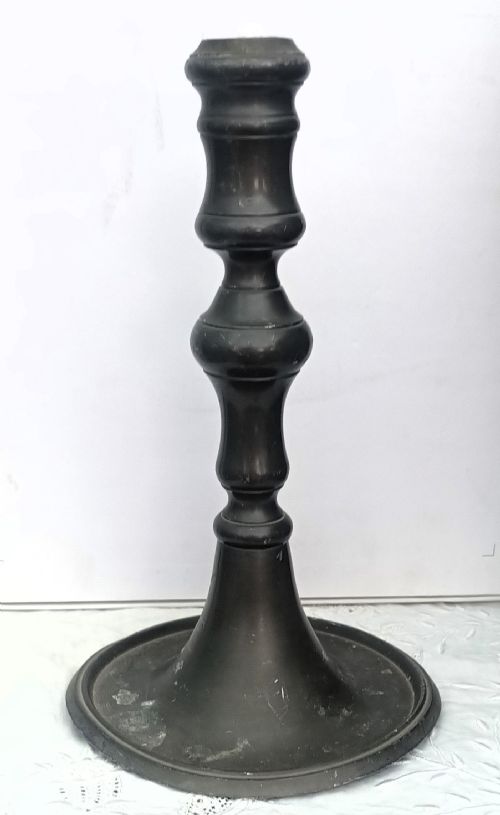
Proportion and material density dictate the success of the object, whether a Dutch Heemskerk or an English Stuart pewter stick. Surface wear tells the true story of age and handling rather than applied finishes.
The 17th Century Candlestick Glossary
- Heemskerk candlestick
- A distinct type of brass candlestick originating in the Netherlands featuring a prominent central drip pan on the stem.
- Pricket candlestick
- A candleholder that uses an upward-pointing metal spike to secure the base of the candle rather than a socket.
- Baluster knop
- An architectural swelling on the stem of a candlestick shaped like a classic baluster column.
- Bell brass
- A high-copper alloy traditionally used for bells that yields a resonant tone and a bright golden colour when polished.
- Rushlight
- A simple wrought-iron holder designed to grip a dried rush dipped in animal fat for cheap illumination.
17th Century Candlestick: Frequently Asked Questions
What is the difference between a socket and a pricket?
A socket candlestick holds a candle within a cylindrical cup, whereas a pricket candlestick pushes a sharp metal spike directly into the base of the candle.
Pricket sticks are often earlier in date and relate closely to ecclesiastical or large domestic lighting forms.
Are nineteenth-century revival candlesticks collectible?
Nineteenth-century revival pieces offer an accessible route to seventeenth-century interior styles without the scarcity of period originals.
These items replicate the forms of Stuart and Baroque lighting using traditional brass casting methods of their own era.
How should I clean antique brass candlesticks?
Most collectors prefer to leave historic brass unpolished to preserve the dark patination and surface oxidation accumulated over centuries.
Aggressive cleaning removes the historical evidence of age and reduces the visual depth of the metal.