


Pewter Candle Holders
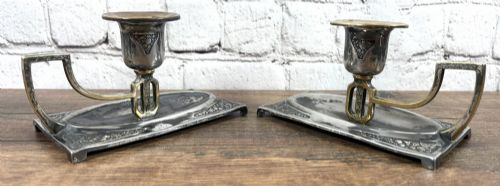
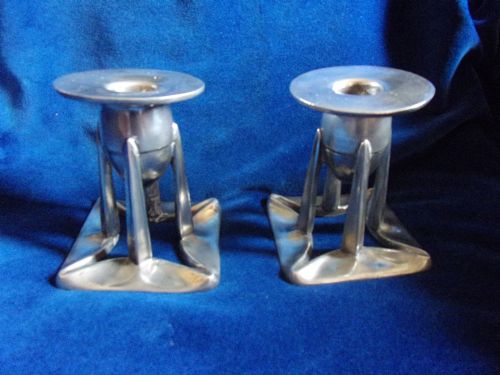
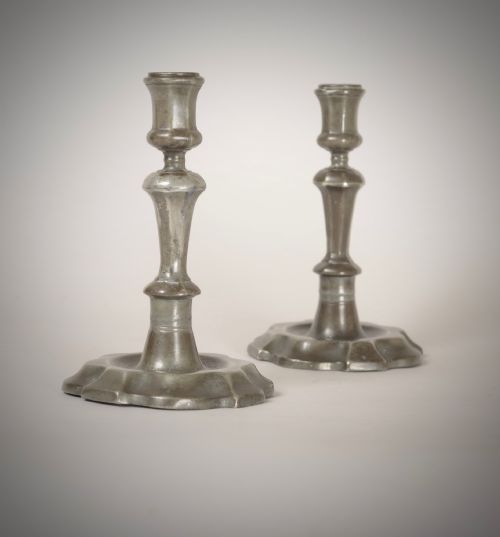
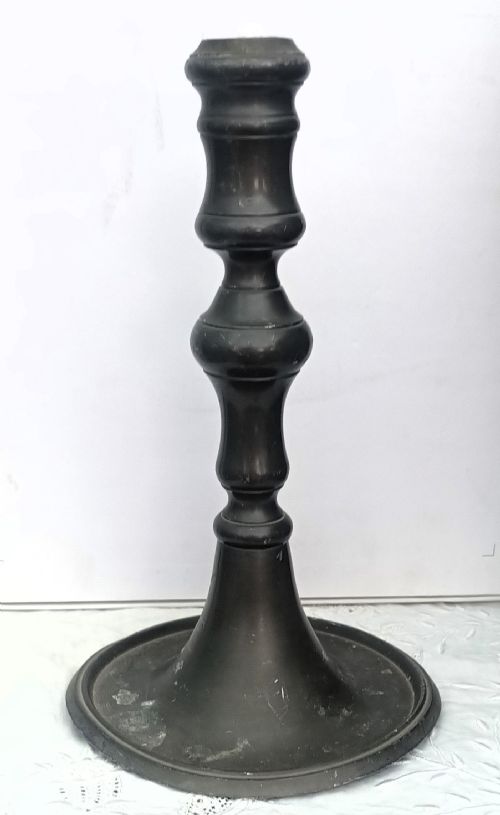
These pewter candle holders bring heavy metal character to a table, ranging from plain seventeenth-century sticks to fluid art nouveau designs.
Pewter Candle Holders
When you search for pewter candle holders, you encounter items shaped as simple sticks, wall sconces and multi-armed candelabra. The selection spans centuries of design, moving from early Stuart forms to geometric art deco pieces.
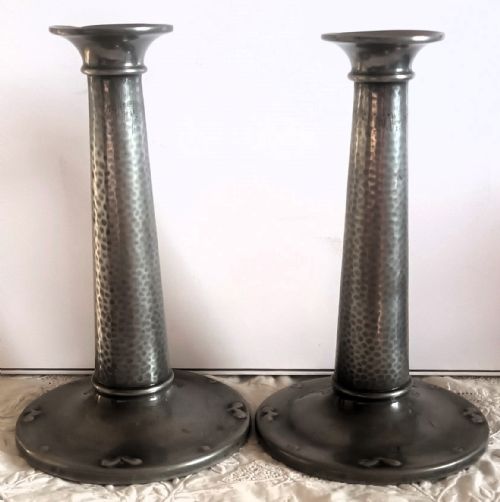
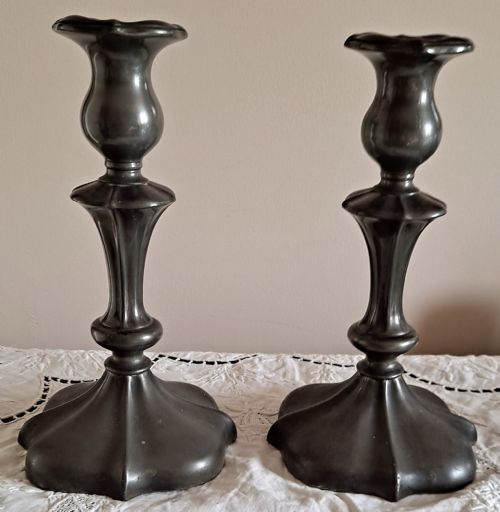
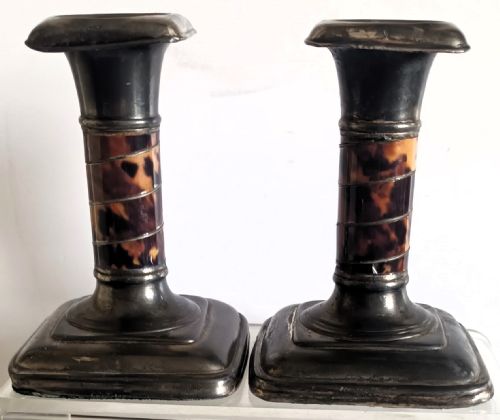
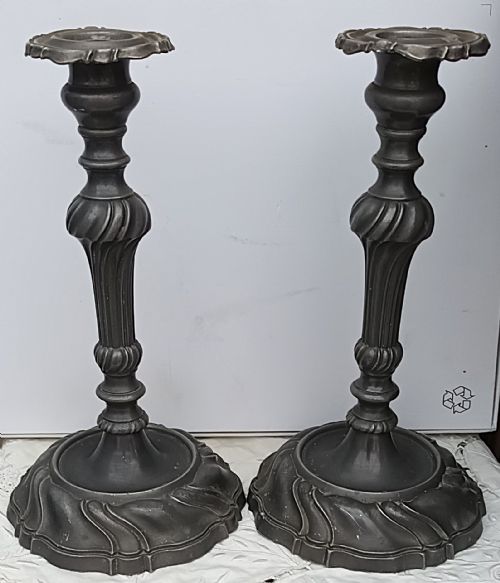
Most examples you meet on this page arrive in pairs, often featuring circular bases and nozzles designed to catch dripping wax. Makers utilised the malleability of the metal to cast complex stems and incorporate other materials like enamel and tortoiseshell.
Origins stretch across English workshops and continental European foundries, reflecting changing domestic lighting needs. You find everything from austere eighteenth-century profiles to ornate nineteenth-century rococo curves.
Materials and Making
Foundries shaped these objects primarily through casting pewter, an alloy traditionally composed of tin alloyed with copper and antimony. Artisans poured the molten metal into moulds to achieve the sturdy bases and stems characteristic of candlesticks and sconces.
Surface treatments varied widely, with some pieces polished to a bright finish while others received a silvered plating. Makers also applied coloured enamel inlays and mounted tortoiseshell panels to enrich the metallic surfaces.
Pewter Candle Holders Retail Price Guide 2026
Typical asking prices for pewter candle holders among the pieces listed under this phrase on Sellingantiques today, from the lower quarter to the upper quarter. They describe what is for sale here now, not the wider market.
Listings here span seven distinct periods, ranging from the seventeenth century through to the art deco era of 1930.
Quality Variations
Distinctions in quality often rest on the crispness of the cast detail and the integrity of the original surface finish. Pieces bearing specific designer names or retailer marks generally display superior sculptural ambition and heavier gauge metal.
The integration of secondary materials like enamel or tortoiseshell requires precise craftsmanship that elevates certain examples above standard production pieces. Well-preserved patination and clear maker stamps further separate standard domestic items from collector pieces.
Archibald Knox·Liberty And Co·Alexandre Clerget
The Pewter Candle Holders Glossary
- Pewter
- A malleable metal alloy historically used for tableware and lighting, prized for its dull grey lustre. It permits intricate casting while maintaining structural weight.
- Sconce
- A wall-mounted lighting fixture designed to hold a candle, projecting light into a room. These often feature backplates to reflect illumination.
- Candelabra
- A multi-branched candle holder designed to support several candles simultaneously. They frequently appear in larger decorative forms.
- Silvered Pewter
- Pewter treated with a thin coating of silver to provide a brighter, more reflective surface finish. This technique gained popularity during the art nouveau period.
- Quatrefoil
- A decorative shape composed of four partially overlapping circles. This geometric motif appears frequently in arts and crafts metalwork.
Pewter Candle Holders: Frequently Asked Questions
Are these candle holders safe to use?
Most antique holders remain structurally sound for holding taper candles during dinner. Ensure the candle fits snugly in the nozzle to prevent wobbling.
Extinguish flames before the wax burns down to the metal to protect older sockets from excessive heat.
How can I date my pewter sticks?
Examine the weight, casting style and any maker stamps found on the base. Earlier pieces often display simpler turned profiles, while later items embrace decorative styles like art nouveau.
Compare the base markings against known registry numbers to narrow down the decade of production.
Why do some have other materials attached?
Makers added tortoiseshell, brass and enamel to provide colour contrast and visual texture. These decorative flourishes were particularly favoured during the arts and crafts and art nouveau movements.
Such mixed-media combinations often indicate a higher tier of design and workshop output.