
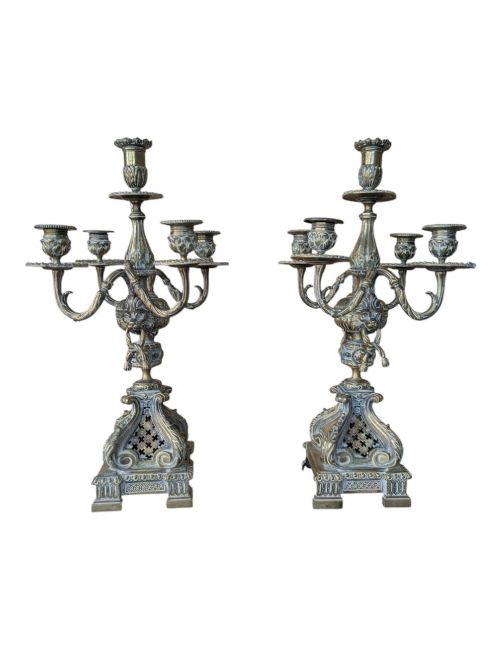


Victorian Metal Candlesticks
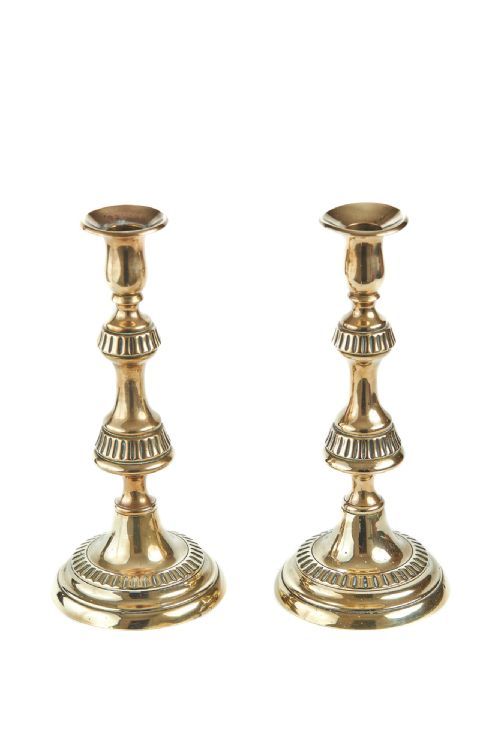
These victorian metal candlesticks bring weight and steady illumination to a room, cast in brass, bronze, and silver plate.
Victorian Metal Candlesticks
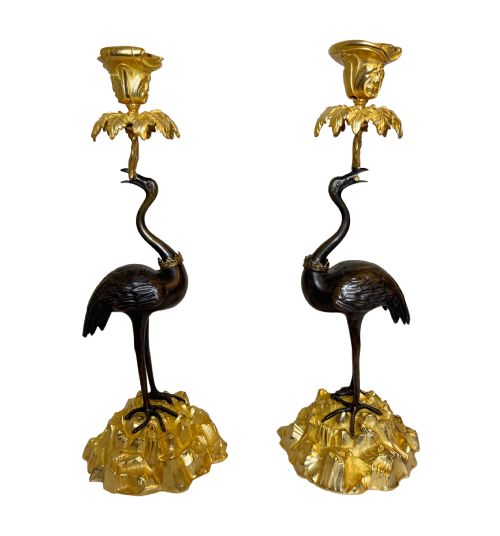
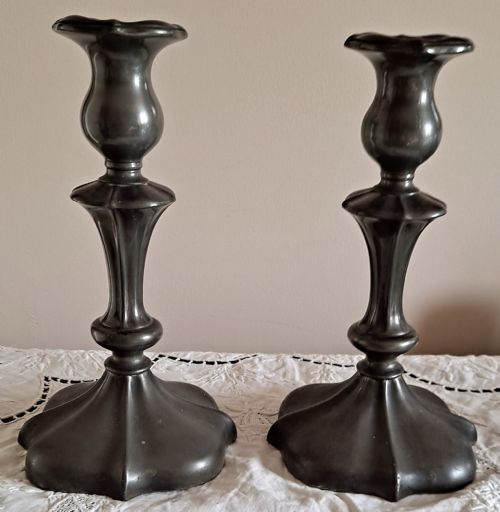
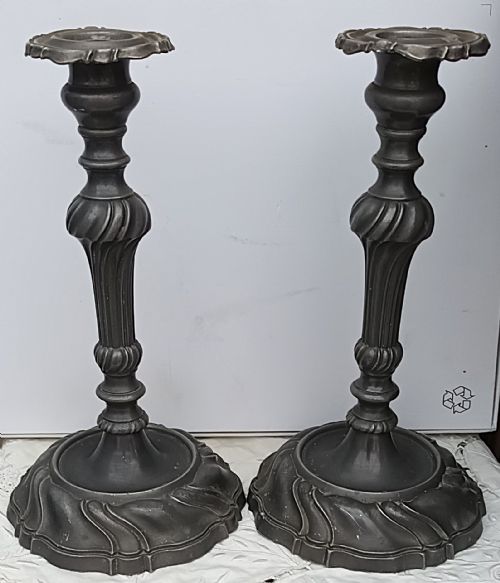
When searching for victorian metal candlesticks, collectors encounter domestic lighting spanning the nineteenth century, including chambersticks, desk pieces, and tall pairs designed for formal mantelpieces. The selection reflects diverse forms, from plain domestic brass to elaborate figural bronzes and pewter examples incorporating rococo or art nouveau motifs.
Most pieces date from the broader Victorian era and the late nineteenth century, capturing periods of rapid industrial development alongside hand-finished revival styles. Makers utilised durable alloys and plated metals to supply middle-class homes with reliable, decorative illumination before electric lighting predominated.
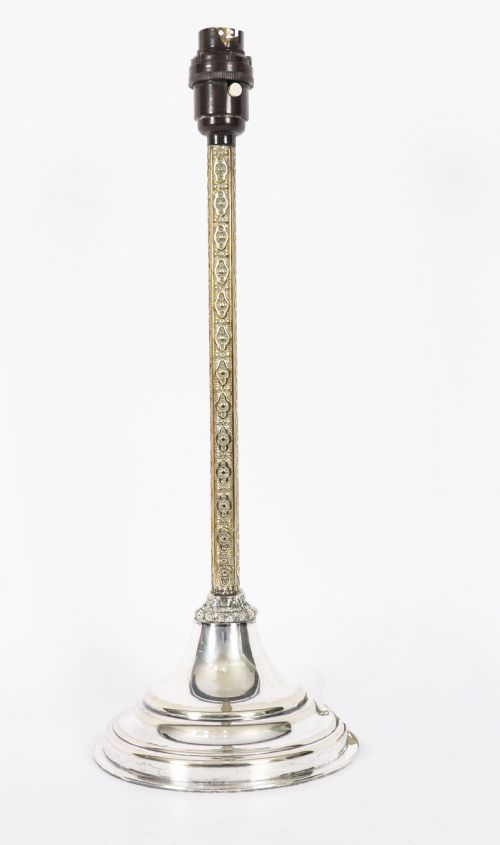
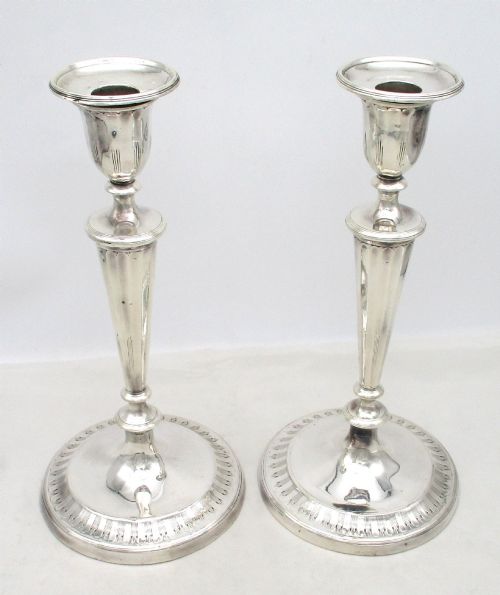
Forms range widely, encompassing standard single-socket sticks, multi-branch candelabra, and pieces later adapted as lamp bases. Buyers frequently find matching pairs intended to flank clocks or mirrors, alongside utilitarian items like travel reading lamps and chambersticks fitted with finger rings.
Materials and construction
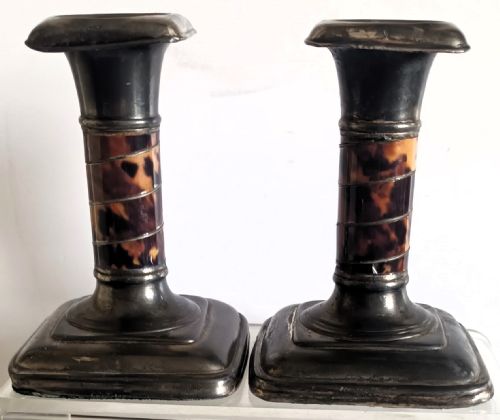
Foundry work relied on brass, bronze, and spelter, often shaped through casting and subsequent turning on lathes to achieve smooth shafts and weighted bases. Pewter and silver plate offered alternative surfaces, sometimes combined with tortoiseshell, marble, or enamel details.
Component parts were joined by threaded rods, soldering, or seaming, leaving subtle structural seams visible upon close inspection. Surface finishes varied from polished ormolu and parcel gilt to patinated bronze and applied lacquer designed to retard tarnishing.
Medievil characters on stilts stand ready to illuminate the room in one unusual pair of patinated spelter candlesticks.
Assessing quality
Superior items display crisp detail in cast ornamentation, such as sharp feathering on figural motifs or clean lines on gothic and arts and crafts stems. Weight serves as an indicator of substance, with quality examples utilising thick-gauge metals rather than thin stamped sheet.
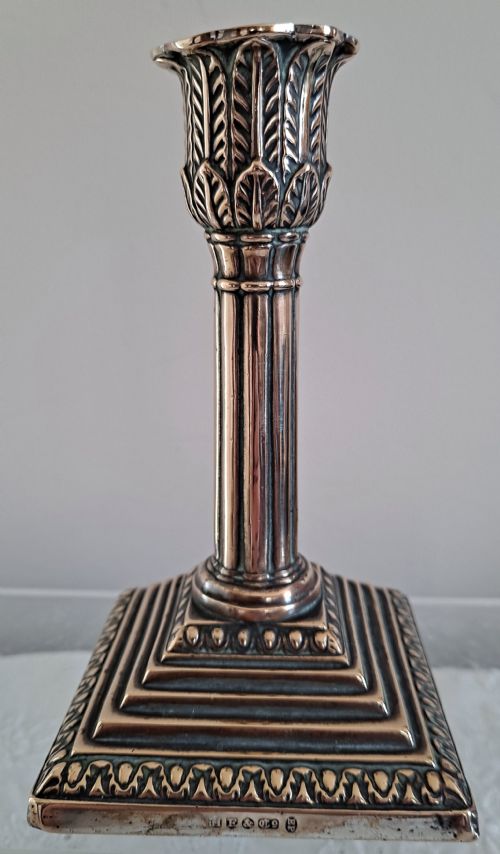
Maker marks, stamps, and registry numbers stamped into the base or drip pan separate mass-produced items from documented workshops. The integrity of the original surface, whether unpolished bronze patina or intact silver plating, preserves the historical character of the piece.
Mappin & Webb·Veritas Lamp Works·James Clews
The Victorian Metal Candlesticks Glossary
- Chamberstick
- A short candlestick fitted with a shallow drip pan and a loop handle for carrying from room to room. They often include a small conical snuffer resting in the saucer.
- Pricket
- A spiked candlestick designed to impale the base of a candle rather than accepting it into a socket. This form appears frequently in ecclesiastical or gothic revival designs.
- Ormolu
- Finely chased bronze finished with a gold mercury amalgam, producing a rich yellow lustre. It is common on decorative french and domestic Victorian pieces.
- Spelter
- A zinc alloy used as an economical alternative to bronze for figural castings. It accepts patination readily to simulate heavier metals.
- Candelabra
- A branched lighting fixture holding multiple candles on separate arms. Many nineteenth-century examples were later converted to electricity.
Victorian Metal Candlesticks: Frequently Asked Questions
How do I clean tarnished brass candlesticks?
Gentle washing with warm soapy water and a soft cloth removes surface grime without destroying the aged patina that collectors value. Avoid harsh chemical dips that strip the metal of its historical character.
After washing, dry the piece thoroughly with a microfiber cloth. Applying a microcrystalline wax offers protection against future oxidation without leaving a sticky residue.
Were these originally made for candles or oil?
The majority of nineteenth-century examples were designed specifically for wax or tallow candles, evidenced by removable drip pans and tapered sockets. Some later models accommodated small oil burners or reading lamps.
Conversion to electricity often occurred during the twentieth century. Inspecting the base and internal channel usually reveals whether wiring was added later.
How do I distinguish brass from spelter?
Brass is a heavy copper-zinc alloy that shows a bright golden colour when polished and is non-magnetic. Spelter is softer, zinc-based, and typically painted or patinated to resemble bronze.
Examining the underside or interior surfaces often reveals the silvery-grey base metal of spelter where the surface finish has worn away through handling.
What does a registry mark on a base mean?
British registry diamonds or lozenge marks stamped onto metalwork indicate the exact date the design was registered with the patent office. These diamond-shaped stamps help narrow down the production year.
Decoding the letters and numbers within the mark reveals the specific month, year, and batch of the design registration. Not all pieces carry them, as registration was optional.