


Antique Metalware Candlesticks
These antique metalware candlesticks bring genuine gravity to a room, offering heavy cast metals and patinated surfaces that hold real history.

Antique Metalware Candlesticks
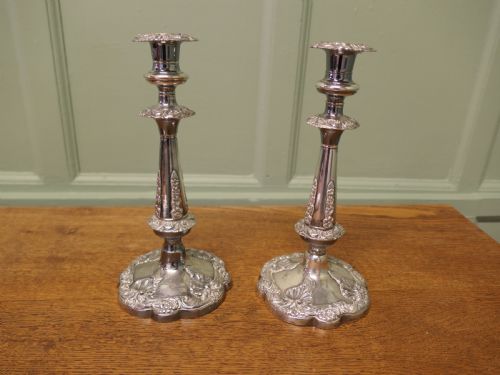
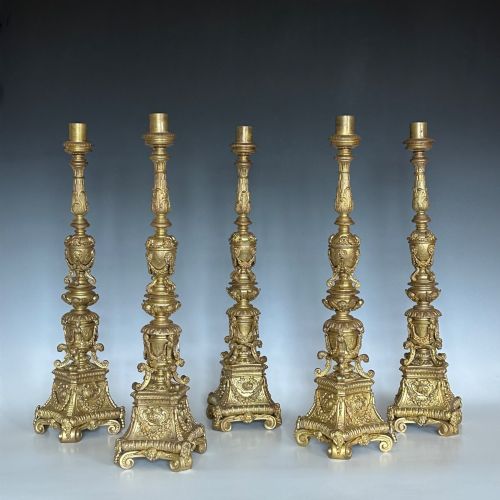
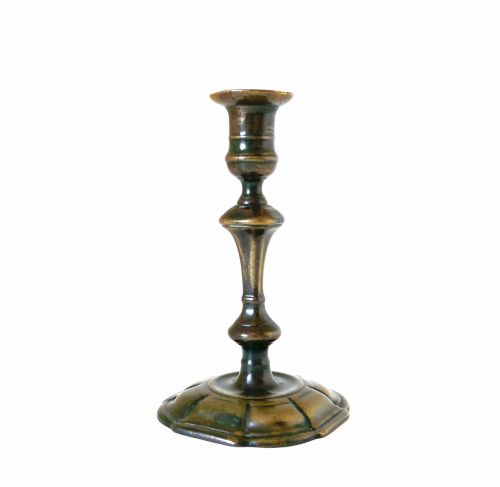
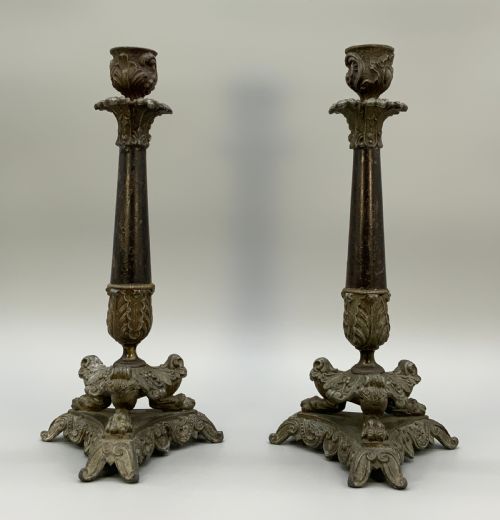
When you search for antique metalware candlesticks, you encounter practical lighting devices spanning several centuries of domestic use. The examples presented here range from early Georgian brass forms to later Victorian silver plate and gilt bronze iterations.
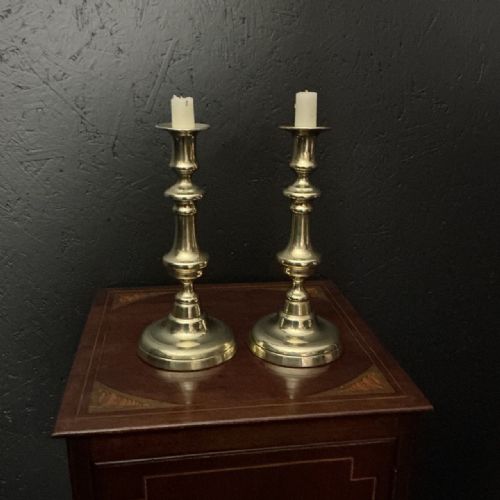
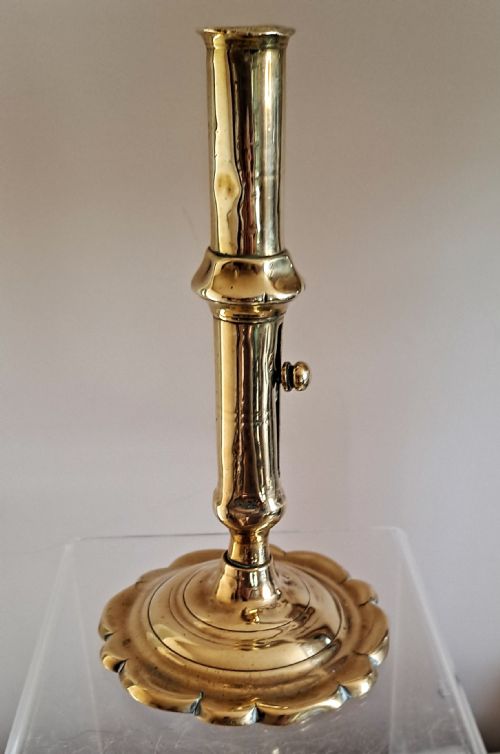
You are most likely to meet sturdy brass pairs originating from the eighteenth and nineteenth centuries, often featuring petal bases or ejector mechanisms. Alongside these standard table pieces, chambersticks and occasional candelabra appear in various metallic alloys.
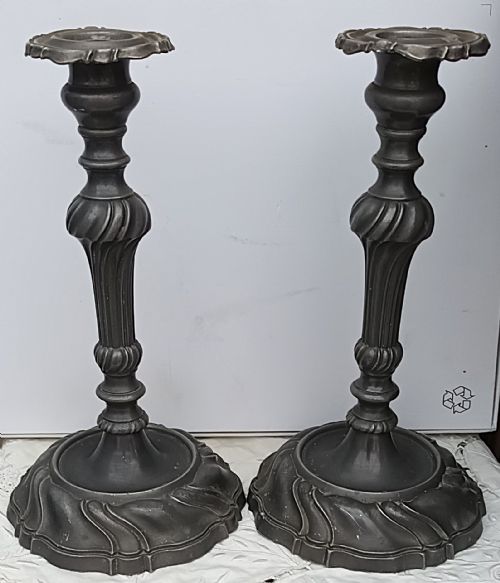
The selection encompasses English, French, and Venetian origins, demonstrating how different European workshops approached domestic lighting. Styles shift from restrained early designs towards ornate Rococo, French Empire, and Art Nouveau expressions.
How they were made
Many of these pieces rely on cast brass and bronze, poured into moulds before being hand-finished on a lathe. Early specimens often utilise seamed construction, where components were shaped and joined together before cleaning.
Silver plating and silvered pewter finishes provide an alternative metallic lustre, bonded to base metals using early plating techniques or Old Sheffield methods. Patination develops naturally over decades, leaving darkened recessed areas and brighter highlights on exposed surfaces.
Antique Metalware Candlesticks Retail Price Guide 2026
Typical asking prices for metalware candlesticks among the pieces listed under this phrase on Sellingantiques today, from the lower quarter to the upper quarter. They describe what is for sale here now, not the wider market.
Design styles span Georgian, Rococo, French Empire, and Art Nouveau forms.
What varies in quality
Weight and casting crispness dictate the distinction between ordinary utility pieces and superior examples. Sharply defined mouldings, substantial metal thickness, and well-balanced proportions indicate skilled foundry work.
The integrity of the original surface finish matters significantly, as excessive cleaning alters the natural patination built up over centuries. Intact mechanics on ejector models and clean joints on seamed construction reflect higher standards of original manufacture.
WMF
The Antique Metalware Candlesticks Glossary
- Ejector
- A concealed internal mechanism with a small side lever used to push the spent candle stub out of the socket. This ingenious device became common in nineteenth-century brass production.
- Chamberstick
- A low portable candlestick fitted with a wide drip pan and a loop handle for carrying from room to room. These were essential domestic items before fixed household lighting.
- Paktong
- A copper-nickel-zinc alloy originating from China that mimics the appearance of silver. British makers utilised this durable metal for high-status eighteenth-century candlesticks.
- Old Sheffield Plate
- A composite material formed by fusing a thin sheet of silver to a thicker copper base. This technique preceded modern electroplating.
- Gilt Bronze
- Bronze metal treated with a fine layer of gold amalgam to create a rich golden finish. French workshops employed this technique extensively on decorative lighting.
Antique Metalware Candlesticks: Frequently Asked Questions
How do I clean antique brass candlesticks?
You should generally leave the patination undisturbed, as heavy polishing removes historical character and reduces value. A gentle dusting with a dry cloth is usually sufficient for routine maintenance.
Avoid abrasive metal cleaners that strip away the aged surface texture. If cleaning is necessary, use a mild non-ionic solution and dry the metal thoroughly afterwards.
What is the difference between a candlestick and a chamberstick?
A standard candlestick stands upright on a table or mantelpiece, designed to remain stationary while illuminating a specific area. Its base is usually weighted or broad for stability.
A chamberstick incorporates a saucer-like tray and a loop handle, intended for safe carriage along corridors and up stairs. They often include a small conical snuffer resting in the tray.
How can I date an old brass candlestick?
Dating relies on examining manufacturing techniques, base shapes, and stem profiles. Early eighteenth-century examples frequently feature seamed construction and bell-shaped bases, while nineteenth-century versions introduce mechanical ejectors and heavier castings.
Comparing the form against documented examples helps narrow down the decade of production. Wear patterns on the base rim also provide clues to the age of the piece.