


Antique Pewter Candlesticks
Antique pewter candlesticks bring a satisfying weight and metallic warmth to a table, spanning simple seventeenth-century forms to fluid twentieth-century designs.
Antique Pewter Candlesticks
When you search for antique pewter candlesticks, you encounter lighting devices spanning several distinct eras from the seventeenth century through to the Art Deco period. The listings here frequently present pairs, alongside occasional single sticks and larger candelabra.
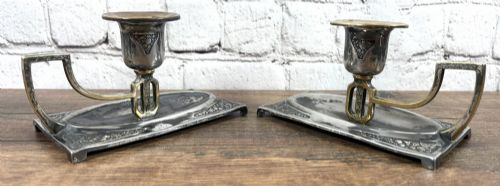
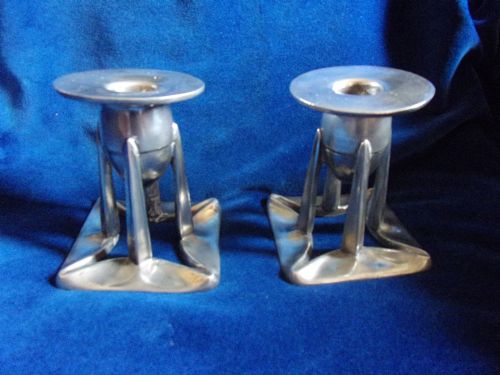
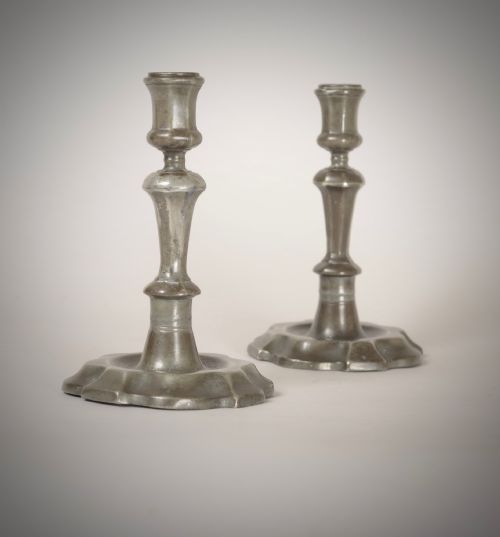
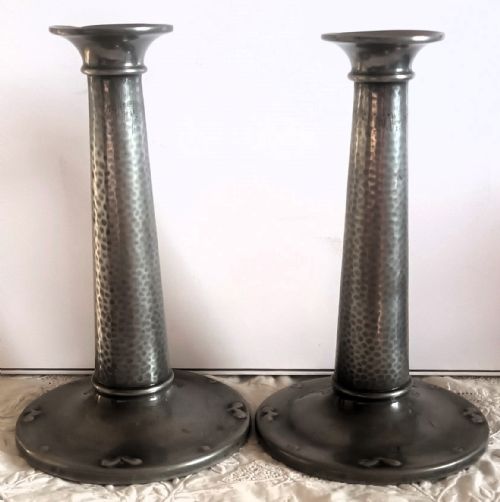
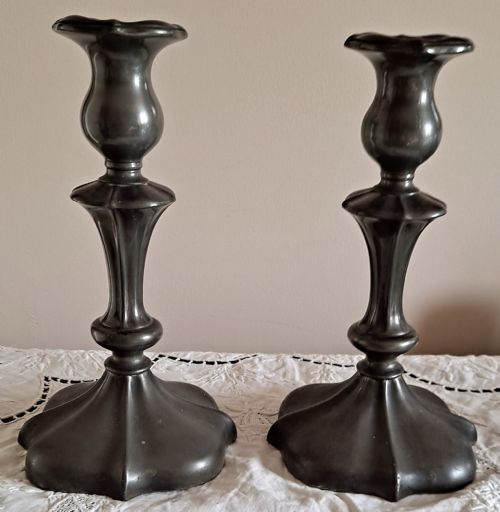
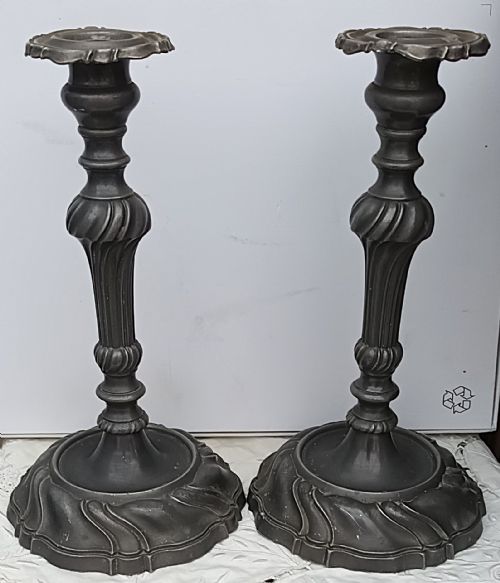
The most common examples on this page date from the nineteenth and early twentieth centuries, particularly reflecting the Arts and Crafts and Art Nouveau movements. Earlier seventeenth and eighteenth-century items appear less often, alongside Georgian and Victorian Rococo interpretations.
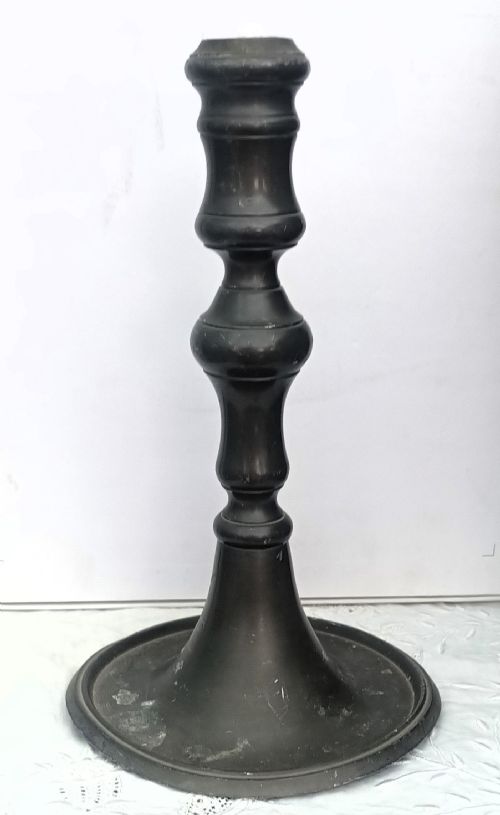
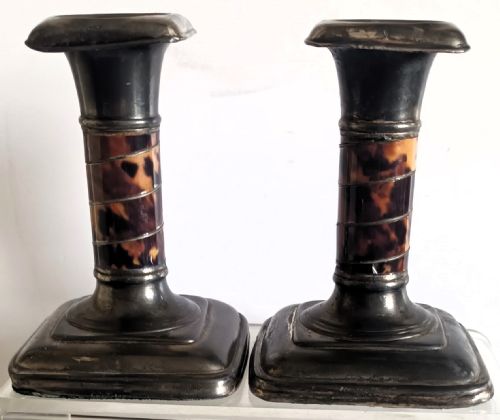
Forms range from utilitarian capstan shapes to elaborate figural pieces incorporating enamel, brass, tortoiseshell, or silvered finishes. British and continental European makers predominate, offering everything from plain domestic lighting to designed studio metalwork.
Materials and construction
Pewter forms the primary substance of these pieces, an alloy traditionally composed chiefly of tin combined with copper, antimony, or lead. Makers shaped the metal through casting, hammering, and turning on a lathe to achieve both sturdy domestic sticks and delicate decorative stems.
Surface treatments vary widely according to the period and style, including polished finishes, applied silver plating, and colourful enamel insets. Some nineteenth-century designs incorporate contrasting organic materials like tortoiseshell alongside the metal body.
The listings on this site encompass periods from the 17th century through to the Art Deco era of the 1930s.
Judging quality and character
Quality rests heavily on the clarity of casting detail and the integrity of the original surface finish, whether patinated plain metal or deliberate silvering. Designer attribution also elevates certain pieces, particularly those associated with known firms or specific aesthetic movements.
Proportion and balance distinguish finer examples from more ordinary manufacturing output, ensuring the candle socket sits securely above a stable weighted or cast base. The preservation of original components, such as enamel panels or multi-part construction, maintains the historical integrity of the object.
WMF·Archibald Knox·Liberty & Co·Alexandre Clerget
The Antique Pewter Candlesticks Glossary
- Pewter
- A malleable metal alloy primarily made from tin mixed with other metals to provide durability for domestic utensils and lighting.
- Capstan candlestick
- A traditional form featuring a wide base tapering to a narrower waist, resembling the nautical device used for hauling ropes.
- Silvered pewter
- Pewter that has undergone a secondary plating process to give it the bright reflective appearance of solid silver.
- Tudric
- A trade name used by Liberty & Co for their specific range of pewter homeware produced during the early twentieth century.
- Rococo
- An ornate design style marked by asymmetrical scrollwork, C-curves, and naturalistic motifs popular during the Victorian era.
Antique Pewter Candlesticks: Frequently Asked Questions
How do I clean antique pewter?
Pewter requires gentle cleaning with warm soapy water and a soft cloth to preserve its historic surface appearance. Avoid harsh modern abrasives and aggressive metal polishes that strip away the soft patina accumulated over centuries.
Dry the metal thoroughly after washing to prevent water spotting. A light application of microcrystalline wax can help protect the surface if desired.
Were these used with real candles?
These pieces served as functional domestic lighting before the advent of electricity, holding tallow or beeswax candles in homes and public spaces. Many retain remnants of wax within their sockets from past usage.
Modern users can still burn standard taper candles in most examples, provided the diameter matches the socket size safely.
How do I date a pewter candlestick?
Dating relies on stylistic clues, manufacturing techniques, and occasional maker marks stamped into the base metal. Seventeenth and eighteenth-century sticks generally show simpler, heavier turned profiles, while later pieces adopt Arts and Crafts or Art Nouveau ornamentation.
Comparing the form and materials to documented examples helps narrow down the decade of production.
Are pewter candlesticks heavy?
Solid pewter possesses a considerable heft compared to modern base metals, giving these candlesticks a reassuring stability on a table. Some examples utilise weighted bases to prevent tipping when tall candles are lit.
This substantial weight distinguishes genuine period pieces from lighter contemporary reproductions.