


Vintage Pewter Candle Holders
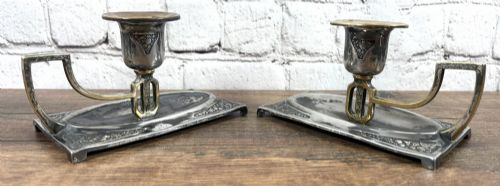
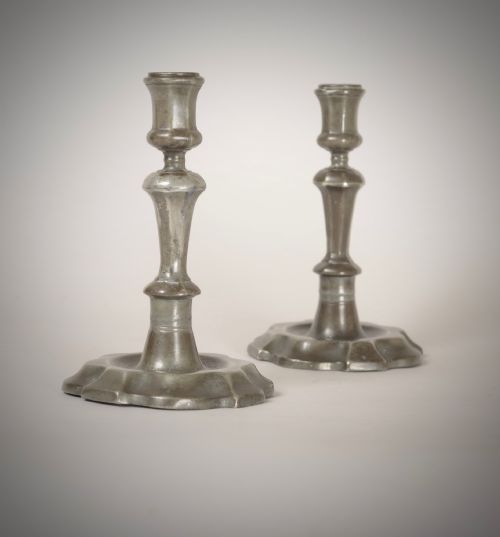
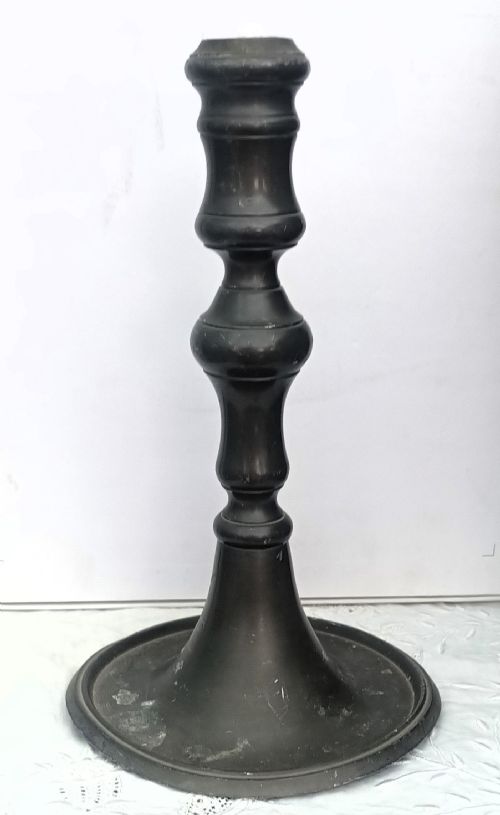
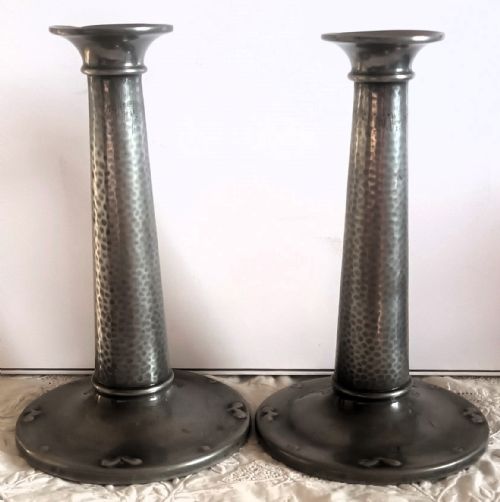
These vintage pewter candle holders bring heavy metal character to a room, spanning styles from Stuart severity to Art Deco geometry.
Vintage Pewter Candle Holders
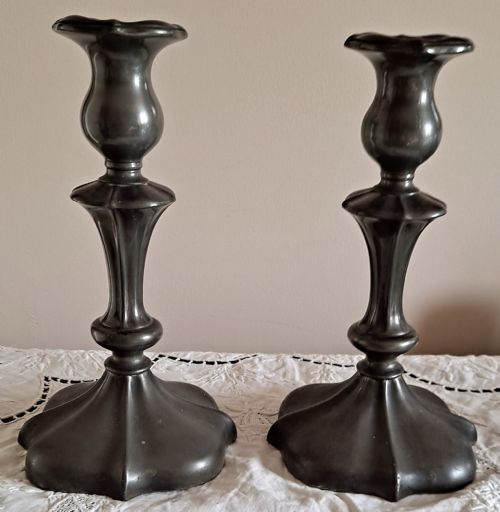
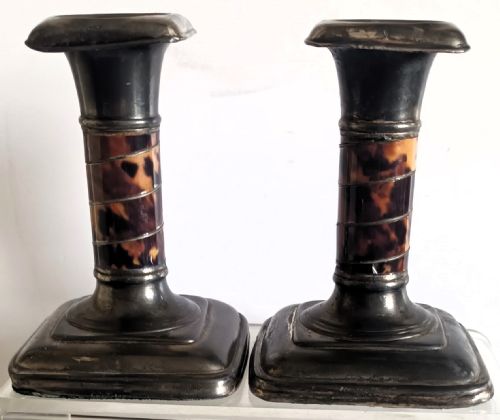
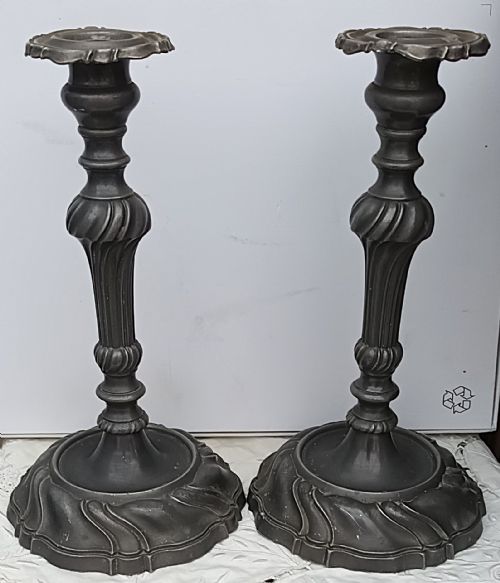
When you search for vintage pewter candle holders, you enter a field dominated by candlesticks and wall sconces shaped in metal from the seventeenth century through to the nineteen-thirties. The most common finds on this page are matched pairs of candlesticks originating from the nineteenth and early twentieth centuries.
The objects take many forms, including quatrefoil wall sconces and figural pieces alongside standard candlesticks. Materials extend beyond pure metal, with combinations featuring tortoiseshell, brass, and enamel.
Design vocabulary shifts across the periods represented here. Pieces carry the weight of Stuart and Georgian eras, the curves of Victorian Rococo and Art Nouveau, and the clean lines of Arts and Crafts and Art Deco movements.
What varies in quality
Quality rests in the harmony between the pewter foundation and auxiliary materials like enamel or tortoiseshell. Crispness of cast detail distinguishes ordinary production from finer work, particularly in stylistic flourishes such as Art Nouveau tendrils or Rococo scrolls.
Makers known for specific designs, such as Tudric work by Archibald Knox for Liberty, display a deliberate structural integrity that elevates them above anonymous workshop output.
Some seventeenth-century candlesticks have survived centuries of domestic use while still keeping their original stubborn lean.
WMF·Archibald Knox for Liberty & Co·Alexandre Clerget
The Vintage Pewter Candle Holders Glossary
- Pewter
- A malleable metal alloy consisting primarily of tin, historically mixed with copper, antimony, or lead. It develops a soft, dark patina over decades of handling.
- Sconce
- A wall-mounted lighting fixture designed to hold a candle. These often feature backplates that reflect the candlelight into the room.
- Quatrefoil
- A decorative shape composed of four partially overlapping circles of equal radius. This geometric motif frequently appears in Gothic and medieval revival metalwork.
- Rococo
- An ornate design style characterised by asymmetrical curves, scrollwork, and shell motifs. It emerged in France and heavily influenced Victorian metal casting.
- Stuart
- A seventeenth-century British period style associated with austere, solid forms. Pewter pieces from this era favor utility and weight over surface decoration.
Vintage Pewter Candle Holders: Frequently Asked Questions
How do I clean vintage pewter?
Vintage pewter requires gentle care to preserve the dark, aged patina accumulated over centuries. Harsh commercial polishes strip away the surface character that collectors value.
Wash the piece in warm soapy water with a soft cloth and dry it thoroughly. Avoid abrasive pads which scratch the soft metal alloy.
Are these candle holders safe to use?
Most of these holders function well with standard taper candles, provided the socket diameter matches the candle size. Take care to secure the candle firmly before lighting.
Monitor burning candles closely, especially with antique pieces that may have developed slight leans over time. Extinguish the flame before the wax reaches the metal socket.
How do I identify Art Nouveau pewter?
Art Nouveau pieces feature flowing, organic lines inspired by natural forms like plant stems, vines, and insects. The surfaces display smooth, undulating curves rather than sharp geometric angles.
This style gained popularity around nineteen hundred, coinciding with the work of prominent designers and firms of that era.
What is Tudric pewter?
Tudric is a trade name used by Liberty and Company for their high-quality pewter ware produced during the early twentieth century. These items often incorporate enamel inlays or distinctive Arts and Crafts motifs.
Designers like Archibald Knox created some of the most celebrated Tudric pieces, making them particularly recognizable to collectors.