


Pair of Pewter Candlesticks
A pair of pewter candlesticks brings the tactile weight of metalwork from the eighteenth, nineteenth and twentieth centuries into a room.
Pair of Pewter Candlesticks
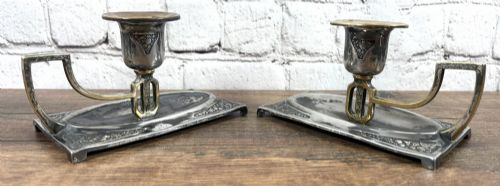
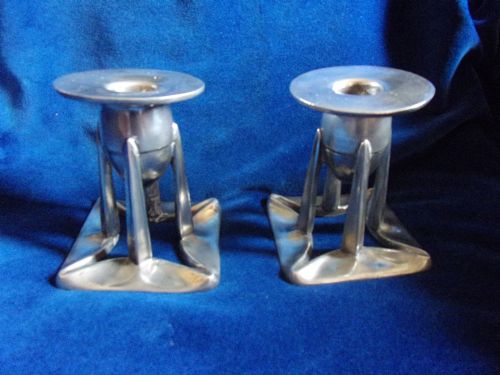
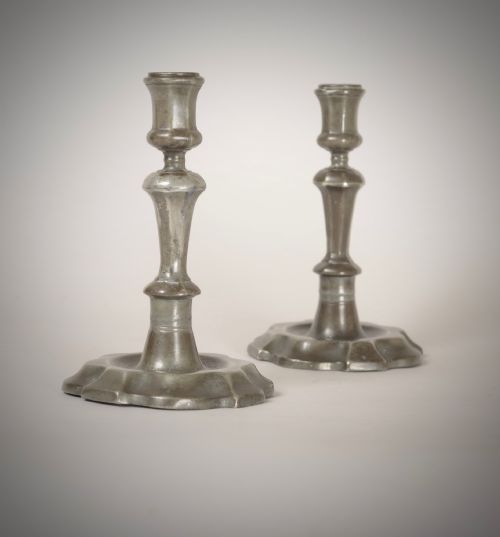
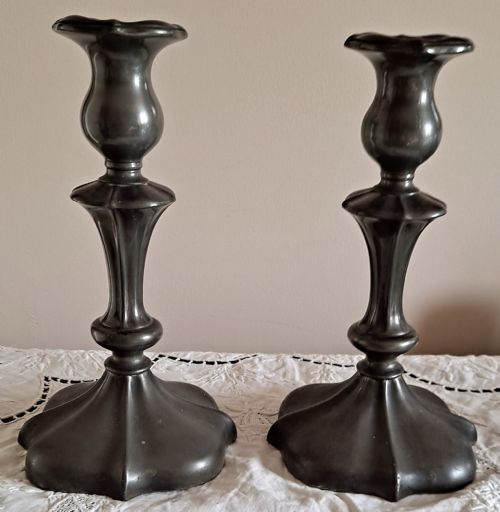
A pair of pewter candlesticks unites domestic utility with decorative design across several centuries of metalworking. You will encounter Georgian and eighteenth-century examples alongside Victorian, Art Nouveau, Arts and Crafts and Art Deco pairs.
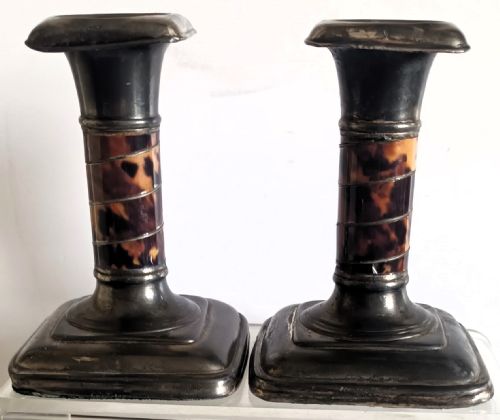
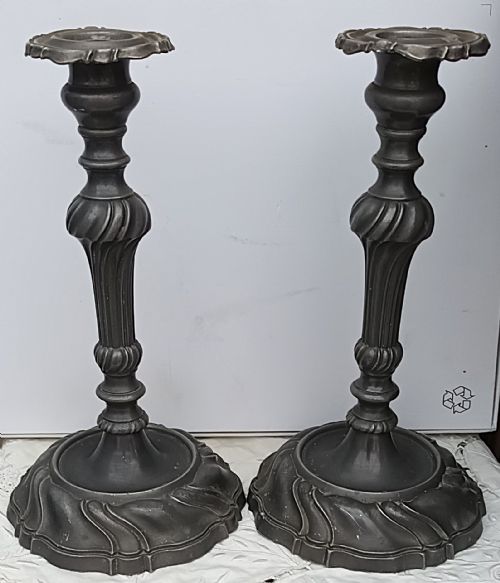
The selection ranges from plain capstan forms and tall domestic holders to ornate figural pieces, candelabra and designs incorporating enamel, oak or tortoiseshell. Pieces from major makers such as WMF and Liberty & Co sit alongside unassigned English, Polish and French work.
How they were made
Pewter forms the primary material, shaped through casting and hammering, sometimes combined with secondary elements like oak bases, tortoiseshell panels or enamel cabochons. Silvered finishes and brass components appear on specific continental and British designs.
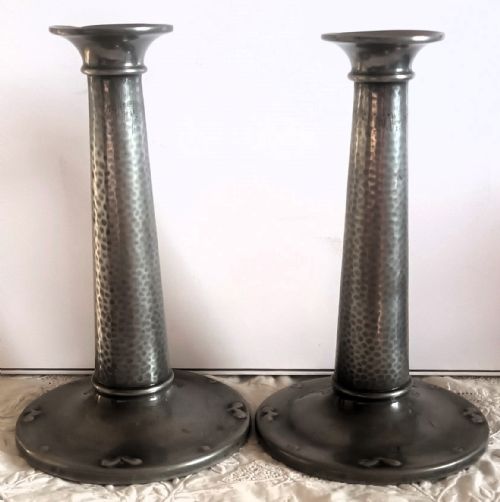
Art Nouveau and Arts and Crafts examples utilise flowing botanical lines and hammered surface textures, while earlier Georgian and Victorian pieces rely on classical turning and cast rococo revival ornament.
Several pairs incorporate unexpected materials like tortoiseshell and oak alongside traditional pewter, proving that metalworkers loved a mixed media experiment.
What varies in quality
Quality rests upon the crispness of the cast ornament and the integrity of the metal alloy used by the workshop. Earlier eighteenth-century forms depend on balanced proportions and weight, while later decorative pairs rely on the precision of applied enamel or mixed media elements like oak and tortoiseshell.
Design attribution to known makers and designers elevates certain pairs above standard domestic production. The depth of the hand-finishing on hammered surfaces distinguishes standard factory output from superior studio work.
WMF·Liberty & Co·Archibald Knox·Alexandre Clerget
The Pair of Pewter Candlesticks Glossary
- Capstan candlestick
- A form shaped like a naval capstan, featuring a wide base tapering to a narrower middle and a flared top. This design provides stability for domestic lighting.
- Tudric
- The trade name used by Liberty & Co for their range of pewter ware produced during the early twentieth century. These pieces often incorporated enamel or mixed media.
- Silvered pewter
- Pewter treated with a silver coating to give the appearance of solid silver. This finish is frequently found on continental Art Nouveau metalwork.
- Rococo revival
- A nineteenth-century style characterised by asymmetrical scrollwork, C-scrolls and naturalistic plant motifs. It appears frequently on Victorian cast candlesticks.
Pair of Pewter Candlesticks: Frequently Asked Questions
How do I clean old pewter candlesticks?
Pewter develops a dark, protective patina over decades of handling and exposure to air. Gentle washing with warm soapy water removes surface dust without harming the metal.
Avoid aggressive metal polishes that strip away the historical surface. A soft cloth brings up a gentle sheen suited to antique metalwork.
Are these candlesticks safe for modern candles?
Many antique candlesticks accommodate standard taper candles, though base sockets vary in diameter due to historical manufacturing standards. Using fitted beeswax or paraffin candles prevents tilting.
Keep burning candles away from draughts to protect the surrounding antique surface from dripping wax.
How can I tell an eighteenth-century pair from a Victorian copy?
Eighteenth-century examples typically feature simpler turned forms with heavy metal weight and tool marks from the lathe. Victorian pieces often employ cast rococo ornamentation or machine-stamped decoration.
Examining the underside and construction seams reveals the manufacturing methods characteristic of each specific period.
What caused the different styles in pewter design?
Shifts in artistic movements from Georgian classicism to Victorian revivalism transformed domestic metalwork. The Arts and Crafts movement later championed hand-hammered surfaces and honesty of materials.
Continental firms like WMF embraced flowing Art Nouveau contours, producing organic forms that contrasted with earlier rigid geometries.