


Art Nouveau Candlesticks
Art nouveau candlesticks bring sinuous floral and organic lines to a tabletop, offering a distinct departure from rigid Victorian formality.
Identifying art nouveau candlesticks
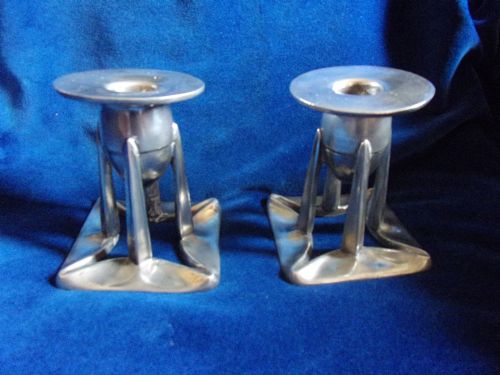
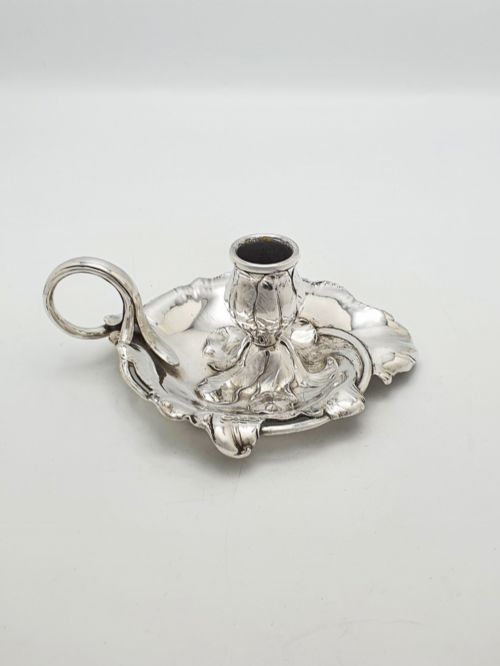
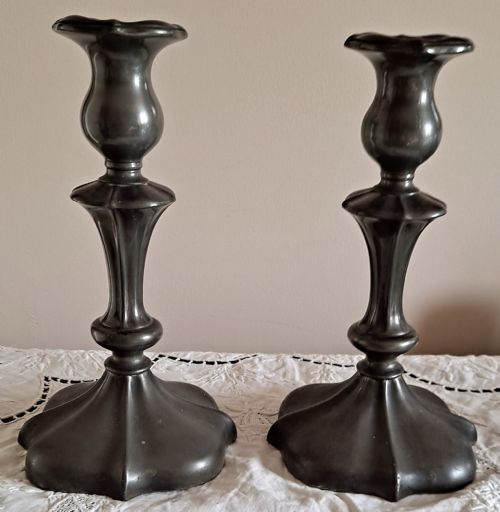
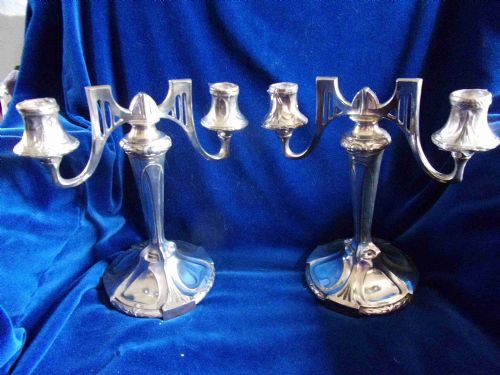
Art nouveau candlesticks encompass a variety of domestic lighting accessories shaped by the flowing natural motifs of the turn of the twentieth century. Examples on this page span the nineteenth century, nineteen hundred, and nineteen ten, taking forms influenced by both Arts and Crafts and Secessionist movements.
Most entries found here are pairs, utilised to balance mantelpieces and dining tables with symmetrical stems and bases. They appear in diverse media, reflecting the broad reach of the style across different European and English workshops.
Materials and construction methods
Makers utilised a wide range of metals, combining pewter, silver, copper, and wrought iron to achieve contrasting finishes and tactile surfaces. Some pieces incorporate turquoise stones or silvered pewter and electroplated metal to enhance visual depth.
Production techniques relied on casting, hammering, and plating, allowing artisans to shape rigid metals into fluid botanical stems, buds, and whipping curves. The integration of copper with brass or silver demonstrates a preference for mixed metal effects.
Retail Price Guide 2026
Typical UK retail prices for art nouveau candlesticks, calculated from the Sellingantiques database of over a million retail prices indexed since 2003. This retail price guide relies exclusively on Sellingantiques data; no external sources or auction records are used, so the figures do not describe the wider market.
Listings here feature items from the nineteenth century up to nineteen ten, executed in pewter, silver, copper, and wrought iron.
Distinguishing quality across examples
Superior examples demonstrate crisp definition in cast ornament and careful finishing of secondary metals, where the fluidity of the organic design remains sharp and intentional. Lesser pieces often exhibit softer contours and shallower relief work that obscures the naturalistic rhythm of the style.
The choice of materials dictates the weight and presence of the piece, with solid silver or substantial copper assemblies holding a different visual gravity compared to plated or light alloy alternatives.
WMF·Hugo Berger Goberg·William Comyns·Walker and Hall·Burmantofts Pottery
The Art Nouveau Candlesticks Glossary
- Pewter
- A malleable metal alloy composed chiefly of tin, frequently utilised in this period for its dark, lustrous finish and adaptability to complex cast ornamentation.
- Secessionist
- An aesthetic movement associated with Central European artists breaking away from traditional academic art, often resulting in geometric interpretations of organic forms.
- Electroplated metal
- A base metal coated with a thin layer of a more precious metal through an electrolytic process, offering the appearance of silver or gold at a lower cost.
- Pricket
- A sharp metal spike set in the centre of a drip pan to hold a candle directly, rather than using a conventional socket.
- Arts and Crafts
- A design philosophy championing traditional craftsmanship, simple utility, and visible hand-working over mass-produced industrial output.
Frequently Asked Questions
How do I date these candlesticks?
Dating relies on stylistic markers such as whipping plant tendrils and whiplash lines typical of the turn of the century, alongside any hallmarking found on silver or stamped maker marks on pewter and metal bases.
Comparative analysis with documented workshop productions helps narrow the period between the late nineteenth century and the nineteen tens.
Were these made as pairs?
Many examples on this page survive and appear as matching pairs, which were originally intended to balance dining tables, sideboards, or mantelpiece displays.
Single items do occur, but matched sets remain the standard format for domestic interior decoration during this period.
How should I clean metal candlesticks?
Maintenance depends entirely on the specific metal, requiring gentle dusting for pewter and copper, and careful polishing for silver or silver-plated surfaces.
Harsh chemical abrasives should be avoided to preserve patination and any original surface treatments like silvering or patinated highlights.
What is the difference between pewter and silver?
Pewter is a heavier, tin-based alloy valued for its dull grey sheen and capacity for deep cast detail, whereas silver is a precious metal with a brighter, reflective finish.
Silver pieces frequently feature official assay office hallmarks, while pewter items often display maker stamps or model numbers.