
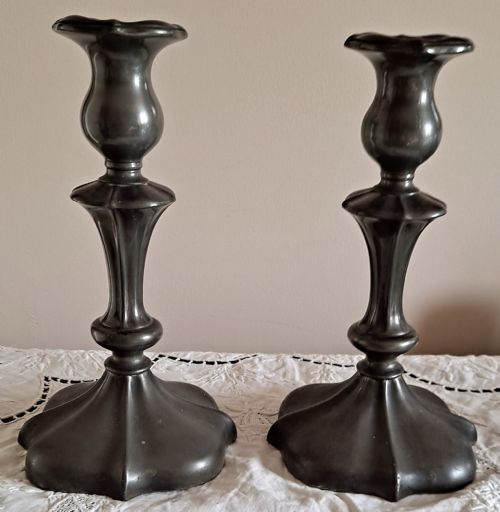
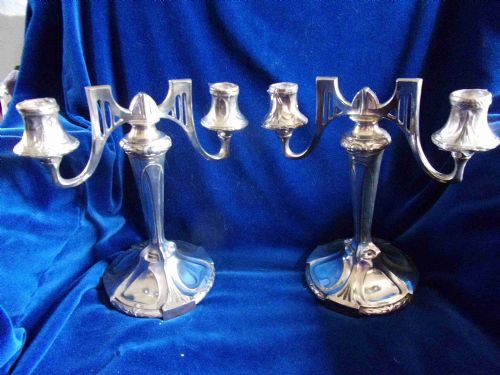


Art Nouveau Candle Holders
Art nouveau candle holders bring organic, fluid design to domestic lighting, offering a tangible connection to turn-of-the-century craftsmanship.
Art Nouveau Candle Holders
Art nouveau candle holders encompass a diverse array of lighting pieces designed during the late nineteenth and early twentieth centuries, capturing the dynamic and naturalistic motifs of the era. Buyers seeking these objects will encounter a wide selection of candlesticks, chambersticks, wall sconces, and multi-branched candelabra originating from British, continental European, and domestic workshops. The majority of pieces on this page reflect the aesthetic developments of nineteen-hundred, alongside related expressions from the Arts and Crafts, Jugendstil, Secessionist, and Amsterdam School movements.
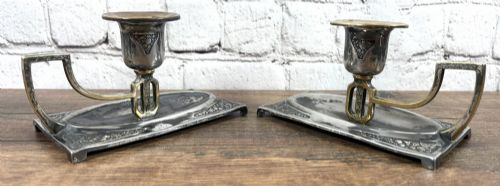
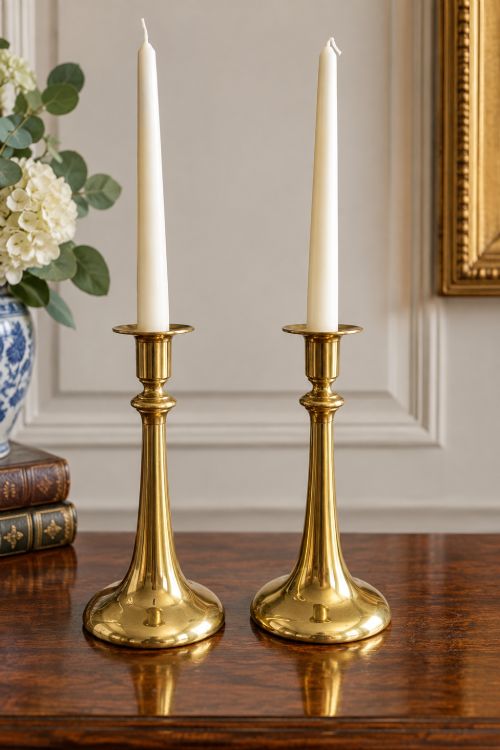
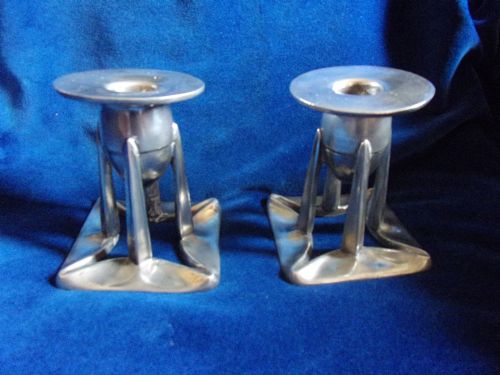
Forms vary from simple chambersticks designed for carrying through a house to monumental pairs of pricket candlesticks intended for display on heavy furniture. Many examples integrate structural iron or brass with softer metals such as pewter and copper, often enriched by silver plating or silvered finishes. Whether searching for standard pairs or specialised figural designs, collectors will find that the inventory spans both everyday domestic wares and ambitious studio productions.
How they were made
Metalworking techniques defined the production of these items, utilising casting, hammering, and plating methods appropriate to each material. Pewter, brass, and copper were frequently cast into fluid, plant-inspired shapes, sometimes accented with enamel insets or clear crystal components. Workshops employed silver plating or applied silvered finishes to base metals to achieve a brighter surface sheen without the expense of solid silver.
Wrought iron and steel appeared in utilitarian and architectural designs, particularly in works associated with the Secessionist movement and makers like Hugo Berger. Heavier pieces combined brass and iron components through riveting and soldering, creating robust structures capable of supporting candles safely. The interplay between rigid metals and sinuous, plant-derived contours remains a defining technical characteristic of the surviving inventory.
Several pieces shaped like delicate maiden figures stand ready to guard your mantelpiece from sudden darkness.
What varies in quality
Quality in these objects rests upon the crispness of the casting and the resolution of the plant-based and figural details. Superior pieces display deep, intentional relief work where whiplash lines and botanical elements remain sharp and well-defined rather than blurred by worn production moulds. The articulation of small decorative additions, such as enamel cabochons or cast maiden figures, separates standard commercial output from distinguished studio work.
Material integrity and the survival of original surface finishes also dictate the standing of a piece. Examples retaining intact silver plating, original patination on copper and brass, or authenticated maker marks command greater attention from collectors. The overall structural balance and the harmony between material choice and organic form reveal the skill of the original manufacturer.
Archibald Knox·Liberty and Co·Hugo Berger Goberg·Alexandre Clerget·Abel Landry
The Art Nouveau Candle Holders Glossary
- Chamberstick
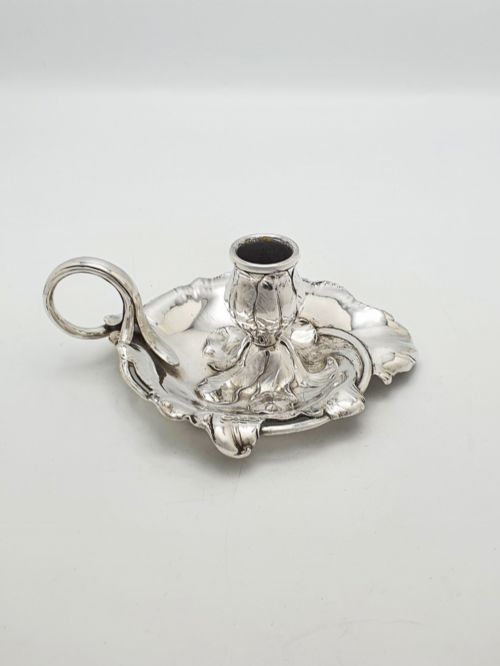
- A low candlestick featuring a wide drip pan and a loop handle for carrying room to room. These portable items were essential for evening lighting before widespread electrification.
- Pricket candlestick
- A candlestick style that uses an upright metal spike to secure the candle rather than a socket. This form appears frequently in ecclesiastical and heavy decorative metalwork from the period.
- Secessionist
- A stylistic movement associated with Central European artists who broke away from traditional academic institutions. It prioritised geometric clarity alongside the flowing organic curves typical of the broader period.
- Jugendstil
- The German-language variant of the broader international movement, named after the Munich art magazine Die Jugend. It heavily influences the continental brass and pewter pieces found in this category.
- Silvered pewter
- A specific surface treatment applied to base metal objects to simulate solid silver. This finish gives a bright, reflective quality to soft pewter castings while maintaining structural durability.
Art Nouveau Candle Holders: Frequently Asked Questions
What is a chamberstick?
A chamberstick is a low, portable candle holder featuring a flat saucer base to catch melting wax and a small handle for carrying. They were commonly used in bedrooms and hallways during the nineteenth and early twentieth centuries.
Unlike standard table candlesticks, their design prioritised safe transport around domestic spaces before electric lighting became standard in ordinary homes.
How do I identify Jugendstil pieces?
Jugendstil items originate primarily from German-speaking regions and share close ties with the wider artistic movement of the era. They often feature distinctively flattened organic shapes, stylised floral motifs, and lettering styles unique to continental design.
Examining the metalwork techniques and any stamped factory ciphers on the base will frequently confirm a continental origin rather than a British Arts and Crafts source.
Were these holders used daily?
Many examples served practical lighting roles in domestic settings, while others were ornamental display objects for mantelpieces and sideboards. Traces of historical wax residue often indicate actual period use.
Heavier pricket sticks and multi-branched candelabra generally functioned as decorative focal points in principal rooms rather than portable working lights.
What is the Amsterdam School?
The Amsterdam School was an architectural and design movement active in the early twentieth century, known for expressionist brickwork and imaginative metal craft. Objects from this tradition feature sturdy brass and iron construction with strong vertical lines.
They represent a more robust, architectural interpretation of domestic metalwork compared to delicate, plant-inspired French or British designs.