



Decorative Bronze Candle Holders
These decorative bronze candle holders bring heavy metal presence and candlelit warmth to a room, ranging from restrained Regency standards to elaborate French revival designs.
Decorative Bronze Candle Holders
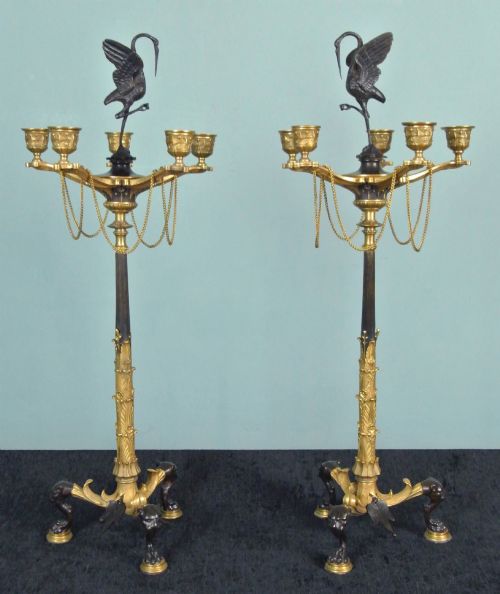
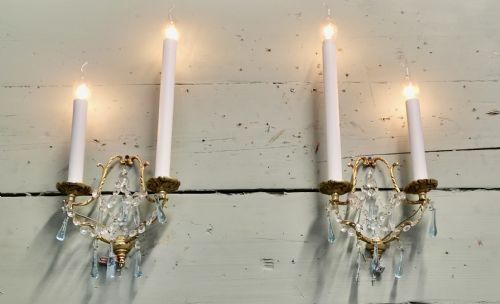
When you search for decorative bronze candle holders, you find metal lighting pieces designed for tables, brackets, and walls. These objects include single candlesticks, multi-armed candelabra, wall sconces, and decorative tazzas.
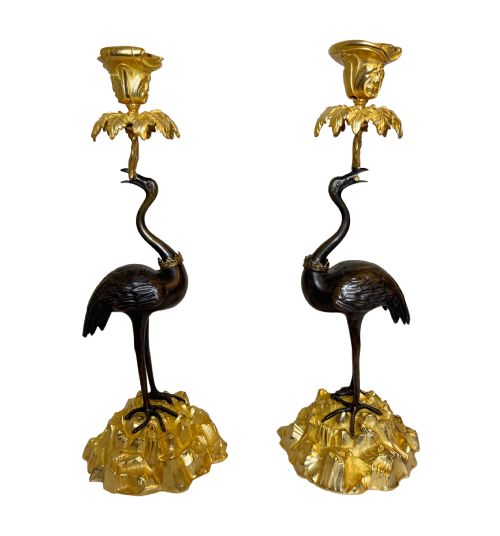
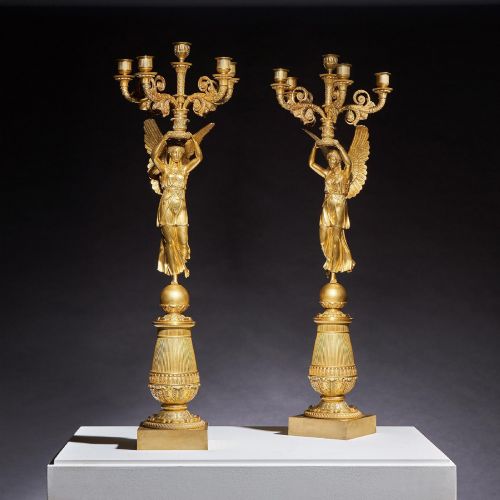
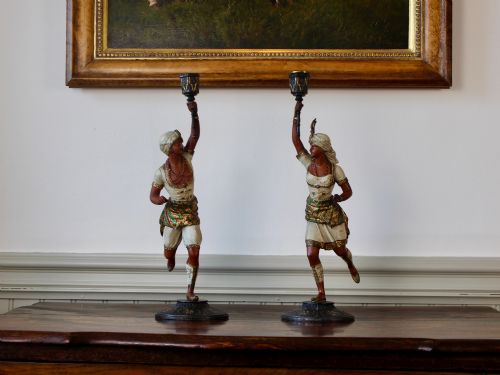
The selections span the nineteenth century into the early twentieth century, showing strong French influence alongside Regency, Art Nouveau, and Edwardian aesthetic choices. You meet pairs most frequently, often featuring classical figures, animals, or elaborate foliate cast work.
Forms vary from simple patinated shafts to grand architectural candelabra mounted with marble or porcelain elements. Makers utilise both heavy cast bronze and lighter brass or spelter components across these diverse periods.
What varies in quality
The crispness of the initial metal casting dictates the foundational quality of each piece. Superior examples retain sharp, deep tool marks from the chaser, whereas inferior castings appear soft and rounded where details blur together.
Finishes separate standard production from master foundry work. Rich, layered ormolu with distinct matte and burnished zones indicates high skill, while flat, uniform gold paint or flaking gilt bronze reveals lesser workmanship.
Artistic attribution and foundry reputation elevate certain pieces significantly. Items bearing the marks of known makers or distinct sculptural provenance show superior proportion, balance, and weight compared to anonymous commercial wares.
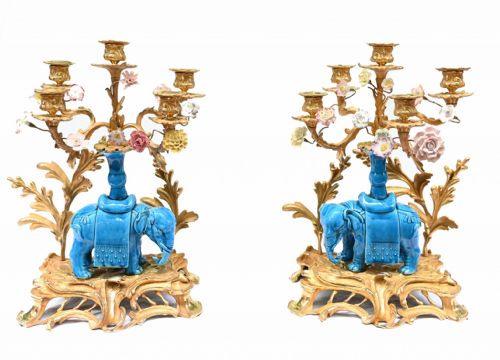
Elephants, flamingos, dolphins, and putti populate these metal candle holders alongside classical figures.
Barbedienne·Pierre Philippe Thomire·Abel Landry·Auguste Cain·Liberty
The Decorative Bronze Candle Holders Glossary
- Ormolu
- Gilded bronze, where a layer of gold amalgam is applied to a bronze base and fired. This technique creates a durable, luminous golden finish characteristic of French decorative arts.
- Patinated bronze
- Metal treated with chemical solutions to produce a controlled surface colour such as deep brown, green, or near-black. It protects the bronze and accentuates sculptural contours.
- Candelabra
- A branched candlestick holding multiple candles on separate arms. These lighting fixtures often feature a central light flanked by symmetrical side branches.
- Spelter
- A zinc-based alloy used as a less expensive substitute for bronze in decorative figures and candlesticks. It is softer than bronze and typically carries a painted or patinated finish.
- Athenienne
- A tripod stand of classical Greek form adapted as a decorative pedestal or burner. Regency period candlesticks frequently adopt this specific architectural silhouette.
Decorative Bronze Candle Holders: Frequently Asked Questions
What is the difference between bronze and ormolu?
Bronze is a copper alloy used as the structural metal base for these decorative objects. Ormolu refers specifically to the applied gold finish placed over that bronze.
Many pieces on this page combine both materials, using dark patinated bronze for figures or shafts alongside bright gold ormolu for mounts and bobêches.
How do I identify Regency period pieces?
Regency items date from the early nineteenth century and typically display strict classical restraint. Look for motifs drawn from ancient Greece and Rome, such as tripod bases, acanthus leaves, and patinated finishes.
These designs often favour clean architectural lines over the sweeping asymmetry found in later revival styles.
Where should I place wall sconces?
Wall sconces need secure wall fixings capable of supporting the substantial weight of cast bronze or brass arms. They work well flanking mirrors, fireplaces, or architectural doorways.
Ensure you mount them at a height where the candle cups and backplates are visible without being obstructed by furniture.
Can I use real candles in antique candelabra?
You can use real candles provided the drip pans or bobêches are intact to catch melting wax. Check that the candle fits securely into the nozzle without leaning against delicate metal arms.
Take care to clean wax residue using warm water rather than scraping the metal surface with sharp metal tools.