


Late Victorian Candle Holders
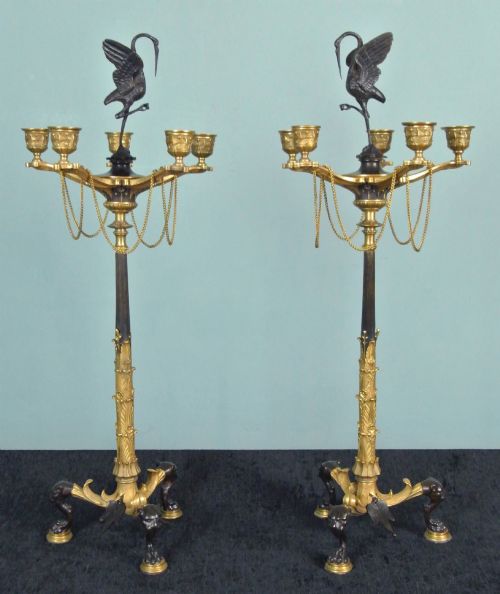
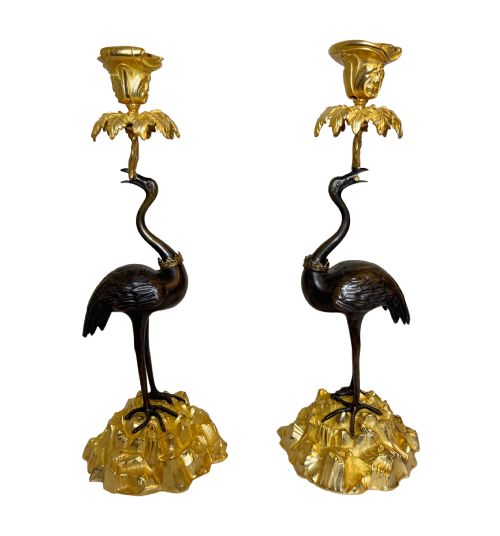
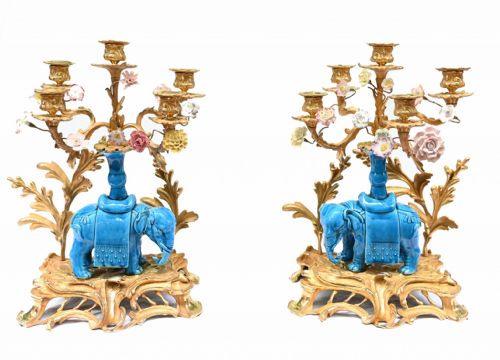
Late victorian candle holders bring heavy cast metals, delicate porcelains and domestic warmth into rooms through paired candelabra, chambersticks and wall sconces.
Late Victorian Candle Holders
Late victorian candle holders comprise candlesticks, candelabra, chambersticks and wall sconces spanning the late nineteenth and early twentieth centuries. These pieces appear in matched pairs or individual examples fashioned from brass, bronze, porcelain and sterling silver.
The aesthetic vocabulary draws upon historicism, rococo revival, aesthetic movement, arts and crafts and gothic revival styles. Makers utilise diverse motifs ranging from animal figures and botanical elements to classical architectural details.
Materials and Techniques
Metalworking techniques dominate the selection, utilising cast brass, gilt bronze, silver-plate and sterling silver alongside turned mahogany and scarlet red tortoiseshell boulle-work. Metal components often receive chased surface decoration, patination or gilding.
Ceramic and glass elements involve moulded porcelain from factories such as Volkstedt, Sitzendorf and Royal Worcester, frequently combined with metal mounts or incorporated into figural compositions.
Design styles recorded include aesthetic movement, rococo revival, gothic revival, french late nineteenth century and historicism.
Factors of Quality
Quality rests upon the crispness of casting and the precision of assembly in multi-part metal objects. Superior items display sharp relief in figural motifs and secure joints without visible excess solder.
In porcelain and glass examples, the fineness of hand-painted enamel details and the clarity of cut glass separate standard production items from masterworks.
Barbedienne·WMF·Frederick J Smith And Co·Dr Christopher Dresser·Sitzendorf·WM Tonks And Sons·Royal Worcester·James Hadley·Clarkes
The Late Victorian Candle Holders Glossary
- Candelabra
- A branched candlestick holding multiple tapers or candles from a single base. These branch arms often detach for cleaning.
- Chamberstick
- A low candlestick fitted with a handle and a small saucer base designed to catch dripping wax while carrying a light through a house. They frequently include a matching conical snuffer.
- Pricket
- A sharp metal spike upon which a large candle is impelled, rather than dropping into a standard socket. This form appears on heavier altar or floor pieces.
- Ormolu
- Gilded bronze produced by applying a mercury and gold amalgum to a bronze base and heating it until the mercury vaporises. The technique creates a durable golden finish characteristic of French luxury goods.
Late Victorian Candle Holders: Frequently Asked Questions
How do I clean brass candle holders?
Warm soapy water and a soft cloth remove surface dust and old wax accumulations safely. Avoid aggressive chemical polishes that strip away historical patination.
Wax residue softens under warm water rather than scraping with metal tools. Dry thoroughly to prevent water spotting.
Are these pieces safe for daily use?
Most antique holders accommodate standard taper sizes securely, though hand-poured or older candles may require minor trimming at the base.
Keep burning tapers away from drafts and monitor them closely near delicate materials like tortoiseshell boulle-work or enamel.
What is a Cricklite?
A Cricklite is a specialised lamp or candelabra system utilising cut glass shades and brass frames designed by Clarkes in the late nineteenth century. They were engineered to burn safe, steady night-light candles.
These assemblies diffuse a soft glow through patterned glass domes mounted over brass stems.
How do I date these items accurately?
Dating relies on hallmarks on silver pieces, registration marks, maker stamps and stylistic clues such as aesthetic movement asymmetry or arts and crafts plainness. Comparative design details across similar recorded works confirm eras.
Materials and construction methods, including machine threading versus hand-cut screws, provide further chronological markers.