


Scalloped Base Candlesticks
Scalloped base candlesticks bring eighteenth-century illumination to a room, offering tactile metalwork and formal rhythm at the table.
Identifying Scalloped Base Candlesticks
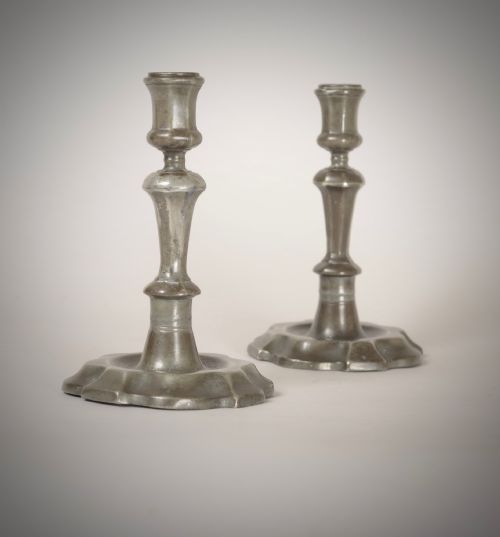
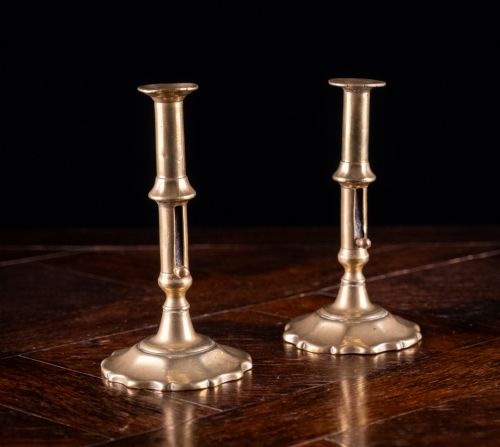
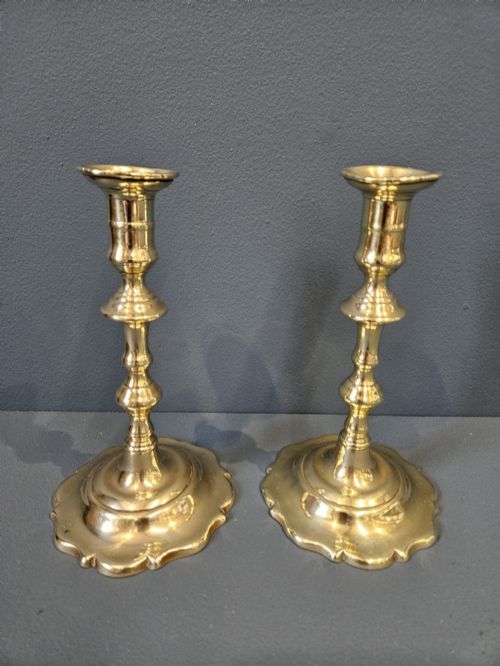
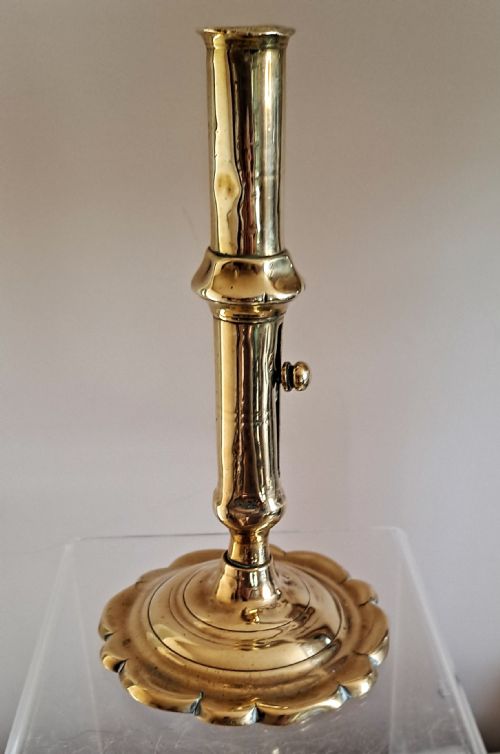
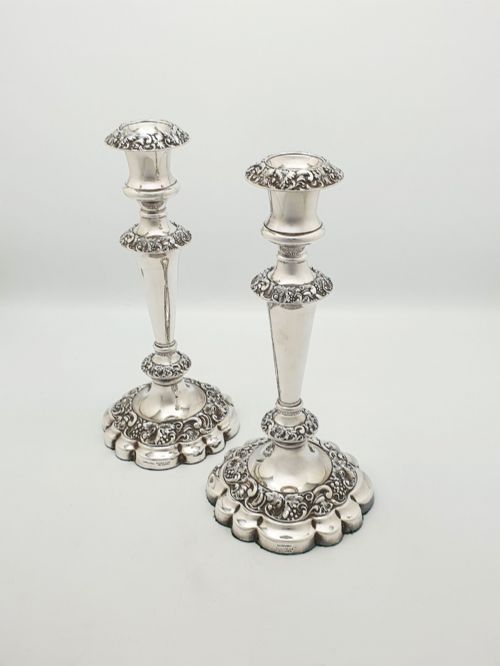
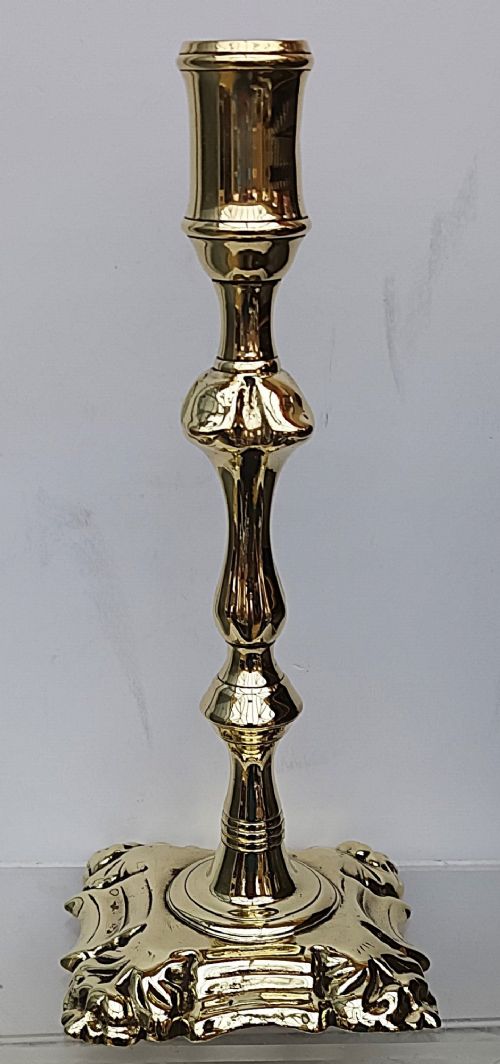
When you search for scalloped base candlesticks, you look at lighting apparatus from the eighteenth century designed with lobed or shaped feet. These domestic pieces appear primarily as pairs, originating across the Georgian era and encompassing the reigns of George II and George III.
The form relies on a shaped footplate that transitions upward into a turned shaft and socket. Examples on this page span the 1750 period to 1800, capturing the shift from early mid-century proportions to later neoclassical discipline.
Most items encountered here belong to the brass tradition, though pewter and sterling silver variants also occur within the eighteenth-century group. Makers such as John Cafe contributed to this form, showing how specialised workshops approached the moulded foot.
Materials and Method
The manufacturing process relies on cast brass or pewter, utilising foundational foundry techniques of the eighteenth century. Molten metal poured into moulds created the distinct lobed profiles and sturdy weight necessary to support a burning taper.
Turned components on the lathe refined the shafts and sockets after the initial casting took place. Artisans then finished the surfaces by hand, leaving tool marks and subtle variations that distinguish individual pairs.
Retail Price Guide 2026
Typical UK retail prices for scalloped base candlesticks, calculated from the Sellingantiques database of over a million retail prices indexed since 2003. This retail price guide relies exclusively on Sellingantiques data; no external sources or auction records are used, so the figures do not describe the wider market.
John Cafe signed his work with a distinctive punch mark, leaving eighteenth-century fingerprints in metal.
Distinguishing Quality
Quality rests in the crispness of the casting and the retention of original form across the lobed footplate. Sharper definition in the moulding separates finer workshop output from softer, worn examples.
The integrity of the metal surface and the balance of the proportions dictate the visual success of each pair. Pieces that maintain their original patination and unpolished depth command greater interest among collectors.
John Cafe
The Scalloped Base Candlesticks Glossary
- Scalloped base
- A footplate shaped with curved indentations resembling a shell or multi-lobed outline. This form provides both decorative presence and a wide stance for stability.
- George II
- The period of British history spanning 1727 to 1760, characterised by robust forms and early rococo influences in domestic metalwork. Pieces from this era show heavy casting and generous proportions.
- George III
- The reign from 1760 to 1820, bringing cleaner classical lines and neoclassical restraint to lighting design. Candlesticks from this period often feature more slender shafts.
- Socket
- The uppermost cup designed to hold the base of the candle securely in place. It sits atop the turned shaft and frequently matches the moulding style of the foot.
- Cast brass
- An alloy of copper and zinc poured into a mould to achieve complex three-dimensional shapes. It served as the primary material for durable domestic lighting in the eighteenth century.
Frequently Asked Questions
What periods do these candlesticks date from?
The available evidence points exclusively to the eighteenth century, specifically encompassing the Georgian era from around 1750 to 1800. These dates cover the reigns of George II and George III.
Items from this timeframe reflect the prevailing design standards of Georgian metalworkers, utilising cast brass, pewter, and sterling silver.
Are these pieces sold as pairs?
The listings on this page consist predominantly of pairs, alongside a recorded set of four. This reflects the original domestic use of lighting on mantelpieces, sideboards, or dining tables.
Matching sets of multiple units allowed for symmetrical arrangement in eighteenth-century interiors.
What metals were used for these items?
Makers utilised cast brass as the primary material, alongside softer pewter and sterling silver. Each metal imparted a different weight and surface finish to the finished object.
Brass examples offer durability and a warm metallic tone, while silver and pewter represent distinct tiers of domestic expenditure.
How do George II and George III styles differ?
George II examples, such as those from around 1750, tend to display heavier proportions and robust casting suited to early mid-century tastes. George III pieces move toward more refined profiles as the century progresses.
Both styles retain the characteristic lobed footplate that defines this search category.